5 Kids Kitchen Organization Ideas That Make Family Life Way Less Chaotic
If your kitchen currently looks like a snack tornado met a craft explosion, welcome. Kids are adorable, but their cups, lunch boxes, mystery lids, and half-finished granola bars? Absolute chaos agents.
The good news is that kids kitchen organization ideas do not have to involve a full remodel or a label maker addiction. A few smart systems can make your kitchen easier for them to use and way less annoying for you to maintain.
1. Create A Kid Zone They Can Actually Reach
If everything your child needs is shoved into upper cabinets, you already know what happens. They either yell for help every five minutes or attempt a dangerous countertop climb like a tiny raccoon.
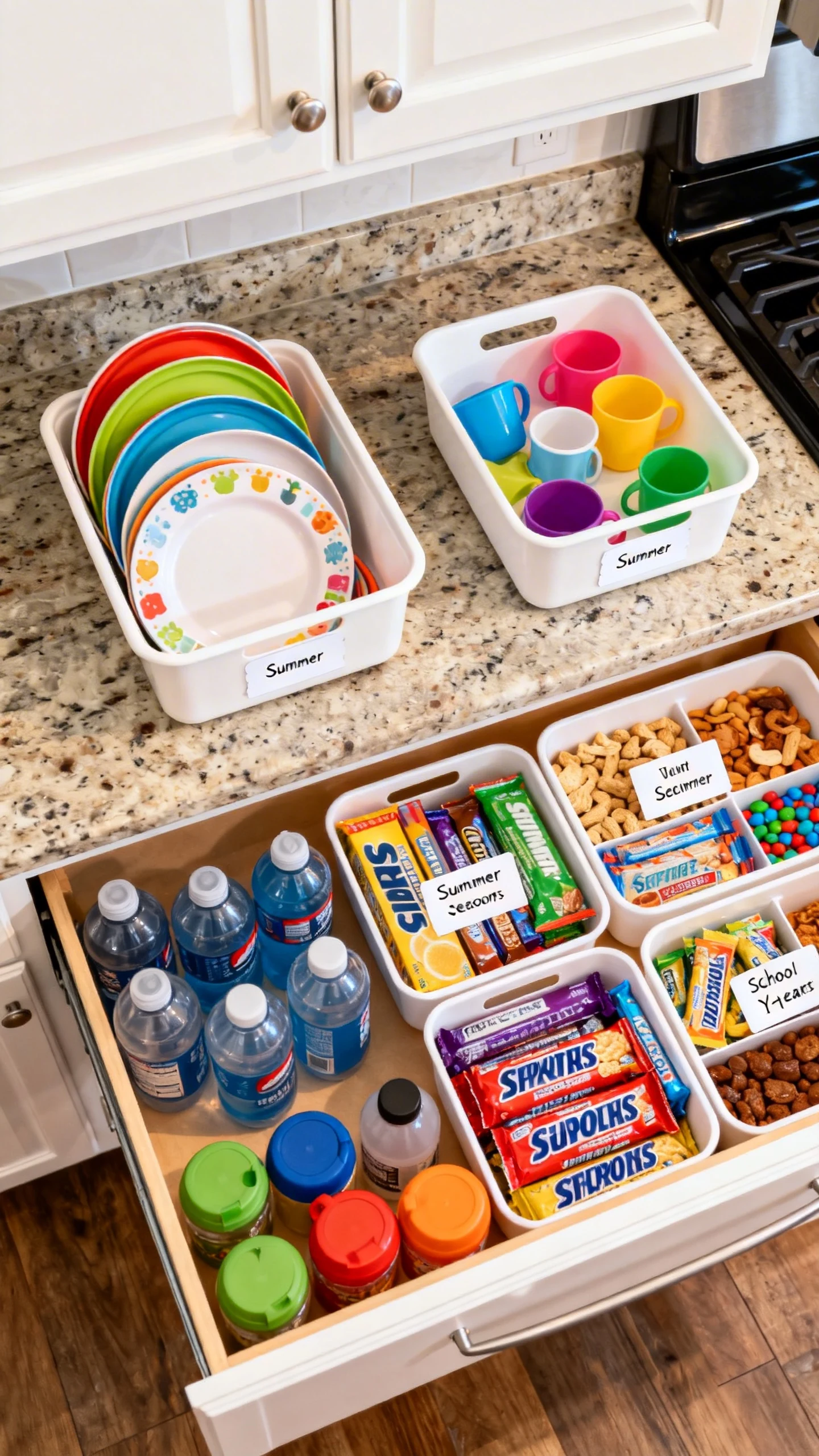
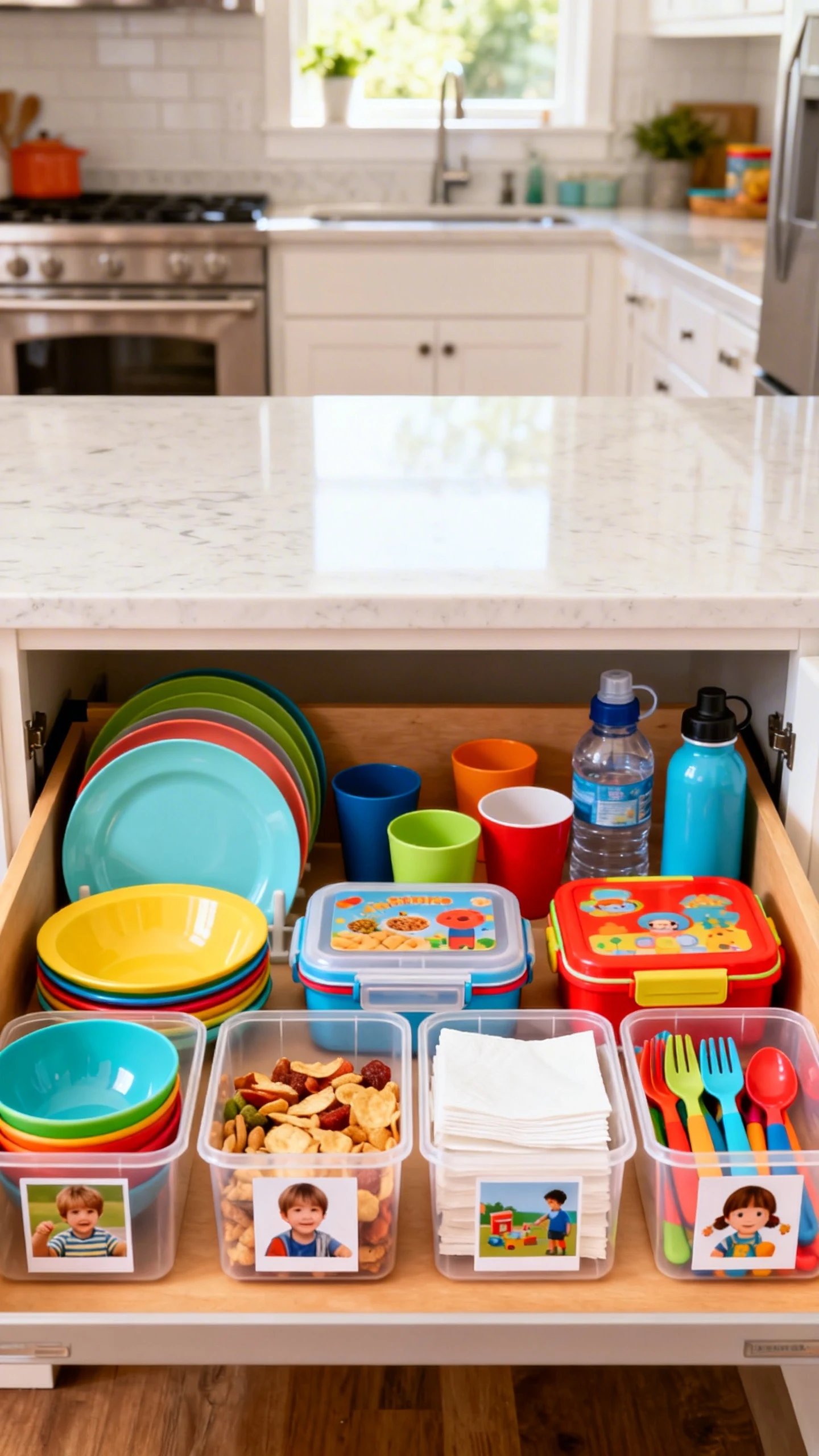
Set up one dedicated kid-friendly kitchen zone in a lower cabinet, drawer, or shelf. Keep it simple, obvious, and easy to reset, because nobody wants a complicated system that falls apart by Tuesday.
What To Store In The Kid Zone
- Plates and bowls that are lightweight and unbreakable
- Cups and water bottles they use daily
- Snack bins with parent-approved grab-and-go options
- Lunch boxes and reusable containers
- Napkins and kid utensils for easy meal setup
The goal is independence without regret. You want them to grab what they need without also unlocking access to the mixer, steak knives, or seventeen bags of chocolate chips.
Use a low drawer if you can. Drawers are easier for kids to see into, and they are less likely to create a cabinet avalanche while hunting for one blue cup they suddenly cannot live without.
Make It Obvious, Not Perfect
IMO, the best systems are the ones a child can understand at a glance. That means clear bins, simple categories, and no overstuffed shelves where everything topples over like a dramatic movie scene.
- Group similar items together
- Keep daily-use items front and center
- Limit duplicates so the zone stays manageable
- Use picture labels for younger kids who cannot read yet
When kids know exactly where things belong, cleanup becomes a lot less painful. Not magical, obviously, but better.
2. Use Bins And Labels Like Your Sanity Depends On It
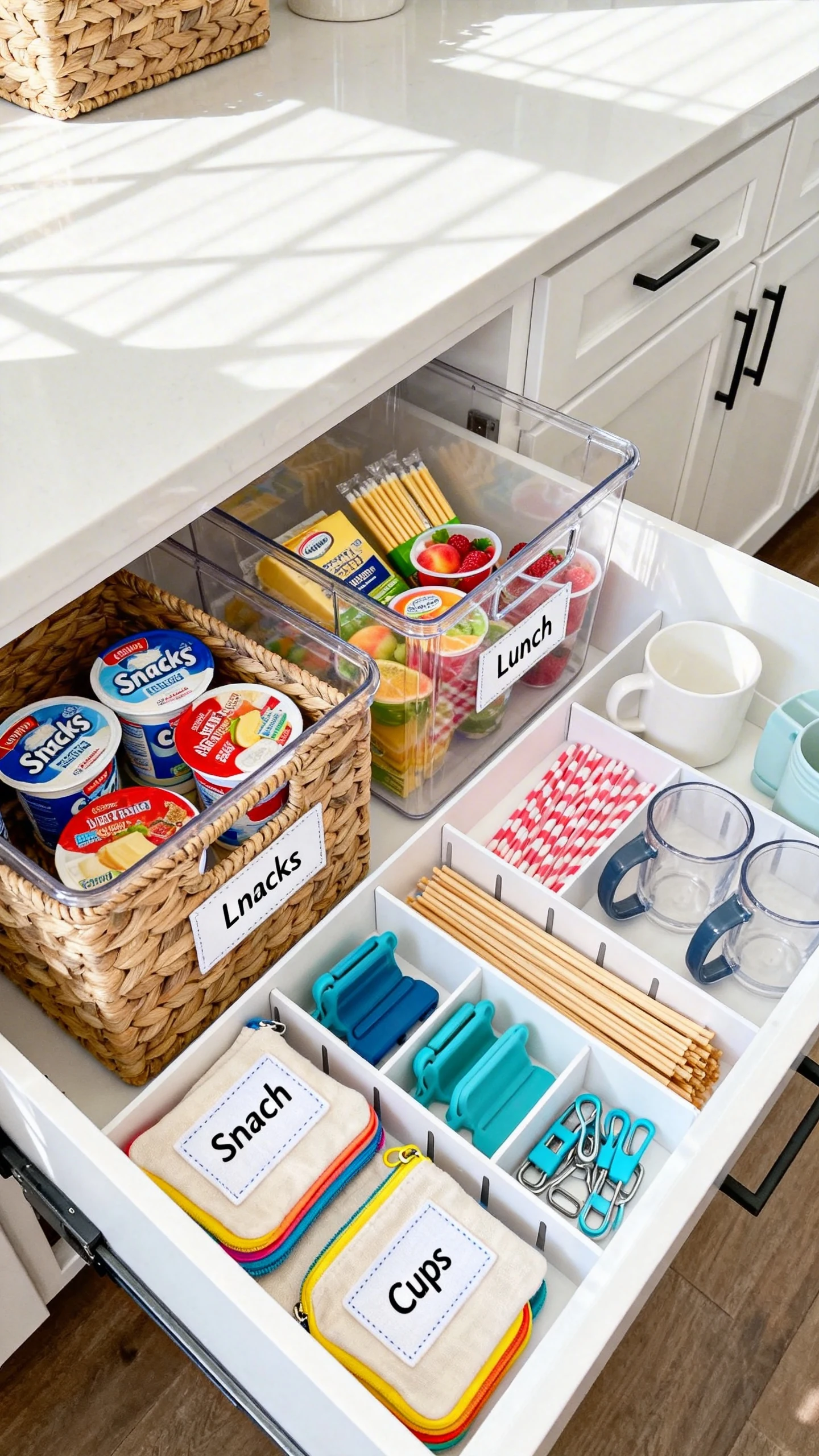
Let’s be honest. Random kitchen clutter looks even worse when it is tiny and colorful and somehow sticky for no reason.
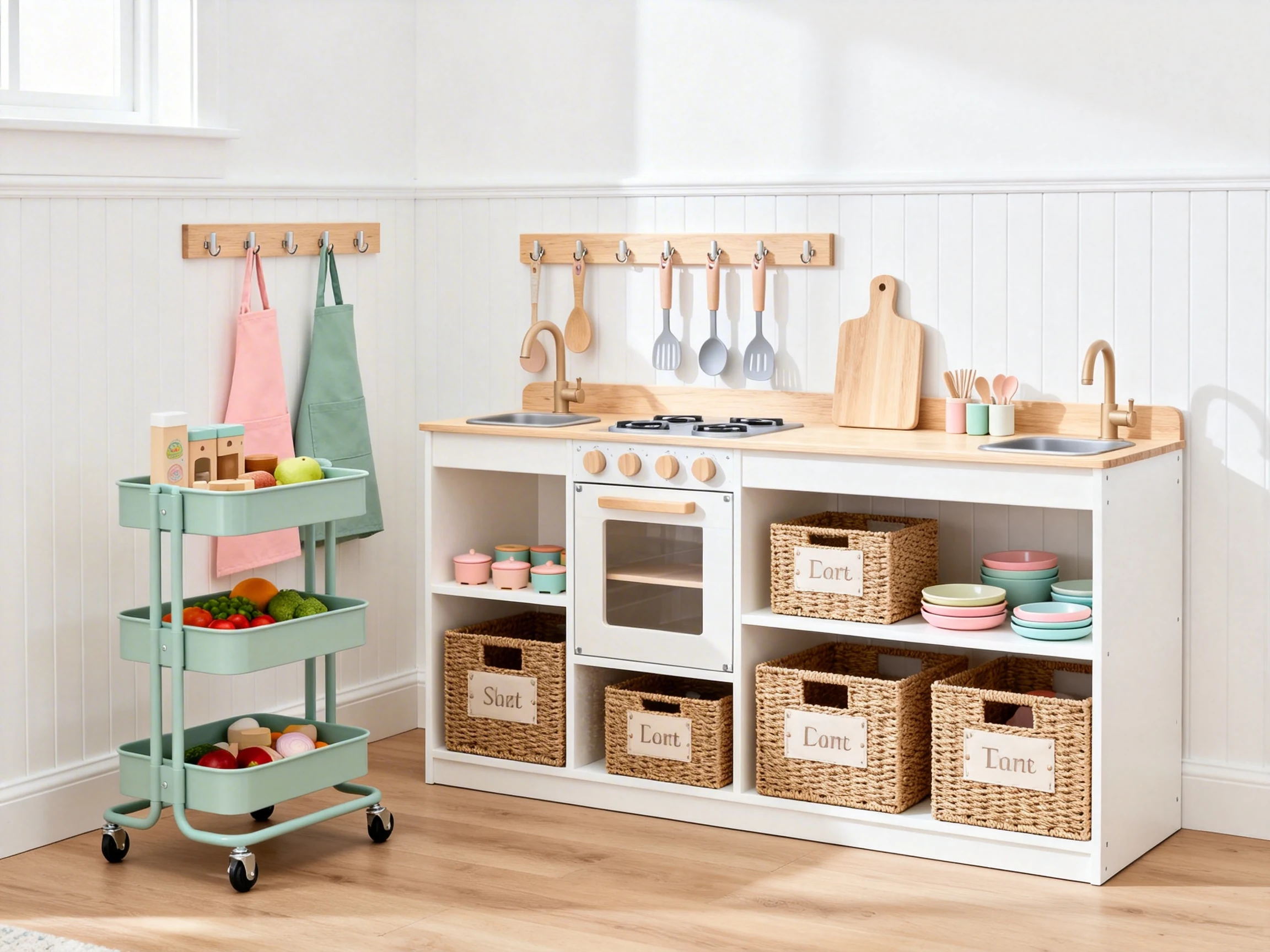
One of the easiest kids kitchen organization ideas is to assign containers to every category. Bins, baskets, and drawer dividers instantly make the mess feel intentional, which is basically the dream.
Best Places To Add Bins
- Pantry shelves for snacks, breakfast items, and lunch supplies
- Fridge drawers for yogurt, cheese sticks, and fruit cups
- Cabinets for plastic dishes and cups
- Junk-prone drawers for straws, snack clips, and reusable pouches
Clear bins are great because kids can see what is inside without digging through everything like tiny treasure hunters. If you prefer woven or opaque bins for a prettier look, just add labels that are impossible to miss.
Labels matter more than you think. They cut down on questions, speed up cleanup, and help babysitters, grandparents, and tired spouses figure out your system without a guided tour.
Smart Label Ideas For Families
- Use both words and pictures for younger kids
- Label by function, not by super-specific product names
- Keep wording short, like “Snacks,” “Lunch,” or “Cups”
- Choose wipeable labels because kitchens are messy by nature
Try not to over-organize every single cracker flavor into its own category. That way lies madness. Stick to broad groupings that are easy to maintain in real life.
3. Turn Snack Storage Into A Self-Serve Setup
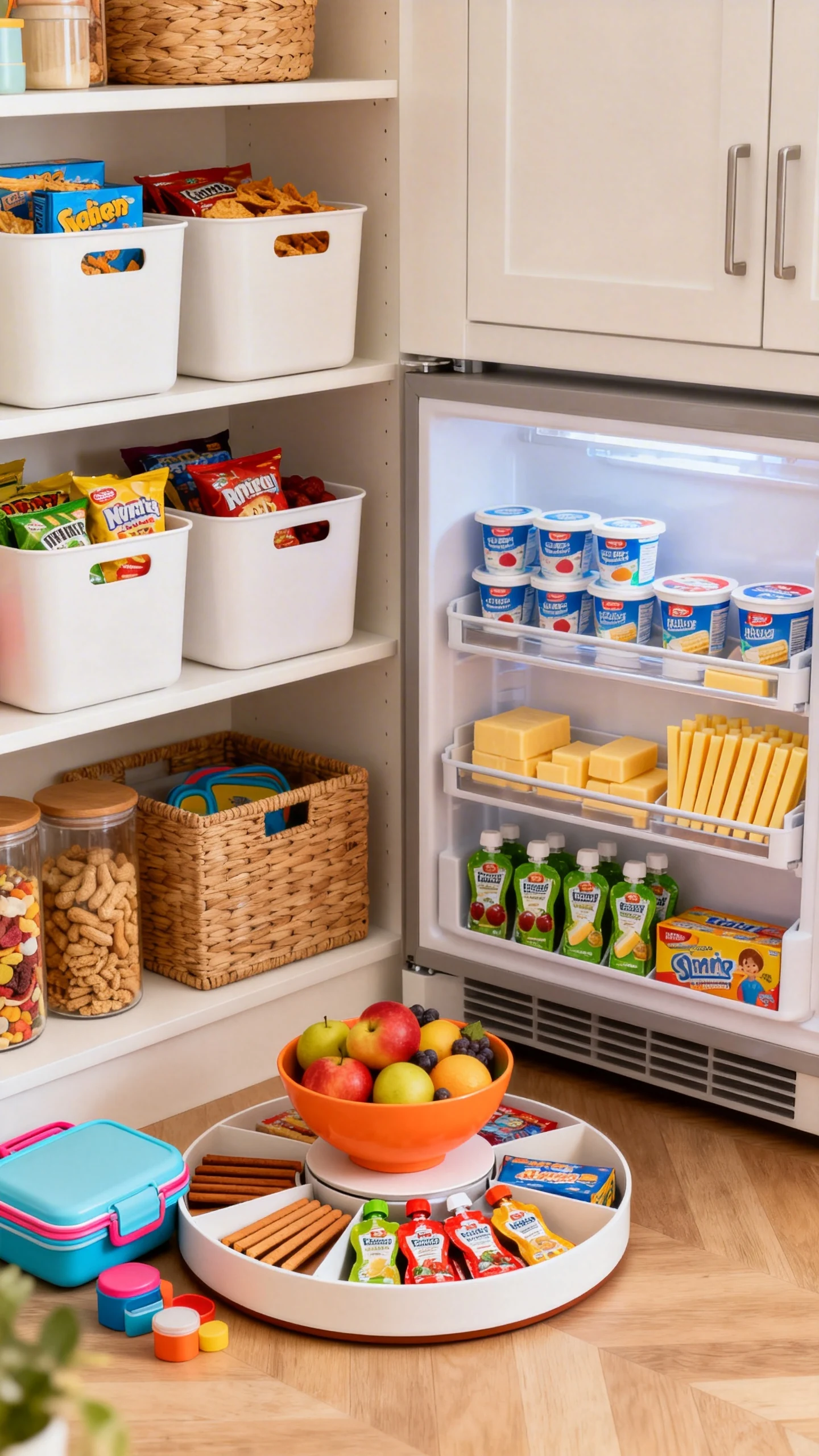
If your kids ask for snacks approximately every eleven minutes, same. A self-serve snack station can save time, reduce clutter, and make the kitchen feel way less chaotic during the daily hunger games.
Choose one pantry shelf, one cabinet, or one section of the fridge and make it the official snack zone. Keep it stocked with options they are allowed to grab without needing a committee meeting first.
How To Build A Snack Station That Works
The trick is balance. You want enough variety to keep things interesting, but not so many choices that your child stares into the pantry like it is an emotional decision.
- Dry snacks in one easy-access bin
- Fruit in a bowl or lower produce drawer
- Protein options like cheese sticks or yogurt in a fridge bin
- Lunchbox extras stored nearby for quick packing
Pre-portioning helps a lot here. Instead of handing over a giant family-size box that will be annihilated in one afternoon, divide snacks into smaller containers or grab-and-go bags.
FYI, this is also a great way to gently control the snack chaos without sounding like the kitchen police. Kids still get independence, and you still get to decide what shows up in the station.
Keep It Looking Cute And Functional
Yes, it should work well. But if it can also look nice, why not? A neat snack zone makes the whole kitchen feel more put together, even if the rest of the house is giving “lived in” in the most aggressive way.
- Use matching bins for a cleaner look
- Add a lazy Susan for bars or pouches
- Keep healthier options at eye level
- Refill once or twice a week instead of constantly fussing with it
Simple systems always win. If snack setup takes longer than dinner prep, it is too complicated.
4. Tame The Cup, Bottle, And Lunchbox Madness
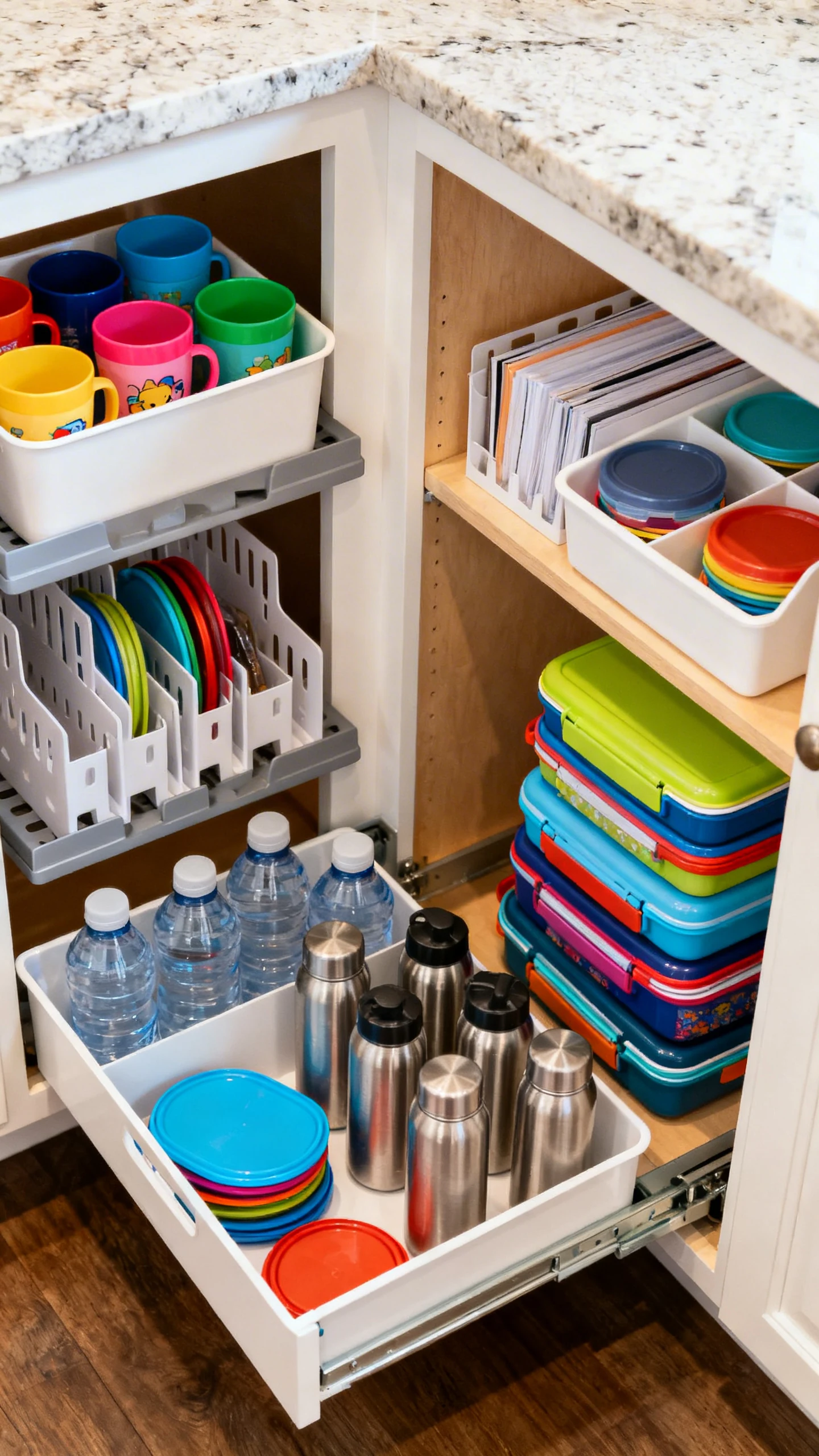
Every family with kids has that cabinet. The one where water bottles roll out, lunchbox lids disappear, and sippy cups multiply when nobody is looking.
This is where targeted kitchen storage for kids items makes a huge difference. Instead of tossing everything into one deep cabinet and hoping for the best, give each category its own home.
Separate By Type, Then By Kid
Start by decluttering hard. Keep the best, most-used items and donate or recycle the weird extras, missing lids, and cups your child suddenly decided are “babyish” after using them for two years.
- Cups in one bin or drawer section
- Water bottles upright in a pull-out bin
- Lunch boxes stacked vertically if possible
- Lids and accessories in a divided container nearby
If you have multiple kids, assigning colors can be weirdly effective. One child gets blue gear, another gets green, and suddenly everyone knows whose bottle is whose. Revolutionary? No. Helpful? Absolutely.
Use Vertical Space Whenever You Can
Deep cabinets are notorious for swallowing kitchen stuff whole. Add shelf risers, file sorters, or narrow bins to use that vertical space better and stop the daily bottle landslide.
You can also hang lunch bags on hooks inside a pantry door or near a mudroom drop zone. That little move alone makes mornings feel less like a scavenger hunt.
- Store bottles with lids off to prevent weird smells
- Keep school lunch gear near food prep areas
- Use a small basket for ice packs and reusable utensils
- Do a quick reset every weekend
This section of the kitchen gets messy fast, so the solution is not perfection. It is making cleanup so easy that you will actually do it.
5. Add Easy Reset Systems The Whole Family Can Follow
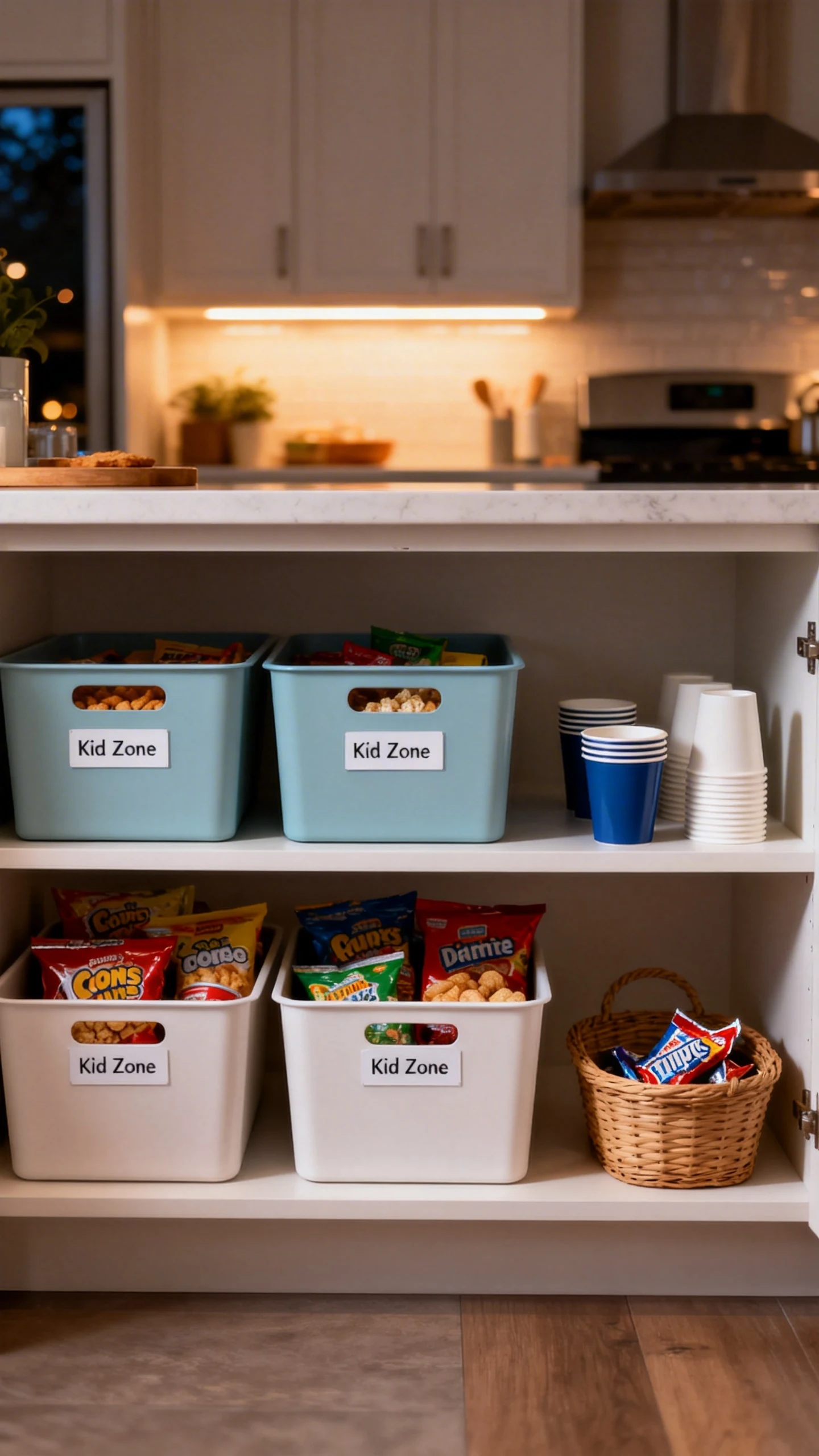
Here is the truth nobody loves hearing: organizing is not the hard part. Maintaining kitchen organization with kids is the part that tests your character.
The answer is to build in reset habits that are quick, obvious, and family-friendly. You do not need a military-level routine, just a few repeatable steps that stop clutter before it turns into a full kitchen mutiny.
Daily Habits That Keep The Kitchen Under Control
- Do a five-minute evening reset of kid zones and snack bins
- Return items to their home right after school or meals
- Check lunch gear nightly so mornings are easier
- Toss expired snacks and random wrappers during pantry checks
Kids are much more likely to help if the system is visual and easy. Think labeled bins, low shelves, and simple rules like “one cup out at a time” instead of a long speech nobody is listening to anyway.
Give them small ownership over the process. A child can refill napkins, restock snacks, or put clean cups back in their zone without much help, and that tiny bit of responsibility goes a long way.
Seasonal Edits Matter Too
As kids grow, their kitchen needs change fast. The toddler plates become unnecessary, the baby cups disappear, and suddenly you need room for giant sports bottles and endless snack bars.
Every few months, do a quick edit and ask yourself what still gets used. If it is taking up space but never leaves the shelf, it is probably just paying rent in your kitchen for no reason.
- Remove outgrown items
- Update labels as routines change
- Rotate school-year and summer snack setups
- Reassess what kids can safely access on their own
FYI, a flexible system is always better than a super rigid one. Family life changes constantly, so your kitchen should be able to roll with it without falling apart.
At the end of the day, the best kids kitchen organization ideas are the ones that make your life easier, not prettier for five minutes on social media. Start with one small zone, keep it simple, and let the system grow with your family.
Your kitchen does not need to be perfect. It just needs to work for the people using it every single day, sticky fingers and all.