25 Unique Wall Decor Ideas Beyond Basic Framed Prints
If your walls feel unfinished but you are tired of standard posters and framed prints, there are plenty of more tactile, dimensional, and personal options to try. These unique wall art ideas work in living rooms, bedrooms, dining spaces, entryways, kitchens, and small apartments where every surface needs to earn its place. The key is to think beyond flat paper and use texture, shape, lighting, storage, and found objects to create a wall that feels intentional.
1. Oversized Woven Wall Hanging
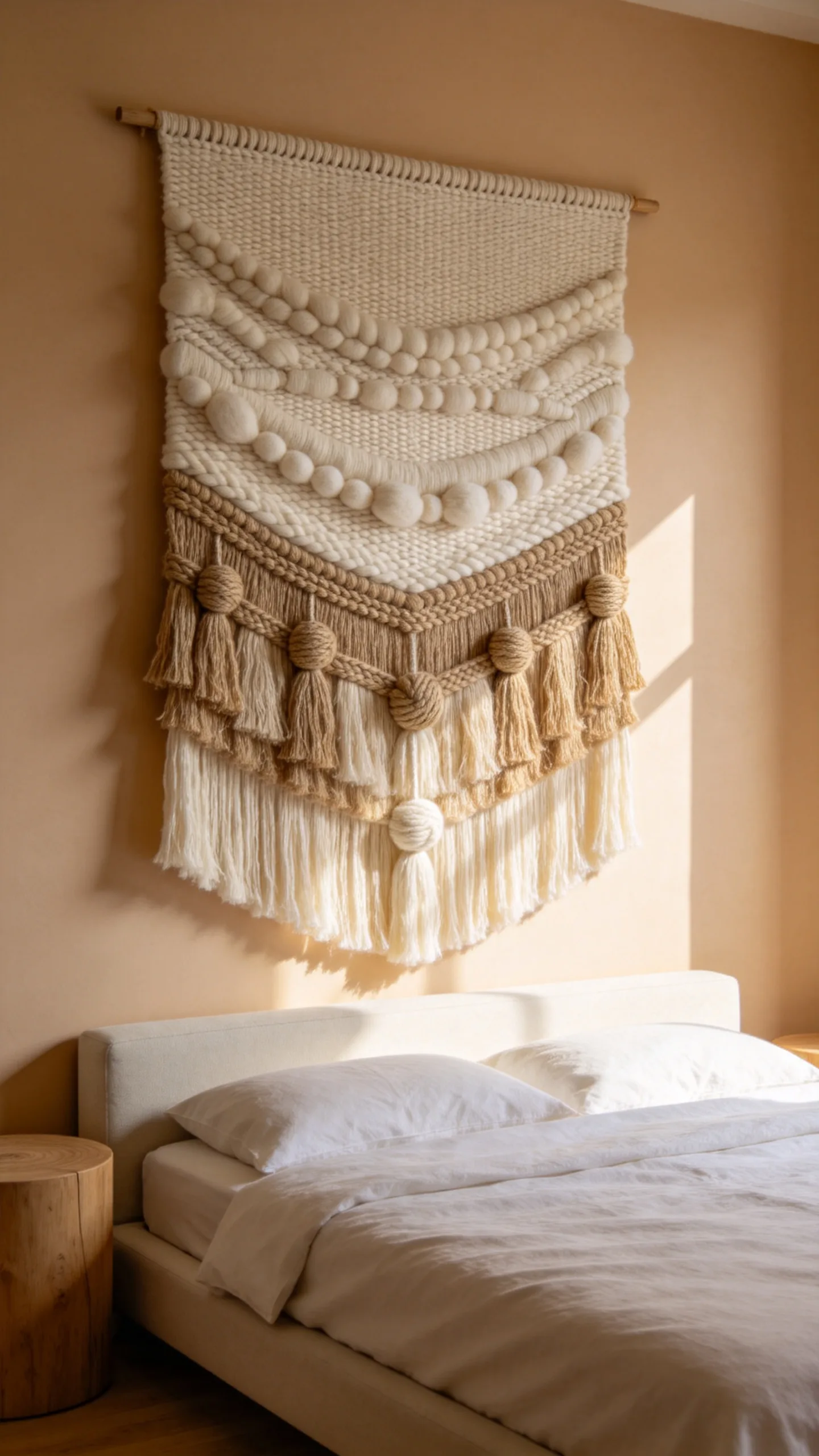
A large woven wall hanging can soften a living room, bedroom, or hallway without needing a heavy frame. Look for cotton, wool, jute, or macramé pieces with fringe, knots, or layered fibers. On a blank white, warm beige, or muted sage wall, the texture adds depth while still keeping the room calm.
This idea works especially well above a sofa, bed, or console table where a single large piece can act as a focal point. Choose a hanging that is about two-thirds the width of the furniture below it so it feels connected to the layout instead of floating randomly. In a small room, a light-colored textile keeps the wall interesting without making the space feel crowded.
2. Sculptural Metal Wall Piece
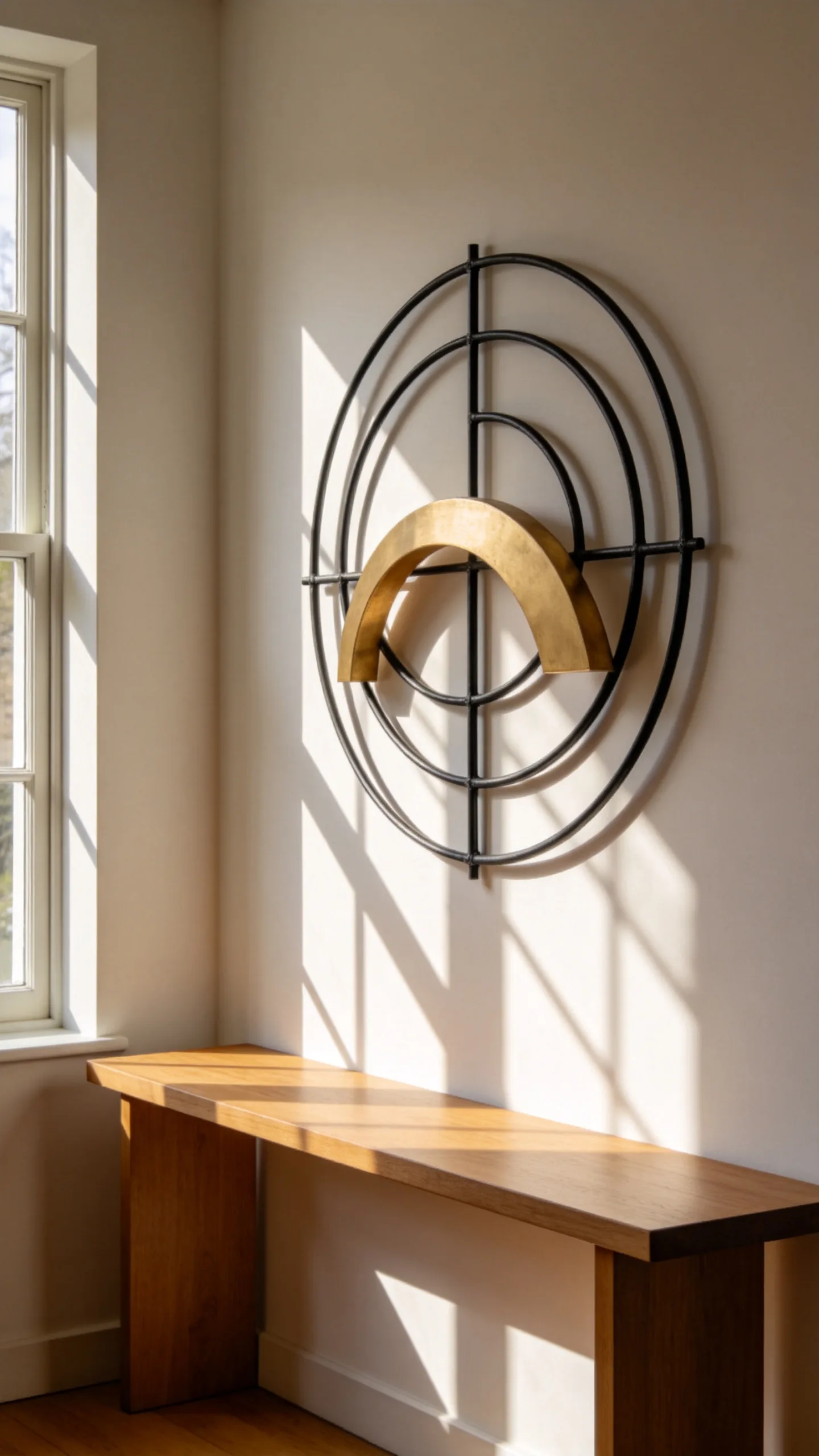
A sculptural metal wall piece brings shape and shadow to a plain wall, especially in a dining room, entryway, or modern living room. Brass, black iron, brushed nickel, or aged bronze can tie in with nearby lighting, cabinet hardware, curtain rods, or table legs.
Metal wall decor looks best where light can hit it from the side, such as near a sconce, picture light, or window. The shadows become part of the design, making the wall feel layered. For a narrow hallway, choose a flatter piece with open lines so it adds interest without sticking out into the traffic path.
3. Floating Shelf Art Display
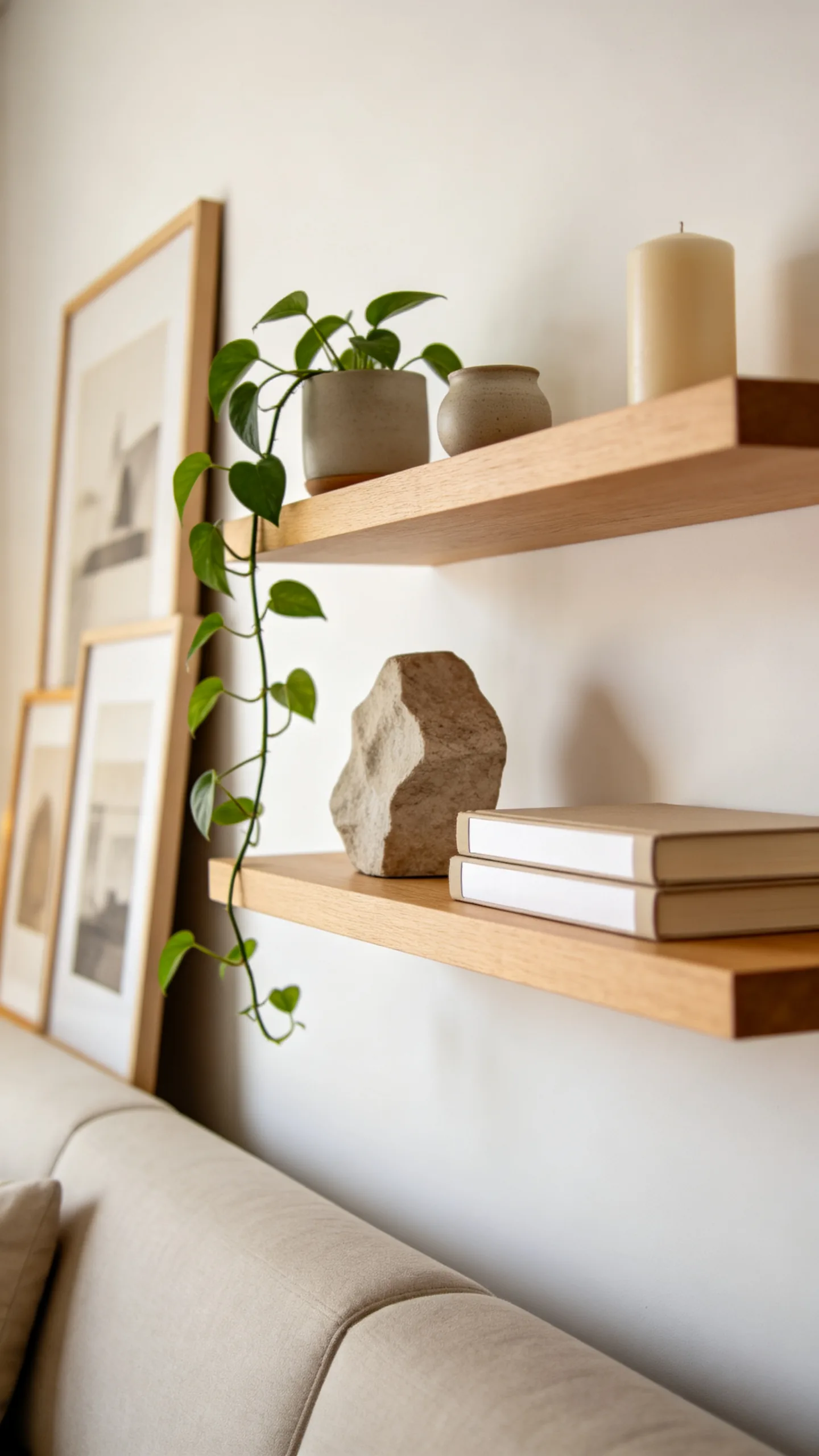
Floating shelves turn wall decor into a flexible, layered arrangement. Instead of hanging one flat print, you can mix small ceramics, leaning art cards, candles, trailing plants, sculptural objects, and favorite books. This works well above a desk, in a kitchen breakfast nook, or on a living room wall that needs both style and function.
Use shelves in wood, painted MDF, metal, or glass depending on the room. In small spaces, shallow shelves keep sightlines open while giving you a place to style objects vertically. Leave breathing room between items so the shelf does not become visual clutter.
4. Vintage Plates Arranged as Wall Art
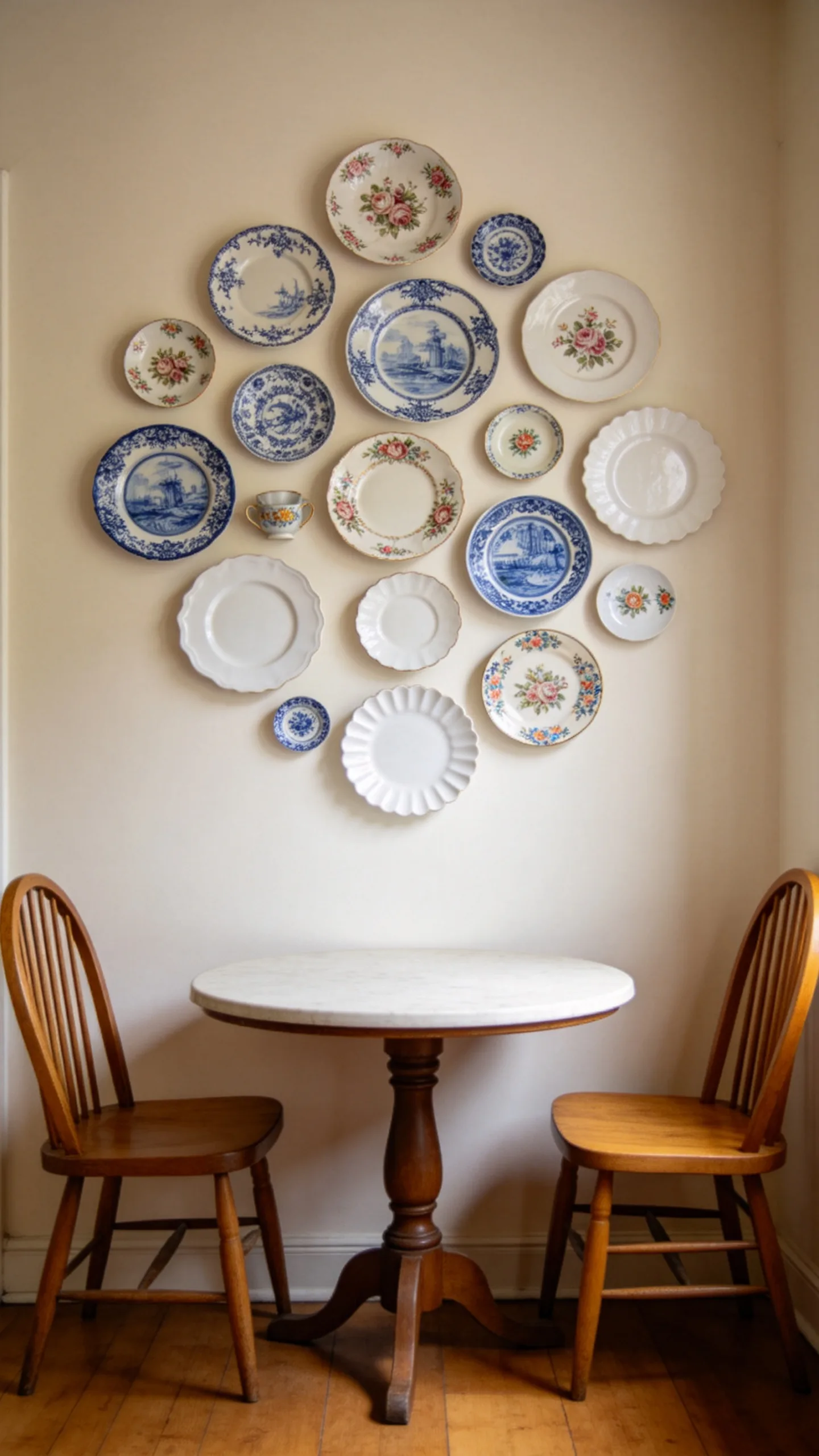
Vintage plates can make a dining room, kitchen, or breakfast nook feel collected and personal. Mix floral china, transferware, hand-painted ceramics, or simple white plates with scalloped edges. The round shapes break up rooms filled with rectangular cabinets, tables, and windows.
Before hanging, lay the plates on the floor and test the arrangement. A loose cluster feels casual, while a symmetrical grid looks more formal. Use secure plate hangers and keep the display away from doors that slam or narrow walkways where it could be bumped.
5. Large Decorative Mirror With an Unusual Frame
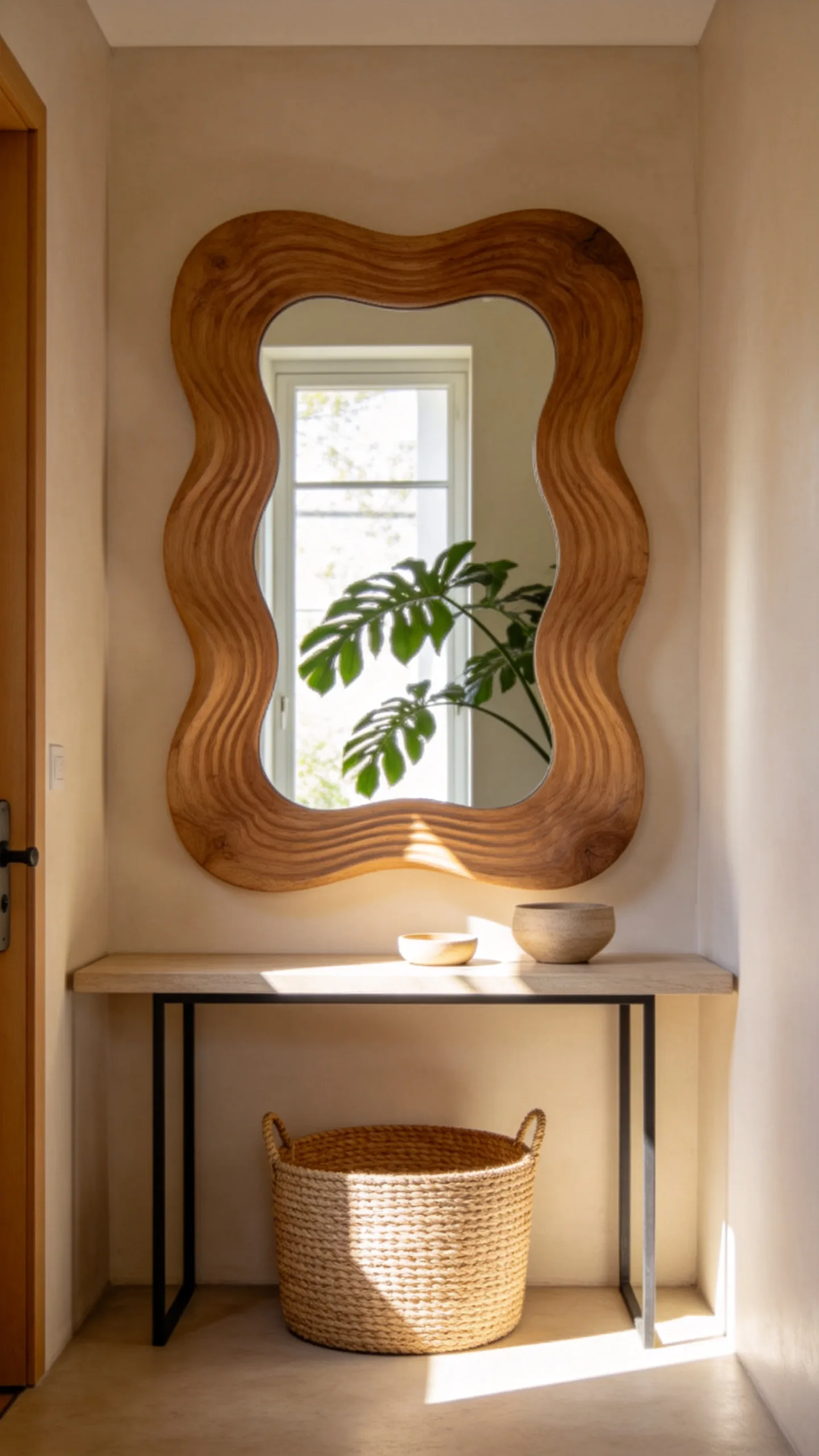
A mirror can function as wall art while also bouncing light around the room. Instead of a basic rectangle, try a wavy, arched, sunburst, carved wood, rattan, antique brass, or irregular organic frame. This is especially useful in entryways, small living rooms, bedrooms, and dark corners.
Place the mirror where it reflects something attractive, such as a window, plant, pendant light, or styled shelf. In a small room, a mirror can visually expand the wall and improve sightlines, but avoid reflecting cluttered countertops or laundry piles. The frame should relate to another material in the room, such as wood furniture, woven baskets, or warm metal lighting.
6. Textile Panels or Fabric Yardage
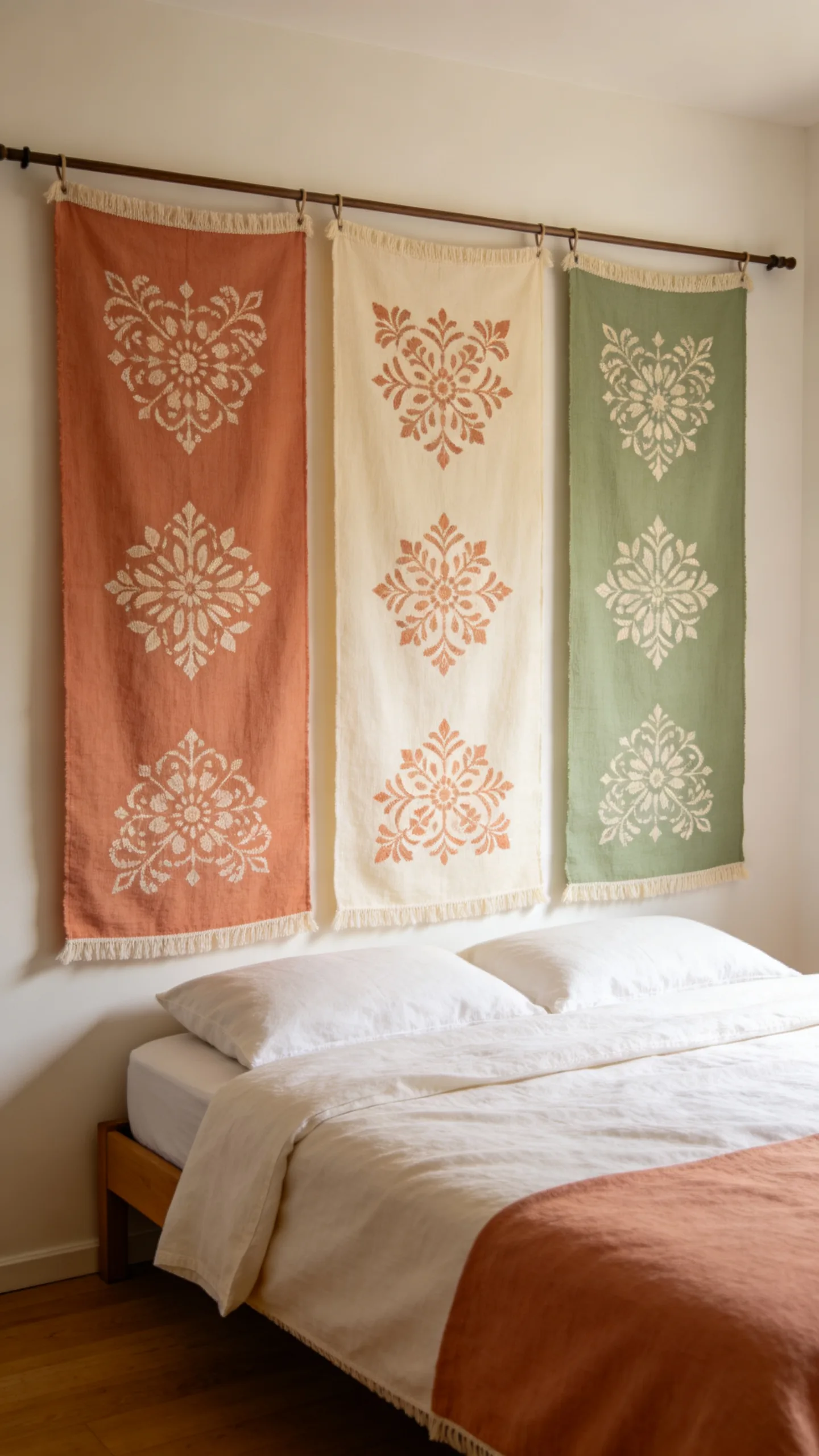
Fabric can become affordable, large-scale wall decor when stretched, hung from a rod, or displayed in panels. Consider block-printed cotton, linen, mud cloth, batik, vintage scarves, embroidered fabric, or patterned upholstery remnants. This is a strong choice for bedrooms, rental apartments, and rooms where you want softness without adding more furniture.
A textile panel behind a bed can act like an alternative headboard, adding color and pattern without taking up floor space. In a living room, a wide fabric piece can warm up a plain wall and reduce the feeling of emptiness. Keep the fabric taut and hemmed or neatly clipped so it looks intentional rather than temporary.
7. Basket Wall Arrangement
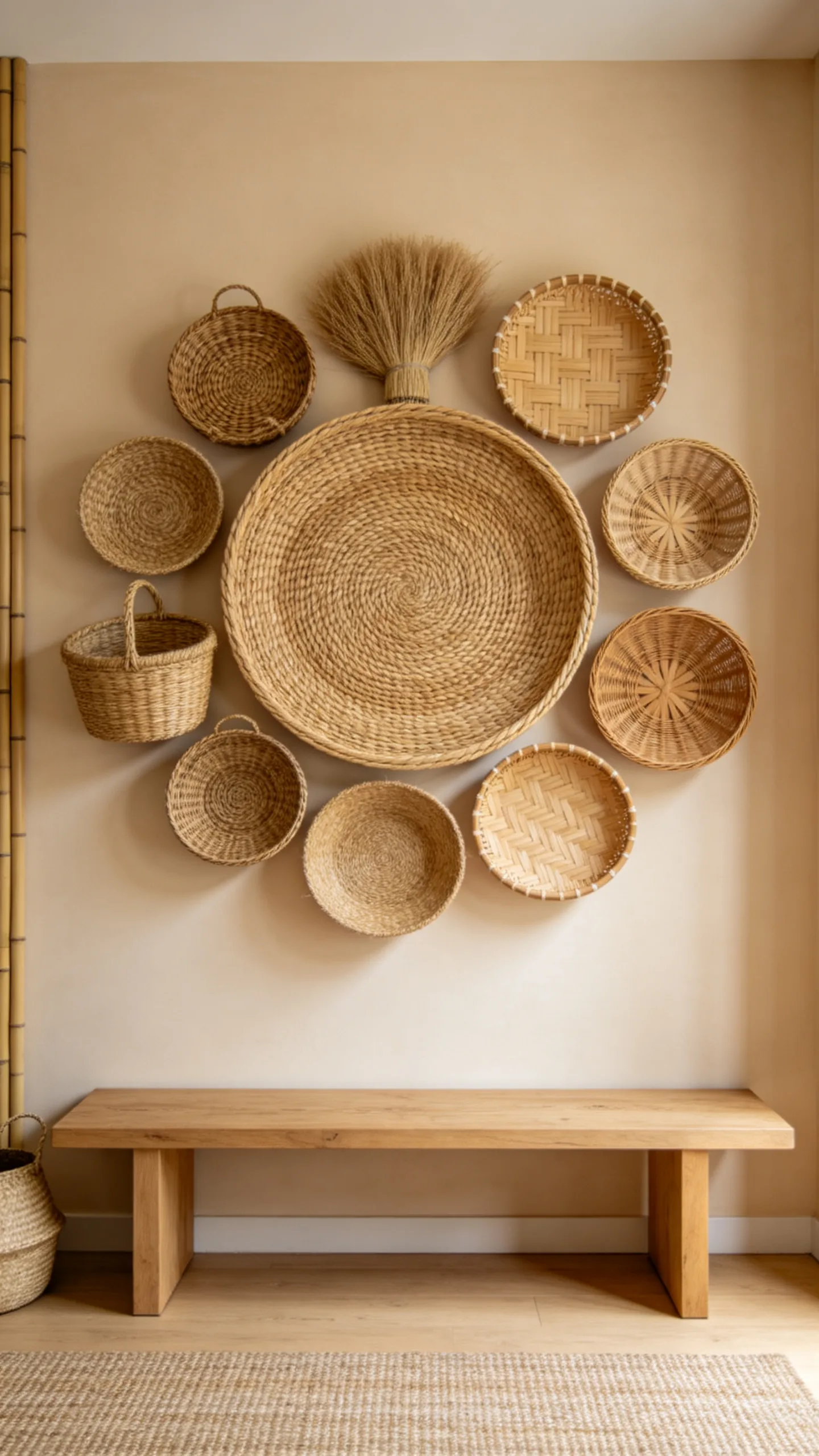
A basket wall adds texture, pattern, and warmth using woven materials like seagrass, rattan, bamboo, sisal, or raffia. It works beautifully in dining rooms, stair landings, nurseries, boho bedrooms, and neutral living rooms. The natural materials can balance painted drywall, smooth cabinets, or sleek modern furniture.
Choose baskets in varied sizes and weaving patterns, but keep the color palette controlled so the arrangement feels cohesive. Start with the largest basket slightly off-center, then build around it with smaller pieces. In small rooms, baskets are lightweight and shallow, so they add impact without blocking traffic flow or taking up valuable surfaces.
8. Wall-Mounted Plant Holders
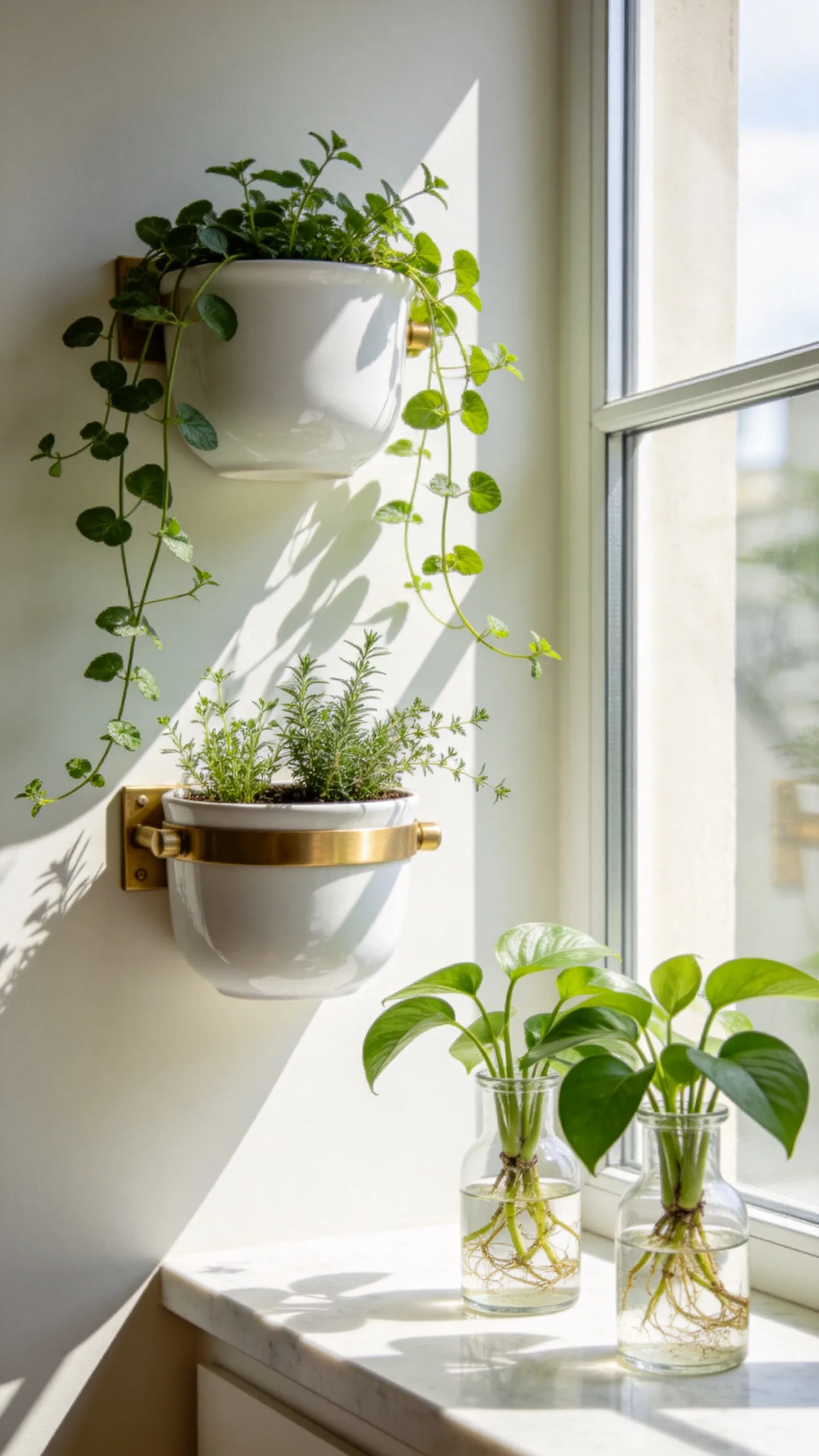
Wall-mounted plant holders bring greenery to vertical space, making them ideal for apartments, kitchens, bathrooms, and small living rooms with limited floor area. Try ceramic pockets, brass planters, wooden propagation shelves, or wall-mounted glass vases. Plants like pothos, philodendron, ferns, air plants, or trailing hoya can add movement and softness.
Consider the light level before choosing the plant wall location. A bright kitchen wall near a window can handle herbs or succulents, while a shaded hallway may need low-light plants or realistic faux stems. Keep planters mounted securely and choose containers with proper liners to protect the wall from water marks.
9. Decorative Wall Hooks With Styled Accessories
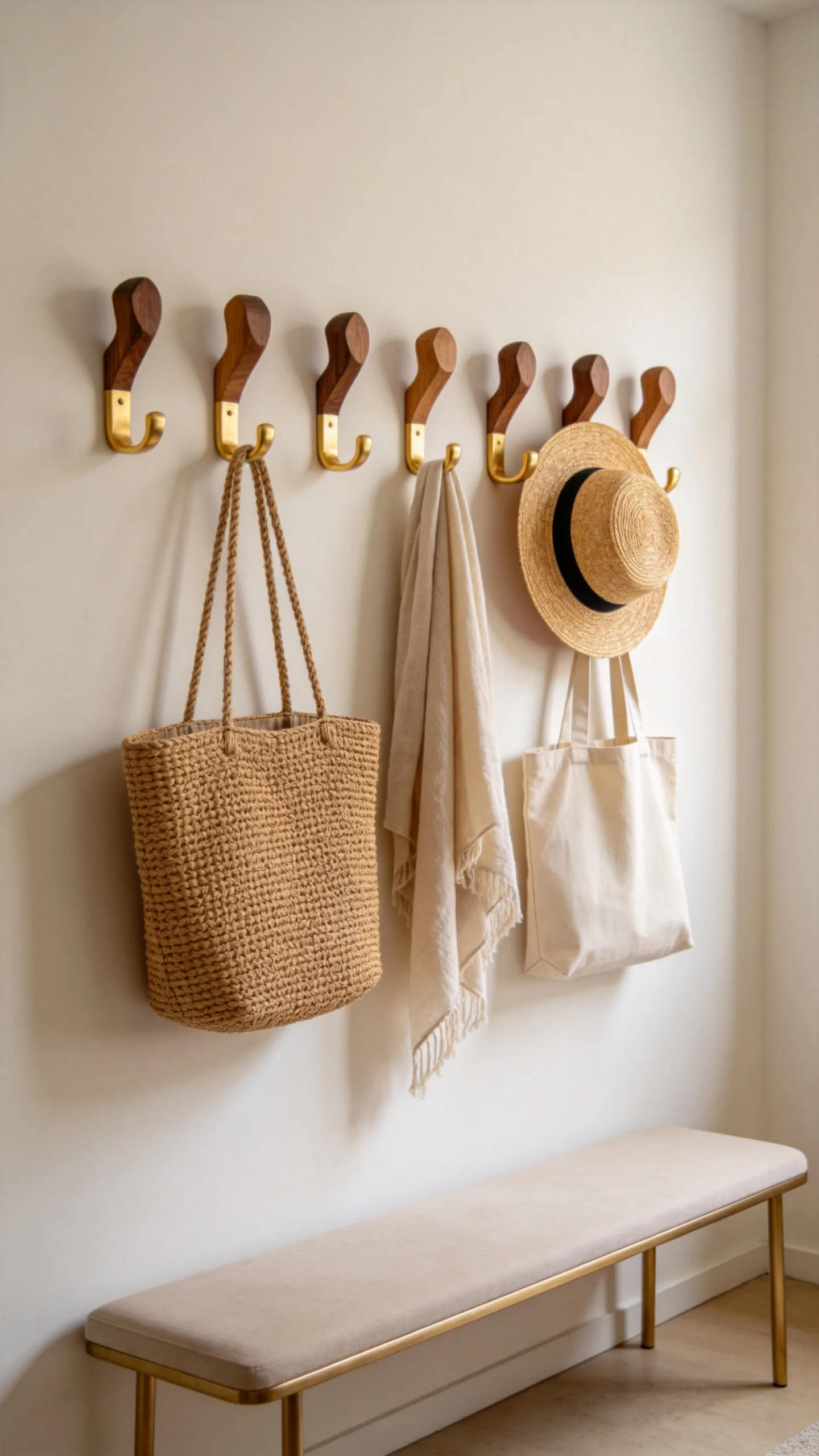
Wall hooks can be both practical and decorative, especially in entryways, mudrooms, bedrooms, and bathrooms. Instead of plain utility hooks, use sculptural wood pegs, brass hooks, ceramic knobs, black iron rails, or vintage coat hooks. The accessories you hang become part of the wall decor.
Style hooks with woven bags, straw hats, linen robes, market totes, or a lightweight scarf. This keeps everyday items visible but attractive. In tight spaces, hooks use vertical storage and keep floors clear, improving traffic flow near doors and narrow hallways.
10. Architectural Salvage as Wall Decor
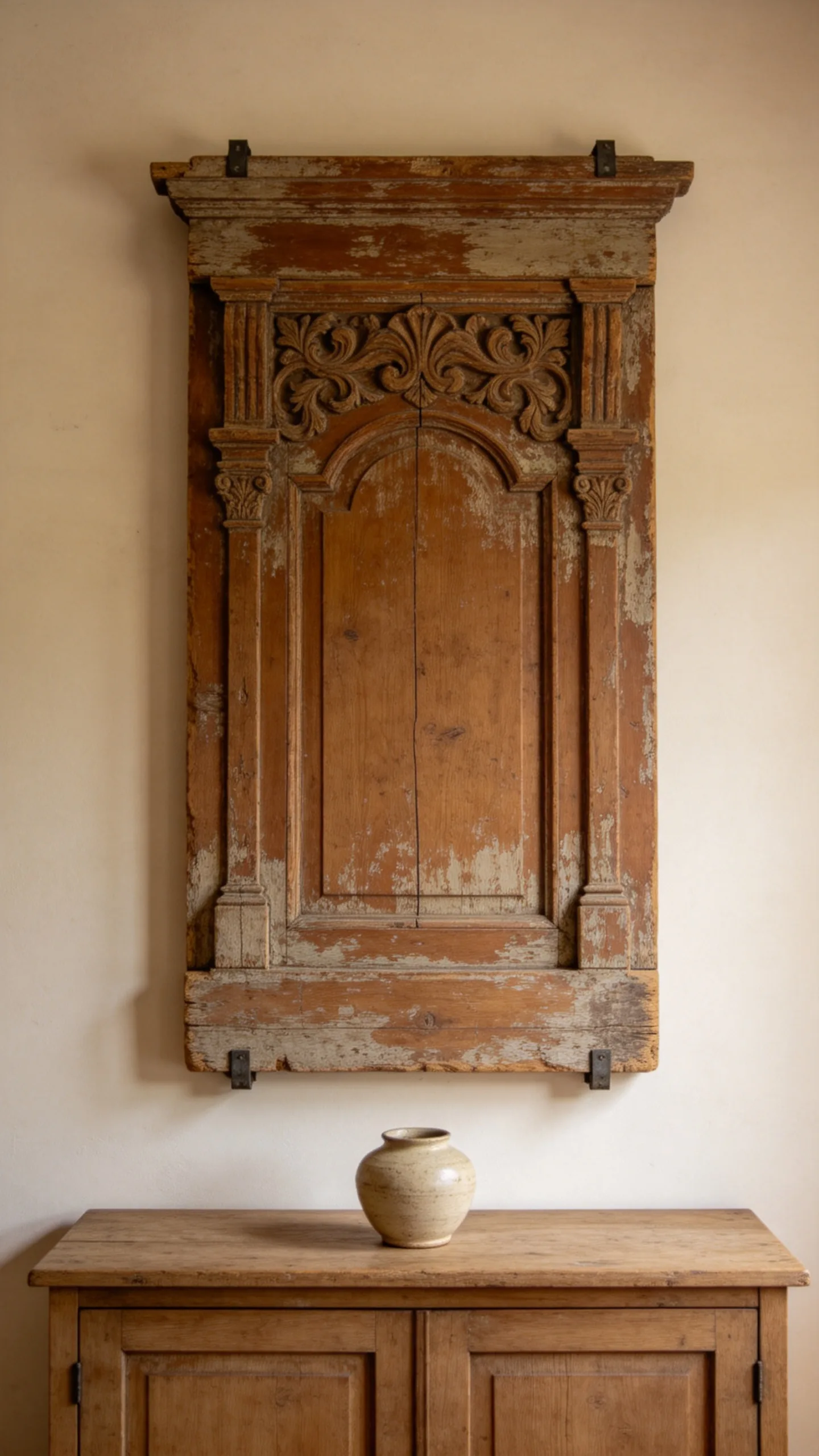
Architectural salvage gives a wall character that new decor often cannot. Look for old window frames, carved wood panels, corbels, shutters, ceiling medallions, tin tiles, or decorative grilles. These pieces work well in farmhouse, cottage, vintage, industrial, and eclectic rooms.
Use one large salvage piece above a mantel, sideboard, or bed, or hang a pair for symmetry. Keep scale in mind: a heavy wood panel needs enough blank wall around it to breathe. If the piece has rough edges or chipping paint, make sure it is sealed and securely mounted, especially in bedrooms and dining areas.
11. Ceramic Wall Tiles in a Mini Installation
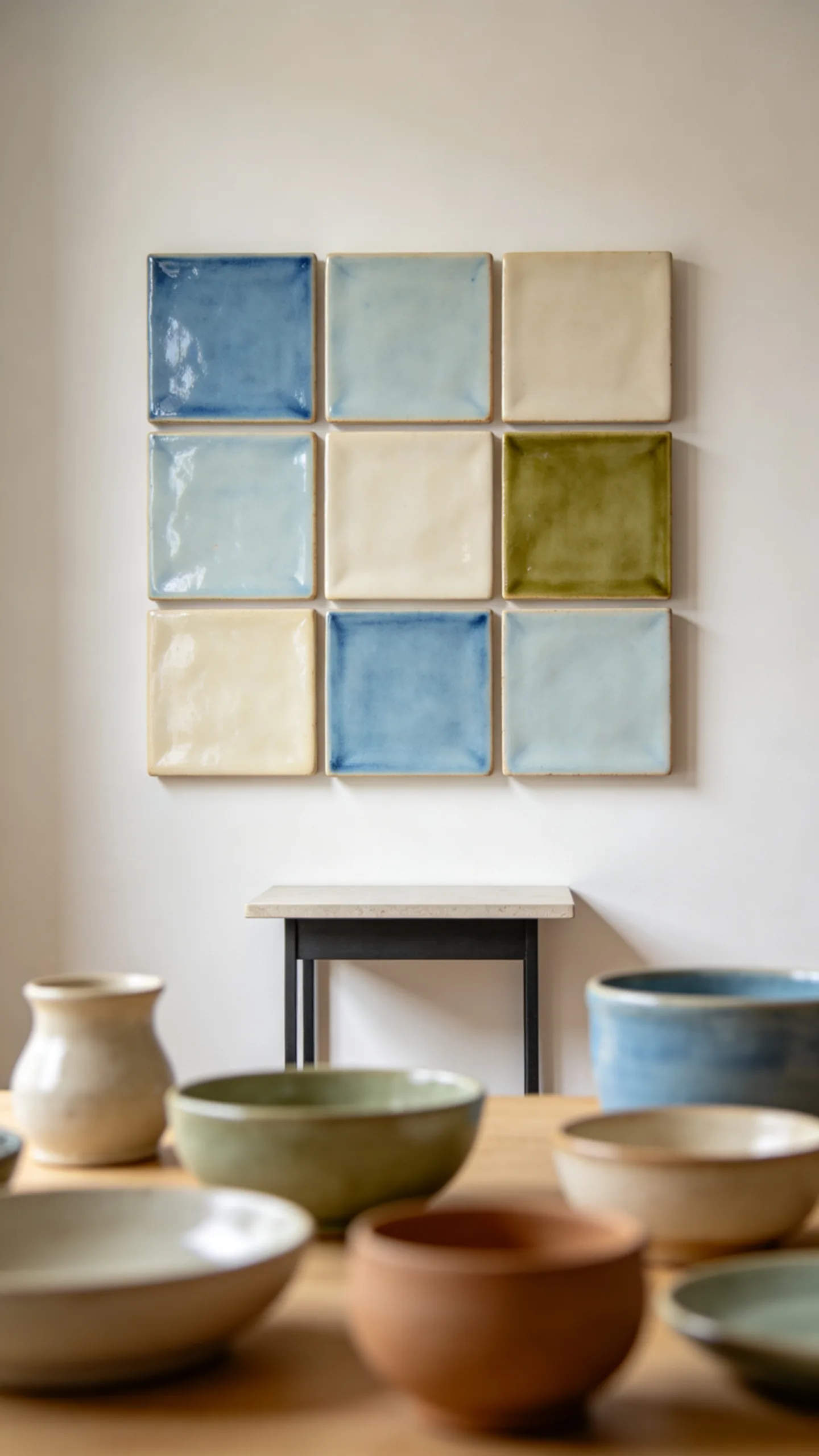
A small grouping of decorative ceramic tiles can create an artful moment in a kitchen, bathroom, laundry room, or hallway. This does not require a full backsplash renovation. You can mount individual handmade tiles, patterned zellige-style pieces, relief tiles, or vintage tiles on a board or directly on the wall with appropriate hardware.
Tiles bring shine, color variation, and craftsmanship to spaces that already include hard surfaces. A set of four to nine tiles above a bar cart, sink nook, or small console can feel like a curated installation. Choose colors that connect to cabinet paint, countertop tones, or nearby textiles.
12. Statement Wall Clock
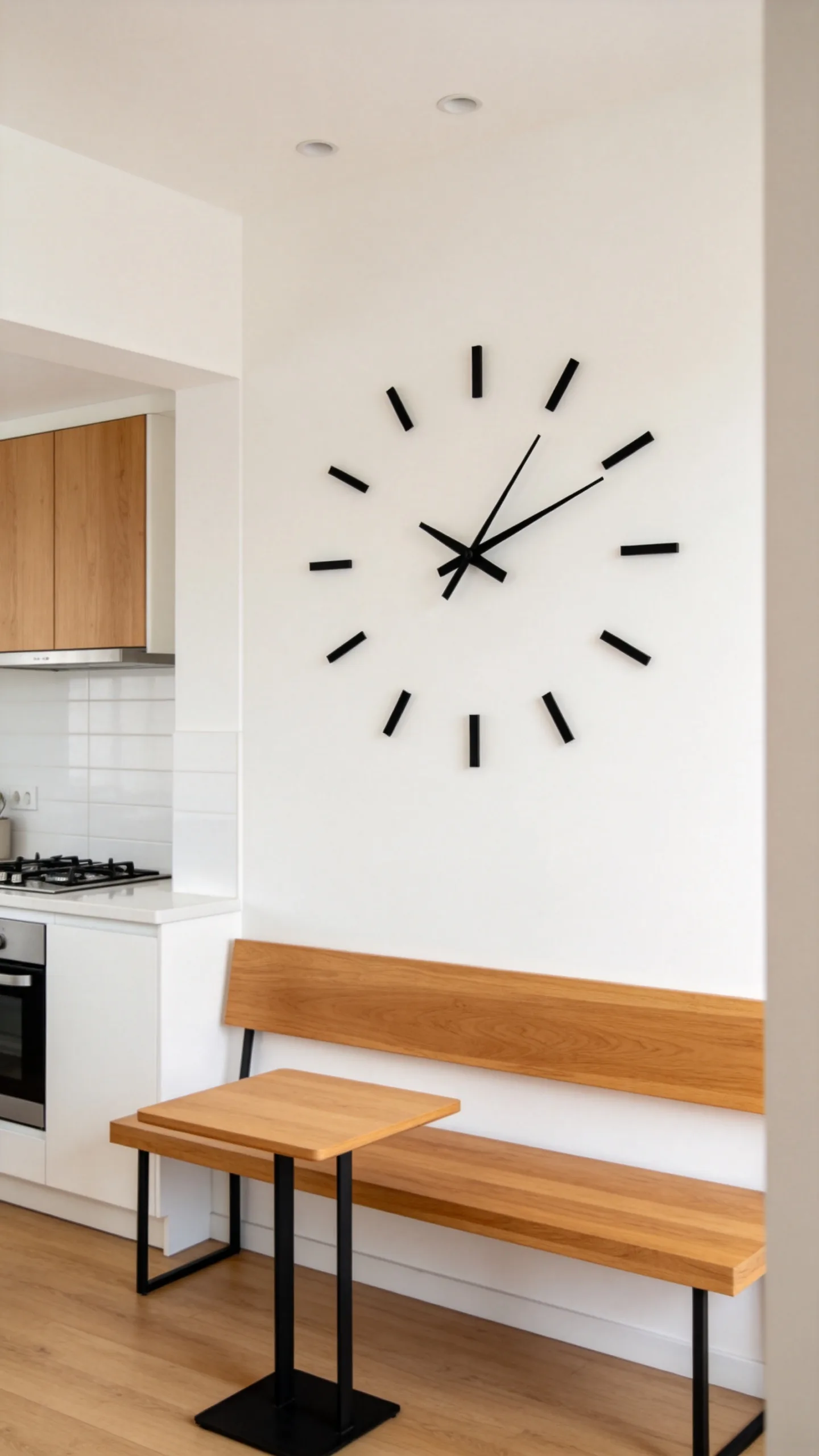
A wall clock can be more than a timepiece when it has a bold shape, oversized scale, or distinctive material. Try a minimalist black clock on a white kitchen wall, a carved wood clock above a console, or a brass clock in a home office. This is a practical alternative to framed art in spaces where function matters.
Scale is important. A tiny clock on a large wall can look accidental, while an oversized clock can anchor a dining nook or open-plan kitchen wall. Choose a quiet mechanism for bedrooms or offices so the ticking does not become distracting.
13. Mounted Musical Instruments
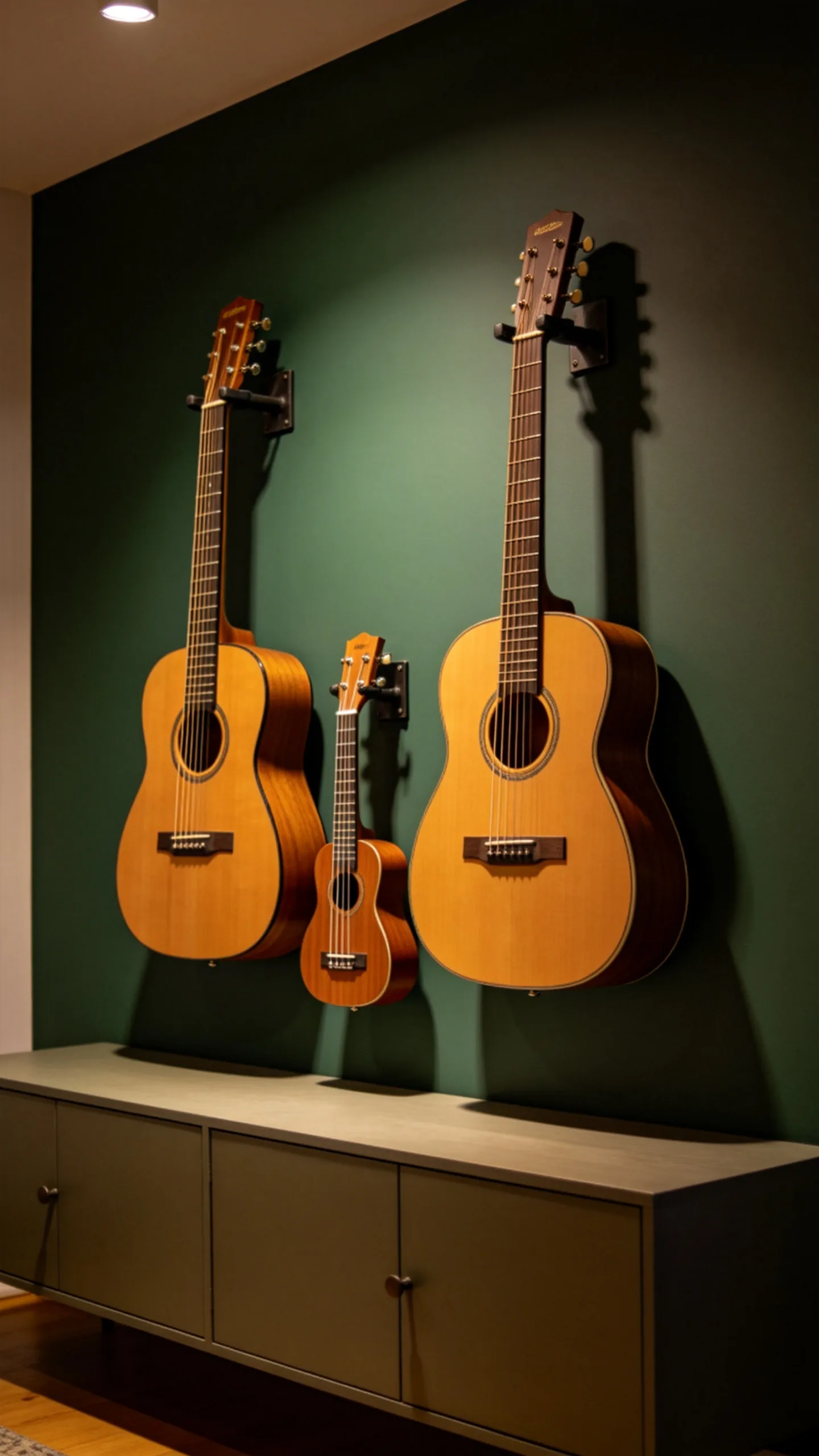
Musical instruments can become meaningful wall decor when displayed carefully. Guitars, violins, ukuleles, brass instruments, hand drums, or vintage tambourines can add shape and personality to a living room, music room, bedroom, or studio corner. This works especially well when the instrument is actually used and easy to access.
Use proper wall mounts designed for the instrument’s weight and shape. Leave enough clearance around the piece so it looks displayed rather than stored. On dark walls, wood instruments feel warm and dramatic; on light walls, they create a graphic silhouette.
14. Framed Wallpaper Panels Without Standard Prints
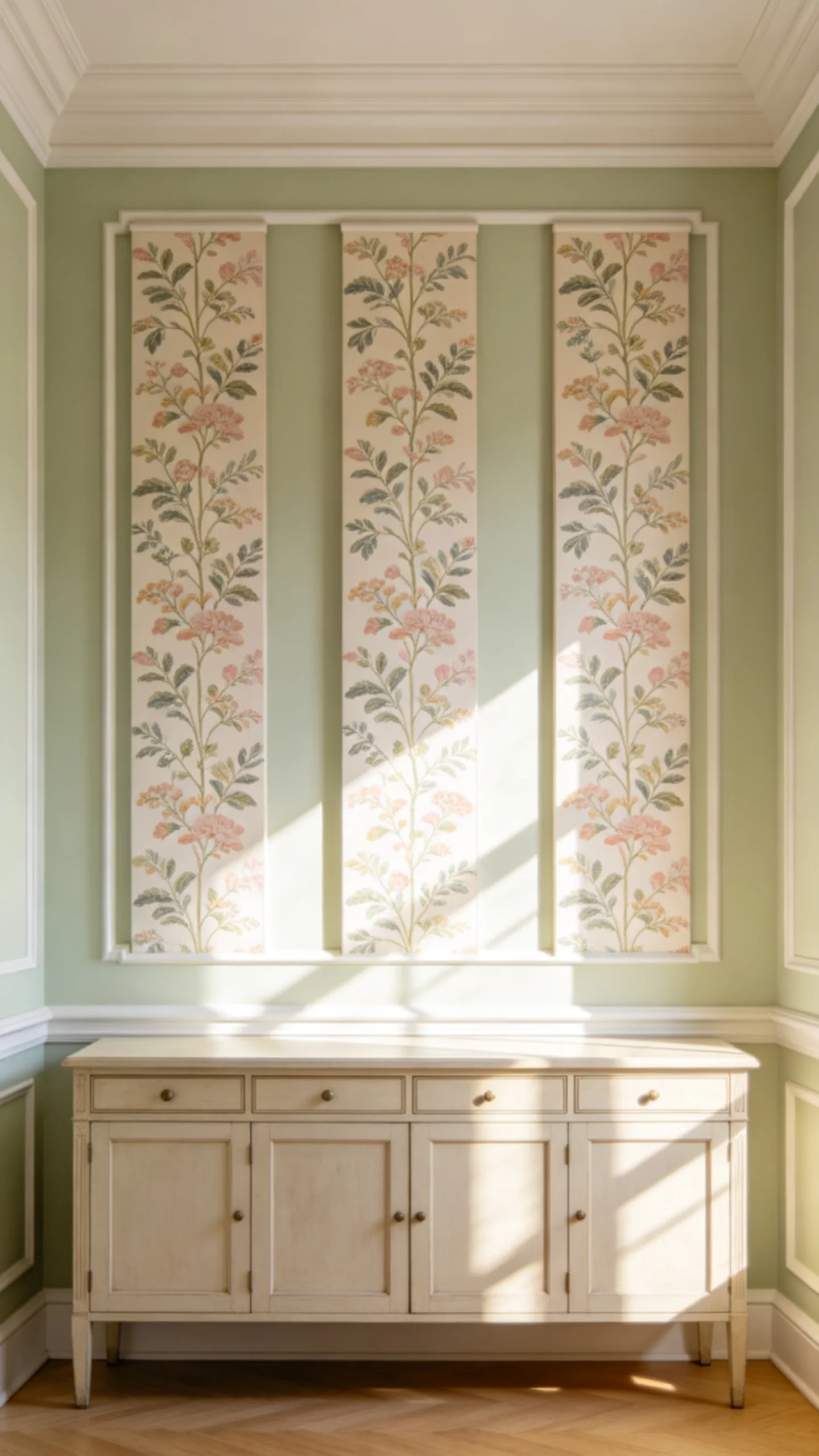
Wallpaper panels offer pattern and color without committing to a full room. Instead of hanging basic art prints, mount a few panels of botanical, geometric, chinoiserie, grasscloth, or mural-style wallpaper in trim frames or directly within wall molding. This is useful for dining rooms, bedrooms, powder rooms, and apartment living rooms.
Choose wallpaper that relates to the room’s palette. A soft floral panel can echo bedding colors, while a bold geometric panel can connect to a rug. For renters, removable wallpaper applied to foam board or lightweight panels can give the same look with less permanence.
15. Wood Slat Accent Panel
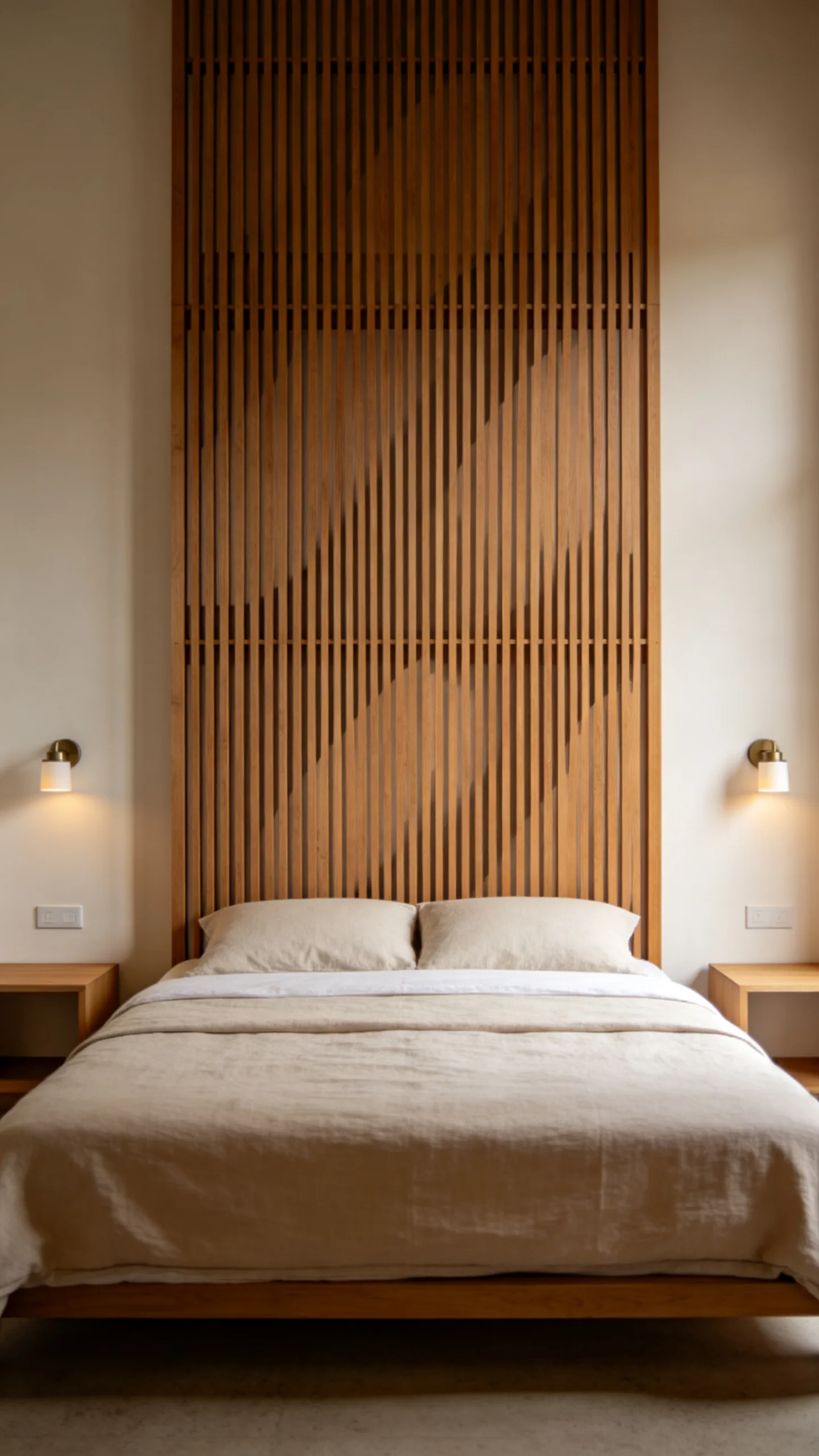
A wood slat accent panel adds rhythm and texture to a wall without requiring a full remodel. Use narrow oak, walnut, pine, or painted slats behind a bed, TV console, desk, or entry bench. Vertical slats draw the eye upward, which can help a room feel taller.
This idea works especially well in small rooms because the linear pattern creates movement without needing bulky furniture. Keep the depth shallow so it does not interrupt walkways. Pair wood slats with simple lighting, neutral upholstery, and uncluttered surfaces so the wall remains the focal point.
16. Gallery of Empty Vintage Frames
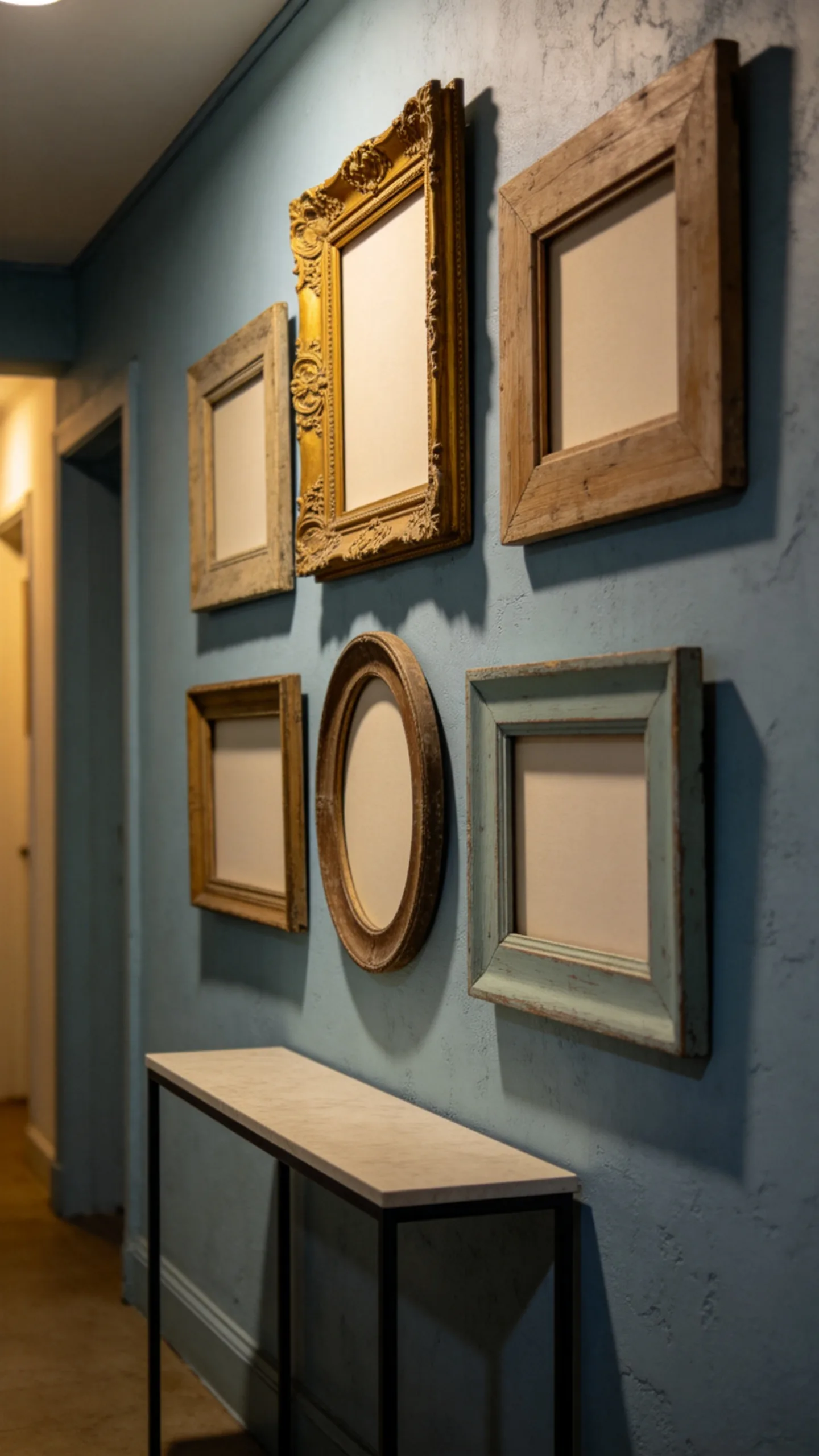
Empty vintage frames can create a layered wall display without using any prints at all. Mix ornate gold frames, simple wood frames, oval frames, or painted frames in a controlled palette. This works in bedrooms, staircases, hallways, and above console tables.
The beauty comes from the shapes, finishes, and negative space inside each frame. For a cohesive look, keep the frames close enough that they read as one arrangement. On a colored wall such as deep green, charcoal, or dusty blue, empty frames can look especially dimensional because the wall color shows through.
17. Tapestry or Rug Hung on the Wall
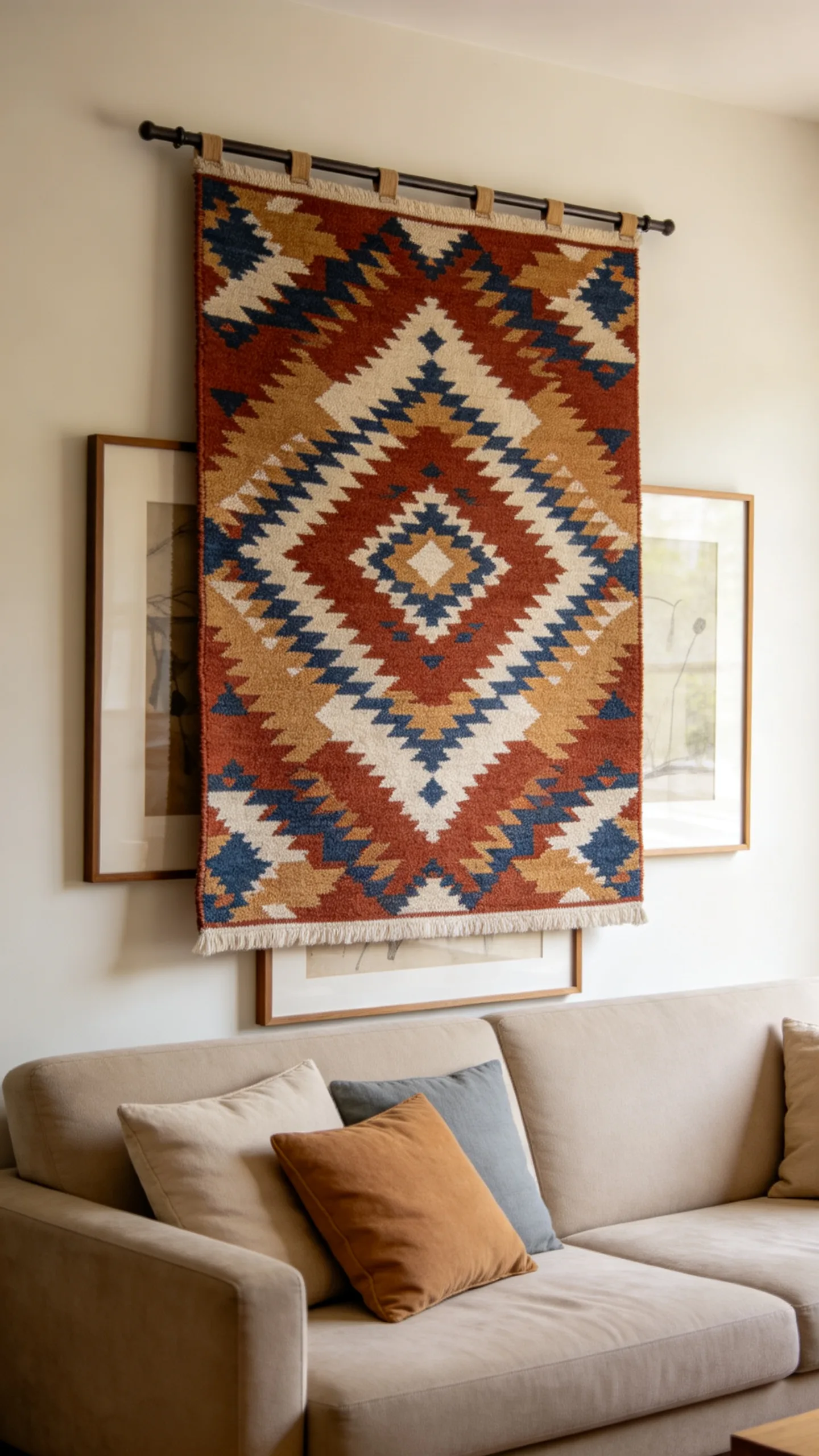
A lightweight rug or tapestry can make a large wall feel warm and finished. Flatweave rugs, kilims, vintage runners, embroidered textiles, and patterned tapestries are especially effective above sofas, beds, and dining benches. They add softness, color, and pattern on a larger scale than most framed art.
Use a proper textile hanger, rug clips, or a hidden rod to distribute the weight evenly. Avoid thick, heavy rugs unless the wall and hardware can support them. In rooms with hard flooring, a wall textile can visually balance the floor rug and make the space feel more layered.
18. Neon or LED Wall Sign
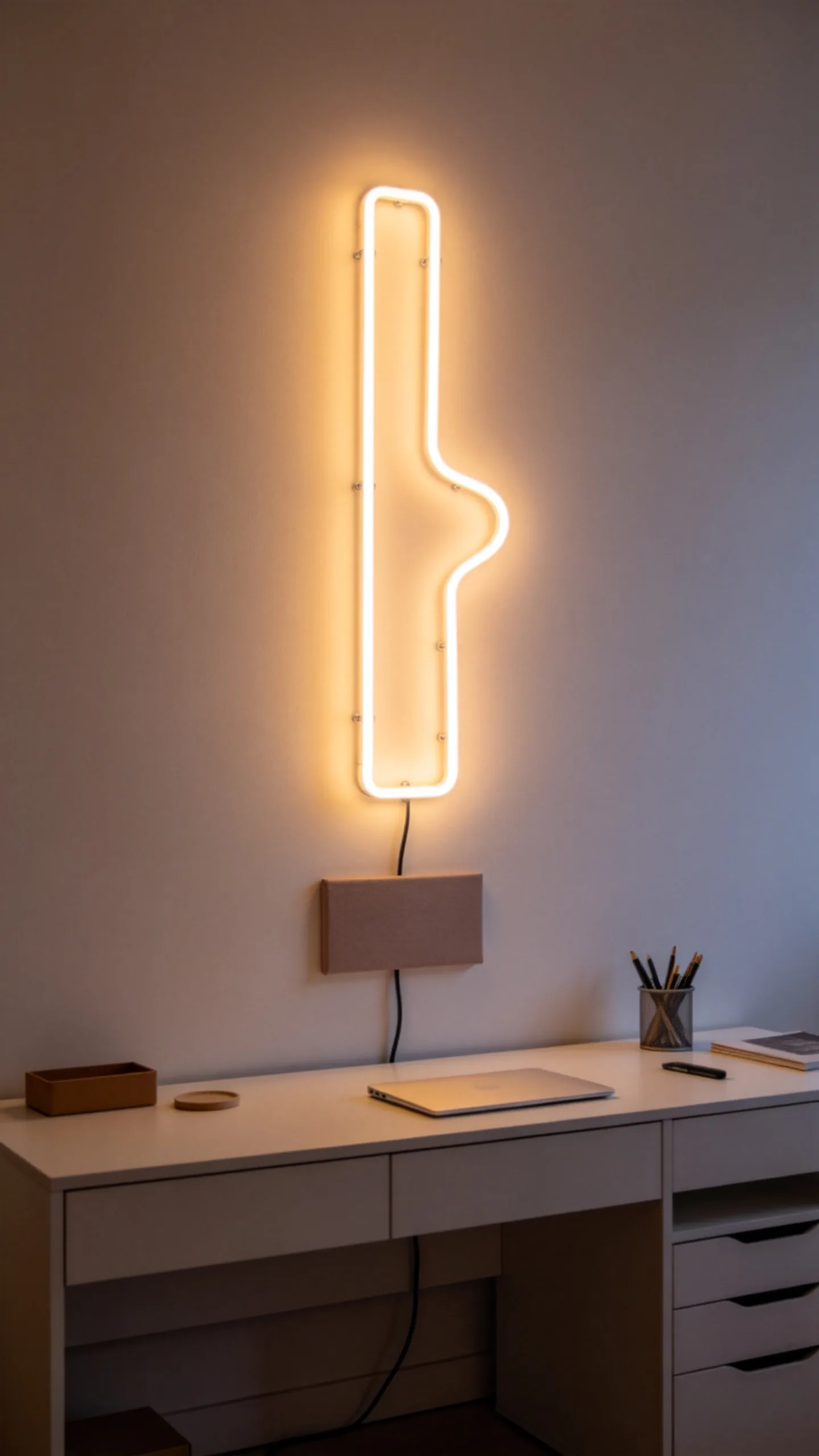
A neon or LED wall sign can bring playful lighting to a bedroom, home bar, game room, teen room, or creative workspace. Instead of a generic phrase, choose a simple shape, abstract line, initial, favorite word, or custom color that fits the room’s mood. Warm white, soft pink, amber, or blue lighting can change the atmosphere immediately.
Place the sign near an outlet or plan cord management with a cord cover painted the wall color. A neon-style sign works best on a wall that is not already crowded, such as above a bar cart, desk, or low cabinet. The glow can serve as accent lighting in the evening while also acting as wall decor during the day.
19. Wall-Mounted Candle Sconces
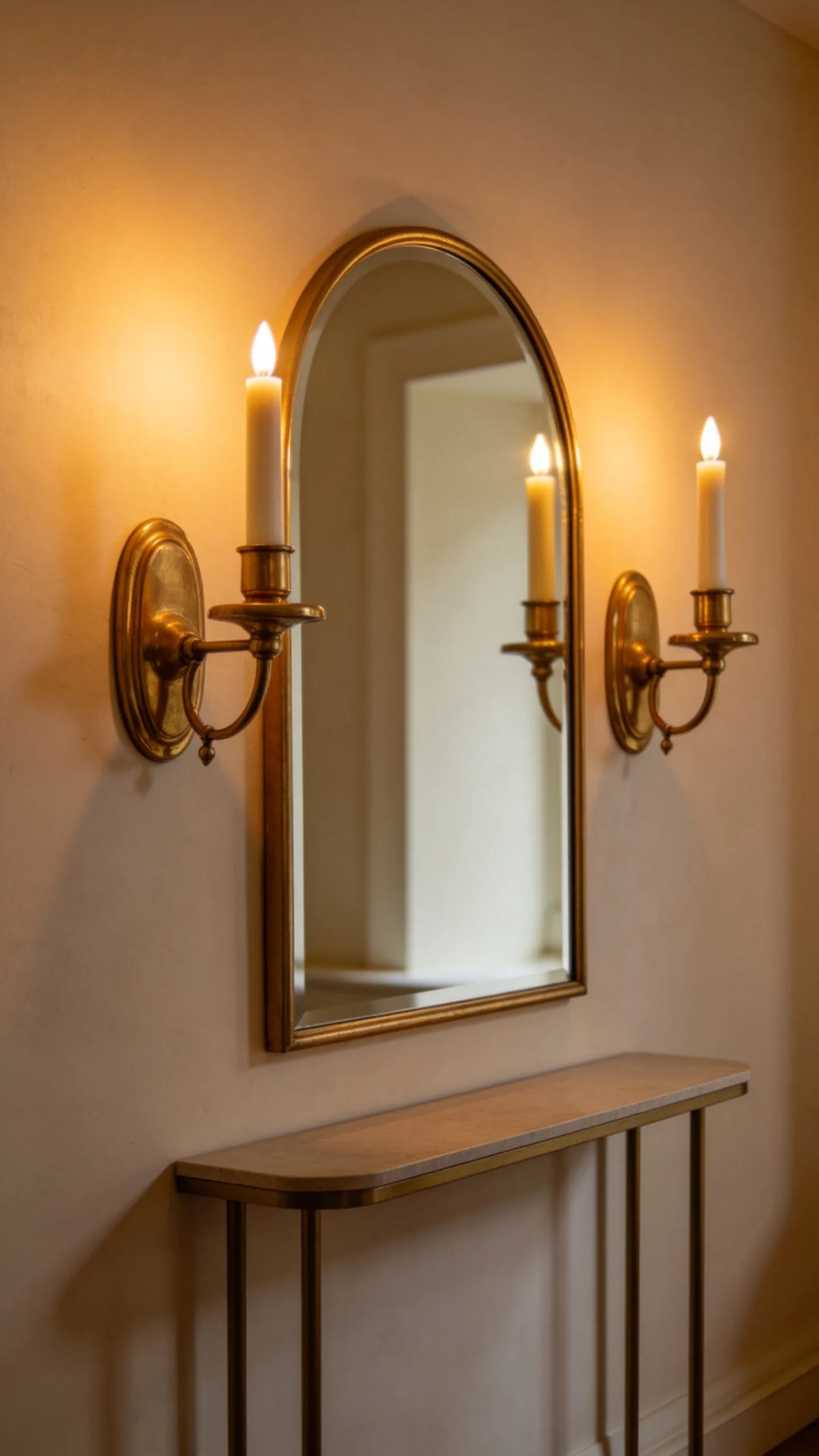
Candle sconces add depth, symmetry, and old-world charm to walls in dining rooms, bedrooms, bathrooms, and entryways. Choose brass, black iron, ceramic, wood, or glass styles depending on the room. Battery-operated taper candles are a practical option where open flames are not ideal.
Install sconces in pairs beside a mirror, over a console table, or flanking a mantel. The vertical shape helps fill narrow wall spaces that are too small for large art. In a dim hallway, sconces can make the wall feel designed even when they are not hardwired.
20. Peg Rail With Rotating Decor
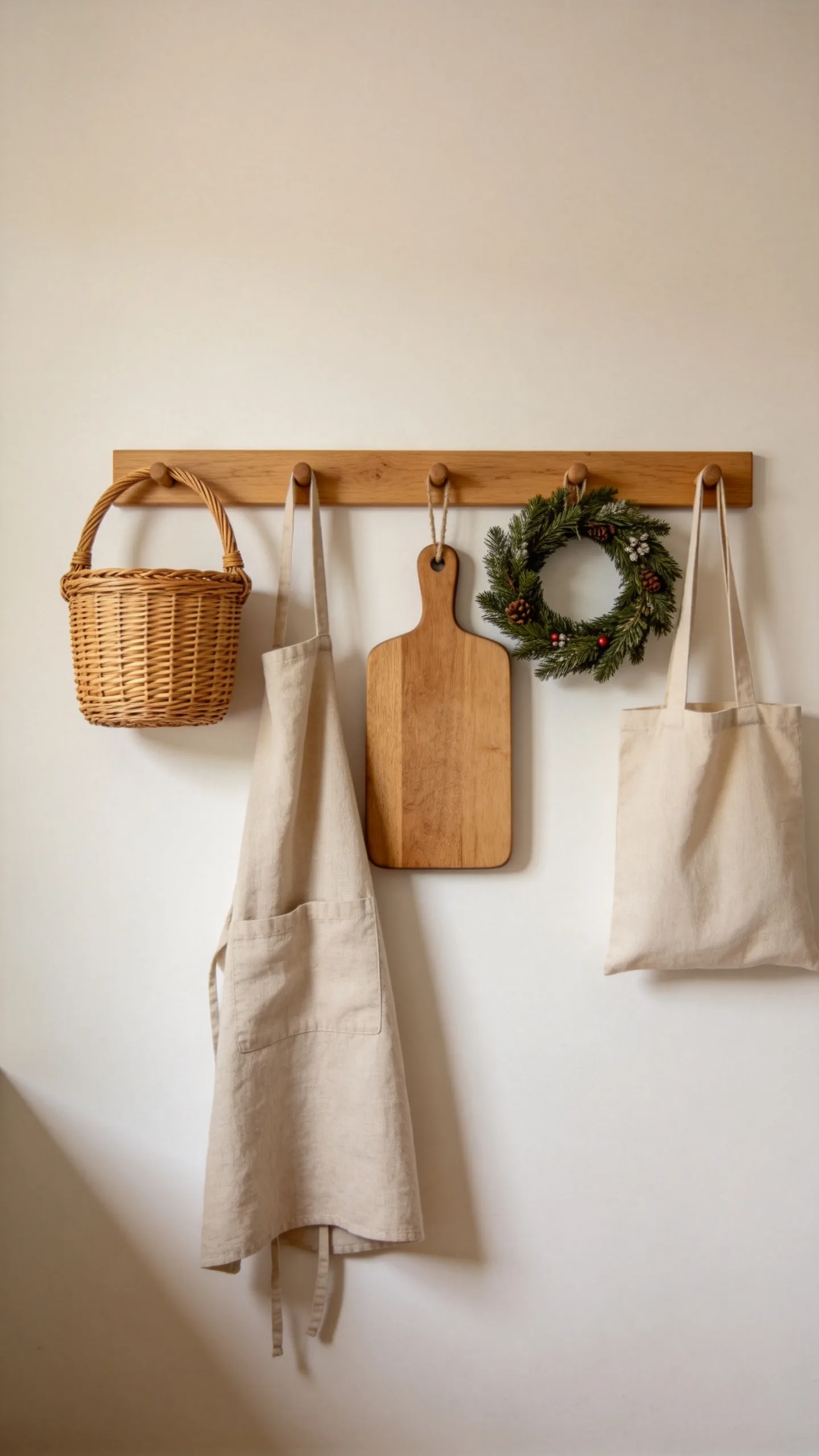
A peg rail is a simple, functional wall feature that can be styled differently throughout the year. It works in kitchens, mudrooms, bedrooms, laundry rooms, and entryways. Use it to hang baskets, aprons, cutting boards, small wreaths, linen bags, hats, or seasonal greenery.
Paint the peg rail the same color as the wall for a subtle built-in look, or use natural wood for contrast. In small spaces, a peg rail keeps items off the floor and gives the wall a horizontal line that can visually organize the room. Keep the display edited so it does not become a catchall for clutter.
21. Decorative Cutting Boards on a Kitchen Wall
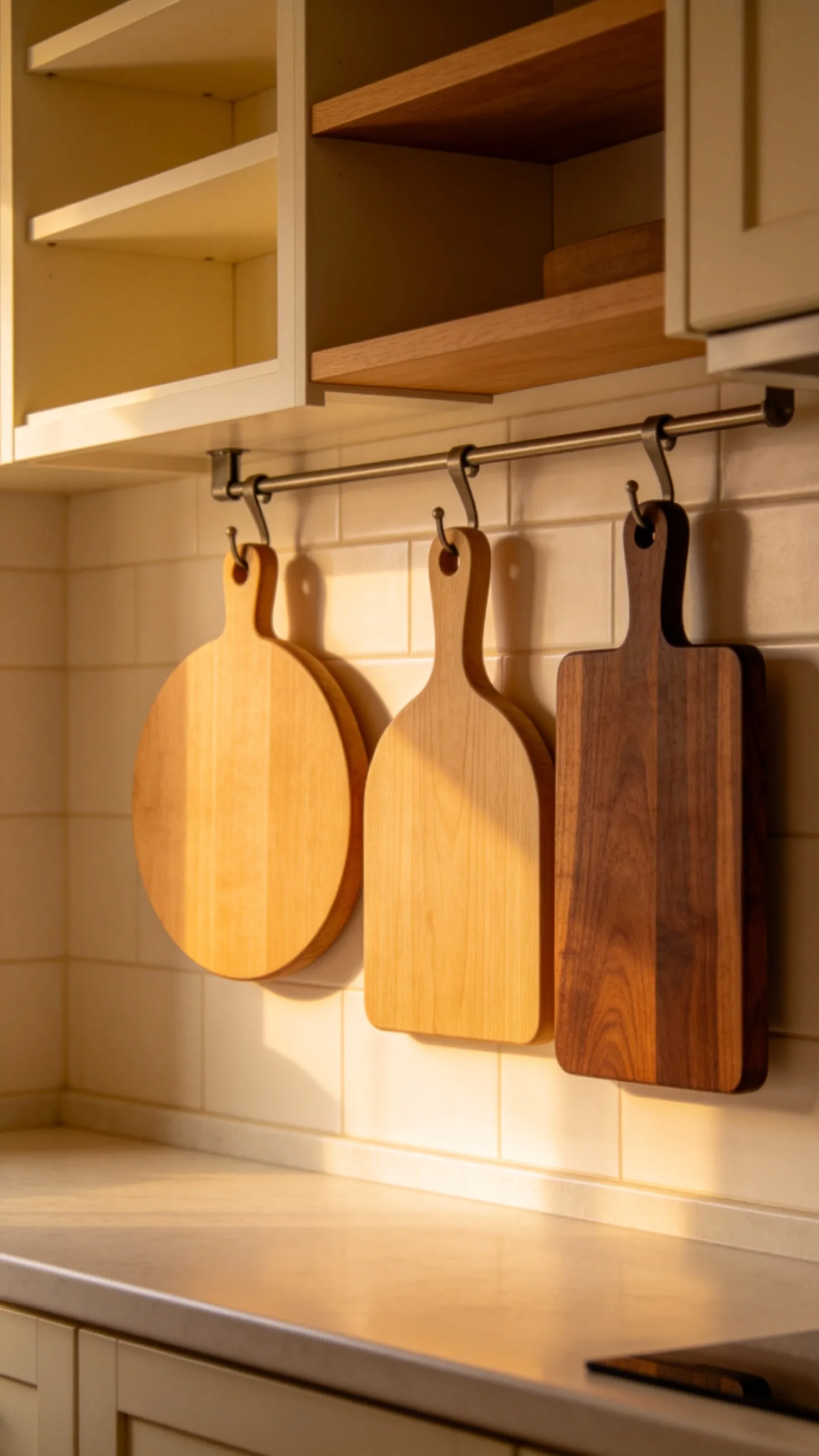
Wood cutting boards can make a kitchen wall feel warm and useful. Hang boards in different shapes, such as round, paddle, rectangular, or arched styles, on a backsplash-adjacent wall, open shelf area, or breakfast nook. The natural wood tones soften tile, stone, stainless steel, and painted cabinets.
This idea is especially practical if you cook often because the boards can be both decorative and accessible. Use sturdy hooks or rails, and keep the display away from areas with heavy grease splatter unless the boards are easy to clean. Mix one darker walnut board with lighter maple or beech boards for contrast.
22. Shadow Box Display of Collected Objects
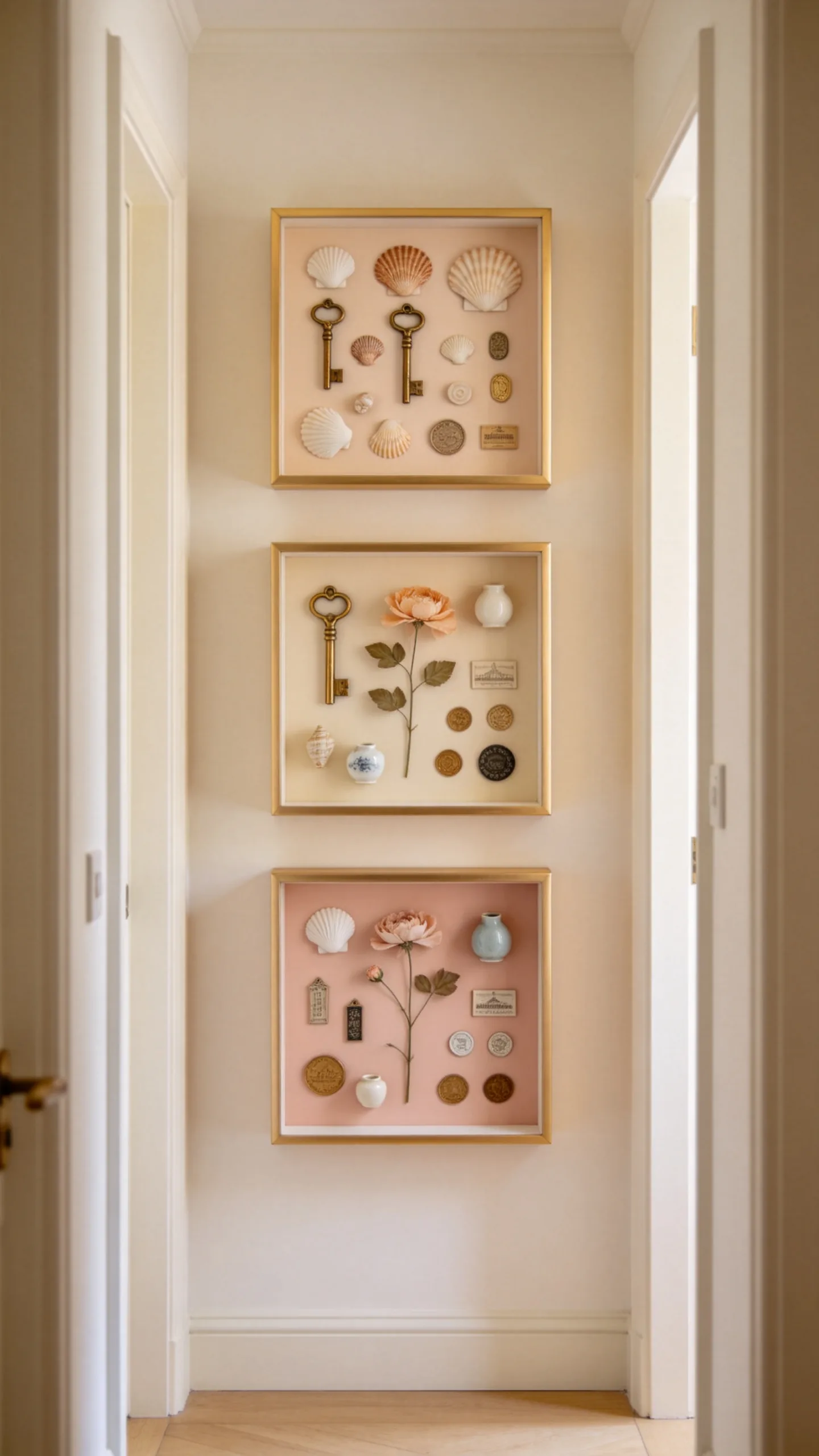
Shadow boxes let you display small dimensional objects in a polished way. Use them for shells, vintage keys, matchbooks, pressed flowers, small ceramics, travel tokens, fabric scraps, or family heirlooms. They work well in hallways, home offices, bedrooms, and living rooms where you want decor with a personal story.
Choose a deep frame or display case with enough room for the objects to sit naturally. Group similar items by color, material, or theme so the display does not feel random. In a narrow hallway, shallow shadow boxes give visual interest without protruding too far into the walking path.
23. Oversized Wall Fan or Palm Leaf Decor
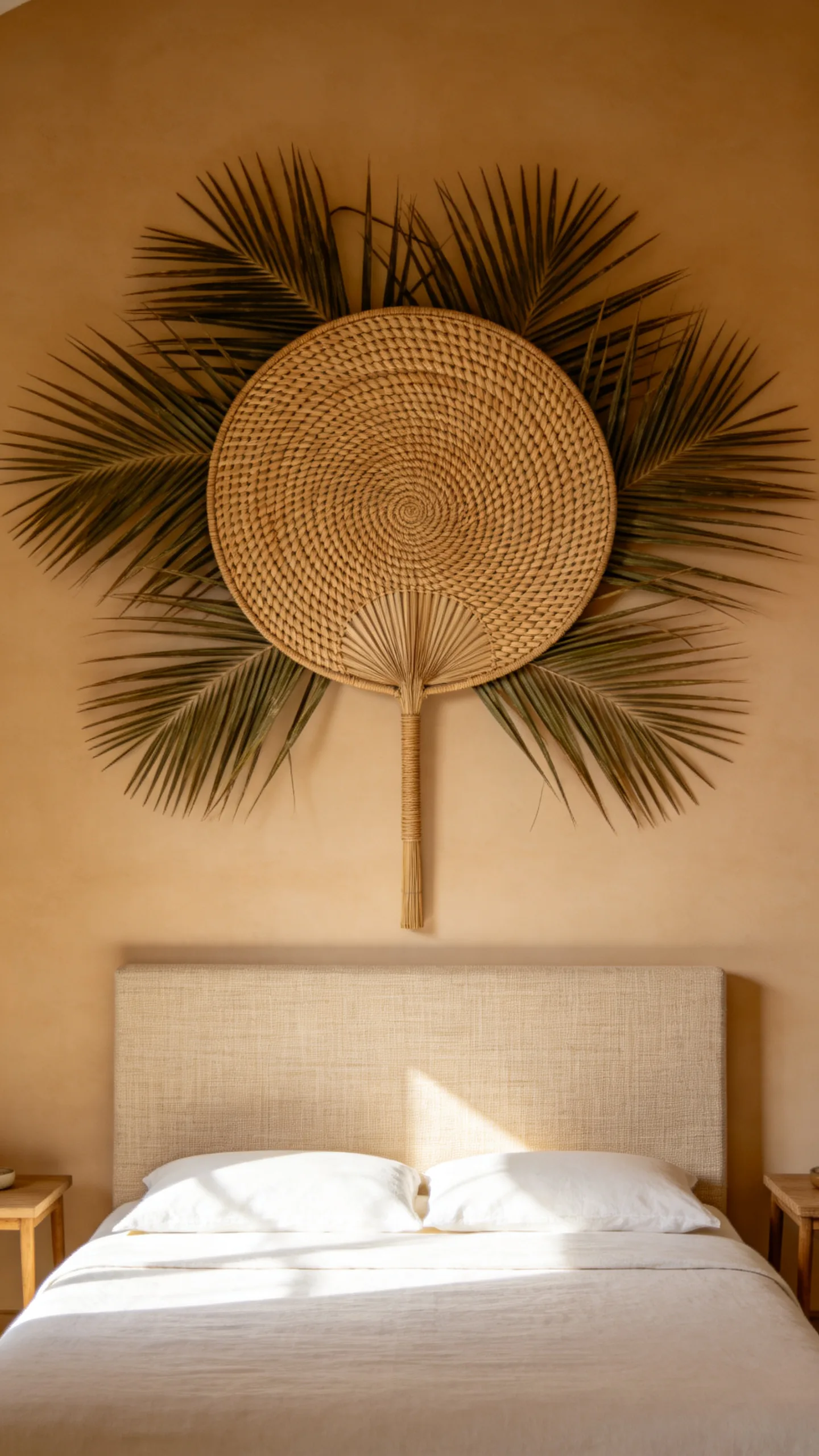
An oversized wall fan, palm leaf piece, or woven fan arrangement can add sculptural shape to a bedroom, living room, sunroom, or covered patio wall. Materials like rattan, bamboo, seagrass, or paper create a relaxed, organic look. The fan shape is especially useful over a headboard or console because it creates a strong focal point.
Keep surrounding decor simple so the fan can stand out. On a white or tan wall, natural woven pieces feel airy; on a dark painted wall, they create high contrast. This option is lightweight, making it easier to hang than many heavy wood or metal pieces.
24. Painted Wall Arch Behind Furniture
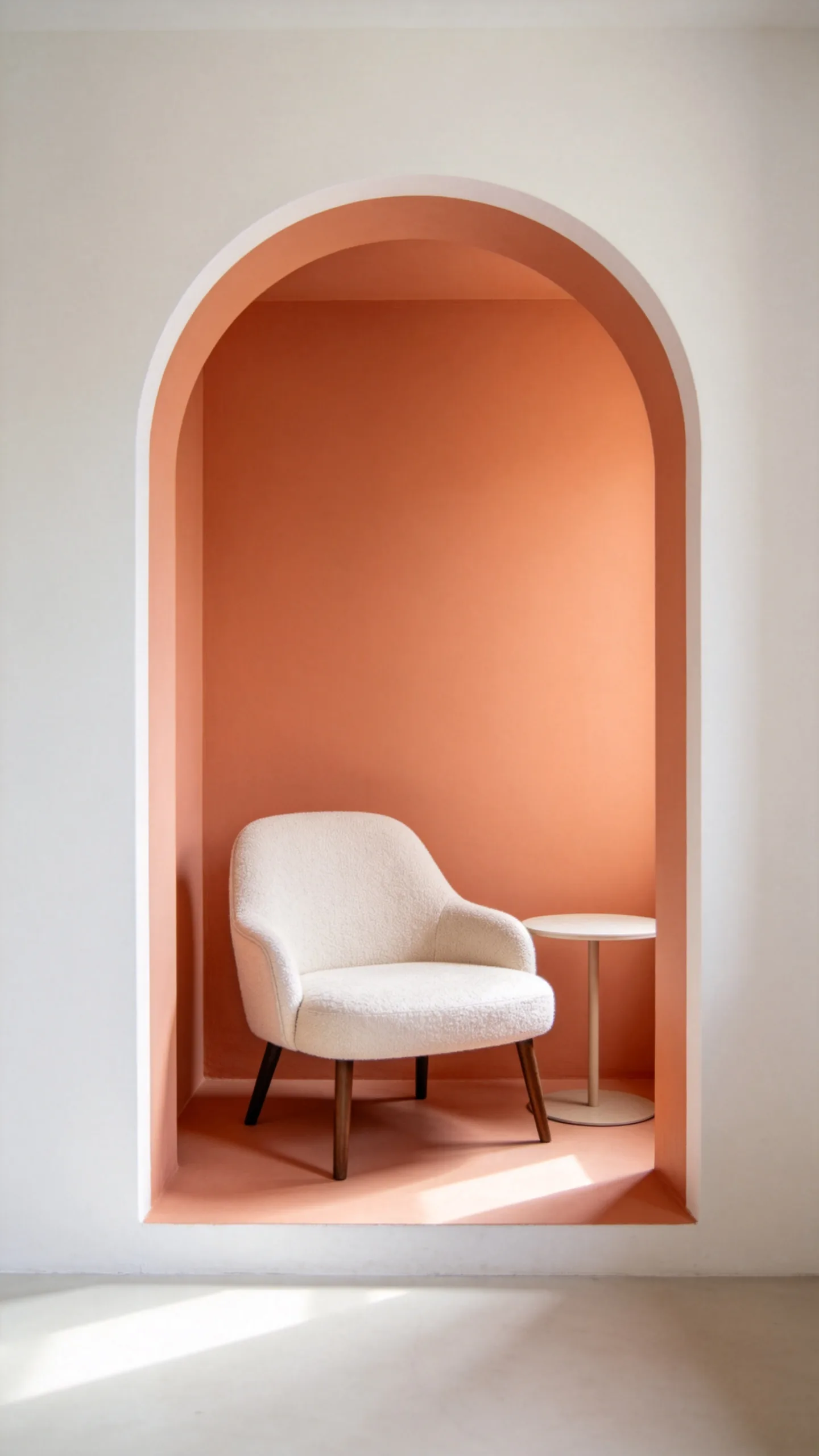
A painted wall arch can create the look of custom wall decor with only paint and careful measuring. Use it behind a desk, bed, bar cart, reading chair, or entry table to create a defined zone. Soft terracotta, olive, dusty rose, warm beige, or deep blue can add personality without covering the entire room.
This is a good solution for renters or budget-conscious decorators because it changes the wall without adding bulky objects. In a small room, an arch can frame furniture and make the layout feel intentional. Keep the edges clean with painter’s tape and choose a width that is slightly wider than the furniture below it.
25. Mixed-Material Wall Collage
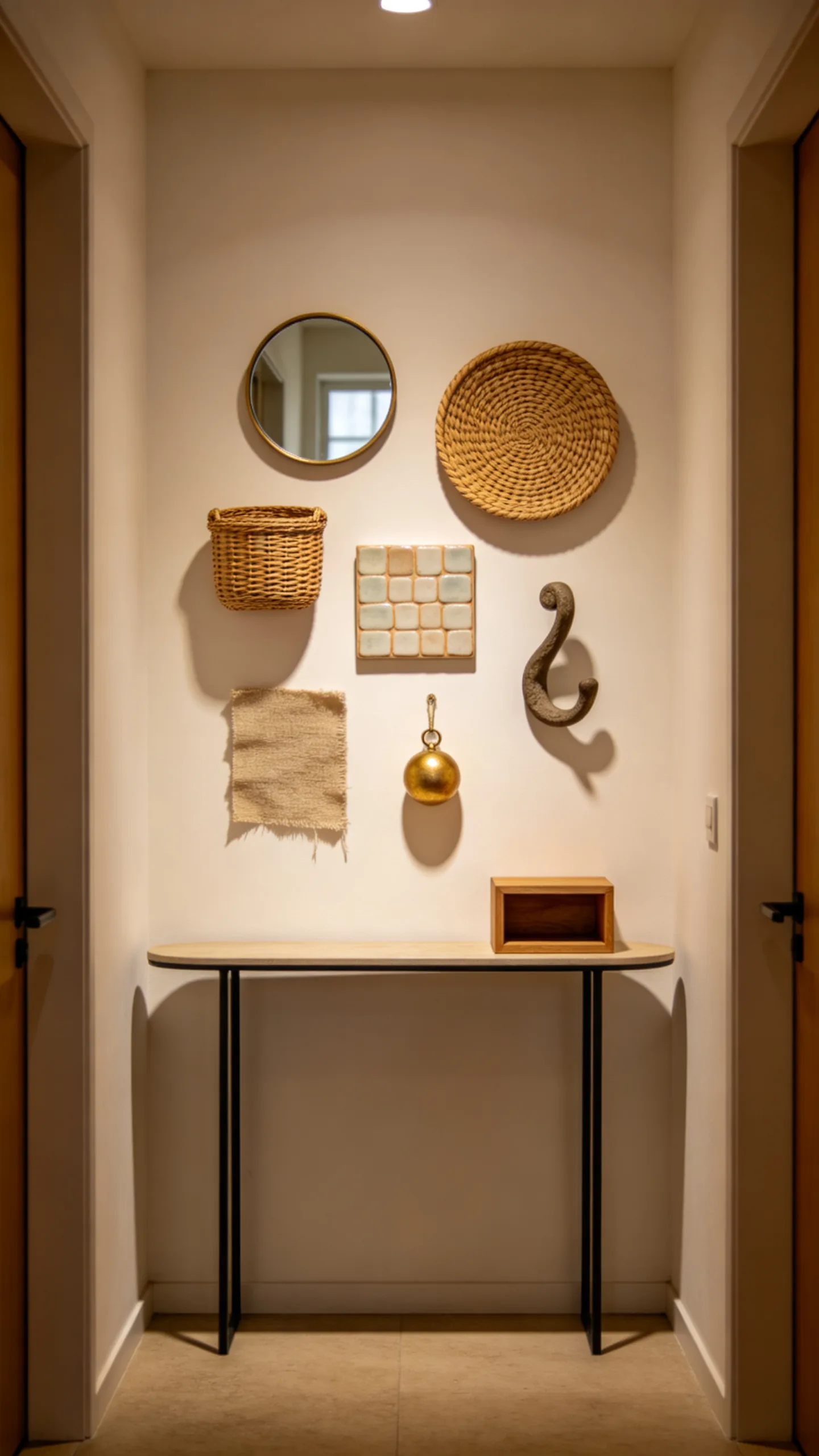
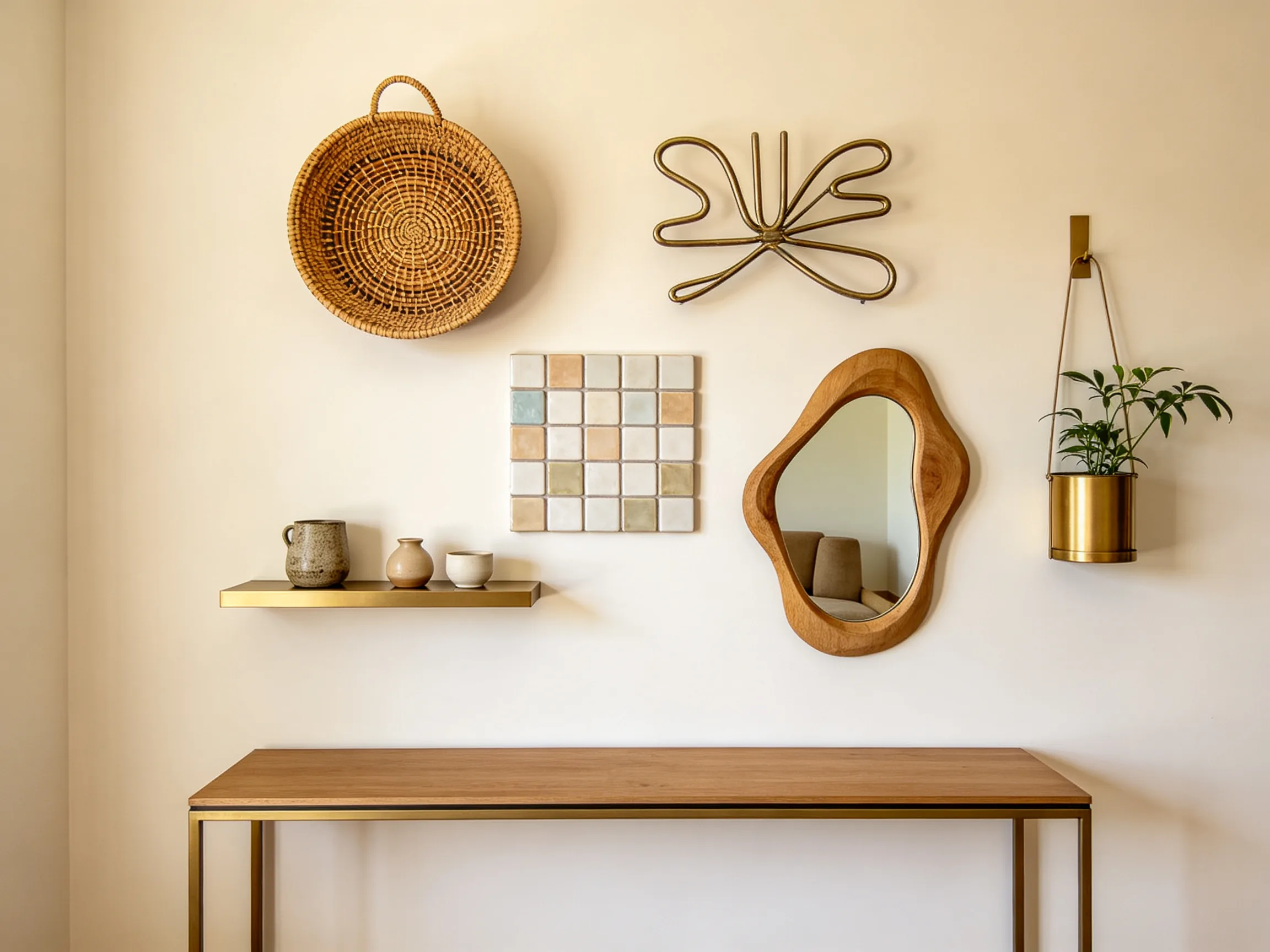
A mixed-material wall collage lets you combine several nontraditional elements into one collected display. Use a small mirror, woven basket, ceramic tile, metal charm, textile scrap, sculptural hook, and tiny shelf instead of relying on framed prints. This works well above a console table, in a hallway, near a reading nook, or on a bedroom accent wall.
To keep the collage from looking chaotic, repeat at least one element: a metal finish, wood tone, wall color, round shape, or natural texture. Start with the largest piece, then layer smaller objects around it with consistent spacing. The result feels personal, dimensional, and much more memorable than a wall filled only with basic framed posters.