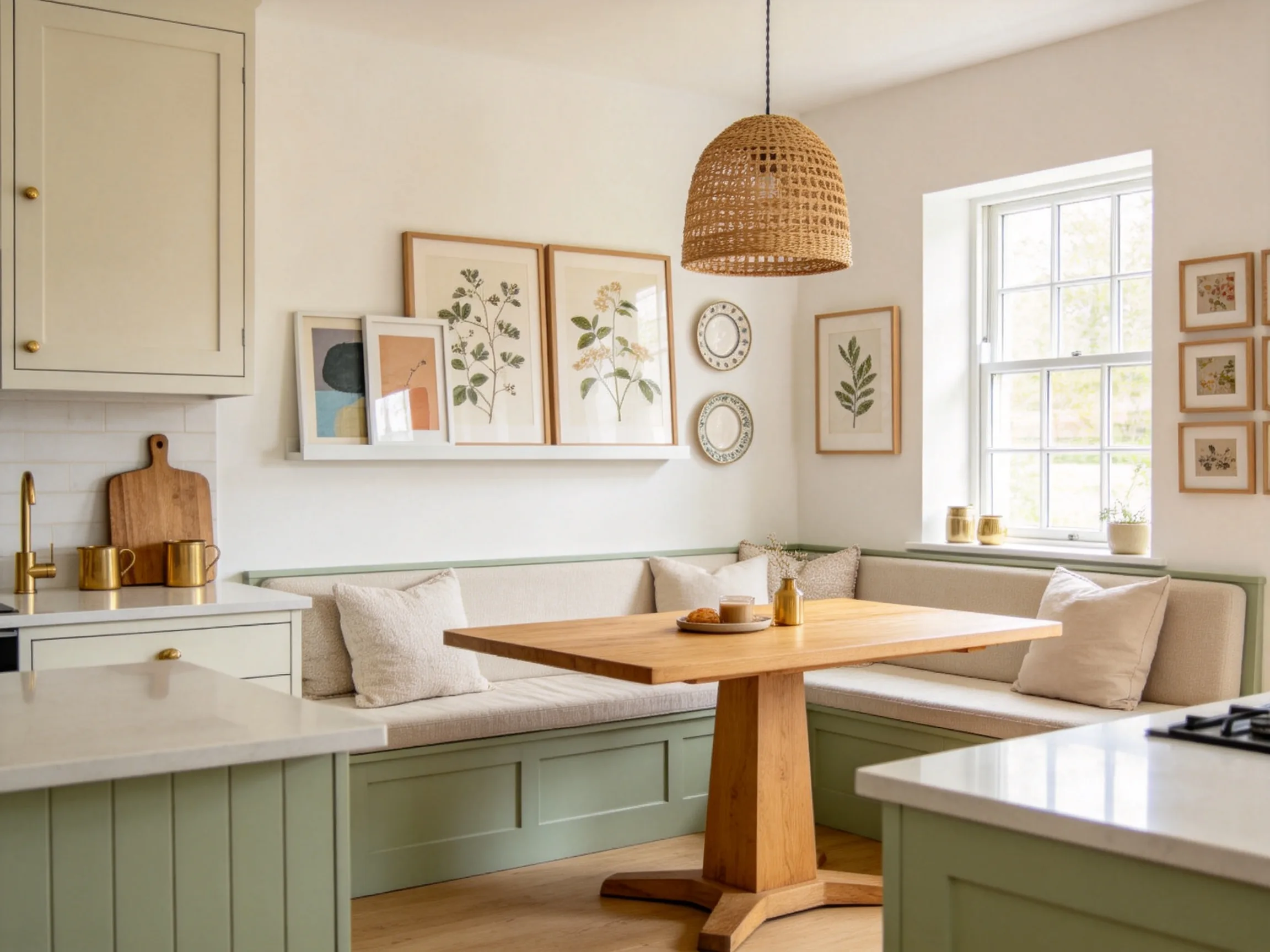
21 Kitchen Wall Art Ideas for Blank Walls and Breakfast Nooks
Blank kitchen walls can make even a well-designed room feel unfinished, especially around breakfast nooks, pantry doors, coffee stations, and small dining corners. The right kitchen wall art ideas can add color, warmth, structure, and personality without taking up counter space or interrupting daily cooking routines. Use these ideas to turn empty kitchen walls into styled focal points that feel intentional, practical, and easy to live with.
1. Framed Botanical Prints Above a Breakfast Nook
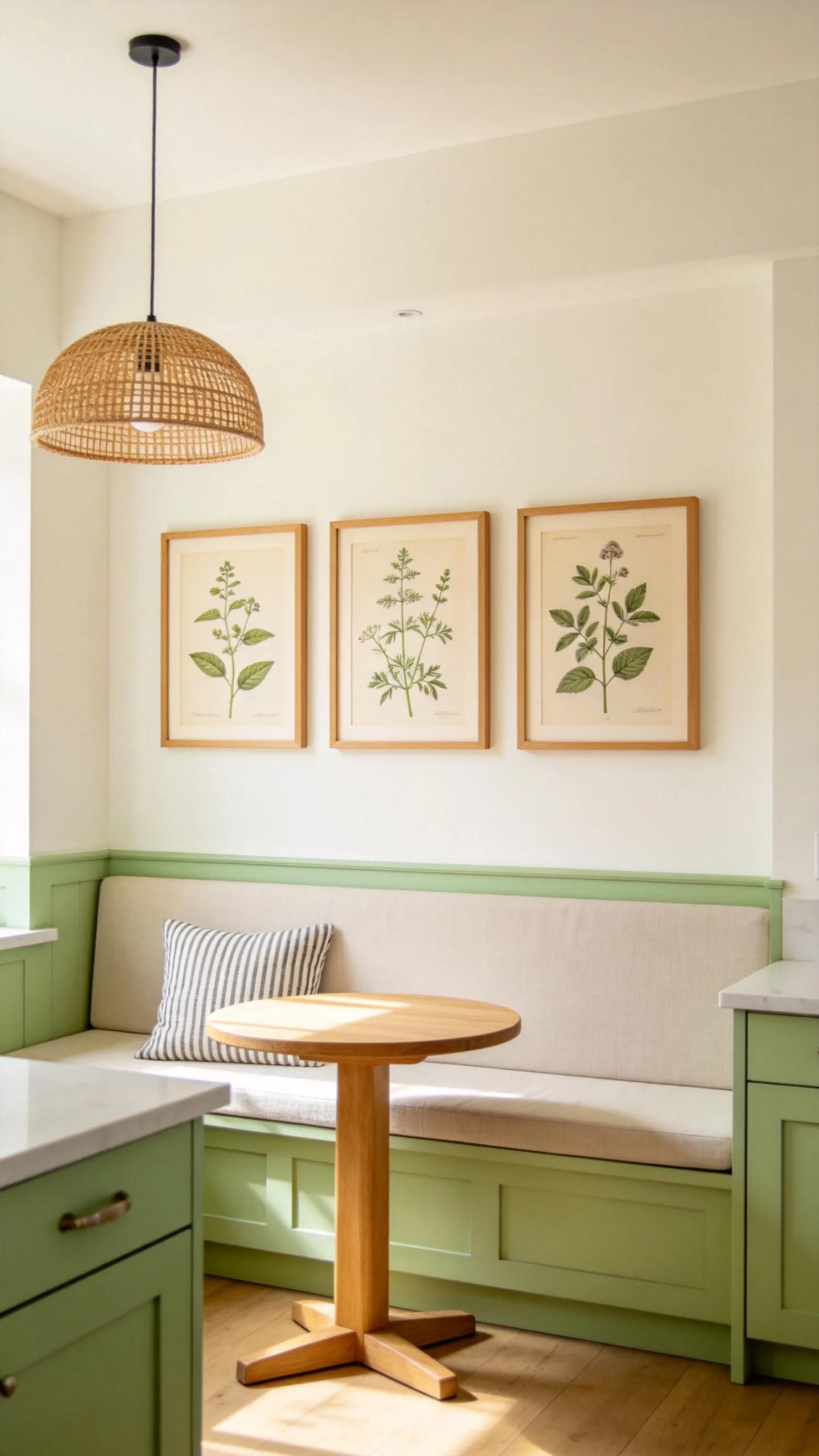
Botanical prints work beautifully in a kitchen because they connect naturally with food, herbs, produce, and garden-inspired decor. Hang a set of two or three framed botanical illustrations above a breakfast nook bench, banquette, or small round table to give the area a calm, collected look.
For a light kitchen with white walls or pale cabinetry, choose soft green herb prints in thin oak, brass, or black frames. If the nook has a striped cushion, linen Roman shade, or woven pendant light, botanical art adds a fresh layer without making the corner feel crowded. Keep the frames evenly spaced and centered over the table or bench so the wall feels balanced from across the room.
2. Oversized Vintage Food Poster on a Blank Kitchen Wall
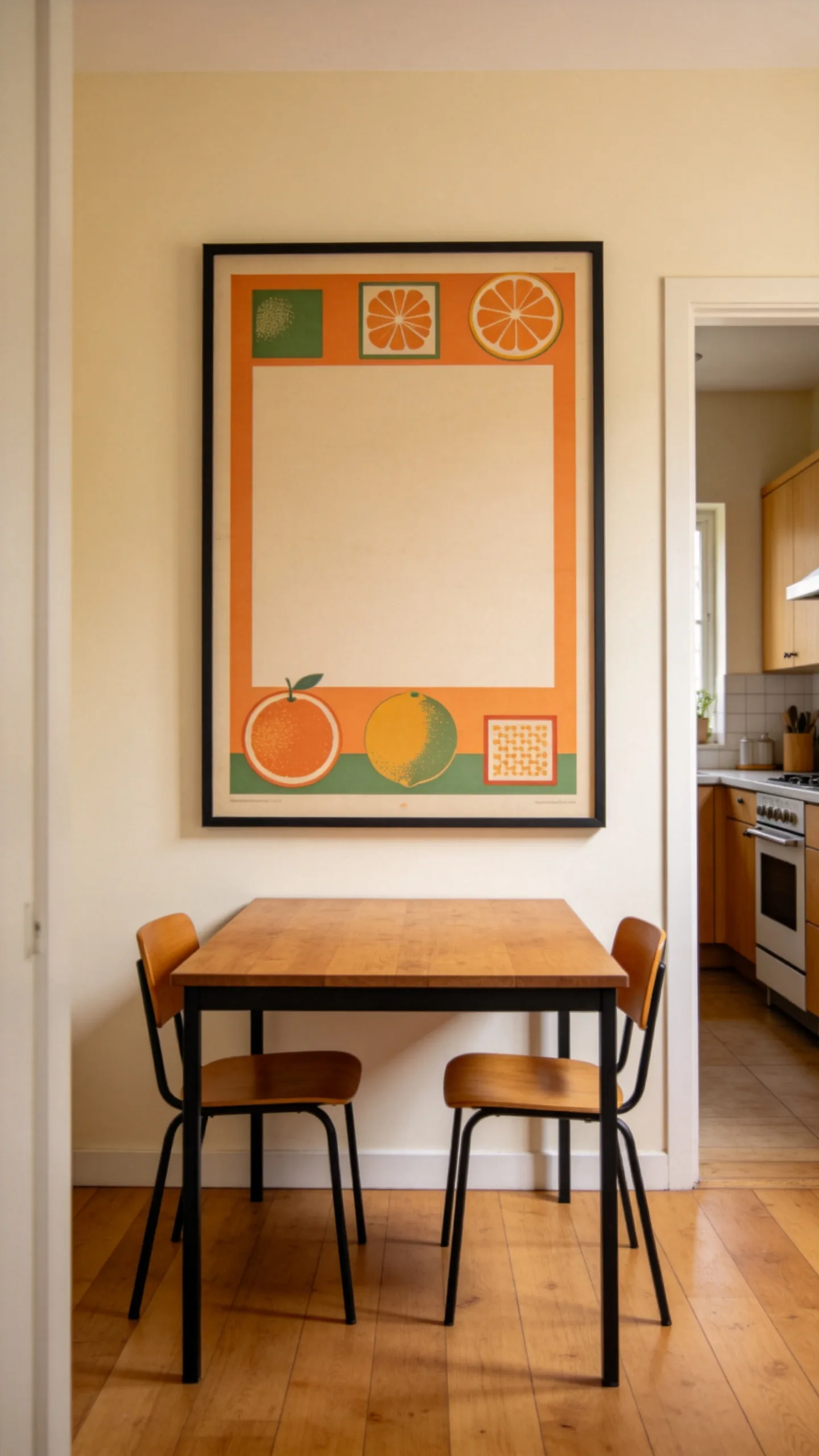
A single oversized vintage-style food poster can fill a large blank wall without needing a complicated gallery arrangement. Look for artwork featuring citrus, coffee, pasta, oysters, wine, or farmers market produce to bring in color that still feels connected to the kitchen.
This idea works especially well on a long wall near a dining table, sideboard, or open kitchen walkway. Choose a frame that matches nearby finishes, such as black metal near black cabinet hardware or warm wood near butcher block countertops. The scale is important: a large piece makes the wall feel deliberate, while several tiny frames can look lost on a wide blank surface.
3. Black-and-White Recipe Print Gallery
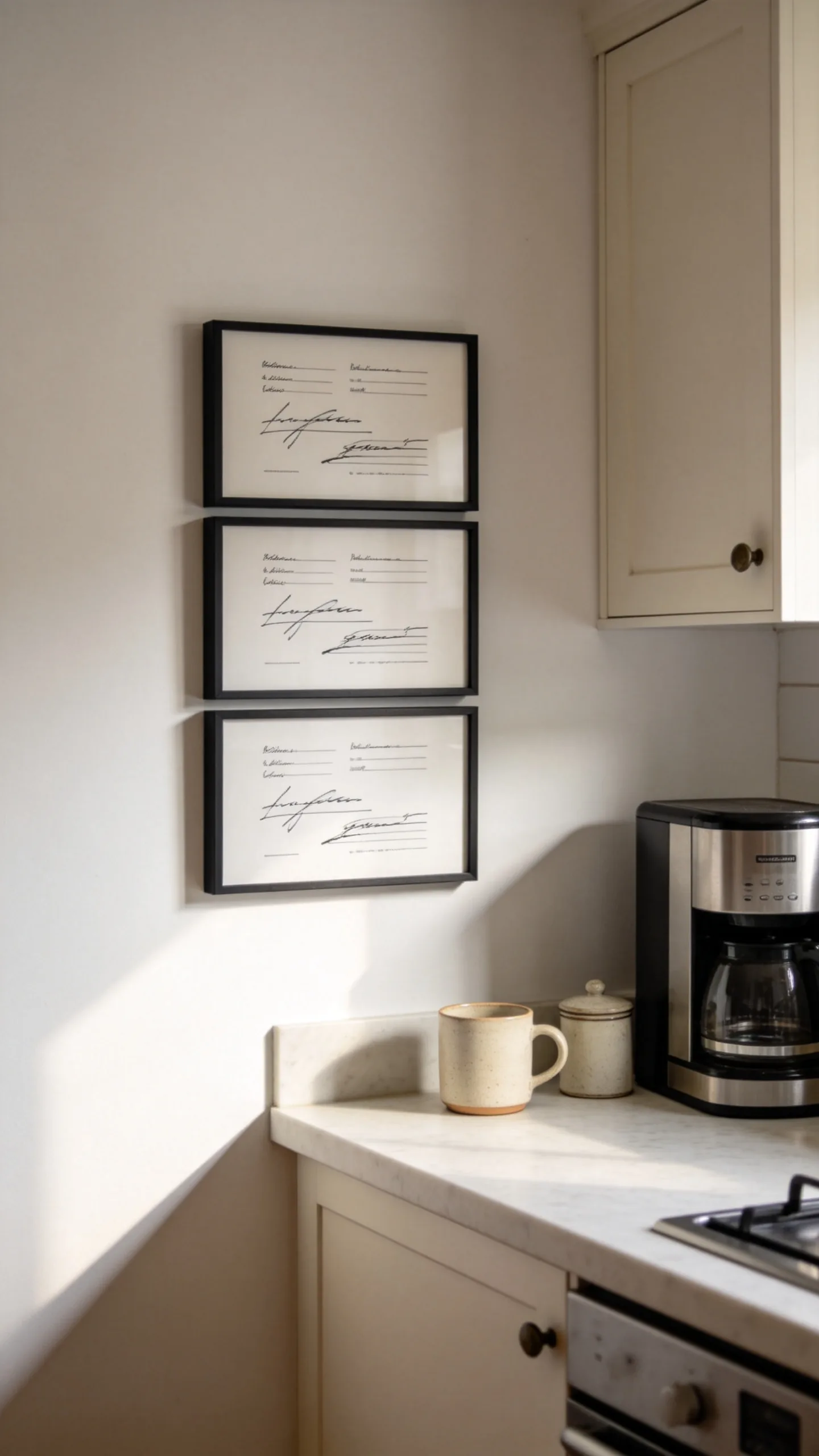
A black-and-white recipe print gallery gives a kitchen wall a clean, graphic look while keeping the theme subtle. Use framed handwritten-style recipes, vintage cookbook pages, or simple typography prints with ingredients and cooking notes.
This works well near a coffee bar, pantry cabinet, or breakfast nook where you want visual interest without adding strong color. Keep the frames consistent for a tidy look, especially in smaller kitchens where too many different finishes can make the room feel busy. On a narrow wall, stack three prints vertically to draw the eye upward and make the space feel taller.
4. Floating Picture Ledge with Rotating Kitchen Art
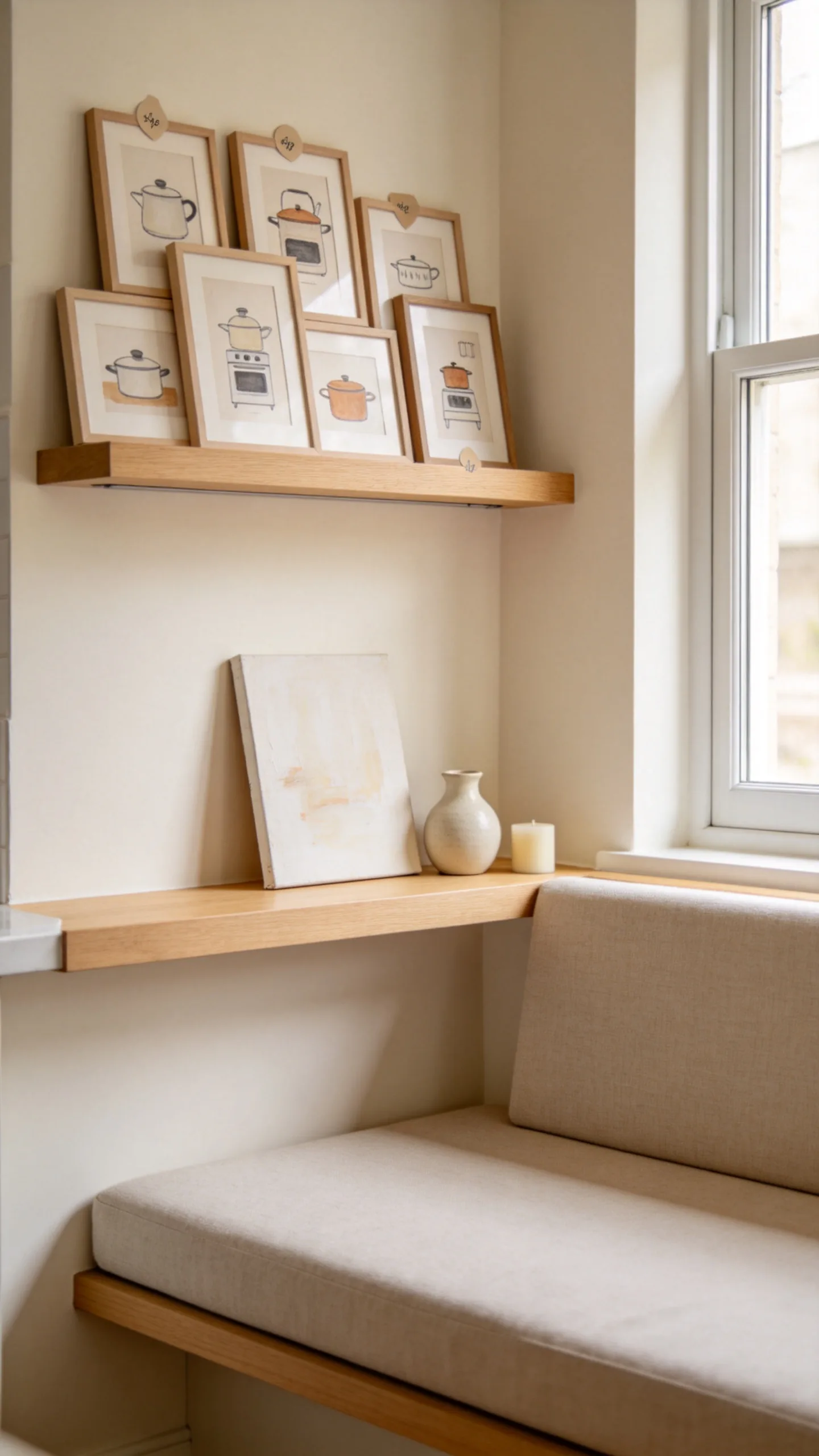
A floating picture ledge is a flexible choice for renters, seasonal decorators, or anyone who likes to change wall art often. Install a slim ledge above a kitchen table, sideboard, or unused wall section, then layer framed prints, small canvases, and a petite vase or candle.
This approach is useful because the art can lean instead of being permanently arranged in a fixed layout. In a breakfast nook, a picture ledge can sit above the bench back and hold a mix of food prints, family photos, and small framed quotes. Keep the ledge shallow so it does not interfere with people sitting below it or walking through the kitchen.
5. Framed Cafe Menu Art for a Coffee Corner
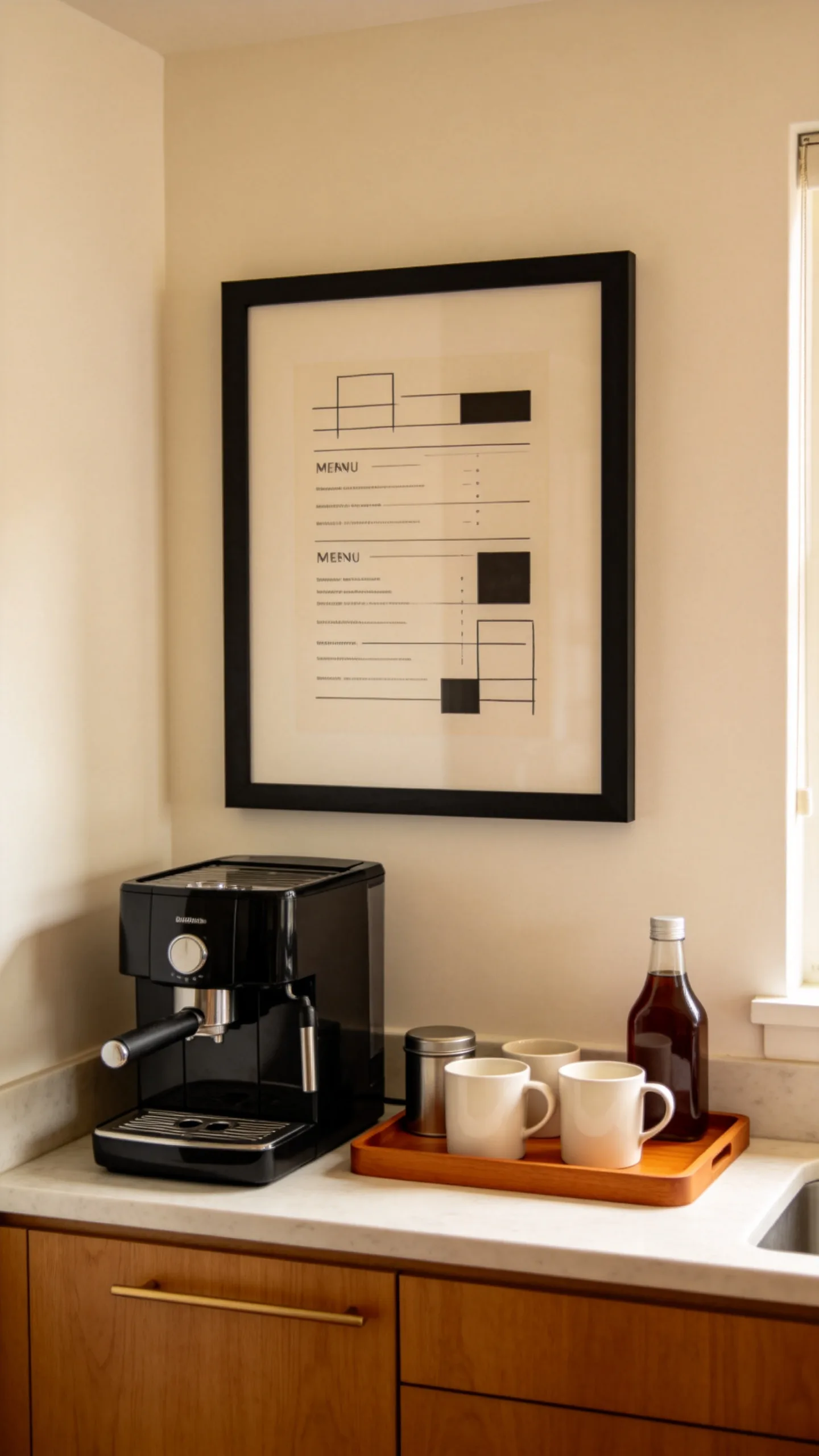
If your kitchen has a small coffee station, use the wall above it for cafe-inspired menu art. A framed coffee menu, espresso illustration, or simple “cappuccino, latte, americano” typography print can make the station feel like a styled corner instead of just a countertop appliance zone.
Place the art above a tray with mugs, syrups, and a small canister of coffee beans. For a modern kitchen, choose crisp black lettering on a white background. For a cozy cottage kitchen, use a chalkboard-style print or warm-toned frame. The wall art helps define the purpose of the area while keeping the counter visually organized.
6. Small Gallery Wall Around a Kitchen Window
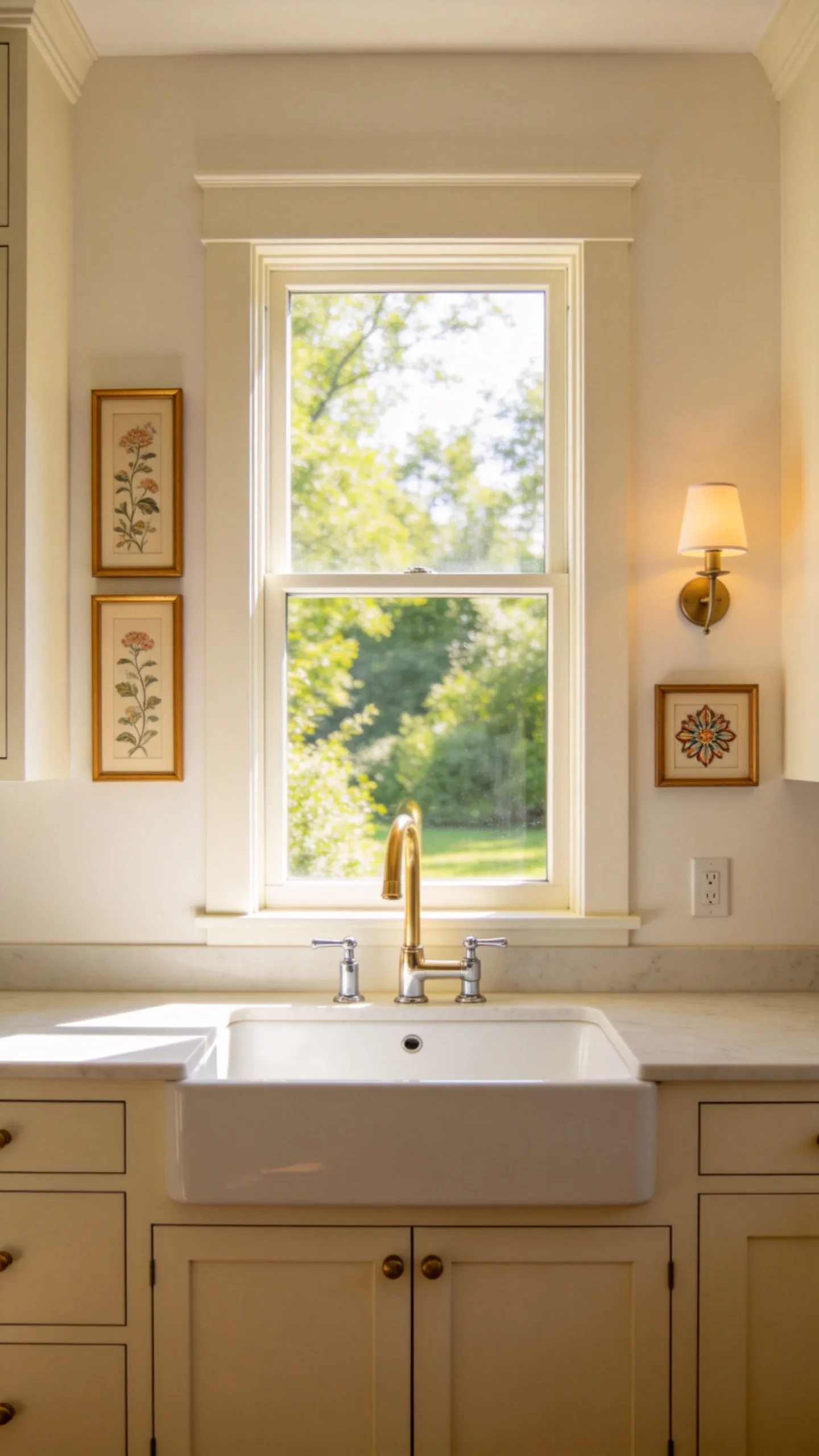
A kitchen window can become a stronger focal point when framed with small pieces of art. Hang two or three narrow prints on either side of the window, or place one small framed piece below a wall sconce if there is enough space.
This is a helpful solution for awkward blank wall areas around sinks or breakfast nooks where one large piece may not fit. Choose water-resistant frames if the art is near the sink, and avoid placing delicate paper prints where they will be exposed to frequent splashes. Matching frame colors create order, while varied art subjects add charm without overwhelming the window view.
7. Woven Wall Basket Arrangement
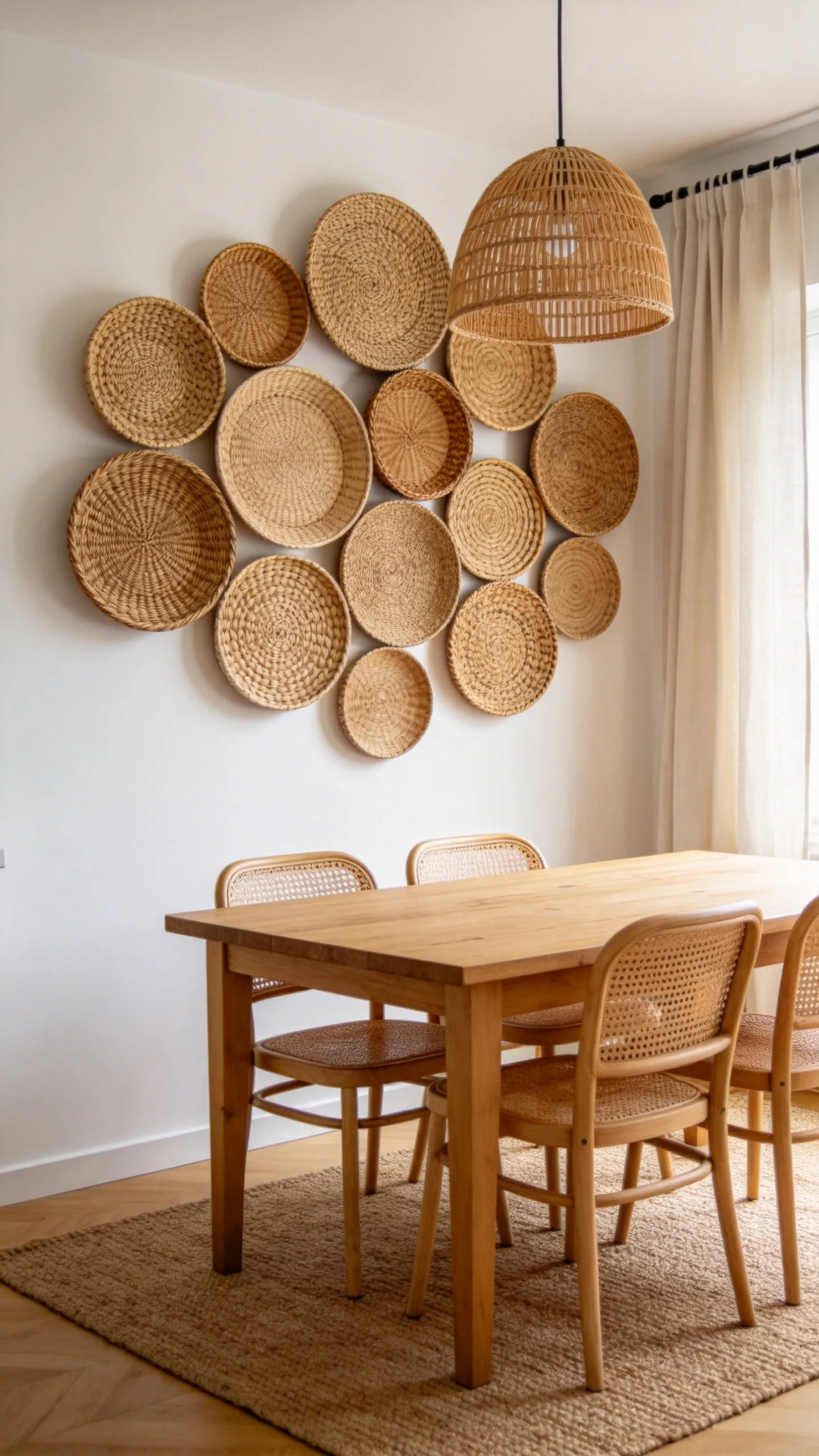
Woven wall baskets add texture to a kitchen without relying on bold color. They work especially well in breakfast nooks with wood tables, cane chairs, jute rugs, rattan pendants, or natural linen curtains.
Arrange baskets in an organic cluster on a blank wall, mixing sizes and weave patterns while keeping the overall palette cohesive. This is a smart option for a wall that feels too flat but does not need traditional framed art. Because baskets are lightweight, they can also be useful in small kitchens where you want dimension without heavy-looking decor.
8. Framed Fruit Still Life Prints
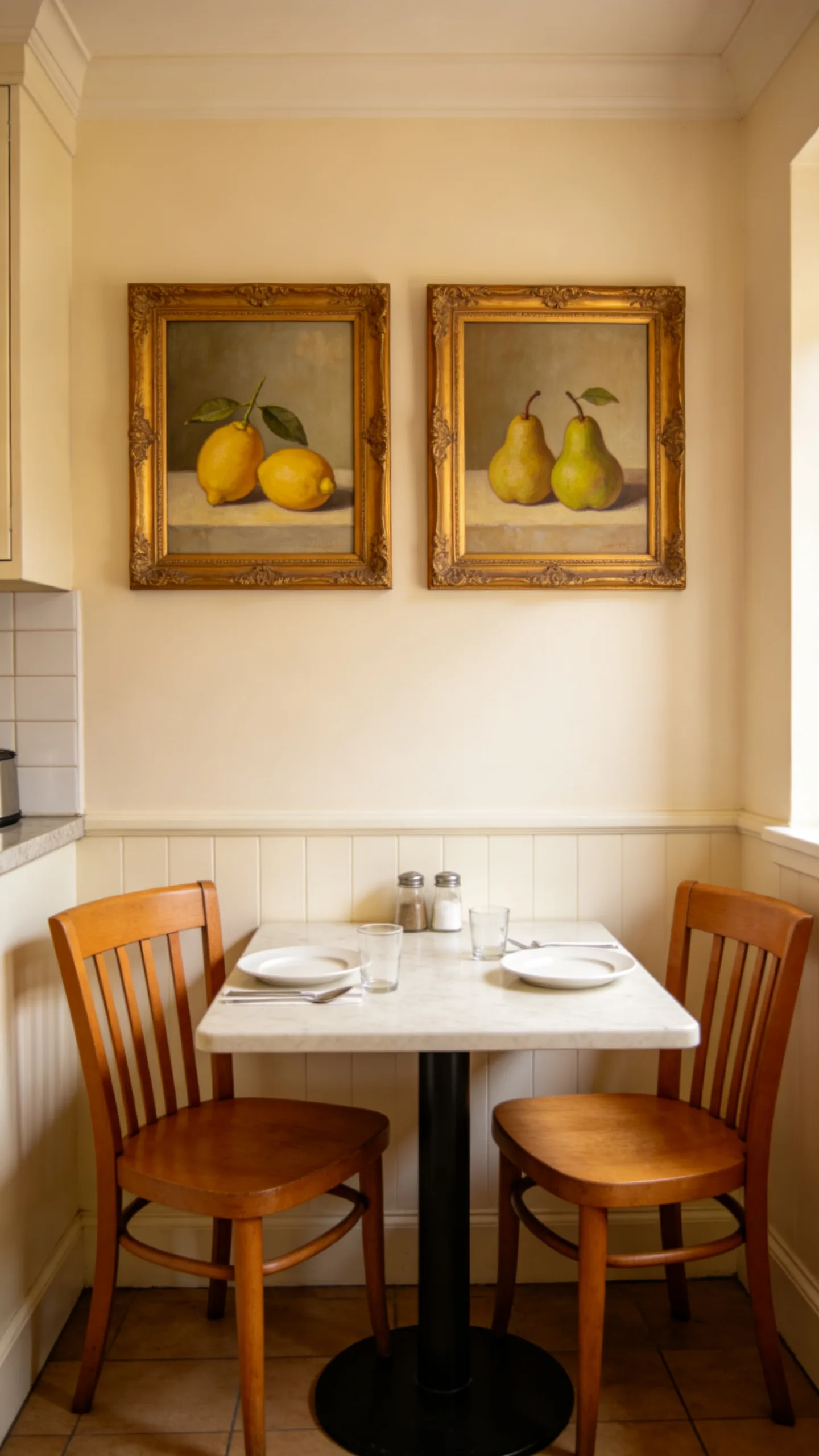
Fruit still life prints are classic kitchen wall art because they bring in color and shape while staying closely tied to the room’s function. Lemon, pear, fig, apple, or citrus artwork can brighten a blank wall near a dining table or prep area.
For a traditional kitchen, choose painterly still life prints in antique gold or dark wood frames. For a more modern kitchen, look for simplified fruit illustrations with clean backgrounds. A pair of fruit prints can look especially balanced over a small breakfast nook table, while one larger piece can anchor an open wall near a pantry or refrigerator.
9. Chalkboard Wall Art for Menus and Notes
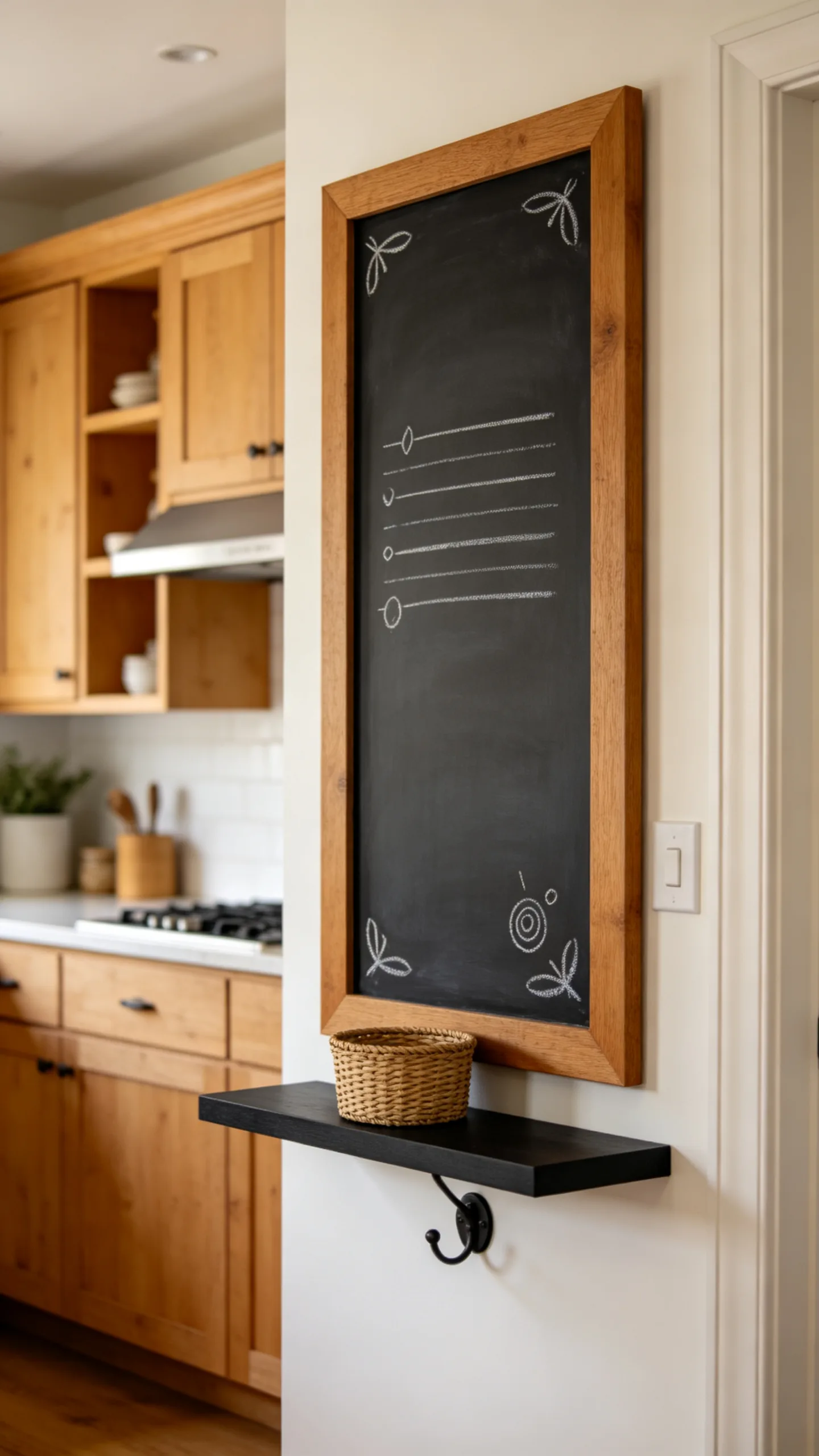
A framed chalkboard or chalkboard panel can double as wall art and a practical message center. Use it for weekly menus, grocery reminders, dinner plans, or seasonal doodles near the kitchen entry, mudroom pass-through, or breakfast area.
To keep it from looking messy, choose a defined frame and place it where notes make sense, such as near the pantry or family command center. In a small kitchen, a vertical chalkboard can use wall height without stealing counter space. Pair it with a narrow wall hook, small shelf, or nearby basket for keys and lists if the area also functions as a drop zone.
10. Plate Wall Display Over a Banquette
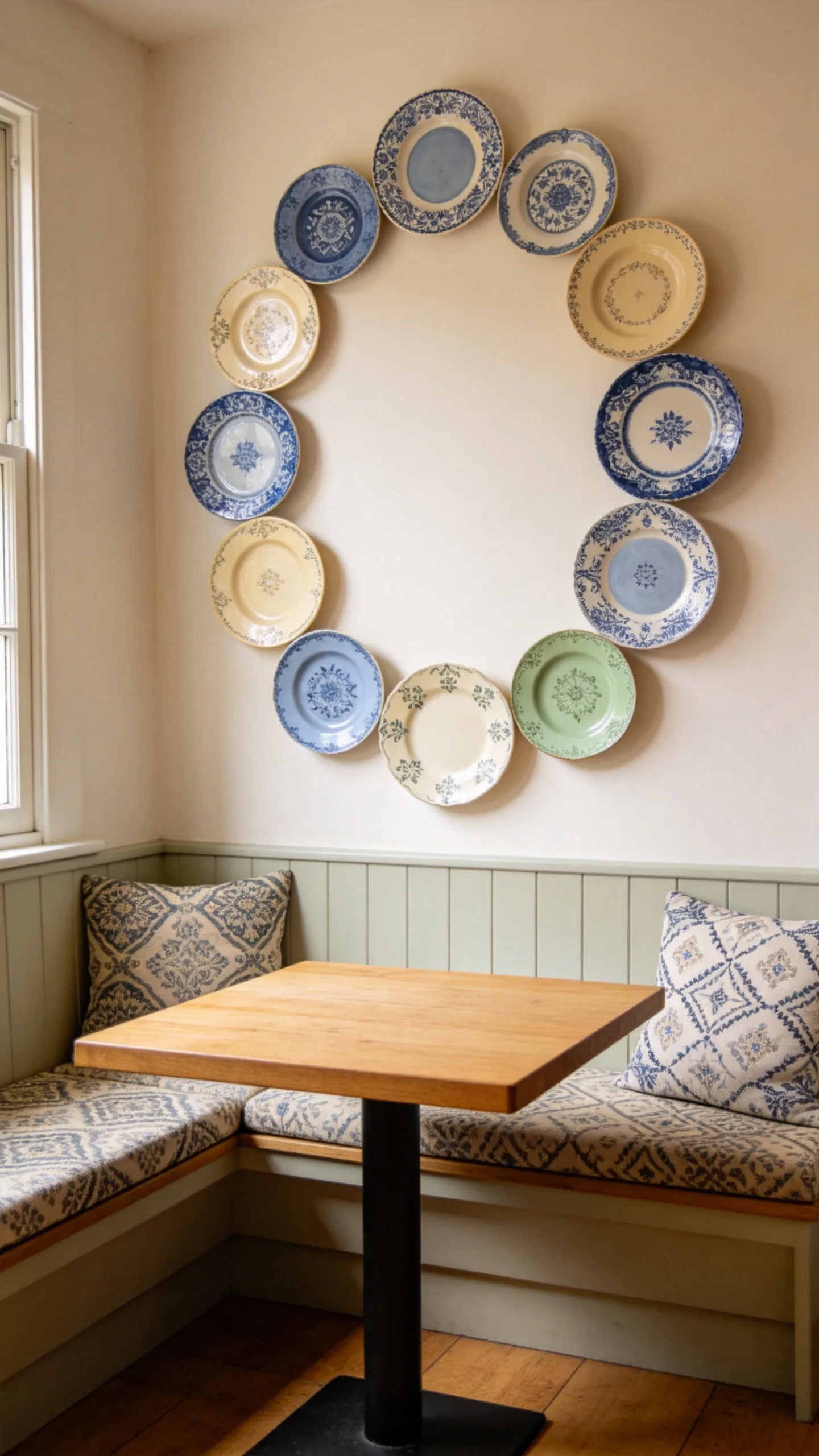
Decorative plates can turn a breakfast nook wall into a charming focal point, especially over a built-in bench or banquette. Mix vintage plates, ceramic dessert plates, or hand-painted pieces in a coordinated color palette.
Before hanging, arrange the plates on the floor to test the layout. A loose oval or arched shape usually looks natural above a table, while a tight grid feels more formal. Use secure plate hangers, especially in a high-traffic kitchen. This idea adds pattern and dimension without needing a deep shelf or bulky decor.
11. Minimal Line Art in Warm Wood Frames
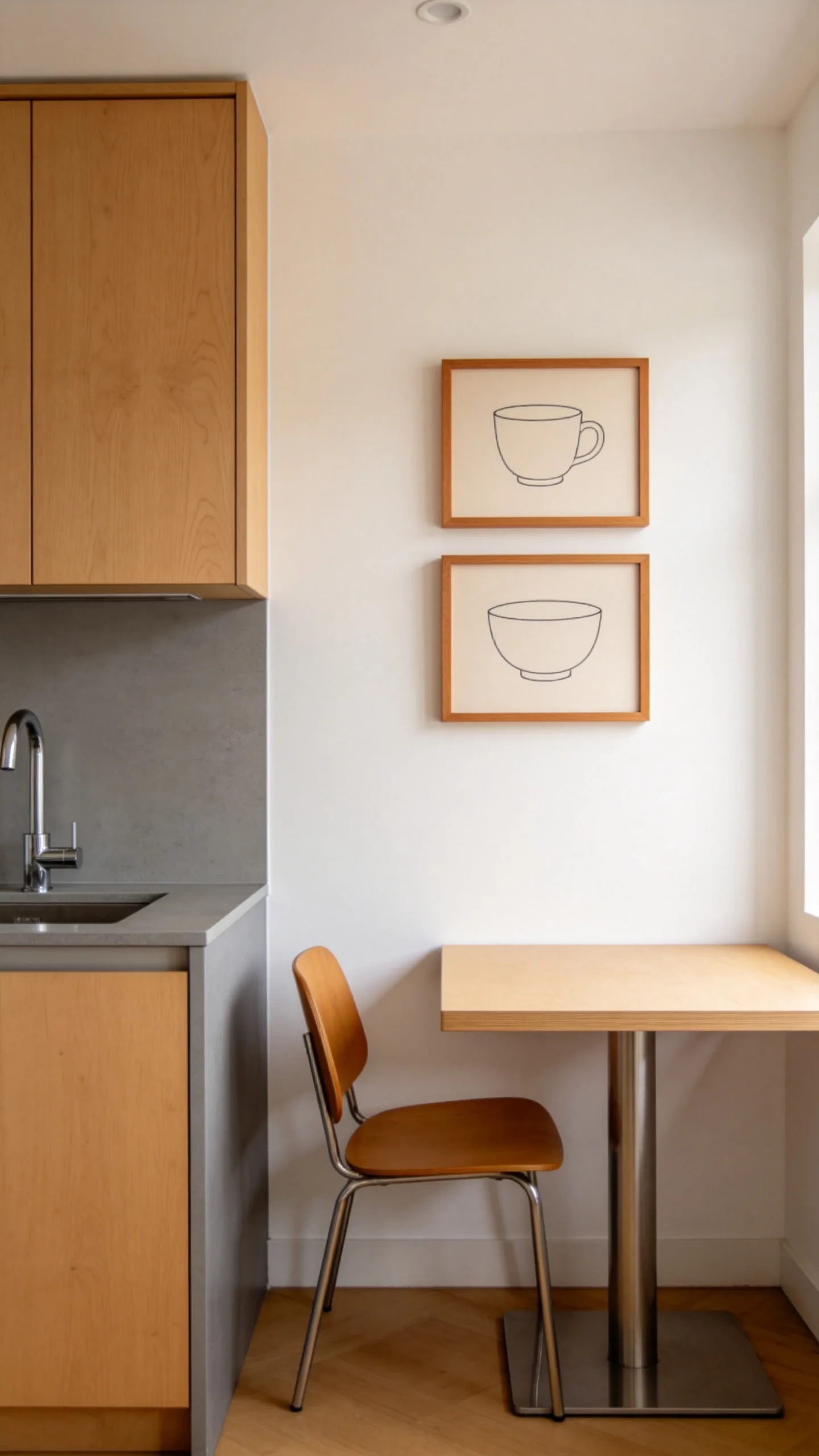
Minimal line art is a good fit for kitchens that already have strong elements like patterned tile, dark cabinets, or busy countertops. Simple drawings of mugs, bowls, hands, plants, or abstract faces can add personality without competing with the room.
Warm wood frames soften white walls, gray cabinets, or stainless steel appliances. Hang a pair of line art prints above a small dining table or on a narrow wall beside the pantry. The simplicity keeps sightlines clean, which is especially helpful in compact kitchens where too much detail can make the room feel smaller.
12. Large Framed Landscape for a Calm Dining Corner
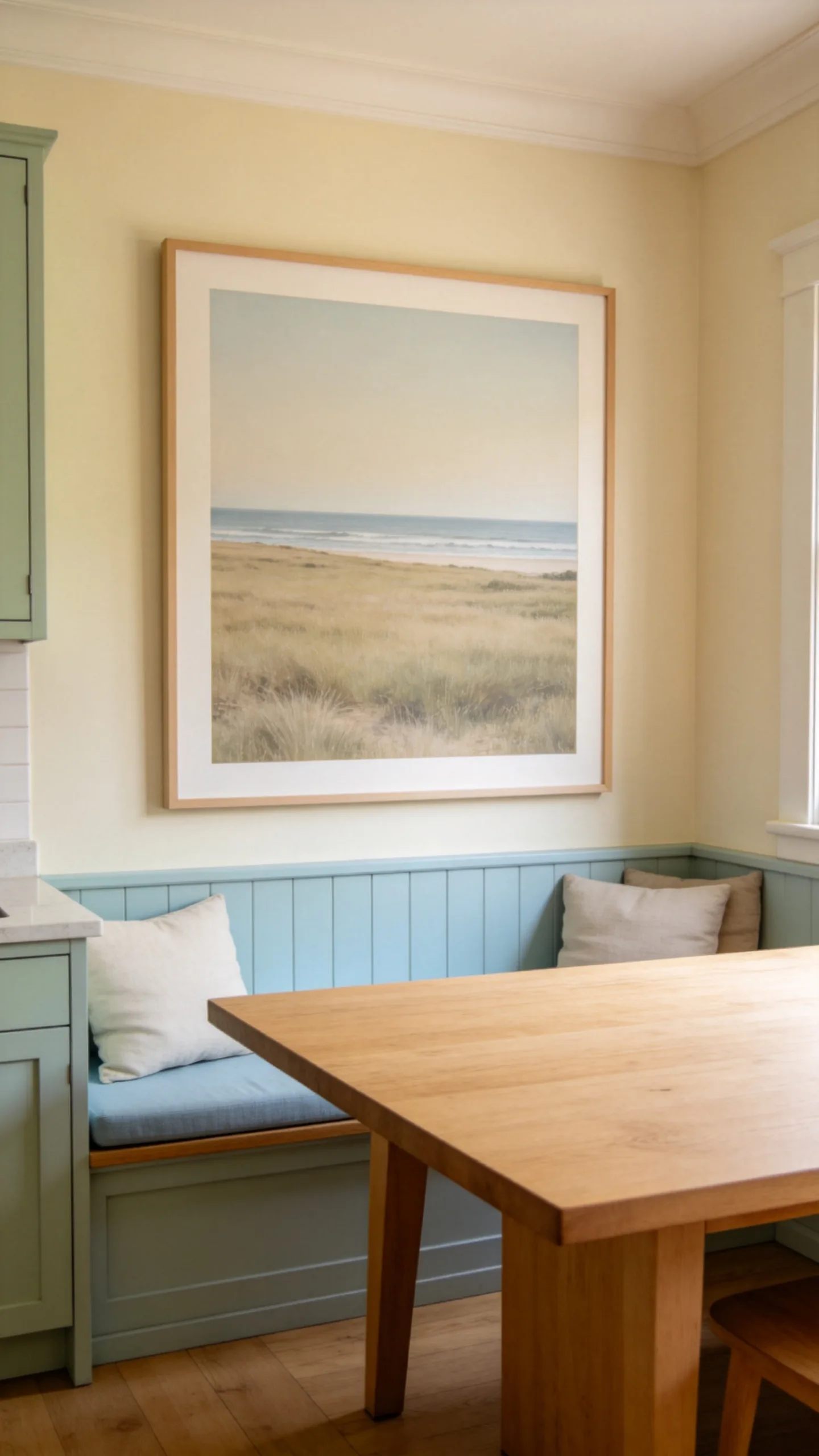
A landscape print can make a breakfast nook feel more like a peaceful dining space. Choose artwork with a soft meadow, coastal view, vineyard, countryside road, or muted mountain scene to add depth to a blank wall.
This works well above a rectangular table, built-in bench, or kitchen sideboard. A landscape with a visible horizon line can visually open the room, making the wall feel less closed-in. Use colors already present in the kitchen, such as sage green, warm beige, soft blue, or terracotta, so the art feels connected to the cabinetry, rug, or chair cushions.
13. Open Shelf Styled with Leaning Art
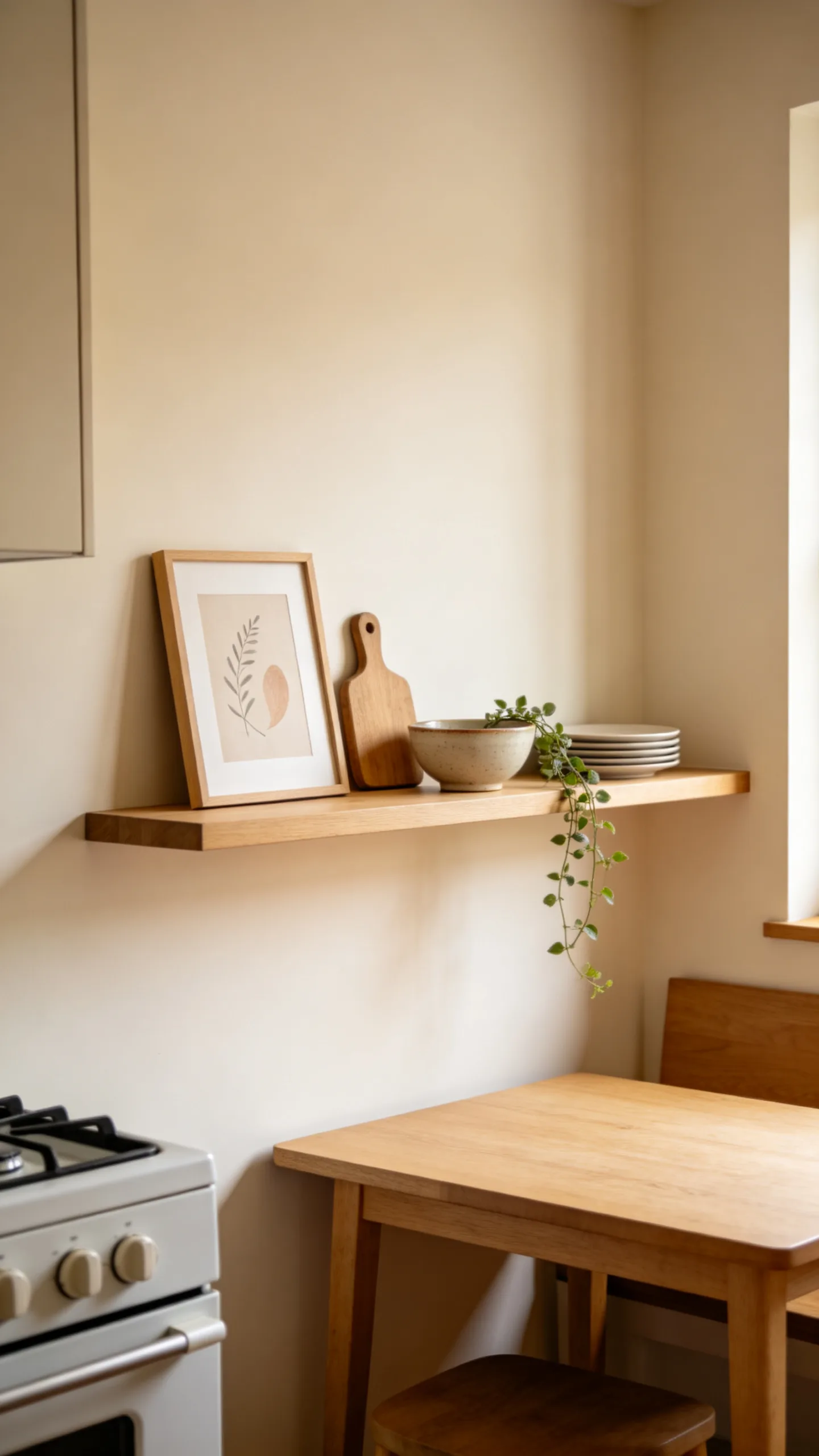
If you need both storage and style, install a narrow open shelf and lean small artwork against the wall. This is useful in kitchens where a completely decorative wall feels impractical but a blank wall still needs attention.
Style the shelf with a framed print, a small cutting board, a ceramic bowl, a stack of plates, or a trailing plant. Keep the objects shallow so the shelf does not block traffic flow or feel bulky. In a breakfast nook, a shelf above the table can display art while leaving room for seasonal updates, cookbooks, and small serving pieces.
14. Statement Typography Print with a Food Phrase
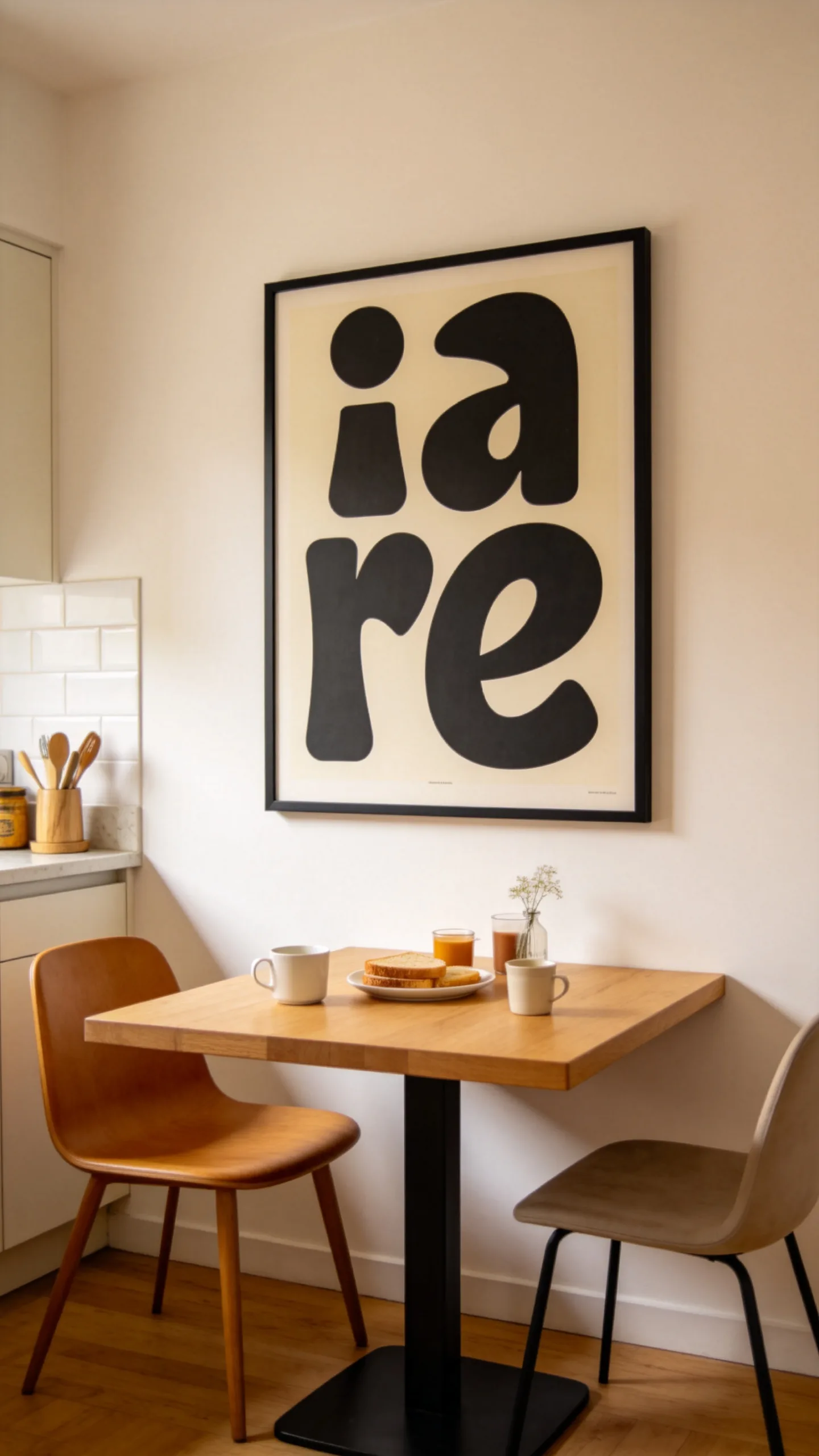
A statement typography print can add a playful focal point to a kitchen wall, especially in a breakfast nook or casual dining corner. Choose a phrase related to coffee, baking, pasta, gathering, or family meals rather than a generic slogan.
For a modern look, use oversized black lettering on a white or cream background. For a farmhouse kitchen, choose a softer script or vintage sign-inspired design. The key is scale: one large typography piece often looks cleaner than several small word signs scattered around the room.
15. Framed Vintage Cookbook Pages
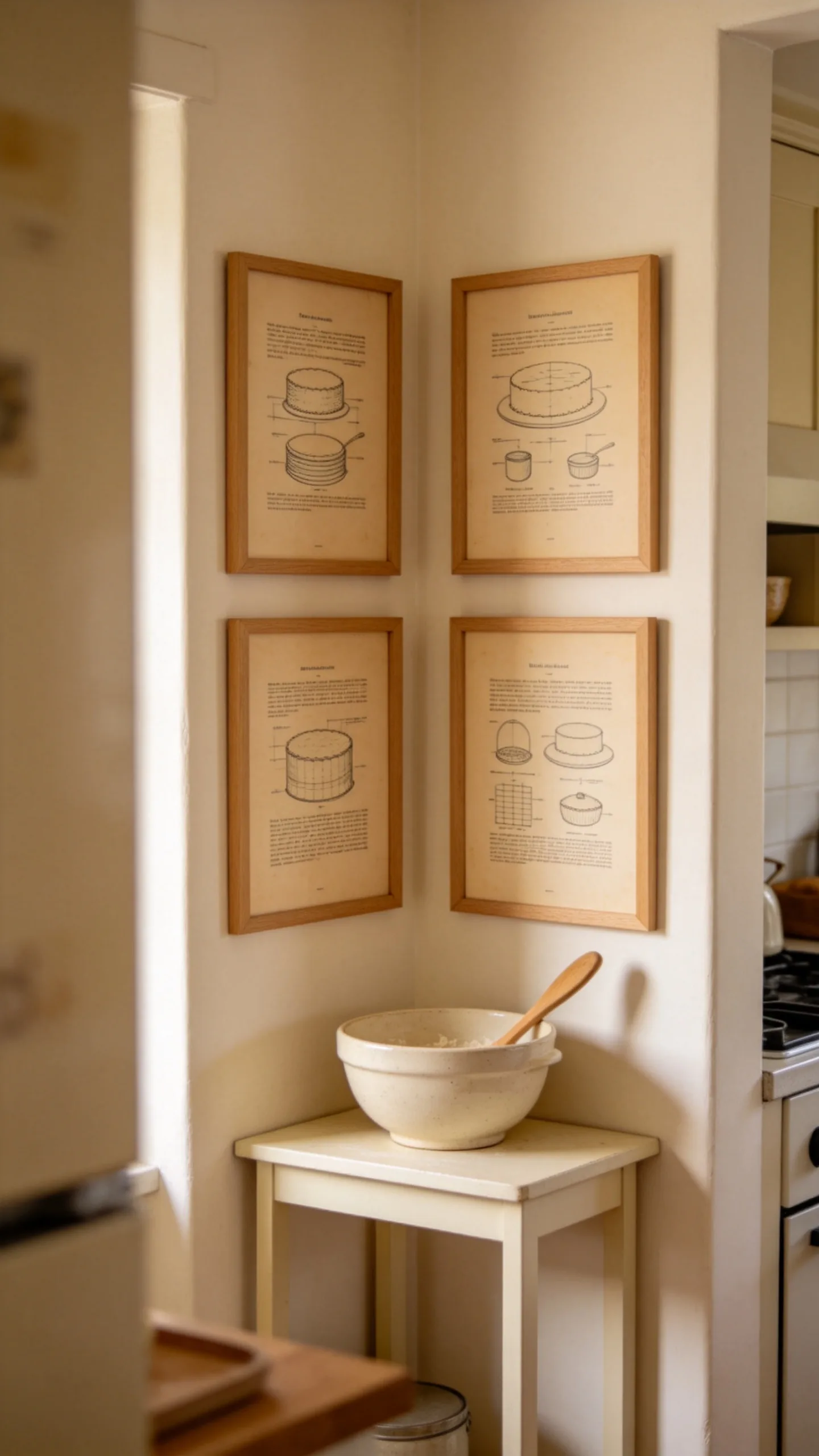
Vintage cookbook pages bring character to a kitchen wall while keeping the decor connected to cooking. Look for pages with illustrated recipes, baking diagrams, ingredient charts, or old-fashioned meal planning notes.
Frame them in matching simple frames to make the collection feel intentional. This idea works well on a narrow wall beside a pantry, near a baking station, or above a small console used for serving. If the pages are delicate, use copies or prints instead of originals so they are protected from kitchen humidity and light.
16. Colorful Abstract Art to Echo Cabinet or Tile Colors
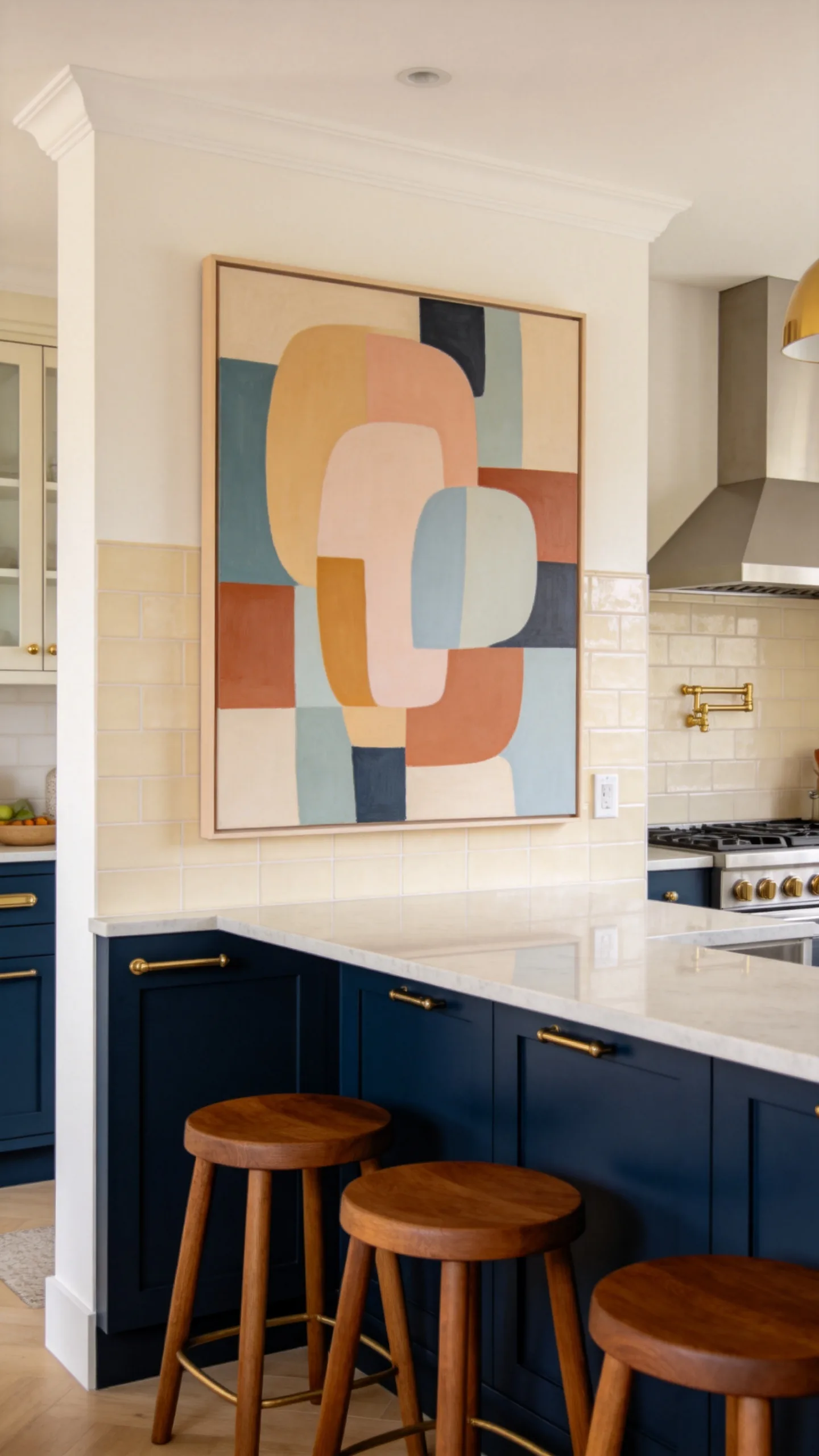
Abstract art can help pull together a kitchen color palette. Choose a piece that repeats tones from your cabinets, backsplash tile, bar stools, rug, or window treatment. For example, a kitchen with navy lower cabinets might look finished with abstract art that includes navy, cream, brass, and warm brown.
Place the artwork where it can be seen from the main entry into the kitchen. On a blank wall near a breakfast nook, a large abstract print can act as the room’s color bridge, connecting the eating area with the cooking zone. Keep the surrounding decor simple so the art remains the focal point.
17. Slim Vertical Art for a Narrow Wall
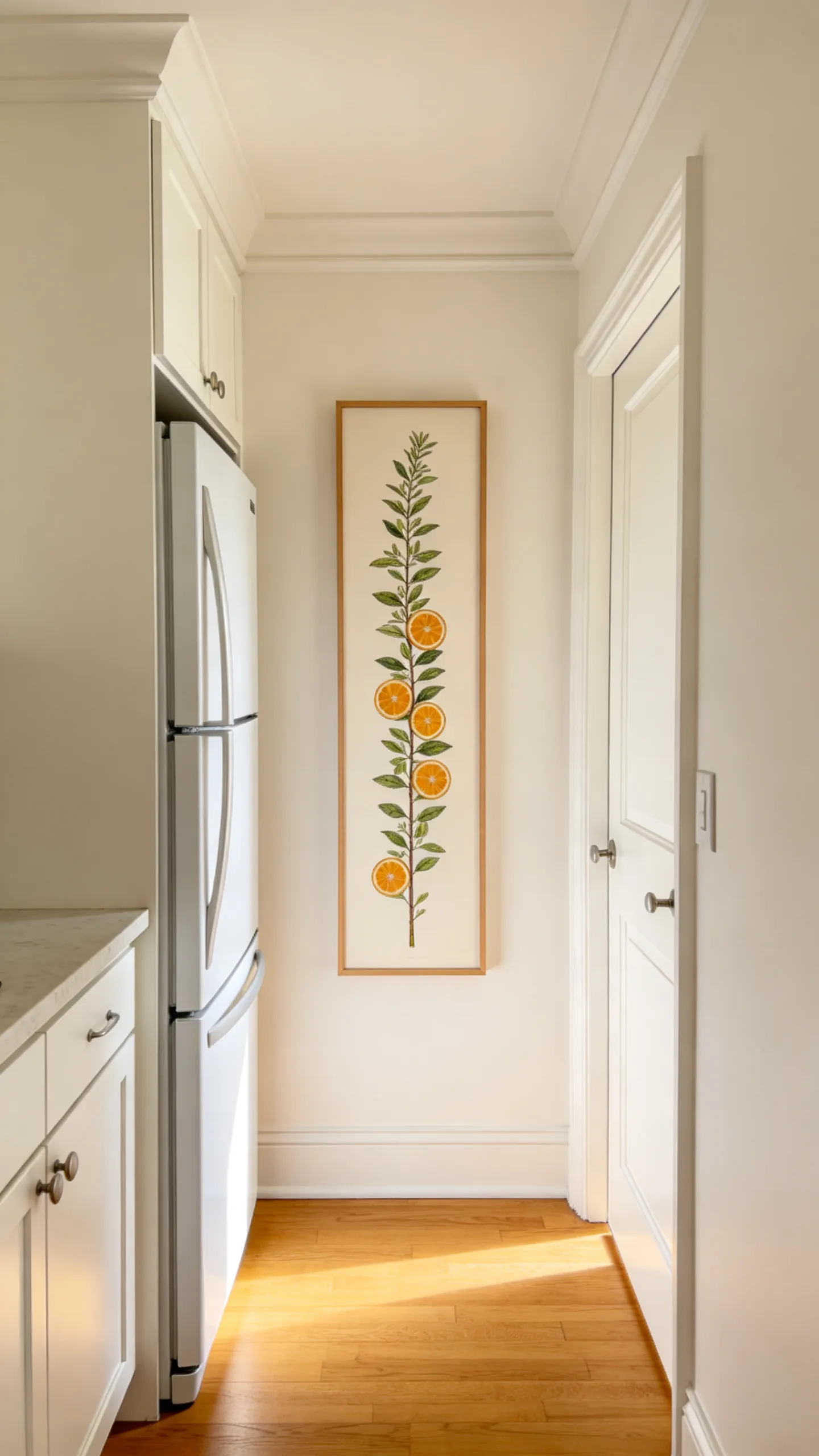
Narrow kitchen walls are common beside refrigerators, pantry doors, windows, or cabinet runs. Instead of leaving them empty, use slim vertical art to make the area feel styled without crowding the space.
Choose a tall botanical print, a vertical food illustration, a stacked set of small frames, or a narrow textile wall hanging. Vertical art draws the eye upward and makes the wall feel purposeful. This is especially useful in small kitchens because it decorates unused wall space without affecting traffic flow, cabinet access, or counter function.
18. Framed Family Food Photos in a Grid
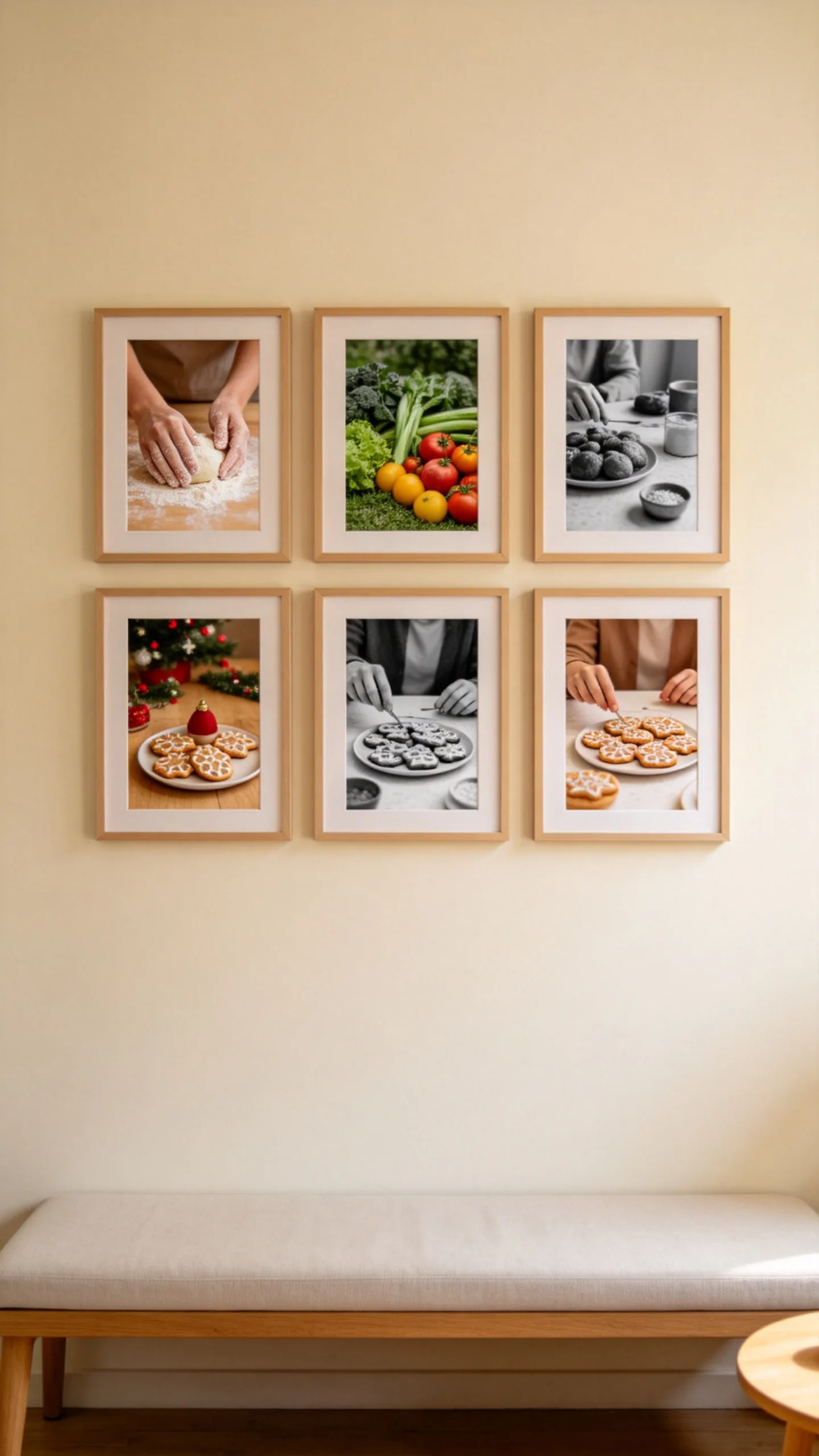
Family food photos can feel elevated when framed in a clean grid. Use close-up images of favorite meals, farmers market trips, holiday baking, garden produce, or shared table moments instead of casual snapshots with cluttered backgrounds.
Print the photos in black and white for a cohesive look, or use warm color editing if the kitchen has wood tones and cream walls. A grid of four or six matching frames works well above a breakfast nook bench or on a blank wall near the dining area. Keep the spacing even so the display feels polished rather than random.
19. Ceramic Tile Art as a Kitchen Focal Point
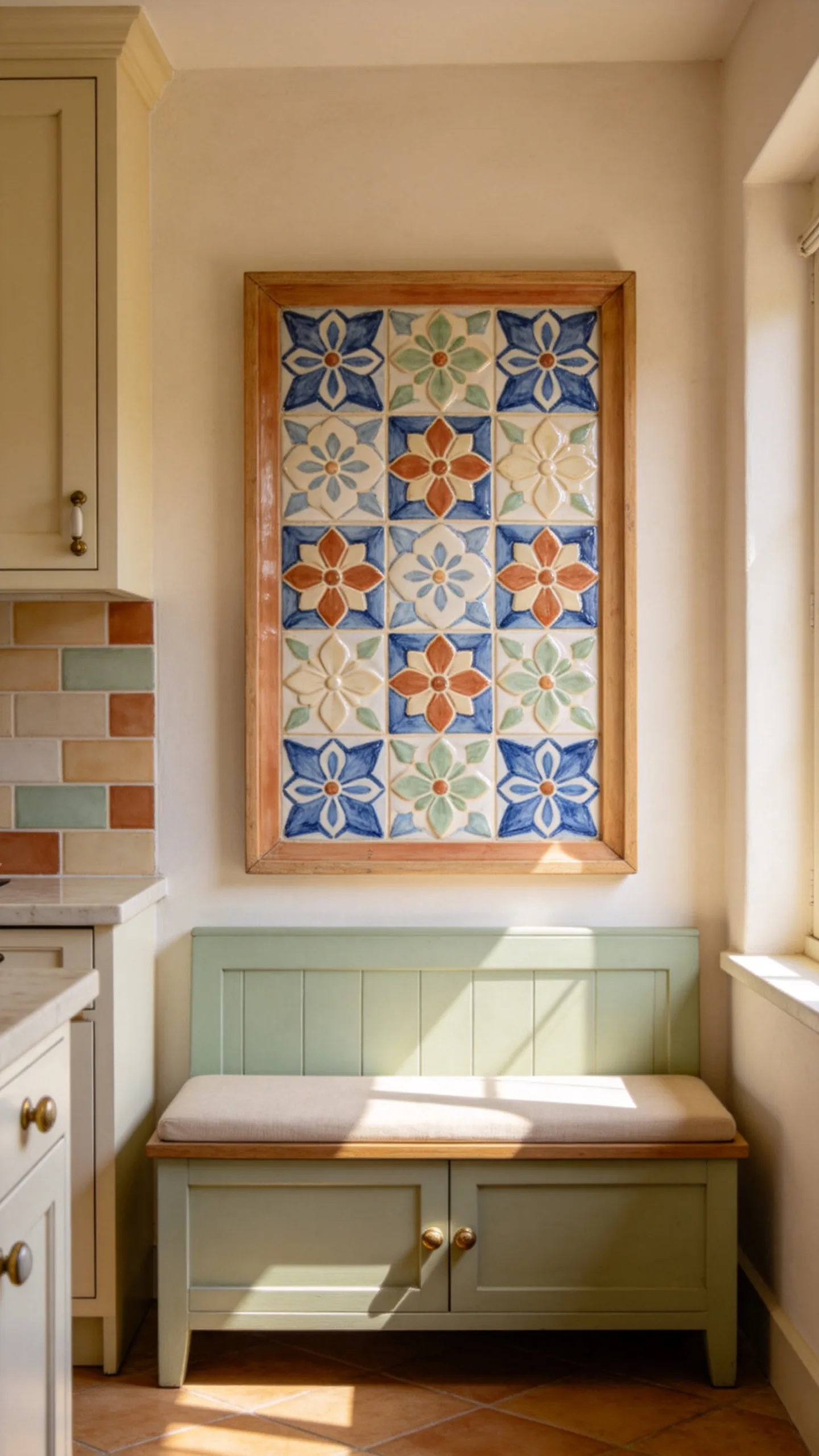
Decorative ceramic tile art is a durable option for kitchens because it relates naturally to backsplashes, dishes, and handmade materials. Use one framed tile panel or a small arrangement of patterned tiles on a blank wall away from direct cooking grease.
This idea looks especially good in Mediterranean, cottage, Spanish-inspired, or colorful kitchens. Choose tile colors that coordinate with the backsplash, cabinet hardware, or floor. A small tile art grouping can brighten the wall near a breakfast nook, while a larger framed tile panel can anchor a plain wall beside a pantry cabinet.
20. Seasonal Art Swap Above a Small Dining Table
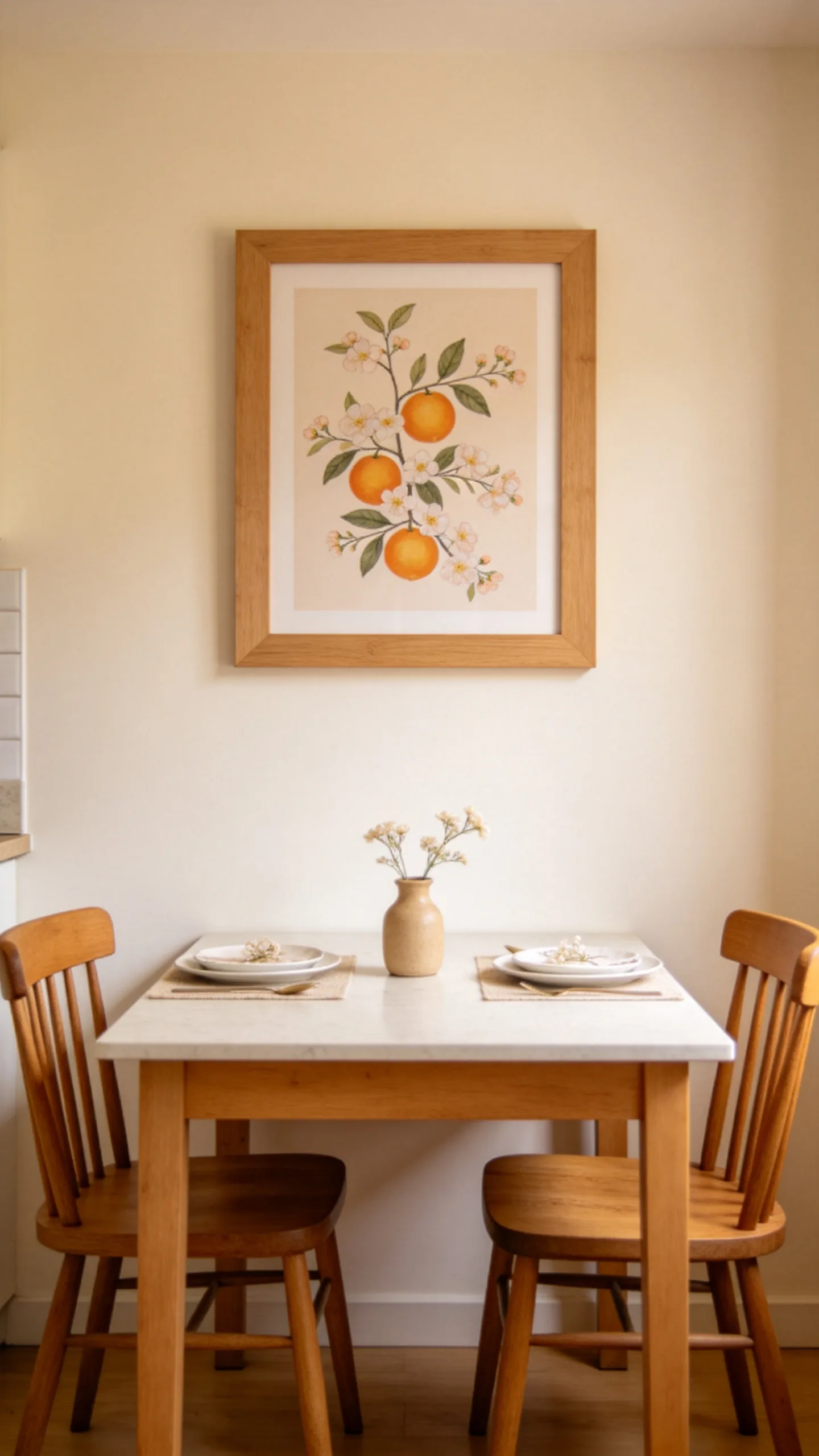
A seasonal art swap keeps a breakfast nook feeling fresh without changing furniture or paint. Use one main frame above the table and rotate prints throughout the year, such as citrus art in summer, warm still life prints in fall, evergreen sketches in winter, and floral illustrations in spring.
This is practical for small kitchens because the wall stays uncluttered while still changing with the season. Store extra prints flat in a folder or behind the current print inside the frame. Choose a frame color that works year-round, such as natural wood, black, brass, or white.
21. Mixed Gallery Wall with Art, Mini Shelves, and Kitchen Tools
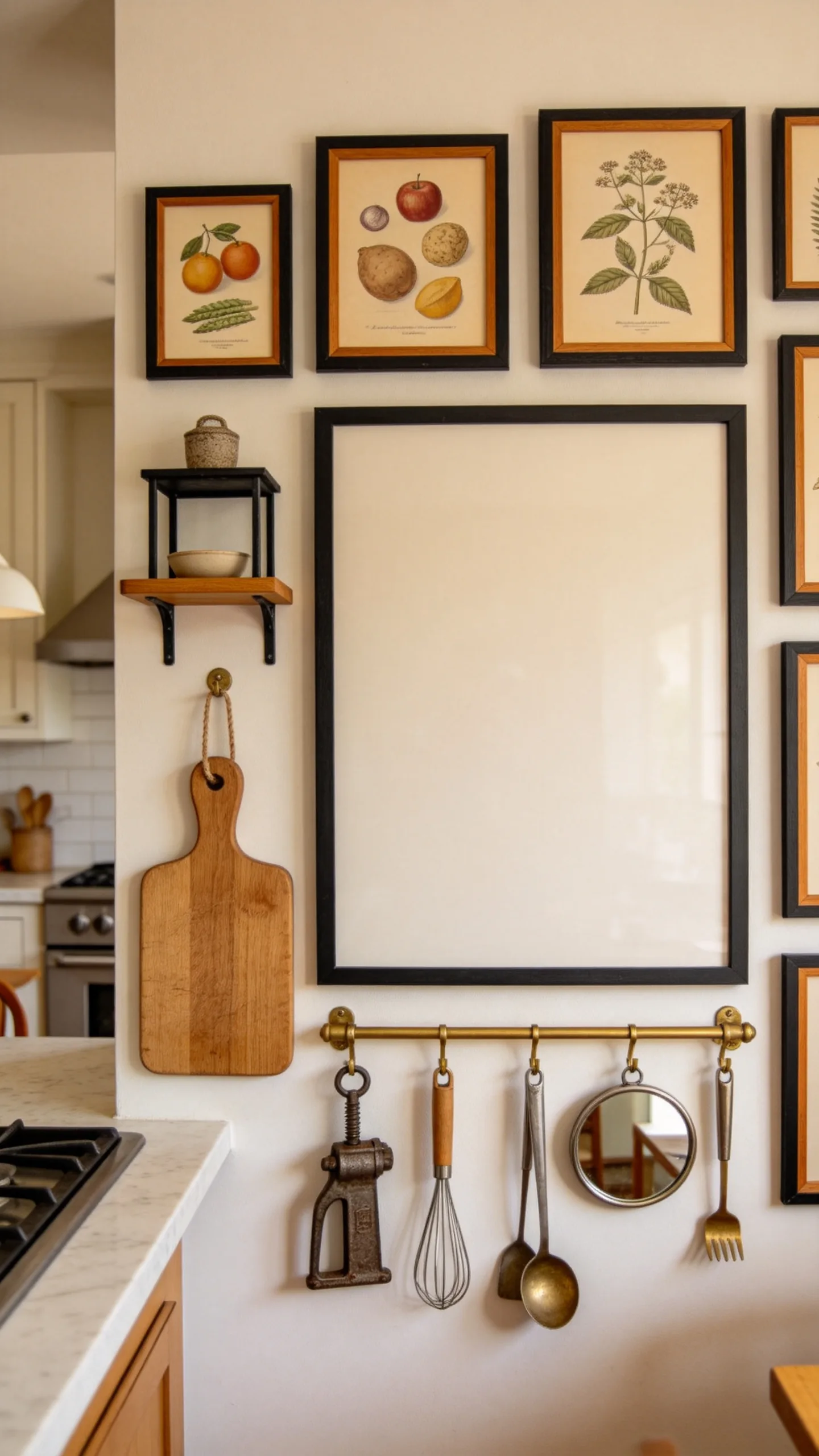
A mixed gallery wall can turn a large blank kitchen wall into a layered focal point. Combine framed art with a small shelf, a hanging cutting board, a vintage tray, a petite mirror, or a few attractive kitchen tools.
To keep the arrangement from looking chaotic, repeat one or two finishes, such as black frames with wood accents or brass hooks with warm-toned art. Start with the largest piece at eye level, then build around it with smaller items. This approach works well near a breakfast nook, eat-in kitchen wall, or open area between the kitchen and dining room because it adds personality while still feeling connected to everyday cooking and gathering.