28 Art Wall Ideas With Frames, Prints, Photos, and Mirrors
A mixed media art wall works best when every piece has a job: one item anchors the layout, another adds texture, another brings in color, and smaller accents fill the gaps. These art wall ideas combine frames, prints, photos, mirrors, shelves, textiles, and sculptural pieces so you can create a display that feels collected instead of cluttered.
1. Black Frame Grid With One Round Mirror
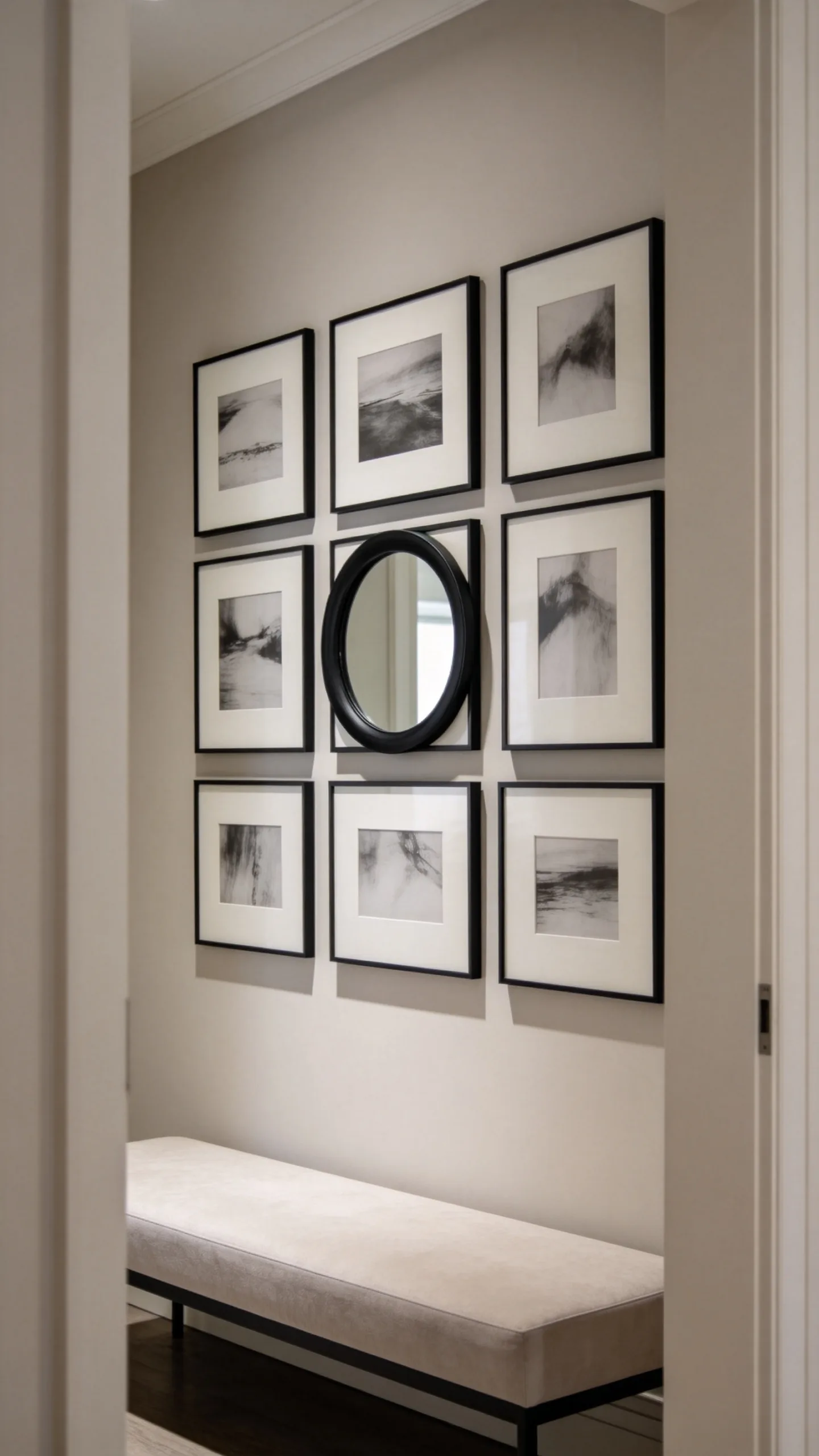
A black frame grid gives a living room or hallway wall a clean structure, especially above a sofa, console table, or bench. Use matching thin black frames for family photos, architectural prints, or black-and-white travel images, then replace one frame in the grid with a round mirror to break the repetition.
Keep the spacing consistent at about two to three inches between pieces. The mirror can sit slightly off-center so the wall feels designed rather than too perfect. This idea works well on white, greige, or soft taupe walls because the black lines create definition without needing bright color.
2. Vintage Gold Frames With Botanical Prints
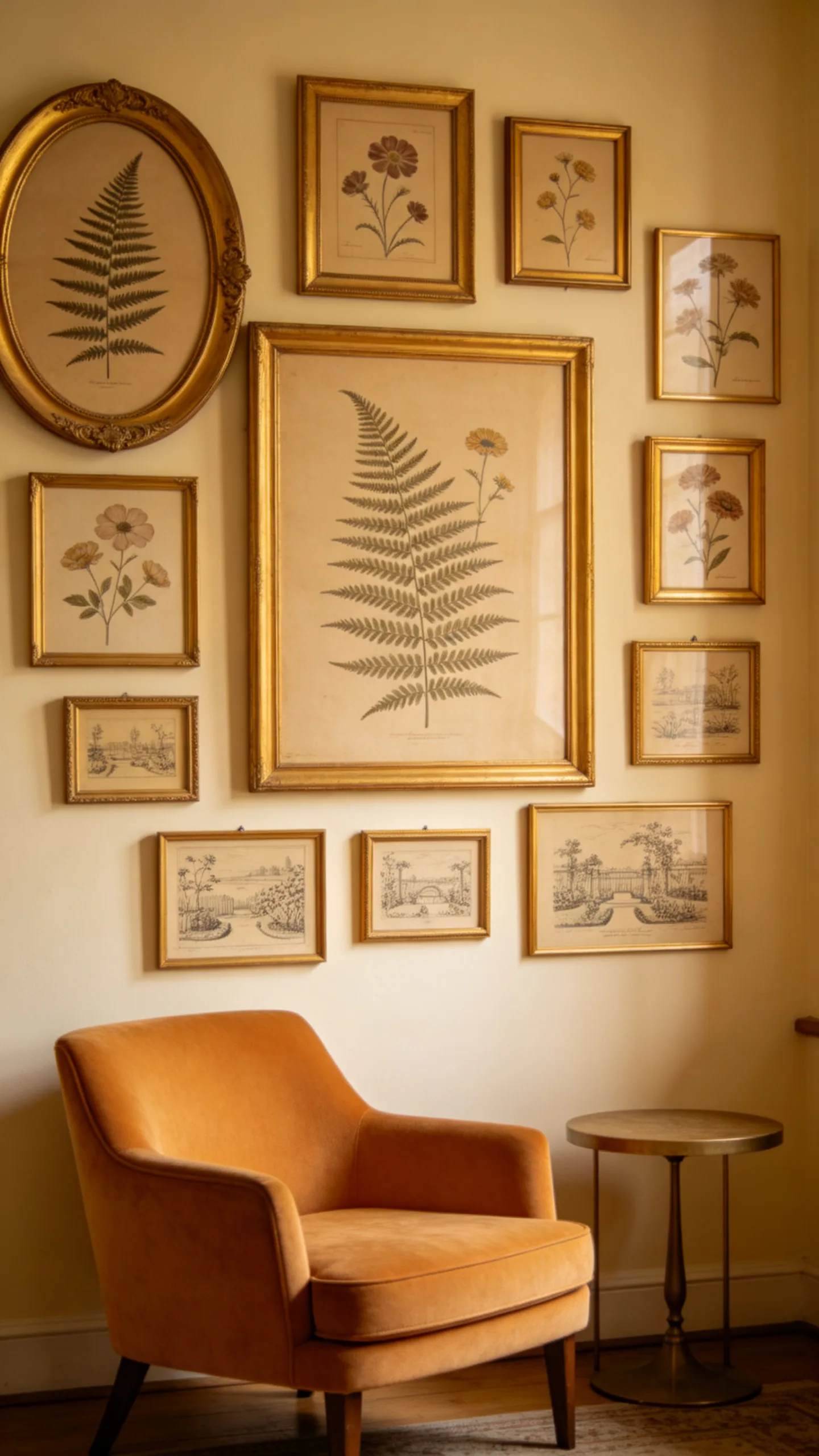
Vintage-style gold frames pair beautifully with botanical prints in a dining room, bedroom, or reading corner. Choose pressed-flower illustrations, fern drawings, or garden sketches in muted greens, creams, and warm browns for a soft collected look.
Mix frame shapes, such as oval, rectangular, and small square frames, but keep the finish similar so the arrangement stays cohesive. Place the largest print near eye level and let smaller frames climb around it. This creates a gentle focal point without making the wall feel busy.
3. Family Photo Wall With Neutral Mats
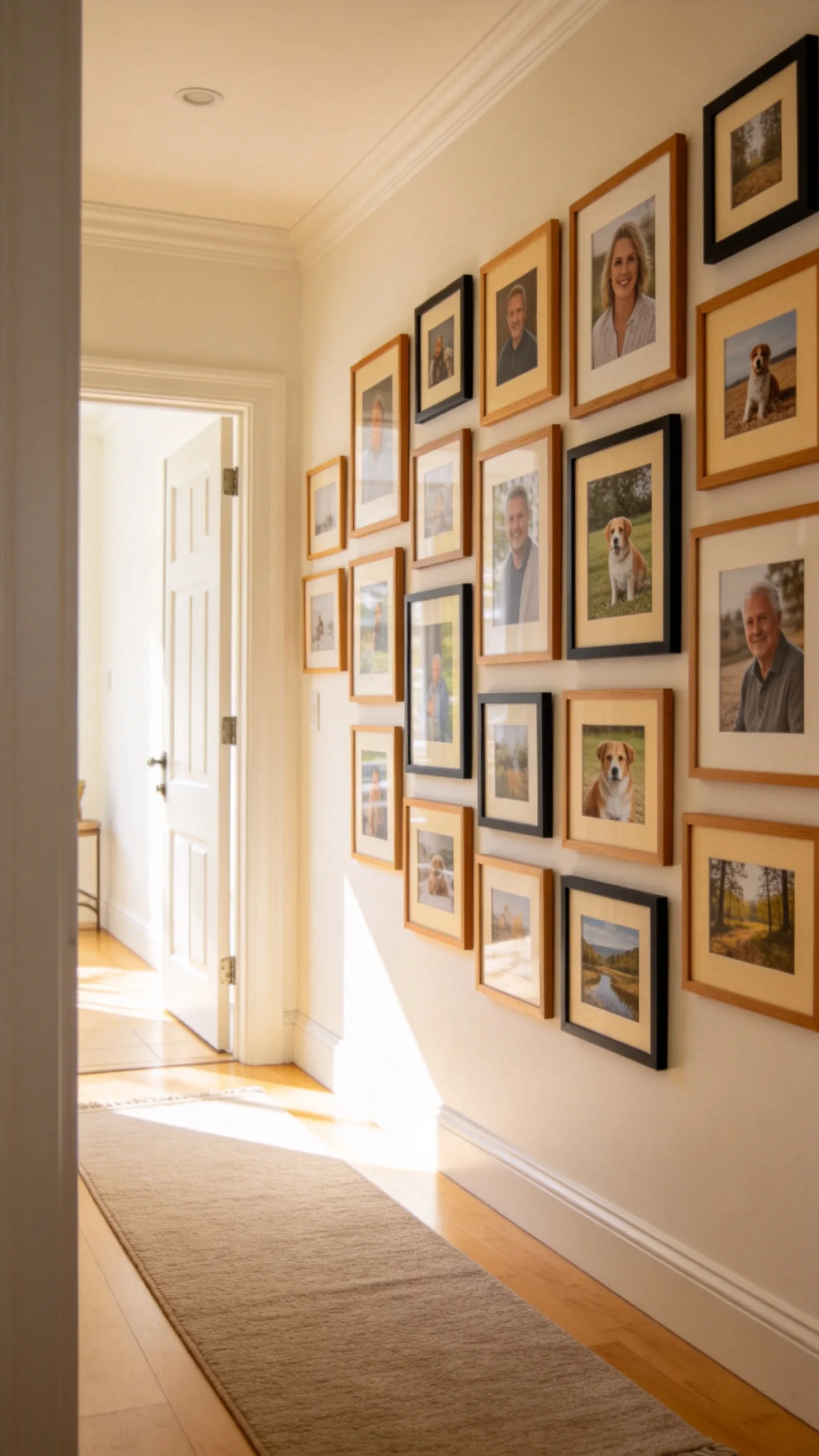
A family photo wall can feel polished when the images share a consistent mat color. Use white, ivory, or warm beige mats inside wood, brass, or black frames to give casual snapshots a more intentional look.
This works especially well in a stairway, hallway, or entry wall where people naturally pause. Use a mix of close-up portraits, candid outdoor photos, and detail shots like hands, pets, or vacation scenery. Keeping the mats consistent helps the wall feel calm even when the photos show different moments and colors.
4. Living Room Art Wall Around a TV
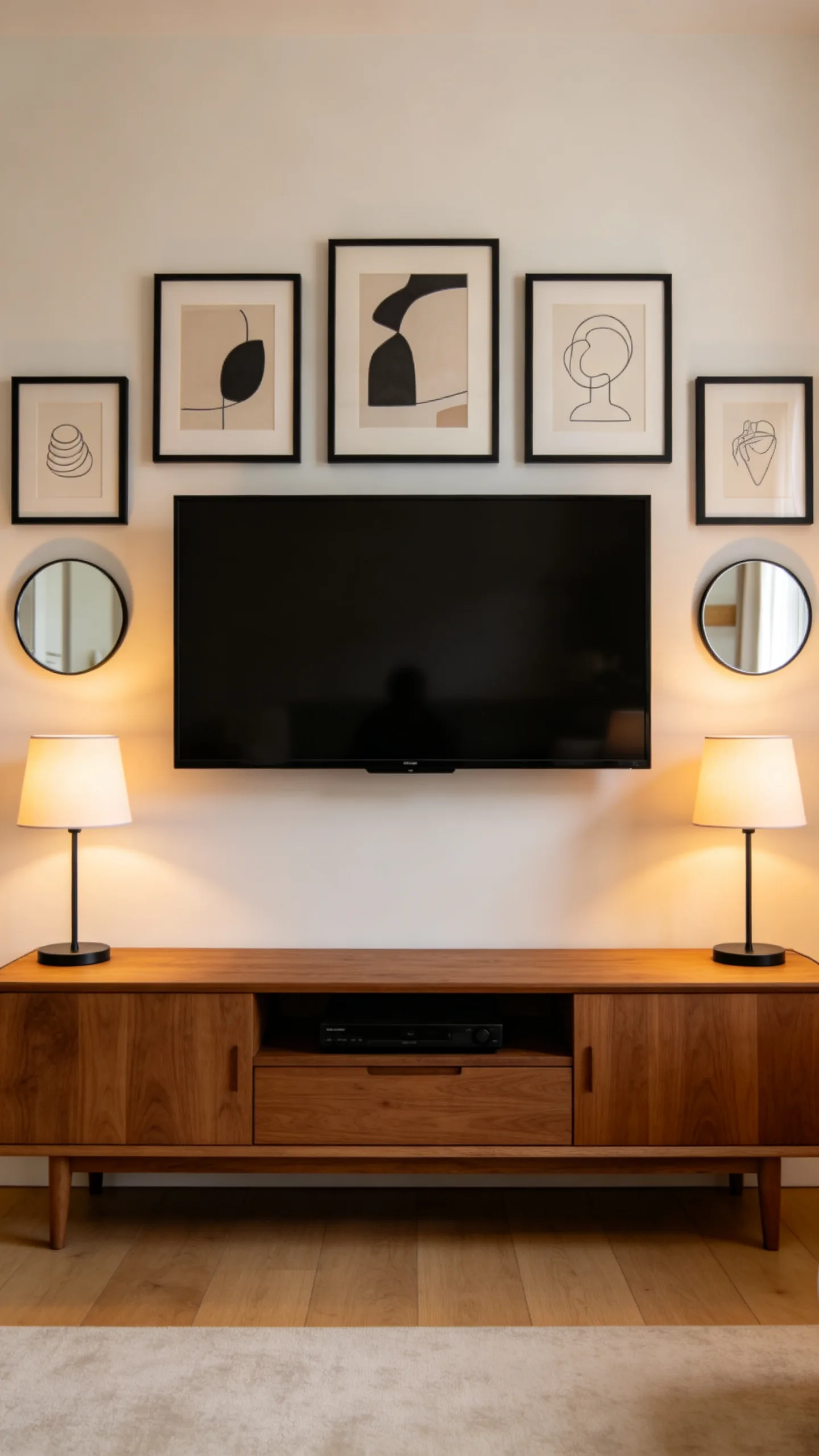
An art wall around a TV softens the large black rectangle and makes the screen feel integrated into the room. Use framed prints, small mirrors, and simple line drawings on both sides of the television, leaving enough negative space so the TV does not look crowded.
Choose frames that match nearby furniture finishes, such as black frames with a black media console or walnut frames with wood shelving. Keep the largest pieces level with the TV’s vertical center. Smaller pieces can sit higher or lower to create a balanced gallery effect.
5. Entryway Mirror and Print Pairing
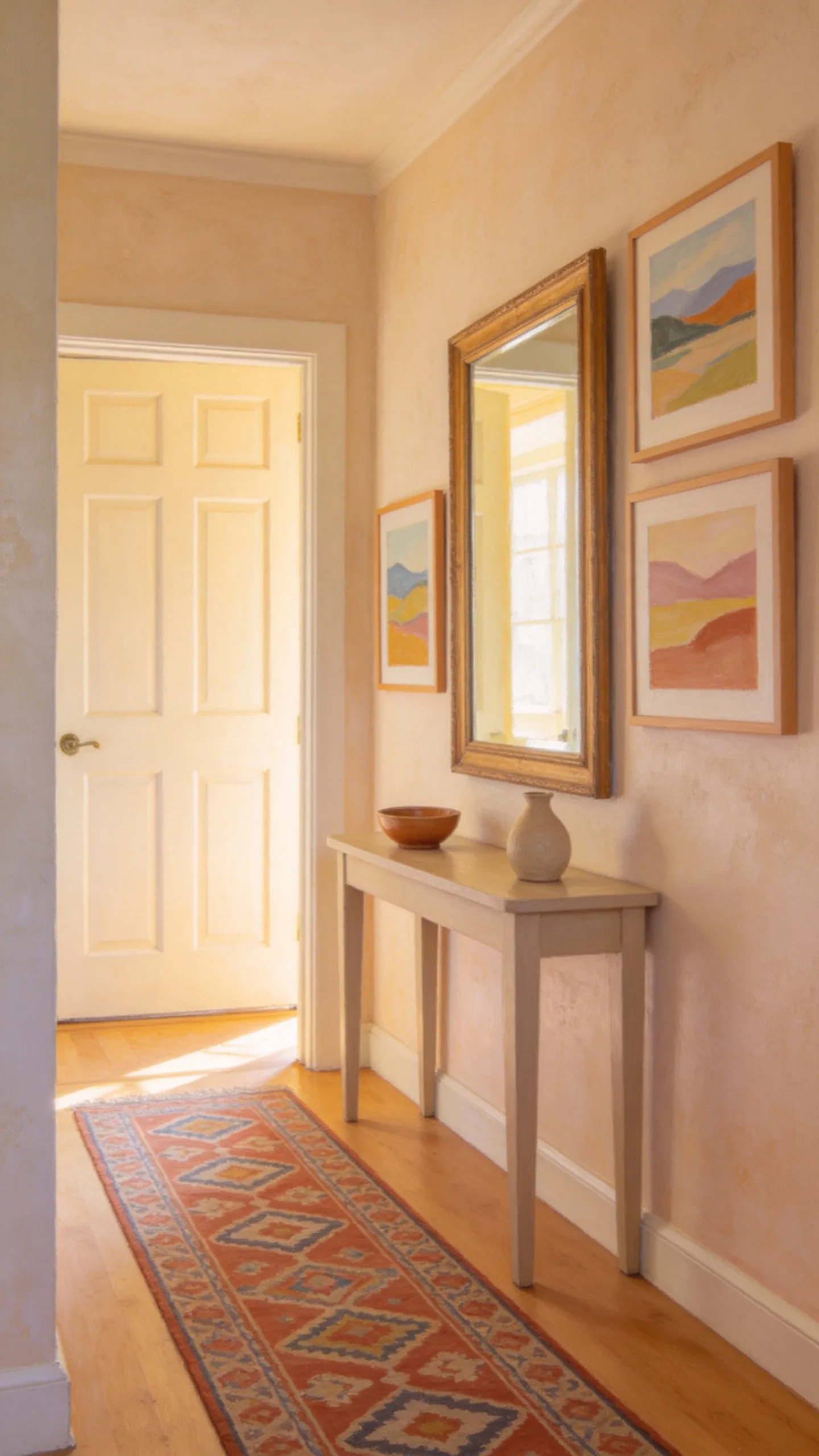
An entryway art wall can be both decorative and practical by combining a mirror with framed prints. Hang a medium mirror above a narrow console table, then add two or three framed prints beside it to create width.
Use art that matches the entry’s function, such as landscape prints, city sketches, or simple abstract pieces in colors pulled from a runner rug. The mirror reflects light near the door, while the prints make the wall feel finished rather than purely functional.
6. Asymmetrical Gallery Wall Over a Sofa
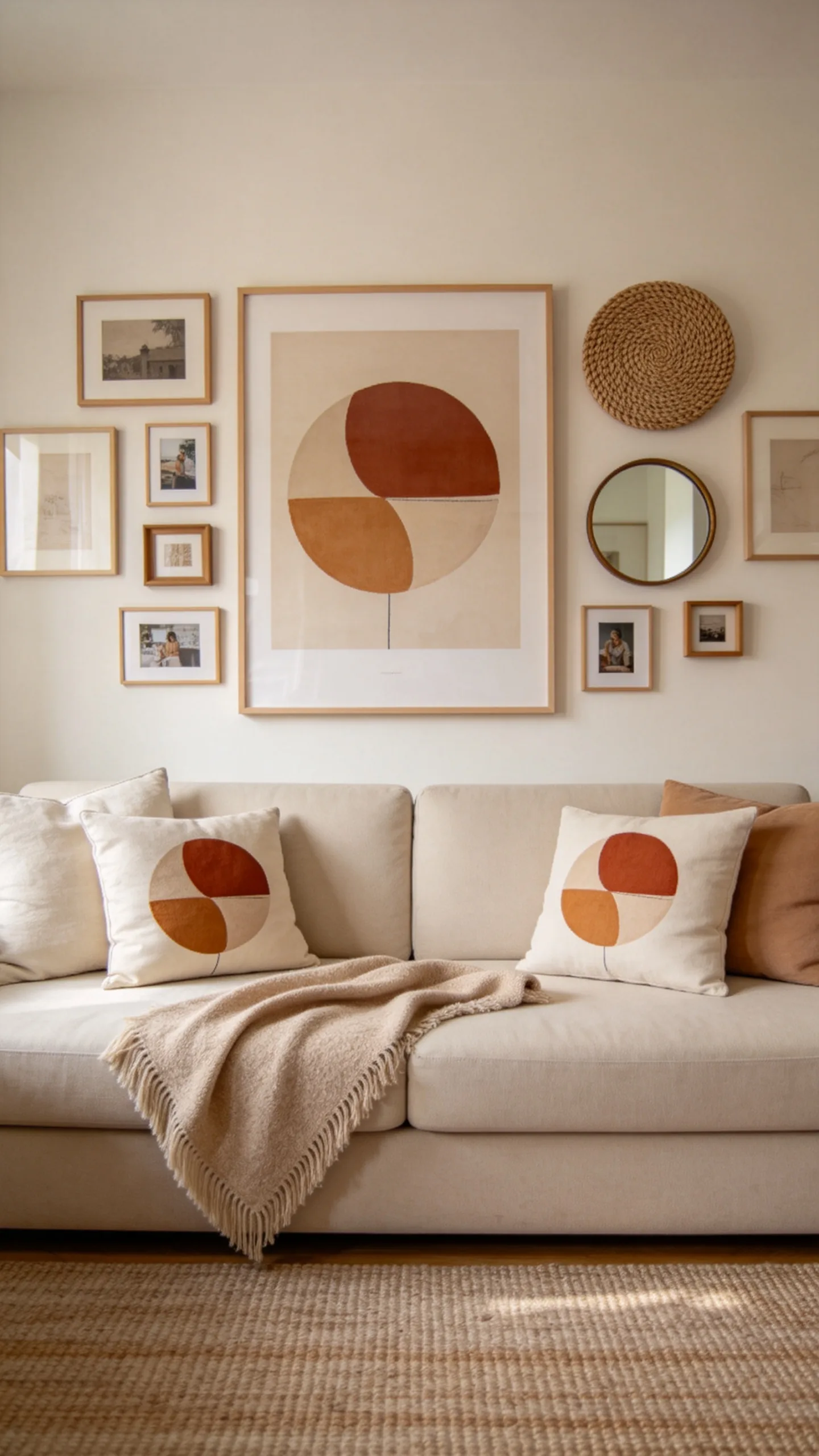
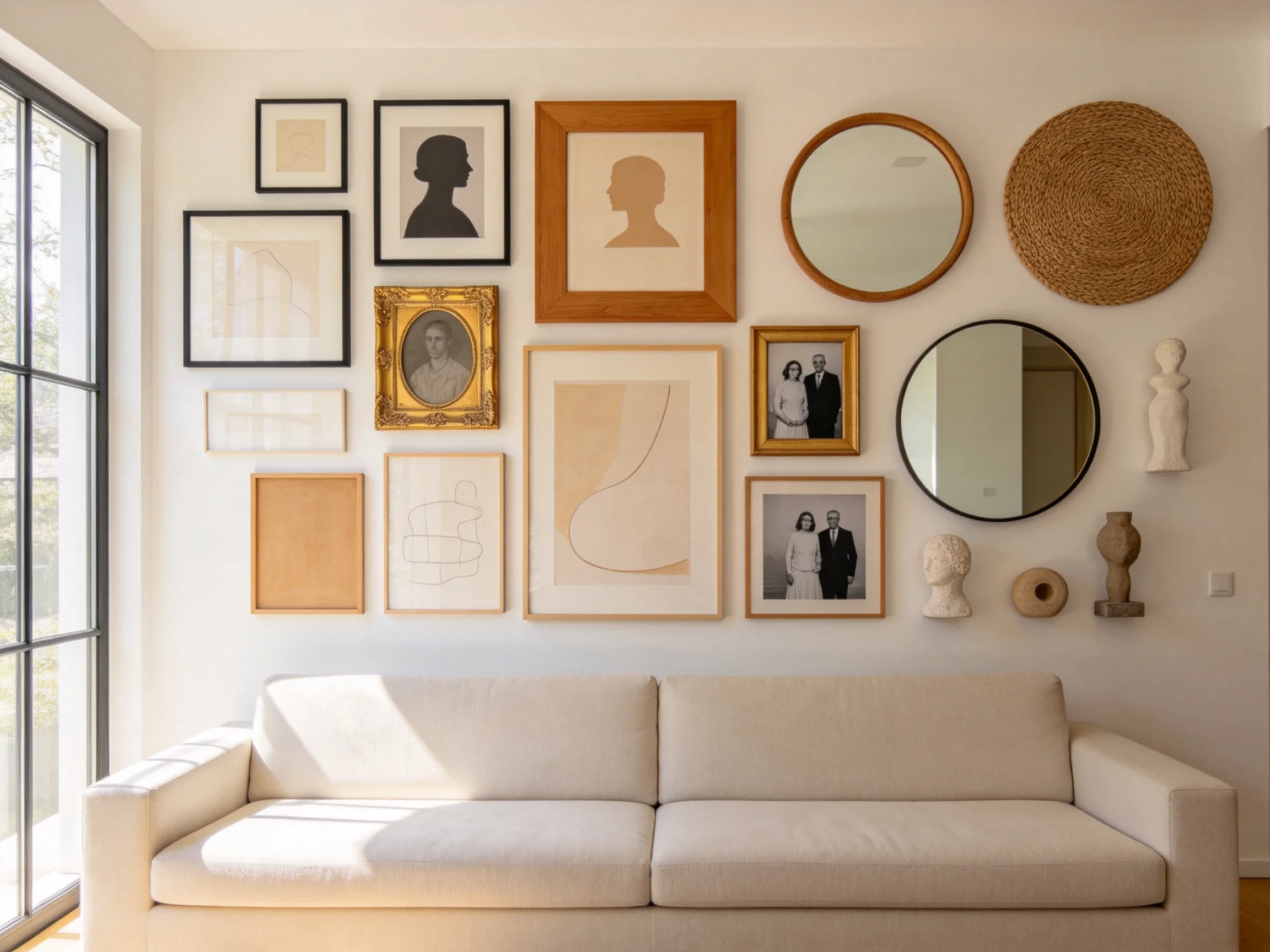
An asymmetrical gallery wall works well above a sofa when you want the room to feel relaxed and layered. Start with one large framed print near the center, then build outward with smaller photos, a small mirror, and one textured wall object.
Leave at least six to eight inches between the top of the sofa and the bottom of the lowest frame. This keeps the display connected to the furniture. Repeat one color from the sofa pillows or throw blanket in at least two prints so the art wall relates to the seating area.
7. Floating Shelf Art Wall With Layered Frames
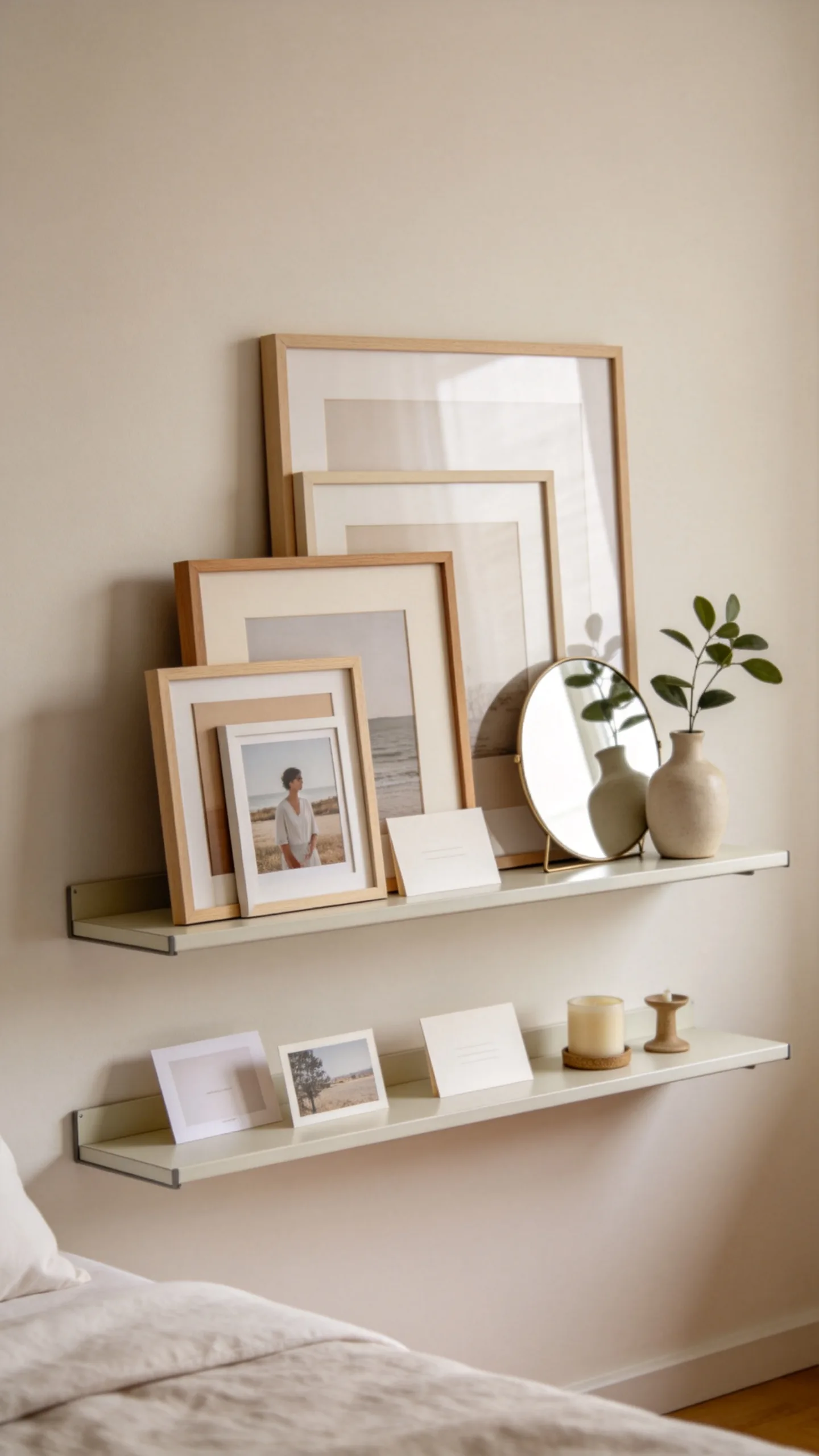
A floating shelf makes it easy to create an art wall without committing to dozens of nail holes. Install one or two slim picture ledges in a bedroom, office, or hallway, then layer framed prints, photos, small mirrors, and postcards along the shelf.
Place larger frames at the back and smaller pieces in front. Add a ceramic vase, small plant, or candleholder to break up the flat surfaces. This is especially useful for renters or anyone who likes to switch seasonal art, family photos, or holiday prints.
8. Bedroom Art Wall With Soft Fabric Texture
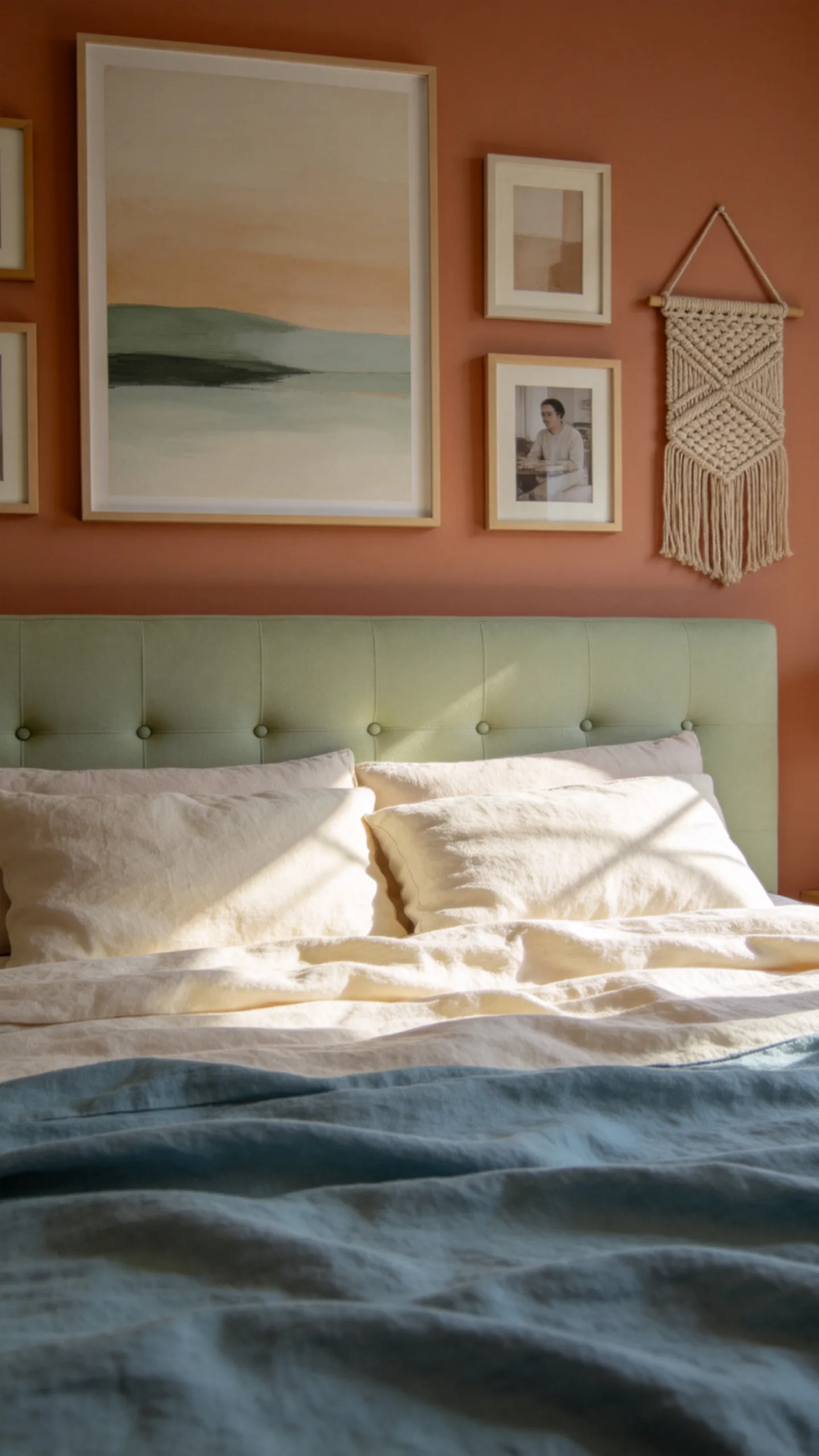
A bedroom art wall feels warmer when you mix framed art with fabric texture. Combine calm prints, framed photos, and a small woven wall hanging above the headboard or dresser.
Choose soft materials like linen, cotton, boucle, or macrame to keep the wall from feeling too hard. For a restful look, use muted colors such as sage, sand, cream, dusty blue, or clay. The textile piece adds depth while the frames keep the arrangement structured.
9. Small Hallway Art Wall With Slim Frames
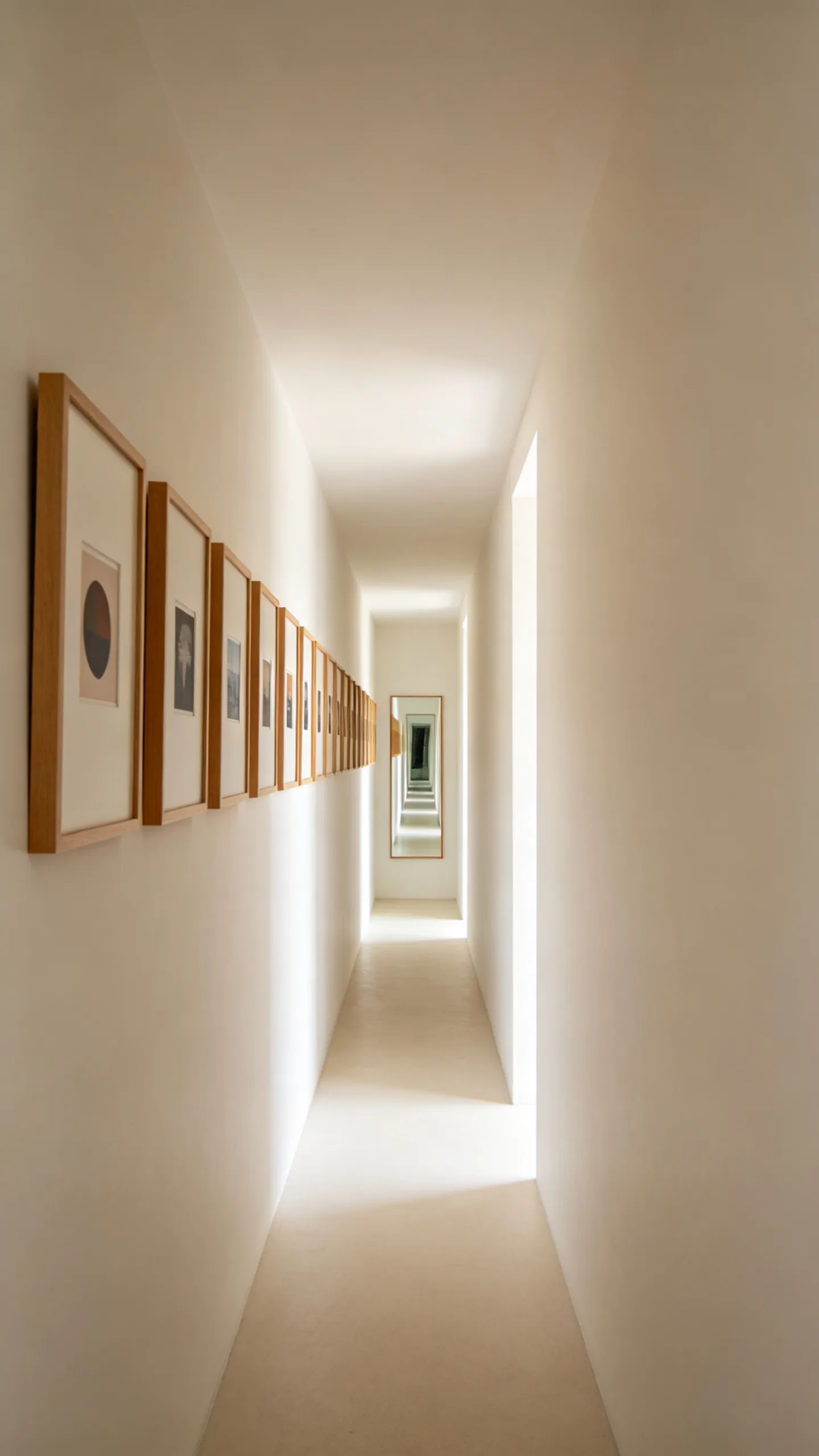
A narrow hallway needs art that adds interest without making the space feel crowded. Use slim frames in a simple finish, such as white, oak, or black, and hang them in a straight line along one side of the hall.
Choose smaller prints or photos so the wall does not overwhelm the walkway. Keep the artwork at a consistent center height, usually around eye level. A small mirror at the end of the hall can reflect light and make the space feel longer.
10. Mixed Media Wall With Travel Photos and Maps
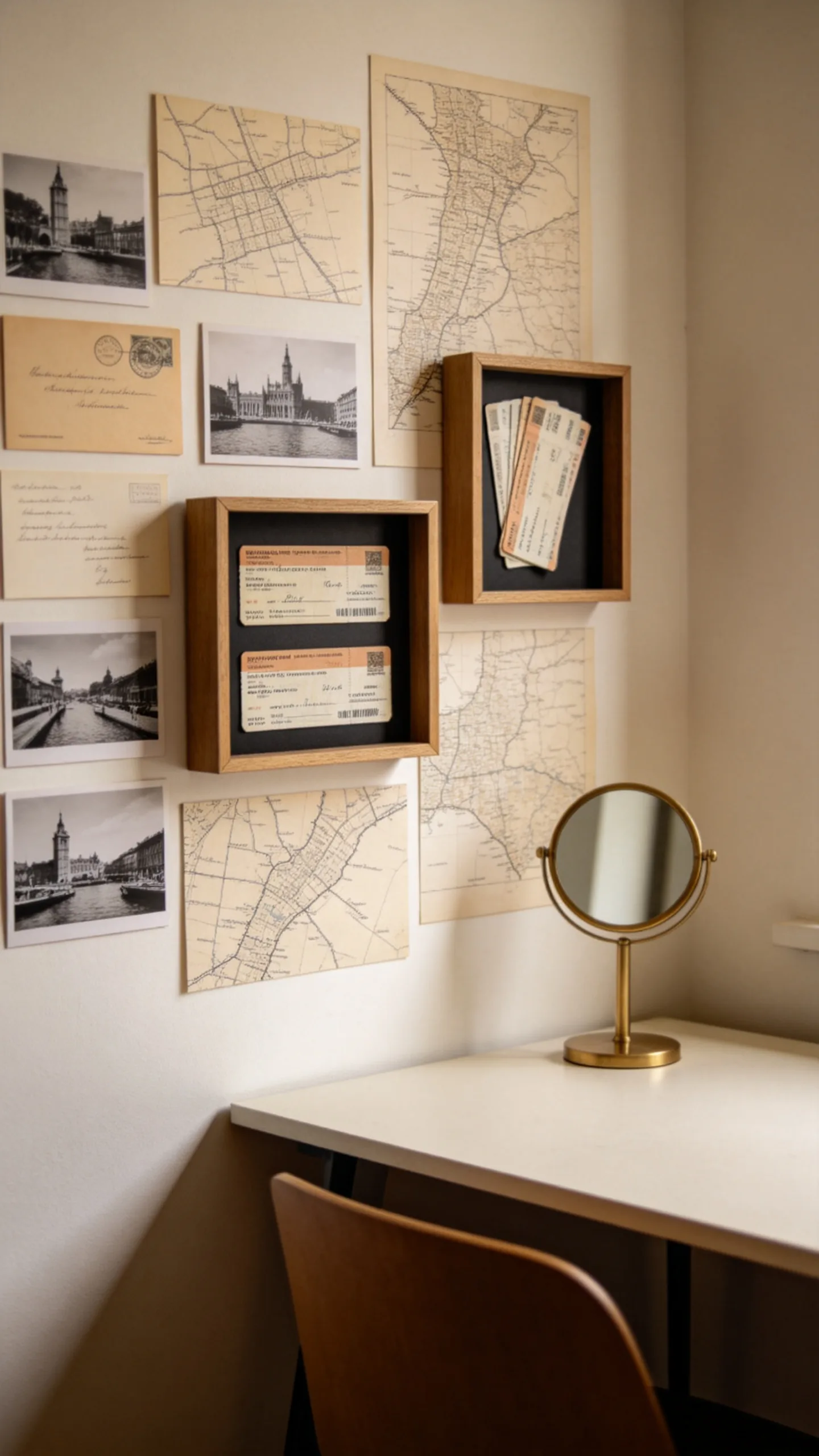
Travel photos look more curated when paired with maps, ticket stubs, postcards, and city prints. Use shadow box frames for small keepsakes and standard frames for photos or map sections.
This idea works well in a home office, hallway, or guest room. Keep the color palette consistent by printing photos in black and white or choosing maps with similar tones. A small brass or wood-framed mirror can add shine and prevent the display from feeling too flat.
11. Kids’ Art Wall With Colorful Frames
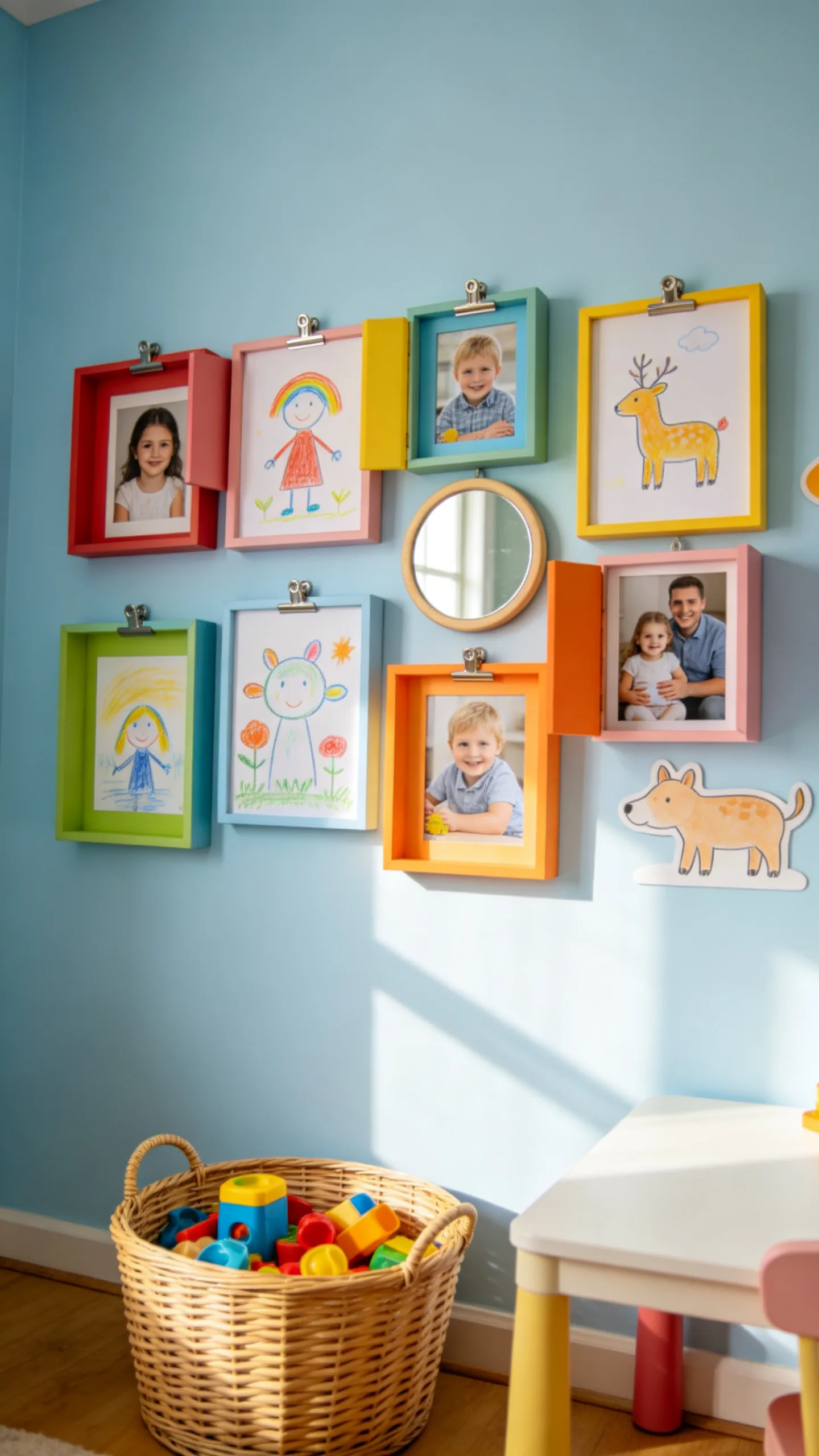
A kids’ art wall is a cheerful way to display drawings, paintings, school projects, and family photos. Use colorful frames in a playroom, hallway, or child’s bedroom, and arrange them at a height where children can see their work.
For easy updates, use front-opening frames or clip-style frames. Mix in a small mirror, alphabet print, or animal illustration to make the wall feel like part of the room decor. Keep the surrounding wall color simple, such as white or pale blue, so the artwork remains the focus.
12. Minimalist Art Wall With Thin Oak Frames
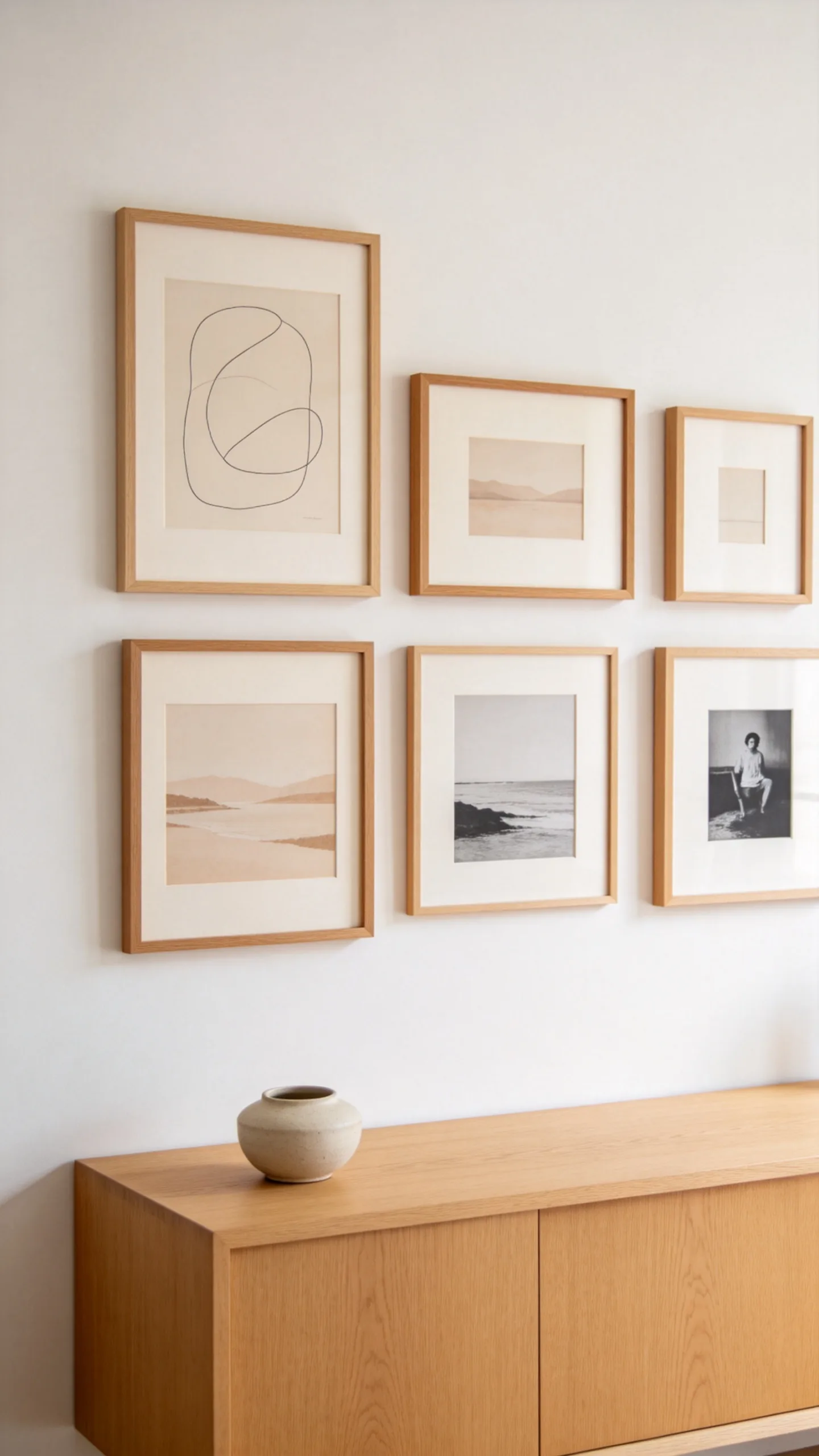
A minimalist art wall can still feel layered when you use different print sizes and a repeated wood finish. Thin oak frames work well with abstract line drawings, soft landscape prints, and simple black-and-white photos.
Place the art above a light wood console, bed, or desk to create a calm focal point. Leave generous space between each piece so the wall has breathing room. This approach suits Scandinavian, Japandi, and modern neutral interiors.
13. Dining Room Art Wall With Still Life Prints
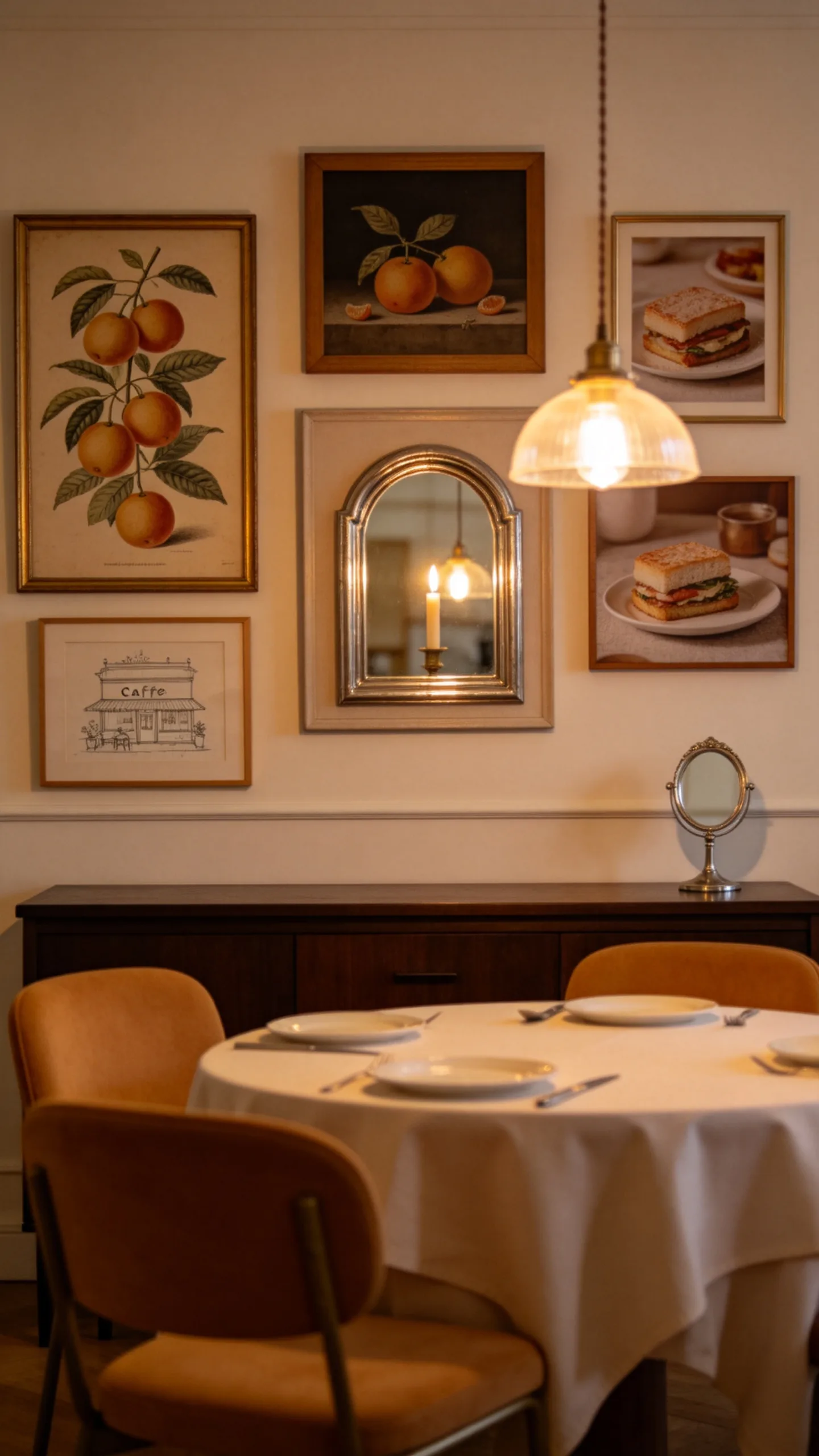
A dining room art wall feels especially fitting with still life prints, food photography, vintage fruit illustrations, or framed cafe sketches. These pieces support the purpose of the room without feeling too themed.
Hang the arrangement above a sideboard, buffet, or along the longest dining wall. Add one small mirror or metallic frame to reflect candlelight and pendant lighting during meals. Use colors that connect to table linens, chair upholstery, or a nearby rug.
14. Staircase Gallery Wall With Photos and Prints
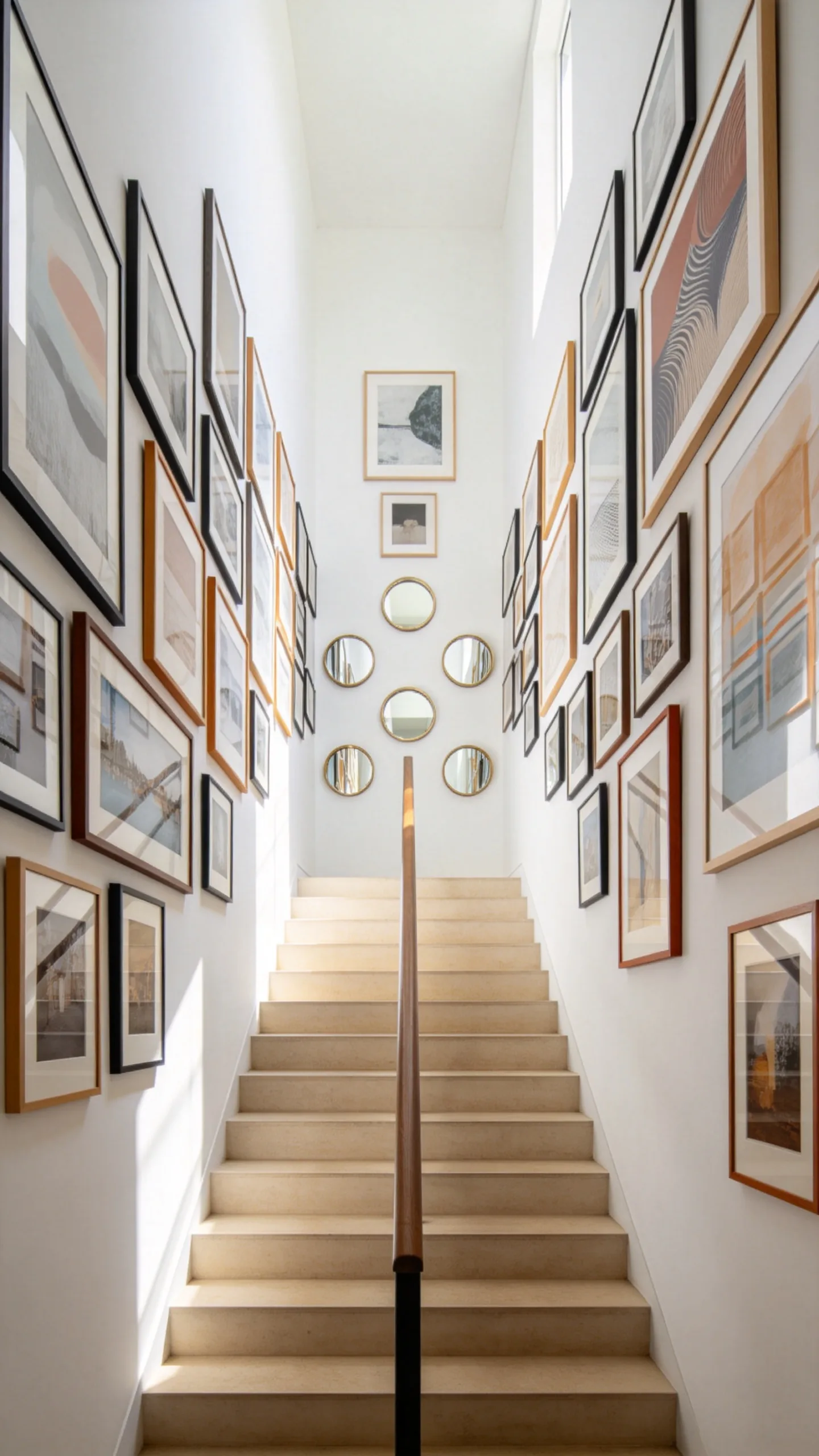
A staircase gallery wall should follow the angle of the stairs while keeping the spacing organized. Start by choosing a center line that rises parallel to the handrail, then arrange framed photos, prints, and small mirrors around that line.
Use paper templates before hanging so the layout feels balanced from both the bottom and top of the stairs. Mix horizontal and vertical frames for movement, but repeat frame finishes or mat colors to keep the display cohesive.
15. Mirror Cluster With Small Framed Art
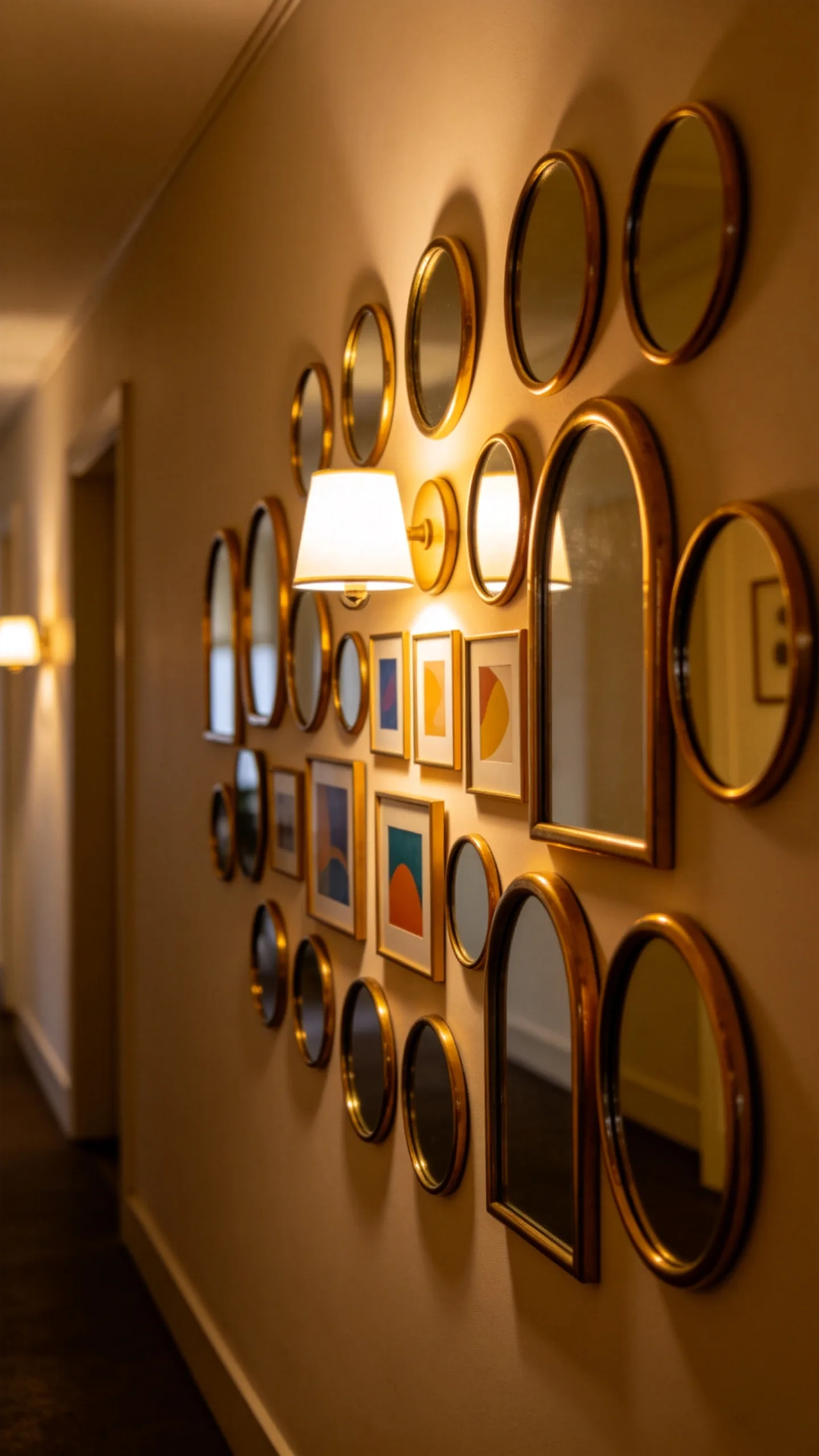
A mirror cluster can brighten a dark room while still feeling artistic. Use several small mirrors in round, oval, or arched shapes, then add framed prints between them to soften the reflective surfaces.
This works well in a dim hallway, powder room, or apartment living room. Keep the mirrors different sizes but similar finishes, such as all brass or all black. The framed art adds color and prevents the wall from looking like a store display.
16. Moody Art Wall With Dark Frames and Deep Colors
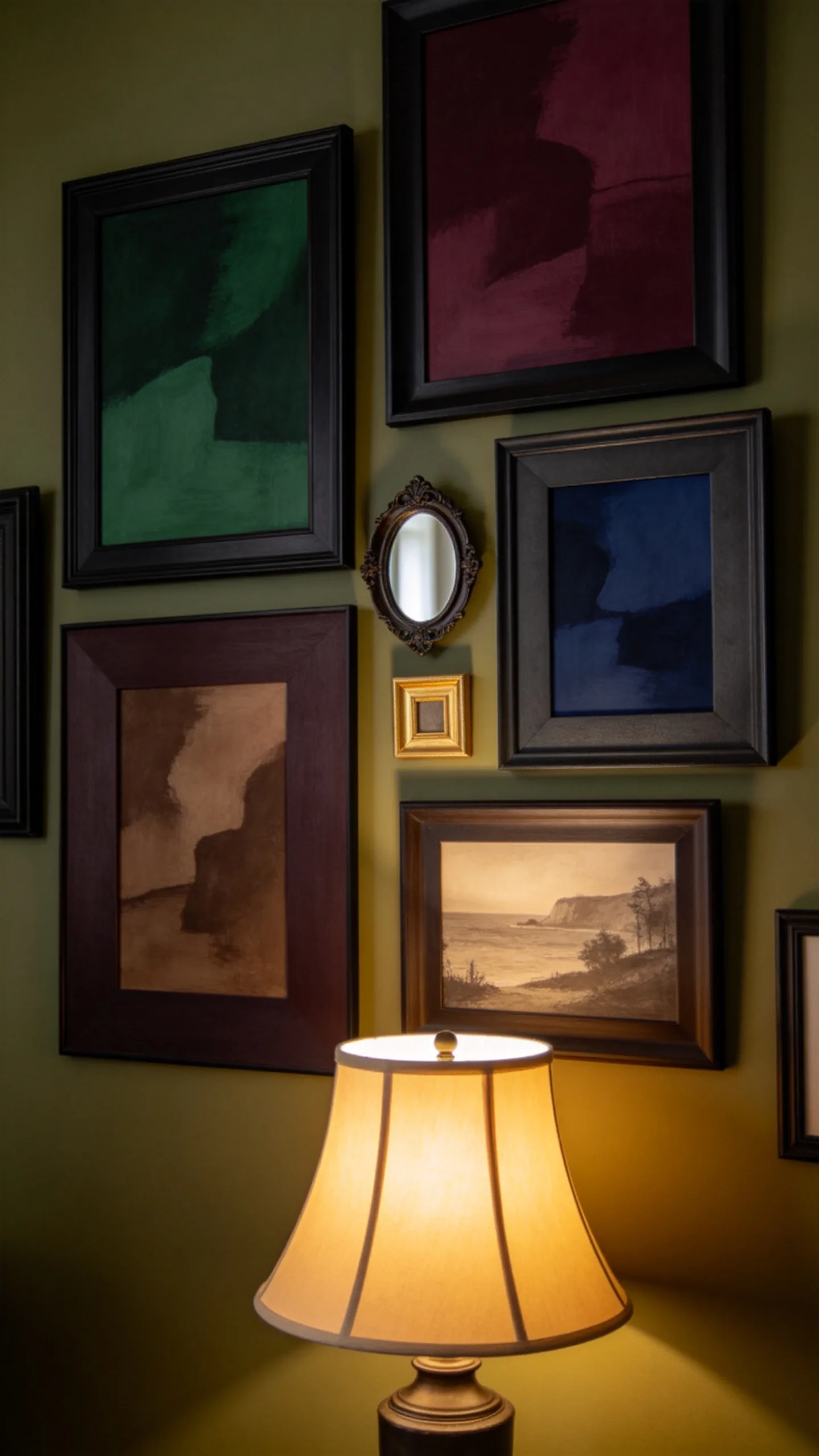
A moody art wall can make a bedroom, study, or dining room feel intimate. Choose dark frames in black, espresso, or aged bronze, then use prints with deep green, burgundy, navy, charcoal, or sepia tones.
This style works beautifully on walls painted olive, slate blue, mushroom, or warm gray. Add one antique-style mirror or a small gold frame for contrast. Use warm table lamps or picture lights nearby so the dark art remains visible in the evening.
17. Coastal Art Wall With Seascapes and Woven Accents
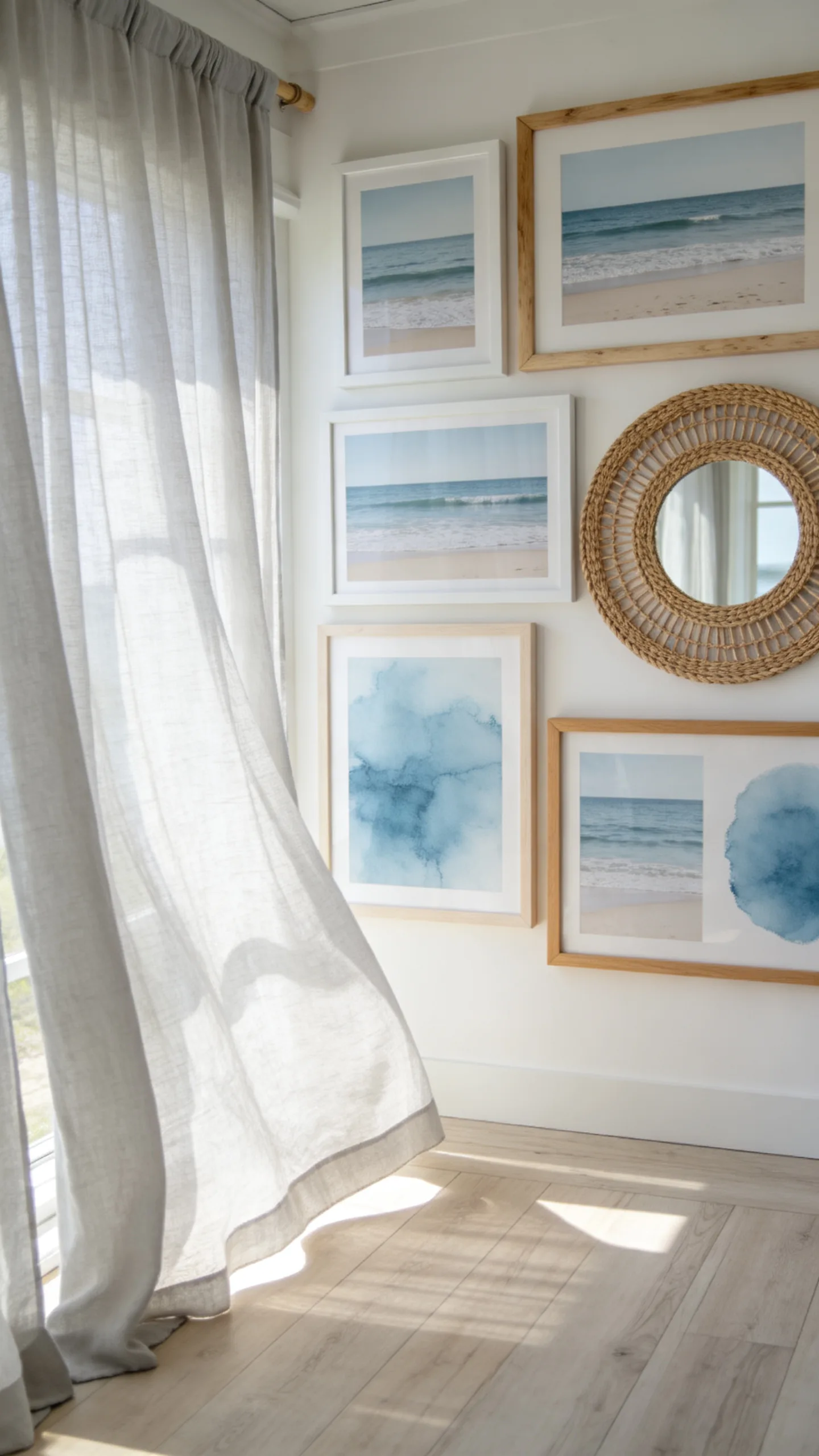
A coastal art wall does not need seashell overload. Combine framed seascapes, beach photography, soft blue abstracts, and one woven wall basket or rattan mirror for natural texture.
Use white, driftwood, or pale oak frames to keep the look light. This works especially well in a bedroom, bathroom, or sunroom with linen curtains and light flooring. Keep the palette sandy, blue, white, and soft gray for a calm beach-inspired display.
18. Office Art Wall With Quotes, Photos, and Abstract Prints
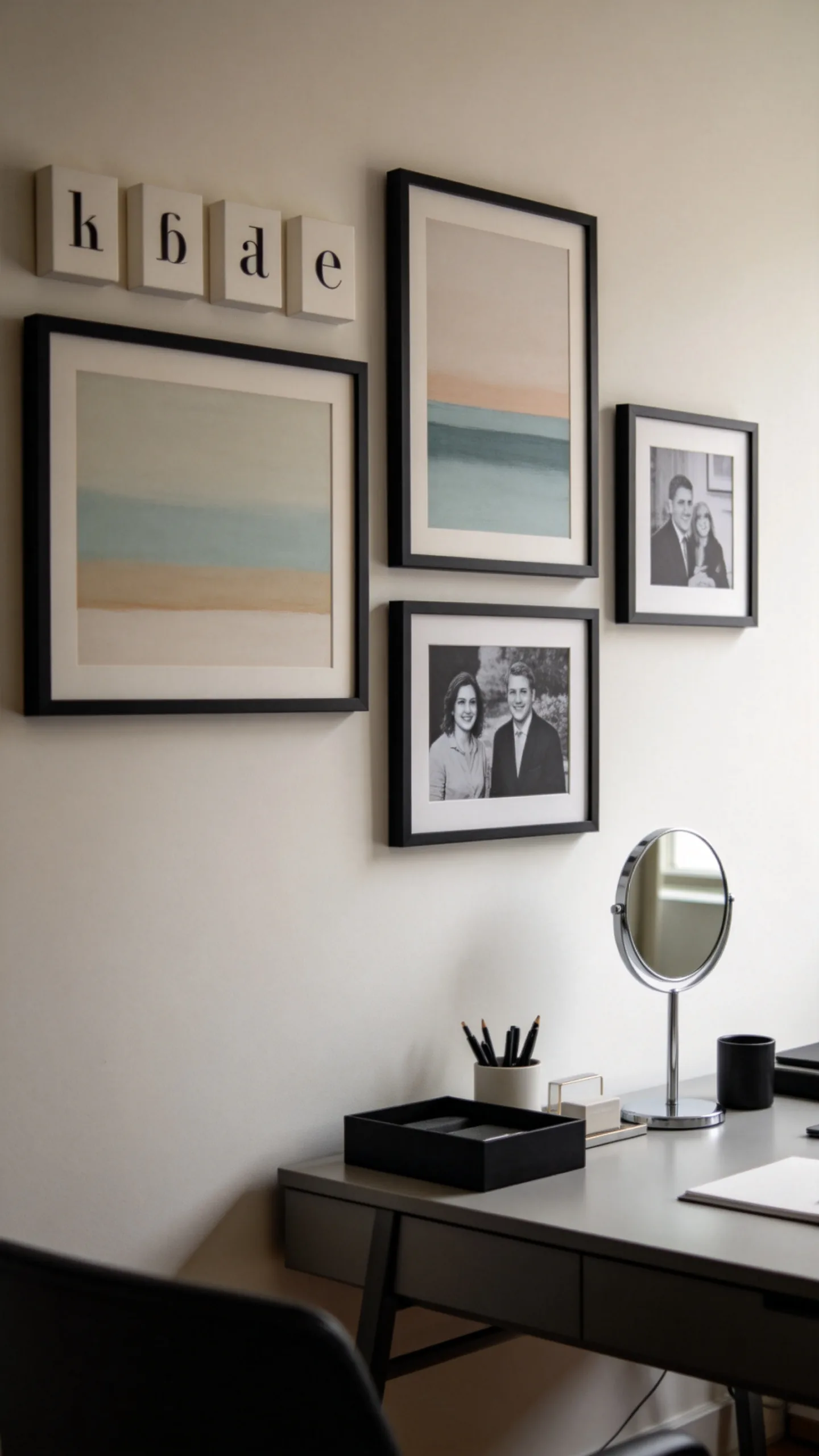
A home office art wall can motivate without feeling cluttered. Mix one or two framed quote prints with abstract art, personal photos, and a small mirror near the desk area.
Choose pieces that support focus, such as simple typography, calm color fields, or black-and-white photography. Hang the arrangement beside the desk rather than directly behind the monitor if you want a cleaner video call background. A consistent frame finish keeps the wall professional.
19. Picture Ledge Wall Above a Bed
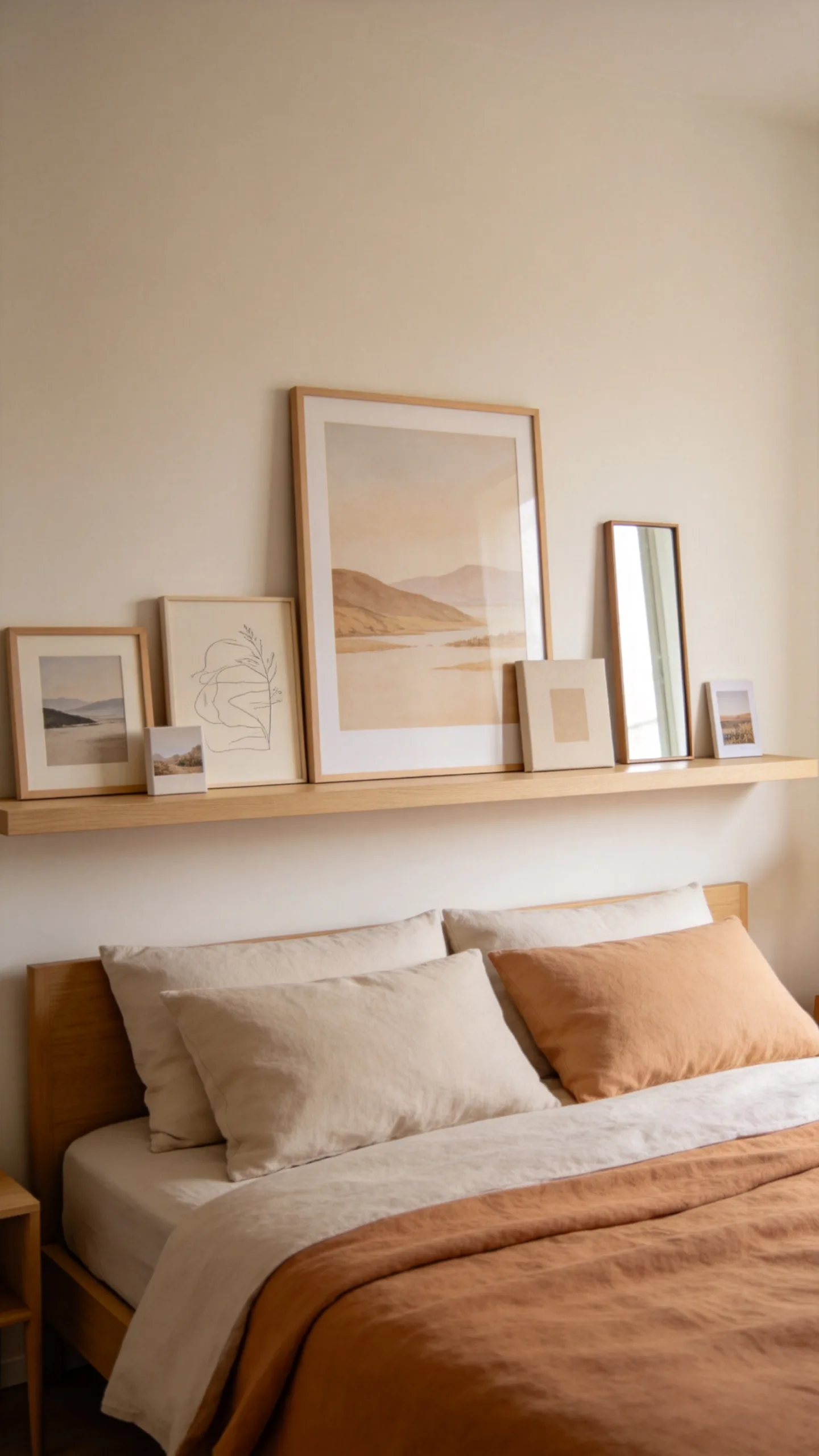
A picture ledge above a bed creates a flexible bedroom art wall. Use one long ledge or two staggered ledges to display framed prints, photos, small canvases, and a narrow mirror.
Make sure the ledge is securely installed and high enough that pillows will not knock the frames. Layer the largest piece in the center and use smaller prints near the sides. Soft landscapes, line drawings, and neutral photography create a restful look above the headboard.
20. Eclectic Art Wall With Thrifted Frames
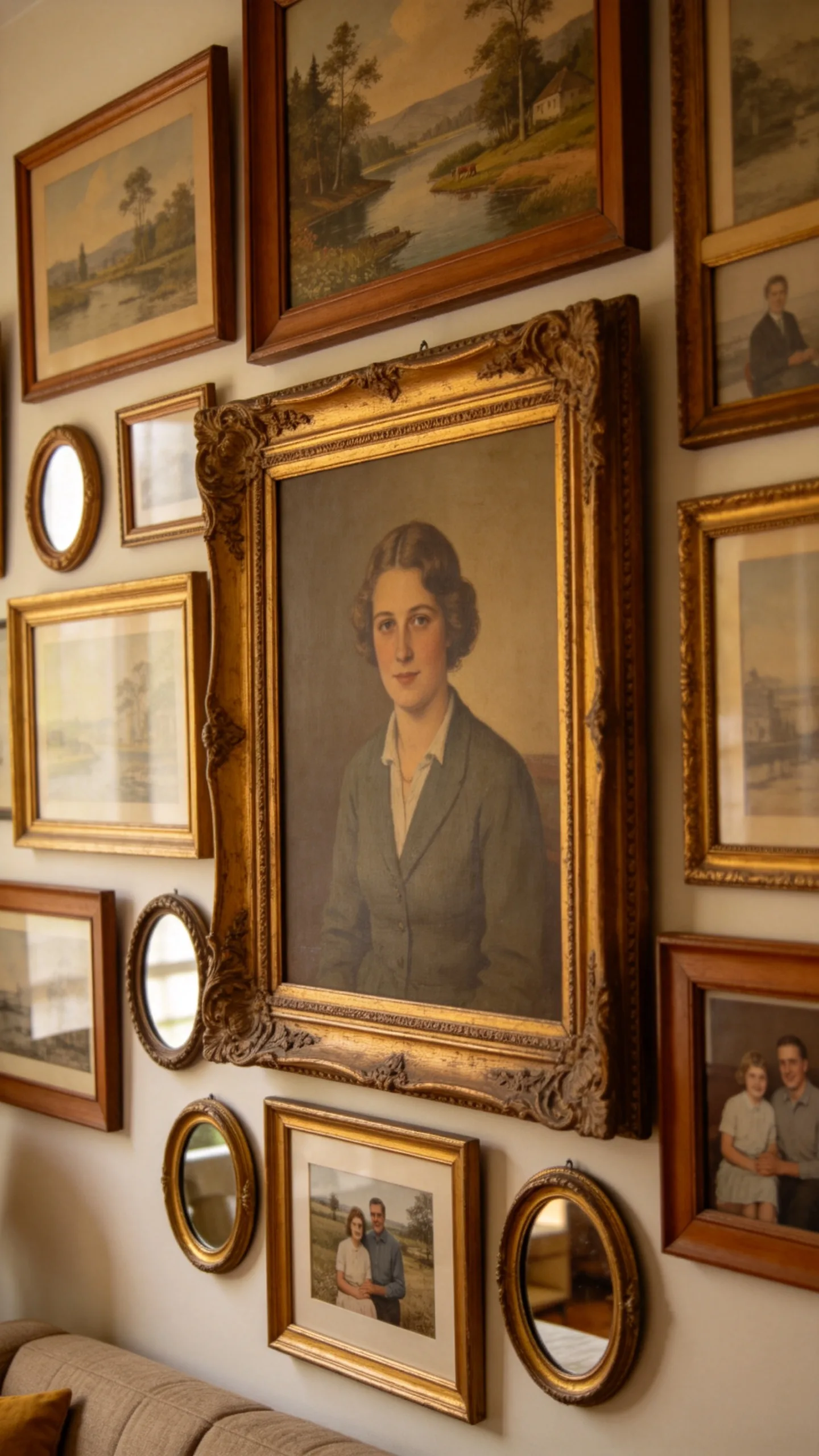
An eclectic art wall is ideal for mixing thrifted frames, vintage prints, family photos, and small mirrors. The key is to repeat at least one design element, such as warm wood tones, gold finishes, or black-and-white imagery.
Lay the pieces on the floor before hanging to find a balanced arrangement. Use the largest or most interesting frame as the anchor. This approach works well in living rooms, stairways, and bedrooms where a collected look feels more personal than a matching set.
21. Kitchen Art Wall With Small Prints and Recipe Cards
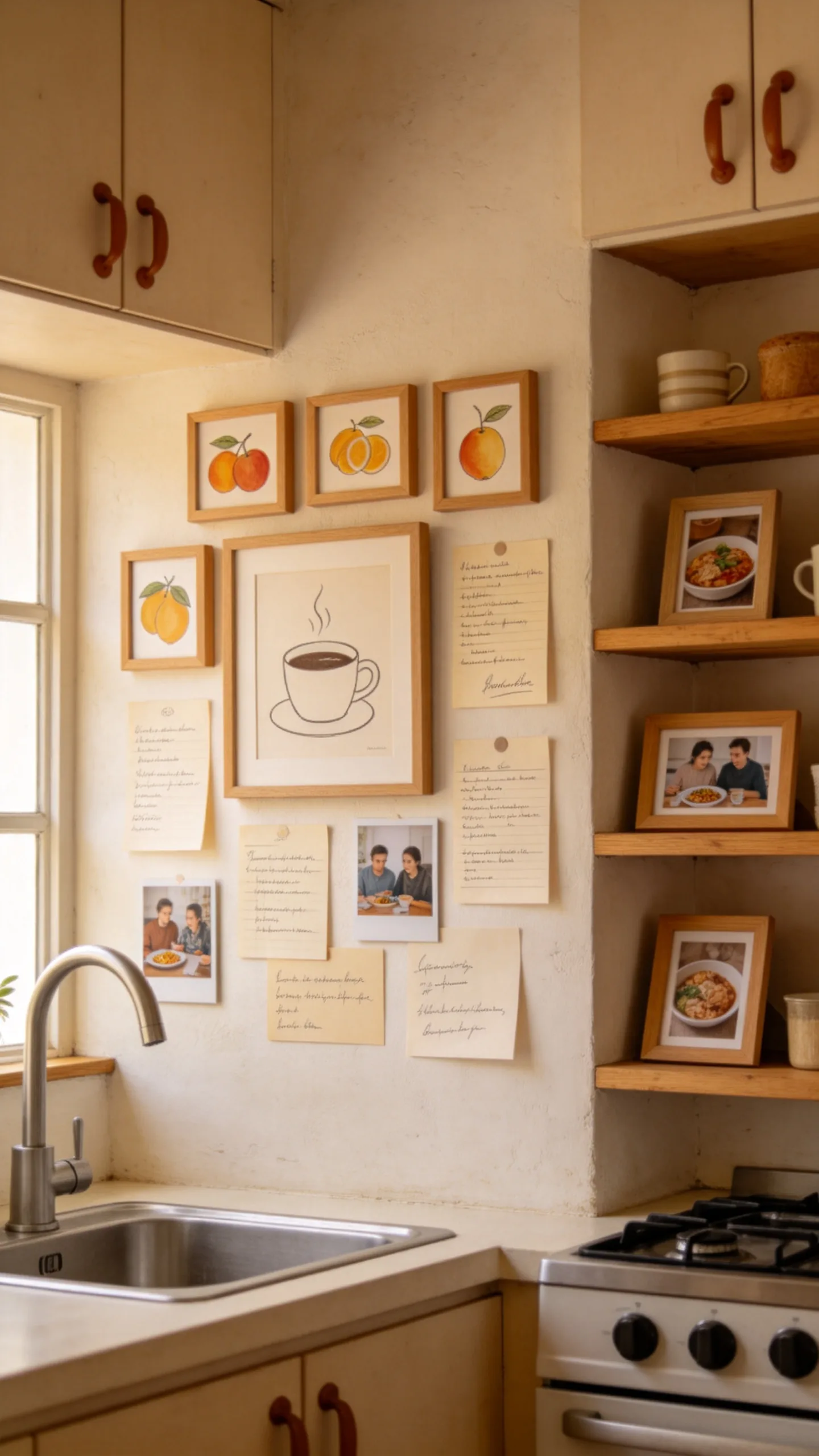
A kitchen art wall can bring charm to an empty breakfast nook, pantry wall, or space beside open shelving. Use small framed fruit prints, coffee illustrations, handwritten recipe cards, and family food photos.
Because kitchens already have cabinets, appliances, and tile, keep the display compact. Choose frames that match cabinet hardware or wood shelves. Avoid hanging delicate paper art too close to steam, the sink, or the stove; a breakfast nook or dry wall is usually safer.
22. Arched Mirror With Surrounding Mini Prints
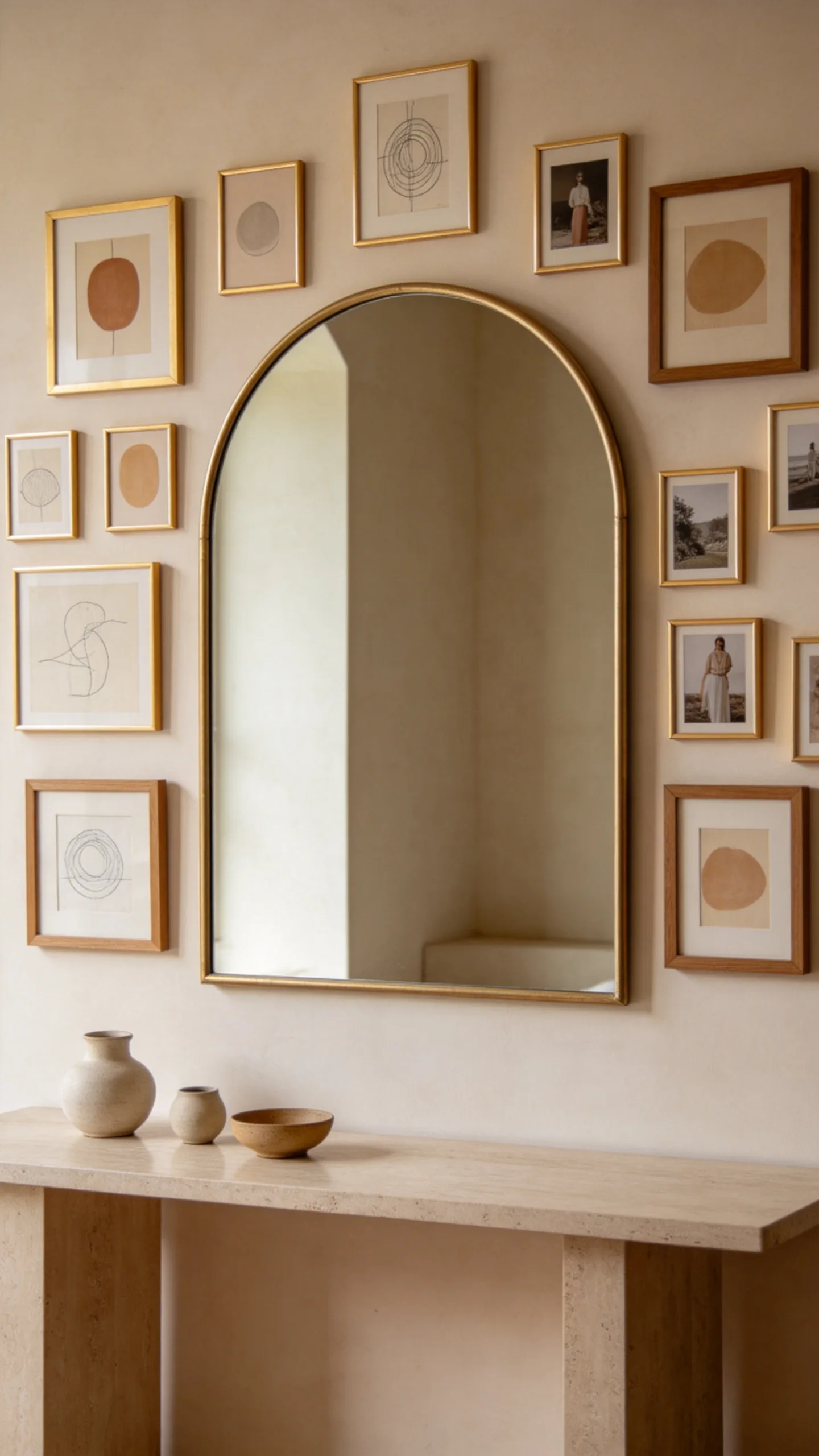
An arched mirror can act as the centerpiece of a mixed art wall. Hang it over a console, dresser, or bathroom vanity, then surround it with mini framed prints, sketches, or photos.
The arch shape softens rooms with many straight lines, such as square cabinets, rectangular furniture, or paneled doors. Keep the smaller frames slightly offset rather than perfectly symmetrical for a relaxed layered look. This idea works well with brass, black, or wood mirror frames.
23. Black-and-White Photo Wall With One Color Print
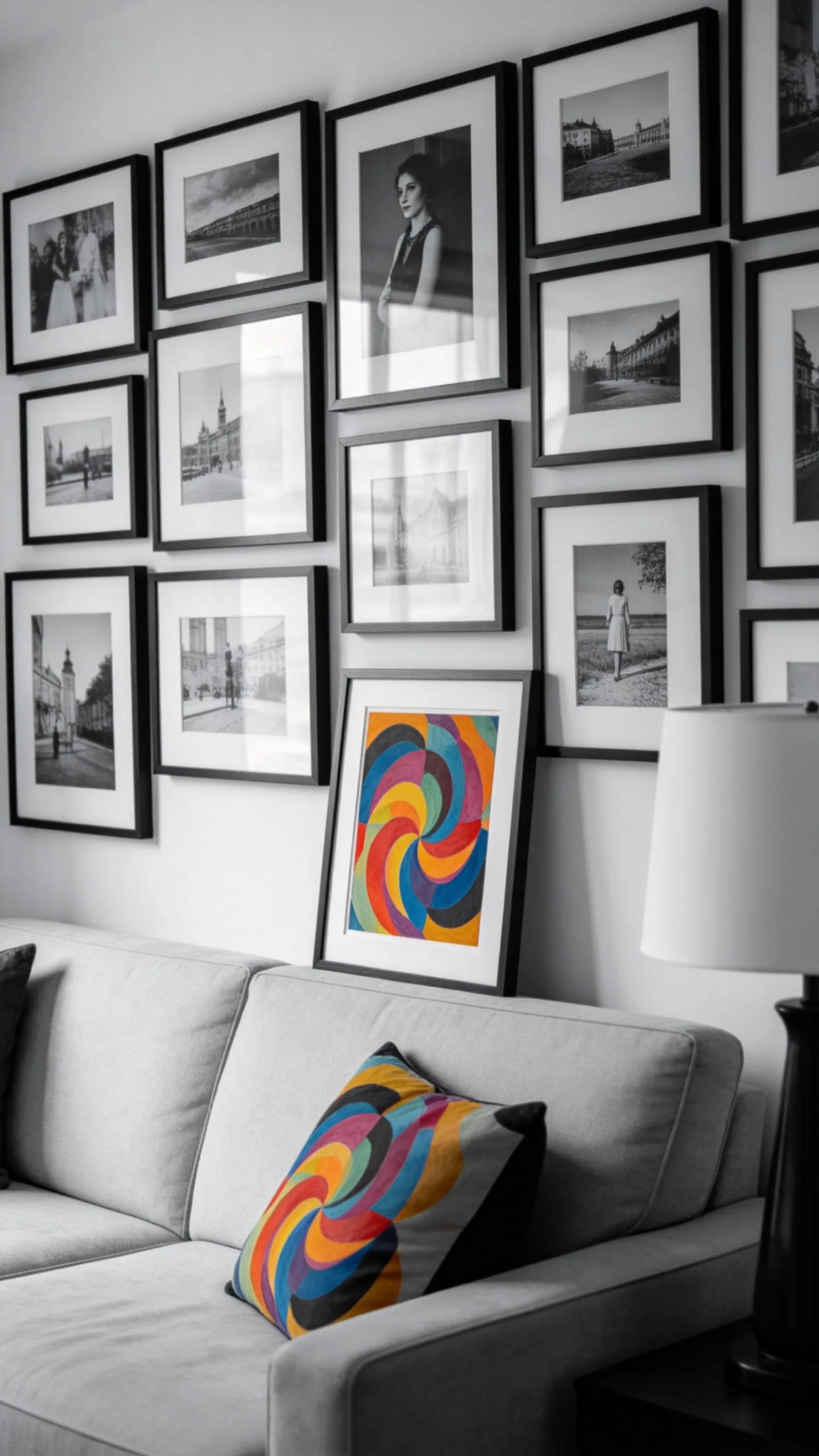
A black-and-white photo wall feels timeless, and one color print gives it a focal point. Use black or white frames for portraits, street photography, landscapes, or family images, then add one colorful abstract or art print in the middle.
This technique is useful when you want a gallery wall that feels controlled but not flat. Pull the color from a pillow, rug, lamp, or accent chair so the single bright piece looks intentional. Keep mat sizes similar to maintain order.
24. Shelf and Peg Rail Art Wall
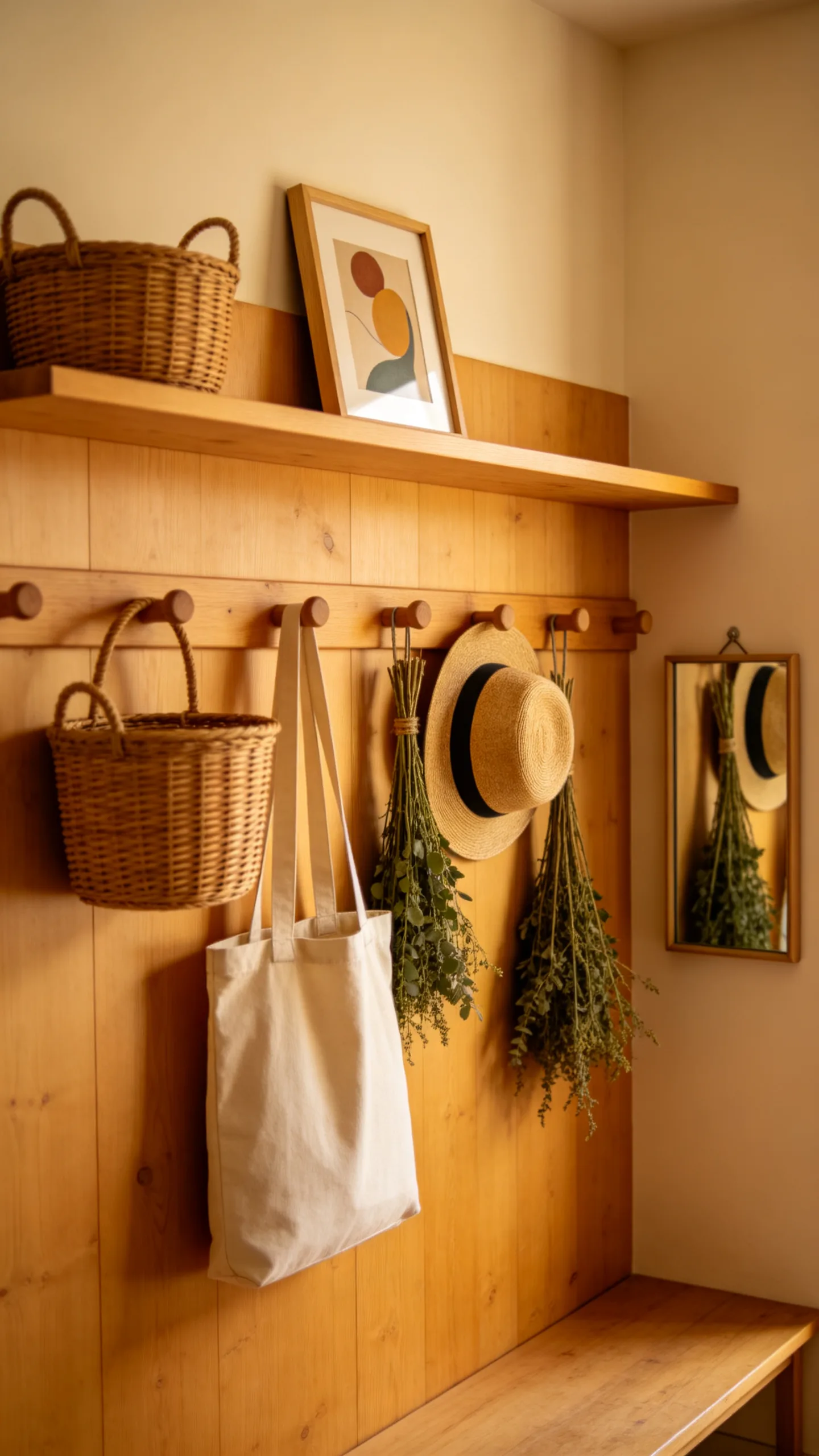
A peg rail adds function to an art wall in an entry, mudroom, laundry room, or kitchen. Hang a wooden peg rail, then place framed art above it or rest small framed pieces on a shallow shelf attached to the rail.
Use the pegs for baskets, tote bags, hats, or dried greenery. This keeps the wall useful while the framed prints make it decorative. A small mirror near the end of the rail is practical for last looks before leaving the house.
25. Large Statement Print With Supporting Small Frames
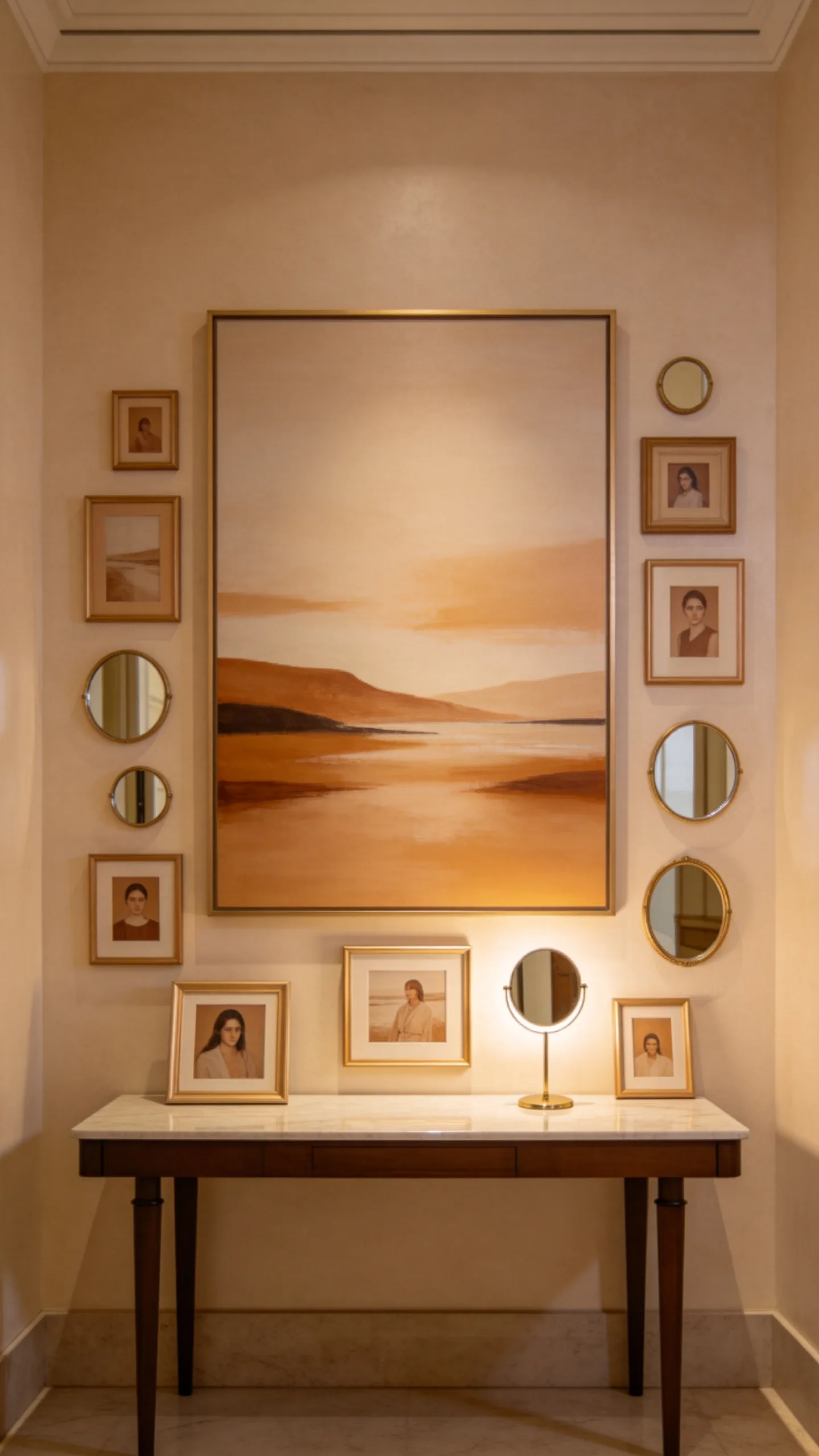
A large statement print can anchor a wall, while smaller frames make it feel layered. Choose one oversized piece for the center, such as a landscape, abstract, portrait, or architectural print, then arrange smaller photos and mirrors around it.
This works well above a sectional sofa, console table, or bed. The large piece should take up visual weight, while the smaller items fill surrounding space without competing. Use similar tones across the supporting pieces so the main print remains the star.
26. Bathroom Art Wall With Framed Prints and a Mirror
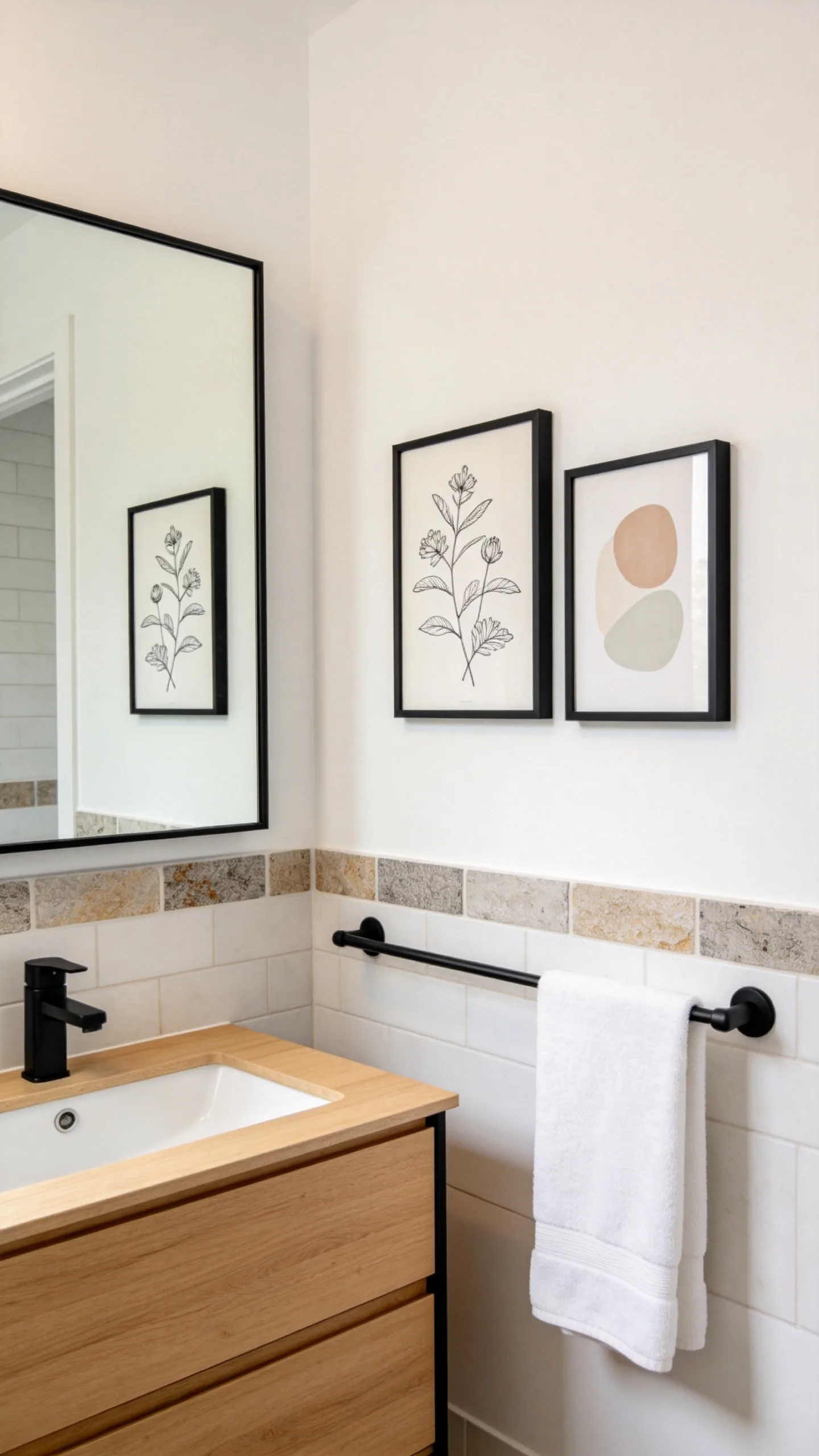
A bathroom art wall can make a plain wall feel finished, especially above a towel rack, beside a vanity, or over a freestanding tub. Combine a practical mirror with framed prints in moisture-friendly frames.
Choose simple subjects such as botanical sketches, abstract shapes, or calm landscape photography. Avoid overcrowding small bathrooms; two or three pieces may be enough. Light wood, white, or black frames usually work well with tile, stone, and painted walls.
27. Color-Coordinated Art Wall With Matching Mats
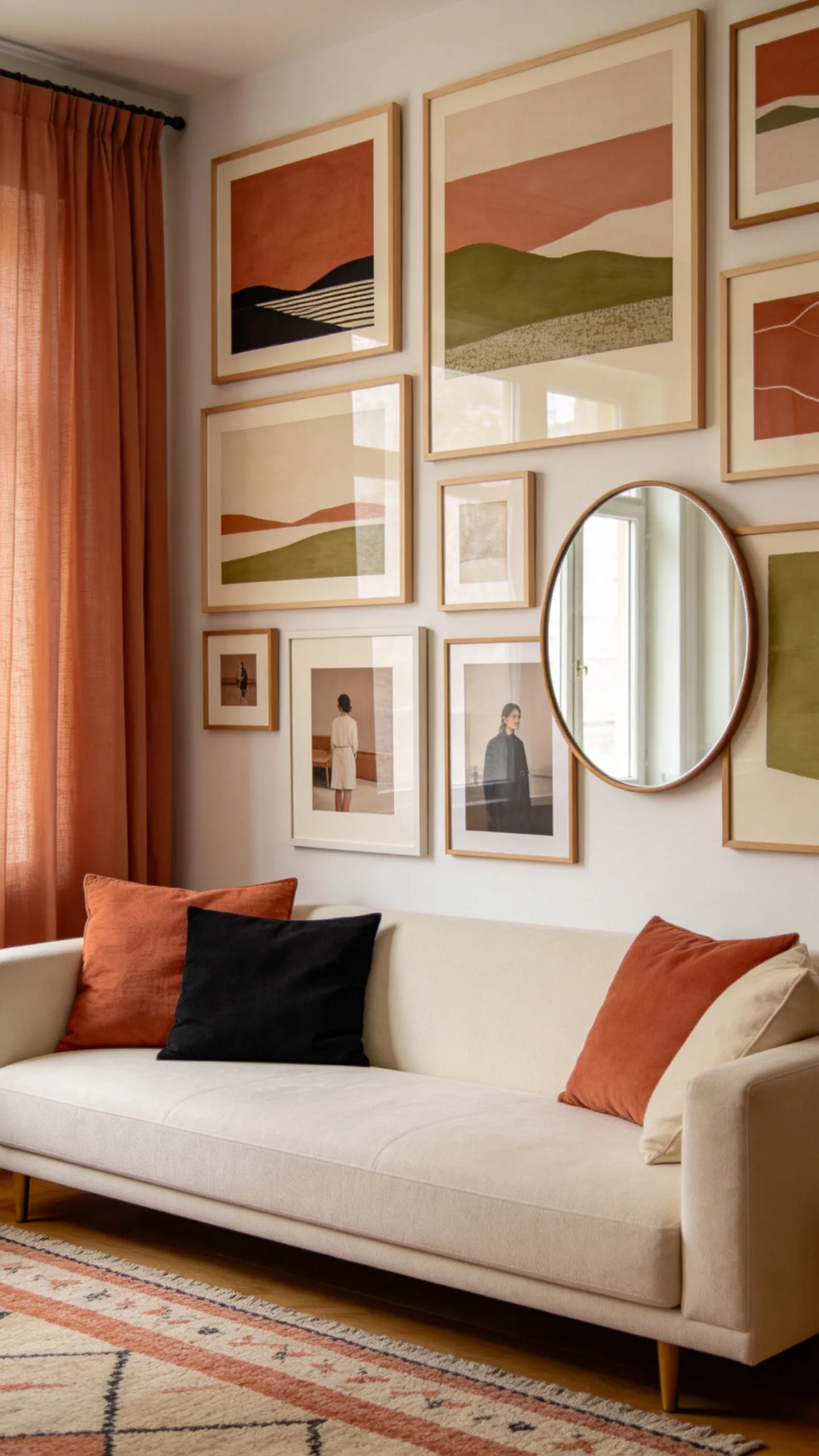
A color-coordinated art wall is a smart way to mix prints, photos, and mirrors while keeping the display cohesive. Choose a palette of three or four colors, such as terracotta, cream, olive, and black, then select art that repeats those tones.
Matching mats help unify different frame sizes and subjects. This idea works in a living room, bedroom, or dining area where the wall needs to connect with textiles like curtains, rugs, and throw pillows. Add one mirror in the same frame finish to lighten the arrangement.
28. Floor-to-Ceiling Art Wall for a Dramatic Focal Point
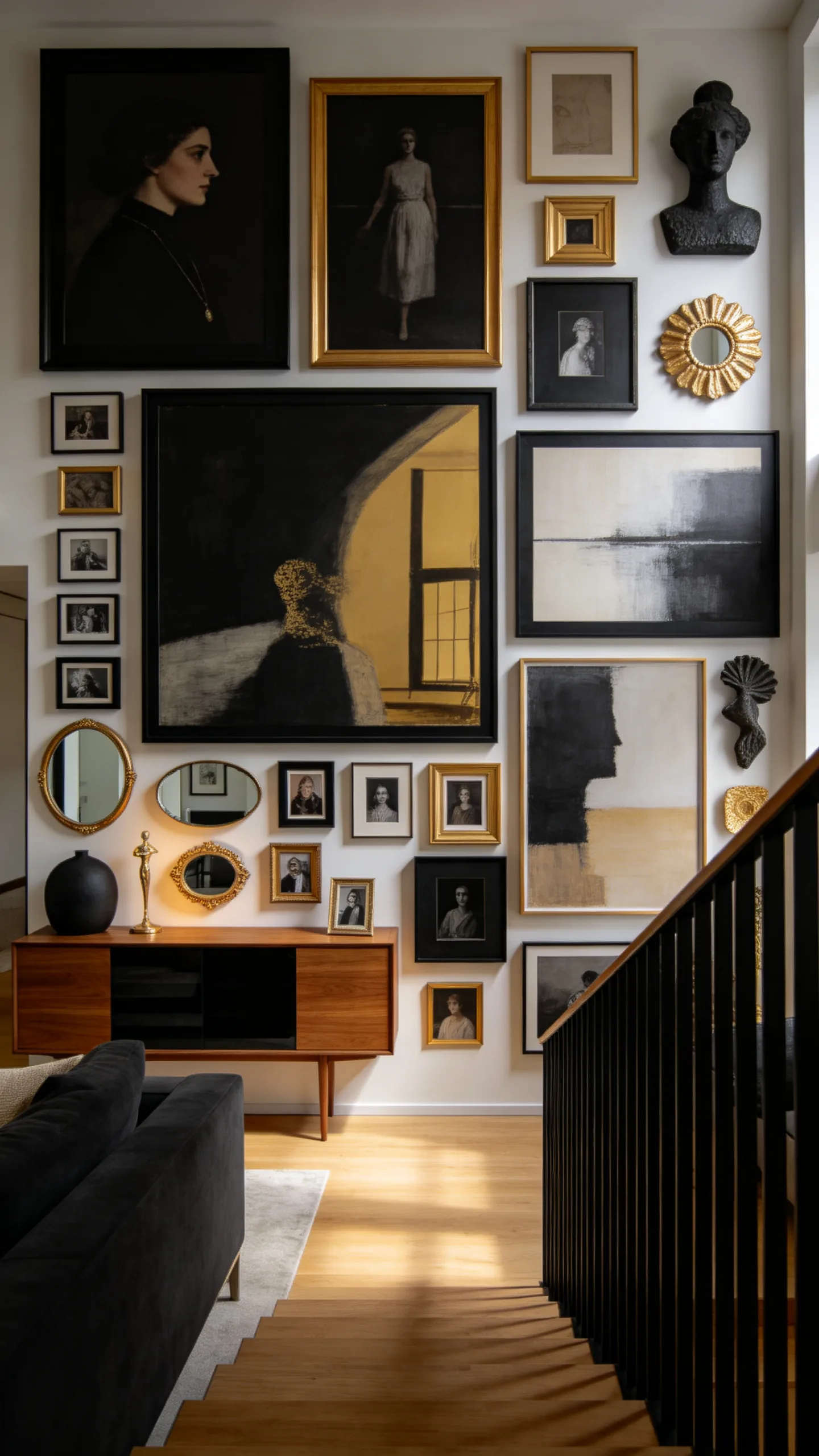
A floor-to-ceiling art wall turns a blank living room, hallway, or stair landing into a major focal point. Mix large frames, small photos, mirrors, canvases, and sculptural wall pieces from near the baseboard up toward the ceiling.
Keep the lowest pieces above furniture or out of the main walking path so the wall does not feel crowded. Use a consistent spacing system and repeat a few frame finishes to control the variety. This style works best on one feature wall, allowing nearby walls to stay quieter.