21 Easy Wall Art Ideas That Make Blank Walls Beautiful
Blank walls can make a room feel unfinished, even when the furniture, lighting, and textiles are already in place. The right wall art ideas can turn those empty surfaces into focal points, help define a seating area, add color to a hallway, or make a bedroom feel more layered without requiring a full redesign. These easy ideas use practical pieces like framed prints, shelves, textiles, mirrors, and everyday objects so you can decorate a plain wall in a way that fits your room, budget, and layout.
1. Oversized Framed Print Above the Sofa
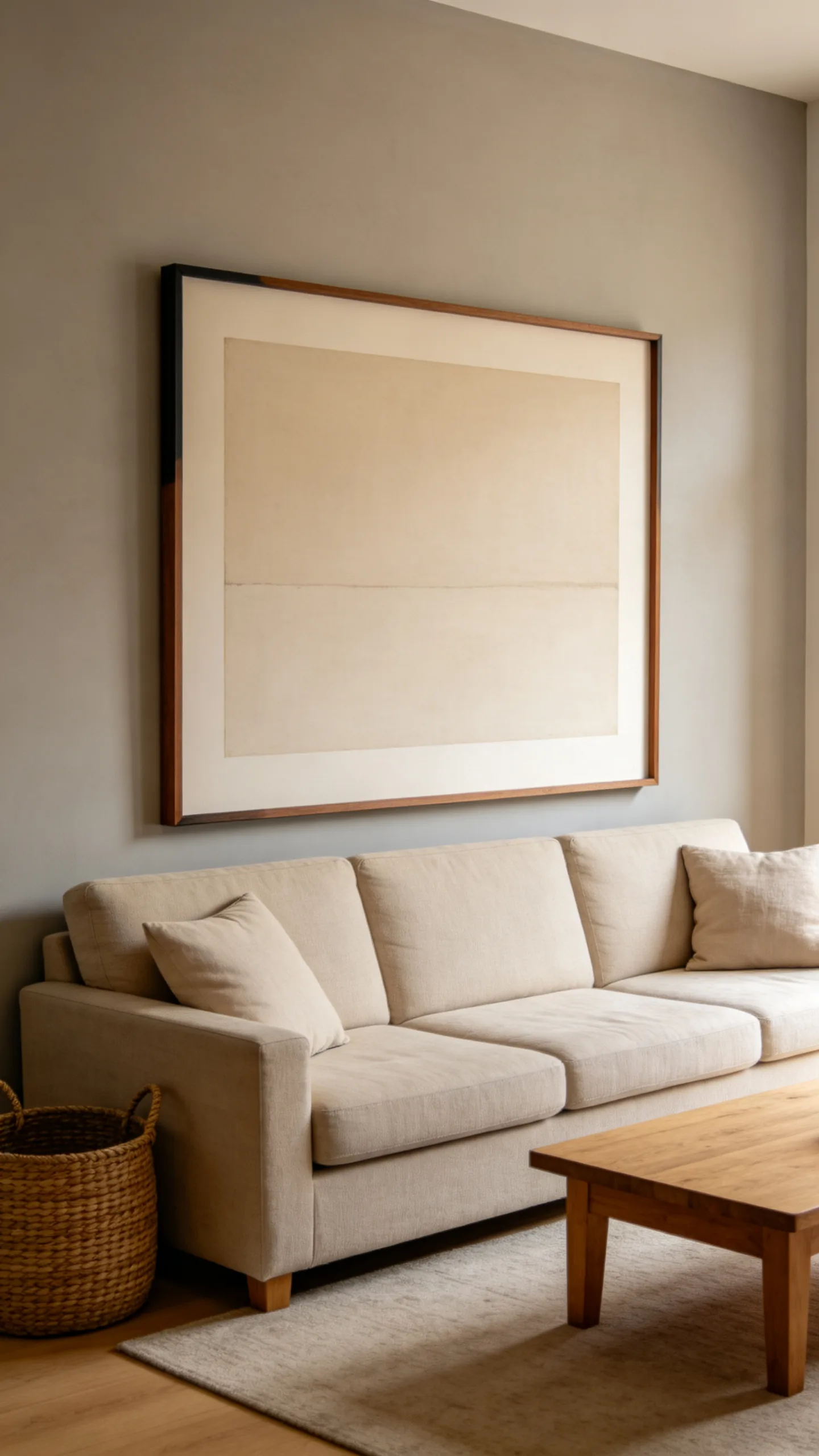
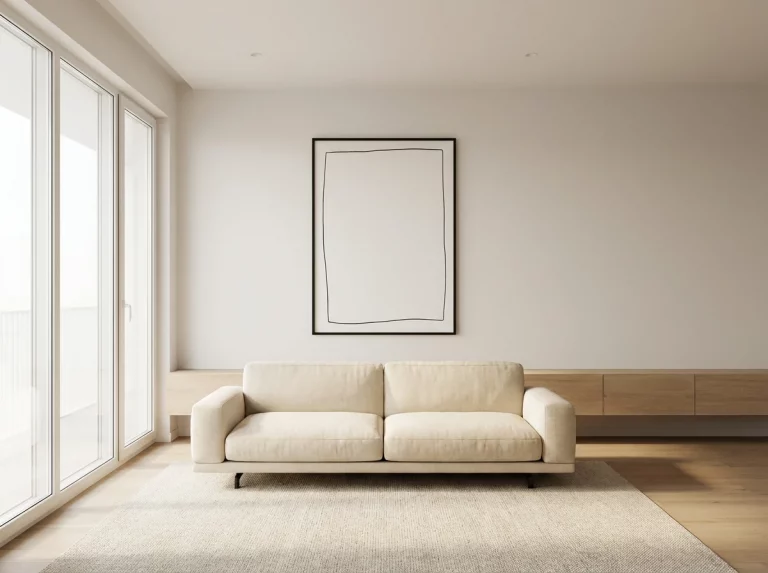
A single oversized framed print is one of the simplest ways to anchor a living room wall. Choose a frame that spans roughly two-thirds the width of the sofa so the art feels connected to the furniture instead of floating awkwardly. For a standard three-seat sofa, a large horizontal print or a pair of wide panels can fill the space without creating visual clutter.
This works especially well in rooms with neutral walls, such as white, warm beige, greige, or soft gray. A black frame adds contrast in a modern room, while a light oak or walnut frame feels warmer with linen upholstery, woven baskets, and wood coffee tables. Hang the frame so the bottom edge sits about 6 to 10 inches above the sofa back, leaving enough breathing room for pillows without making the wall look disconnected.
2. Grid Gallery Wall With Matching Frames
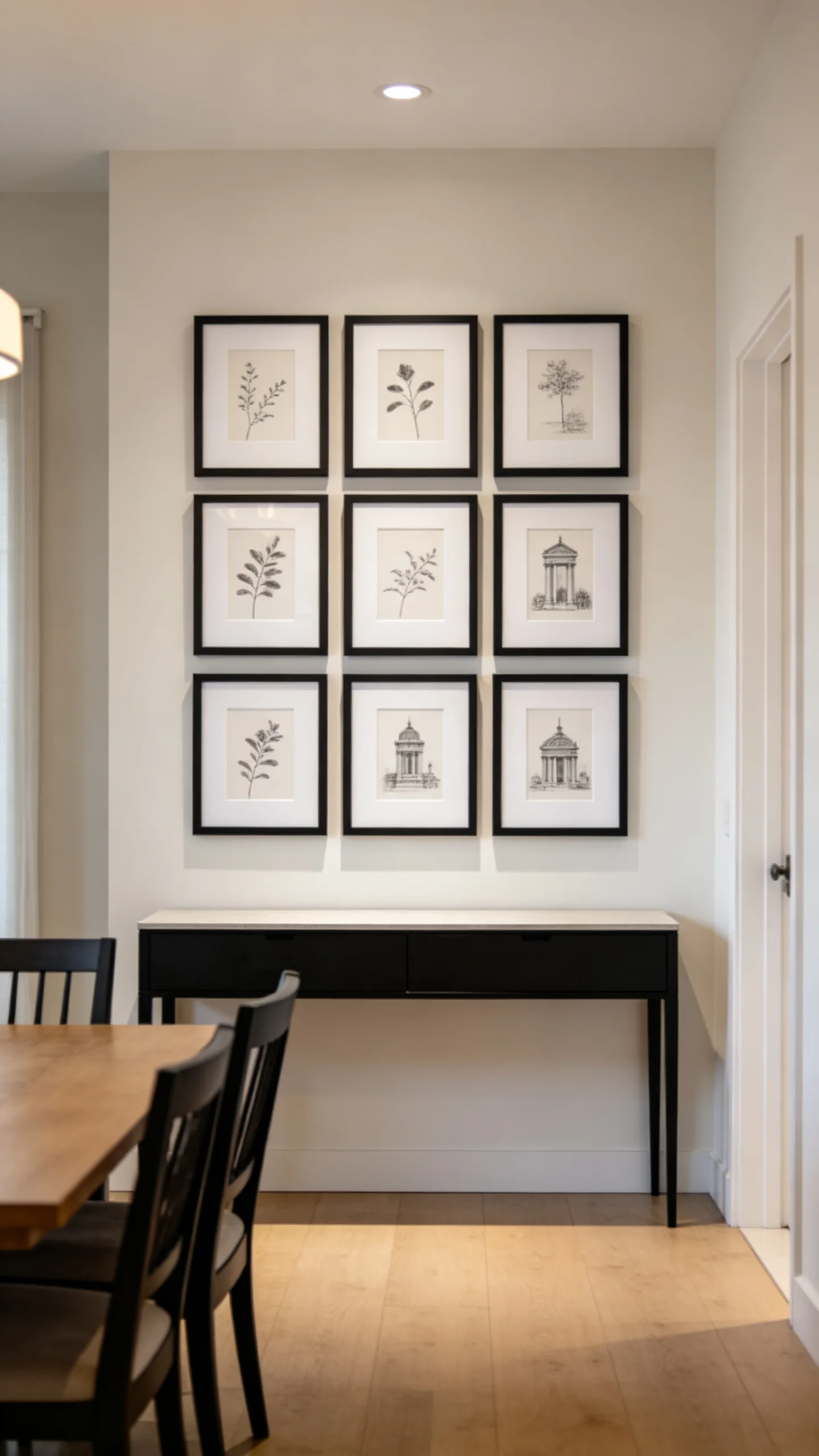
A grid gallery wall creates a clean, organized look for a blank wall in a dining room, hallway, home office, or living room. Use matching frames in the same size and finish, then hang them in a precise arrangement such as two rows of three or three rows of three. The repeated shape gives the wall structure, which is helpful in rooms that already have patterned rugs, colorful furniture, or open shelving.
To keep the layout polished, use a consistent spacing of about 2 to 3 inches between frames. Black-and-white photography, botanical prints, architectural sketches, or simple line drawings all work well in a grid because the uniform frames keep the collection from feeling busy. This idea is especially useful for narrow walls where one large piece might feel too heavy but several small pieces can create impact.
3. Floating Picture Ledges for Layered Art
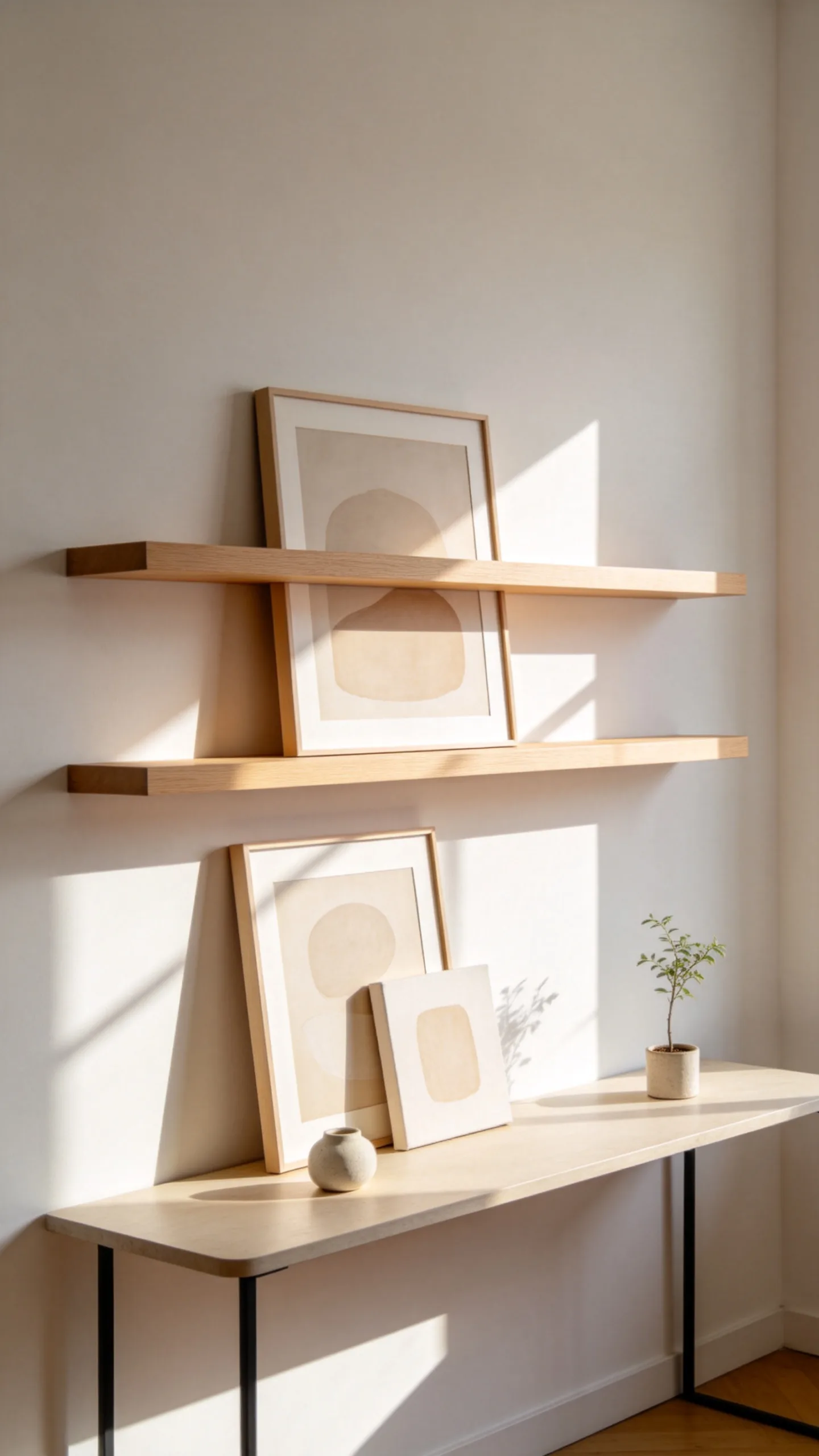
Floating picture ledges are ideal when you want flexible wall art that can change with the season or your mood. Instead of committing to exact nail placement for every frame, install one or two slim ledges and layer framed prints, small canvases, postcards, and decorative objects along the shelf. This works beautifully above a console table, in a hallway, over a bed, or on a living room wall beside a reading chair.
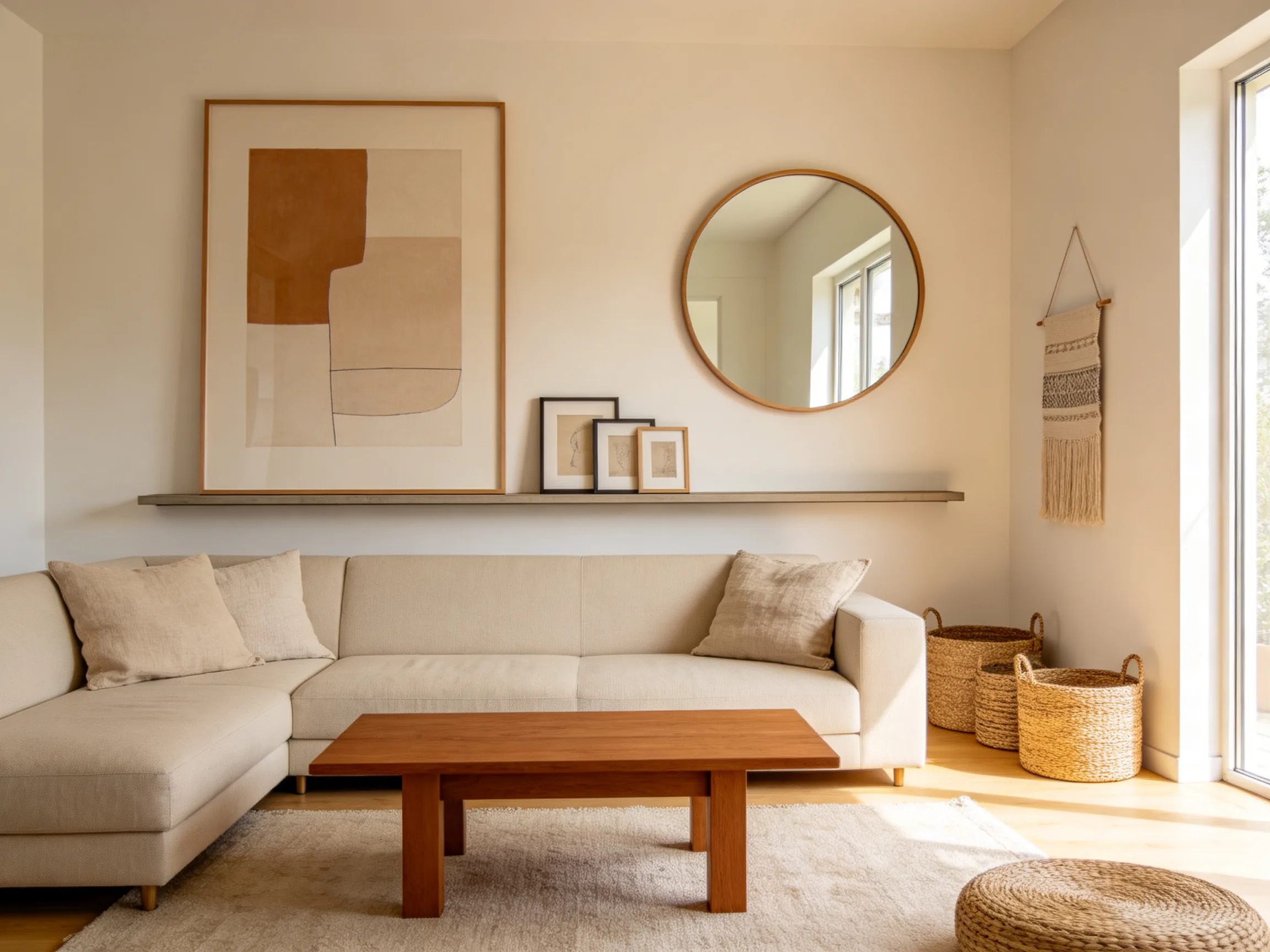
Use ledges in a finish that matches something else in the room, such as white for painted trim, black for metal lighting, or wood for floors and furniture legs. Place taller frames at the back and smaller pieces in front so the display has depth. Keep heavier objects low and avoid overcrowding the ledge, especially in small rooms where too many overlapping pieces can make the wall feel busy.
4. Textile Wall Hanging for Soft Texture
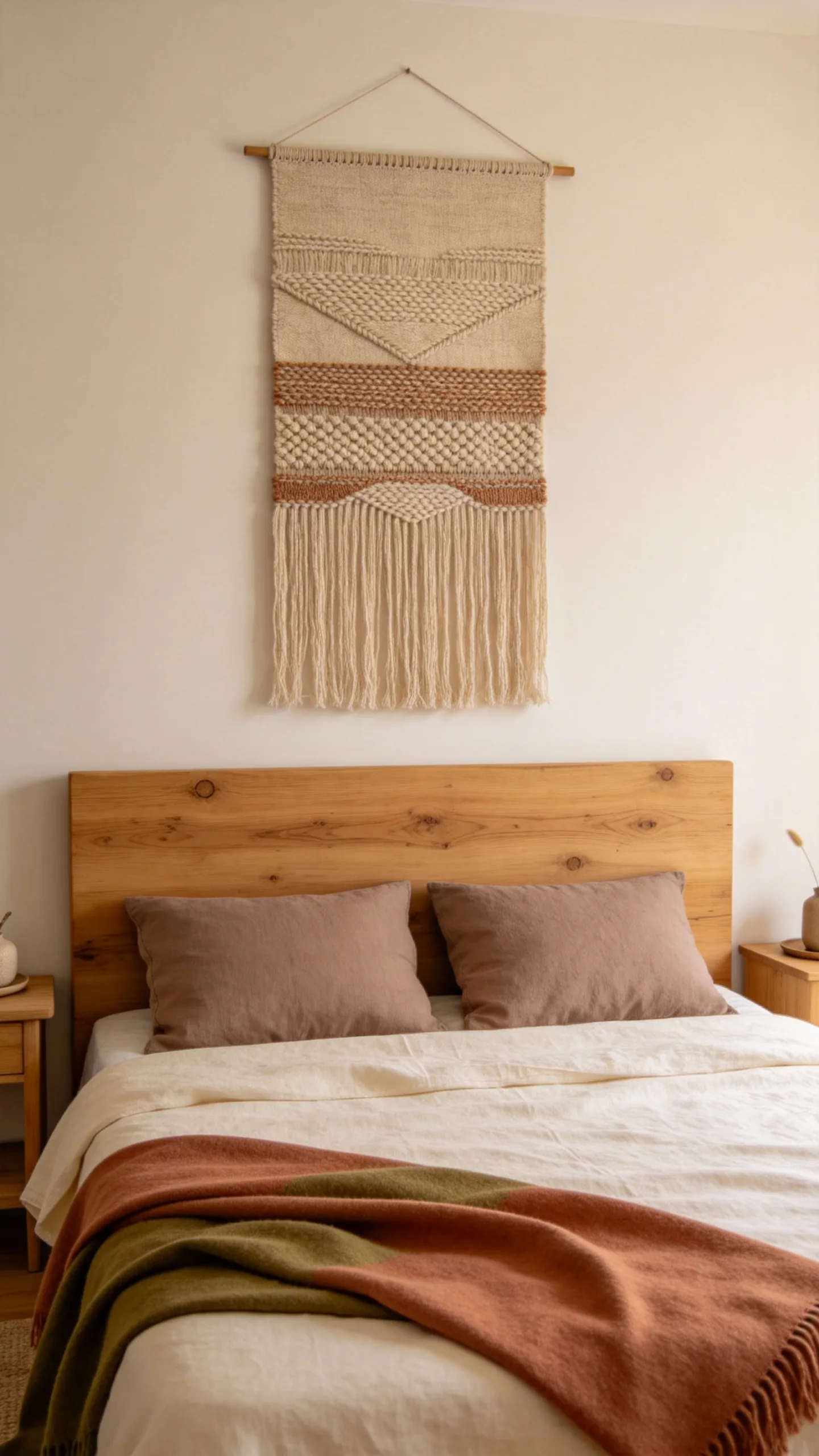
A textile wall hanging adds softness to a blank wall, making it a strong choice for bedrooms, nurseries, reading corners, and rooms with hard surfaces like wood floors or metal furniture. Look for woven wall hangings, macramé pieces, fabric panels, quilted art, or framed vintage textiles. The texture can warm up a plain wall without relying on bold color.
This idea is useful above a bed where framed glass may feel too hard or reflective. Choose a piece that is wide enough to relate to the headboard but not so large that it overwhelms the bedding. Cream, taupe, rust, olive, and muted terracotta textiles pair well with natural wood nightstands and linen bedding. In a small bedroom, a soft textile can add interest without making sightlines feel crowded.
5. Large Round Mirror as Wall Art
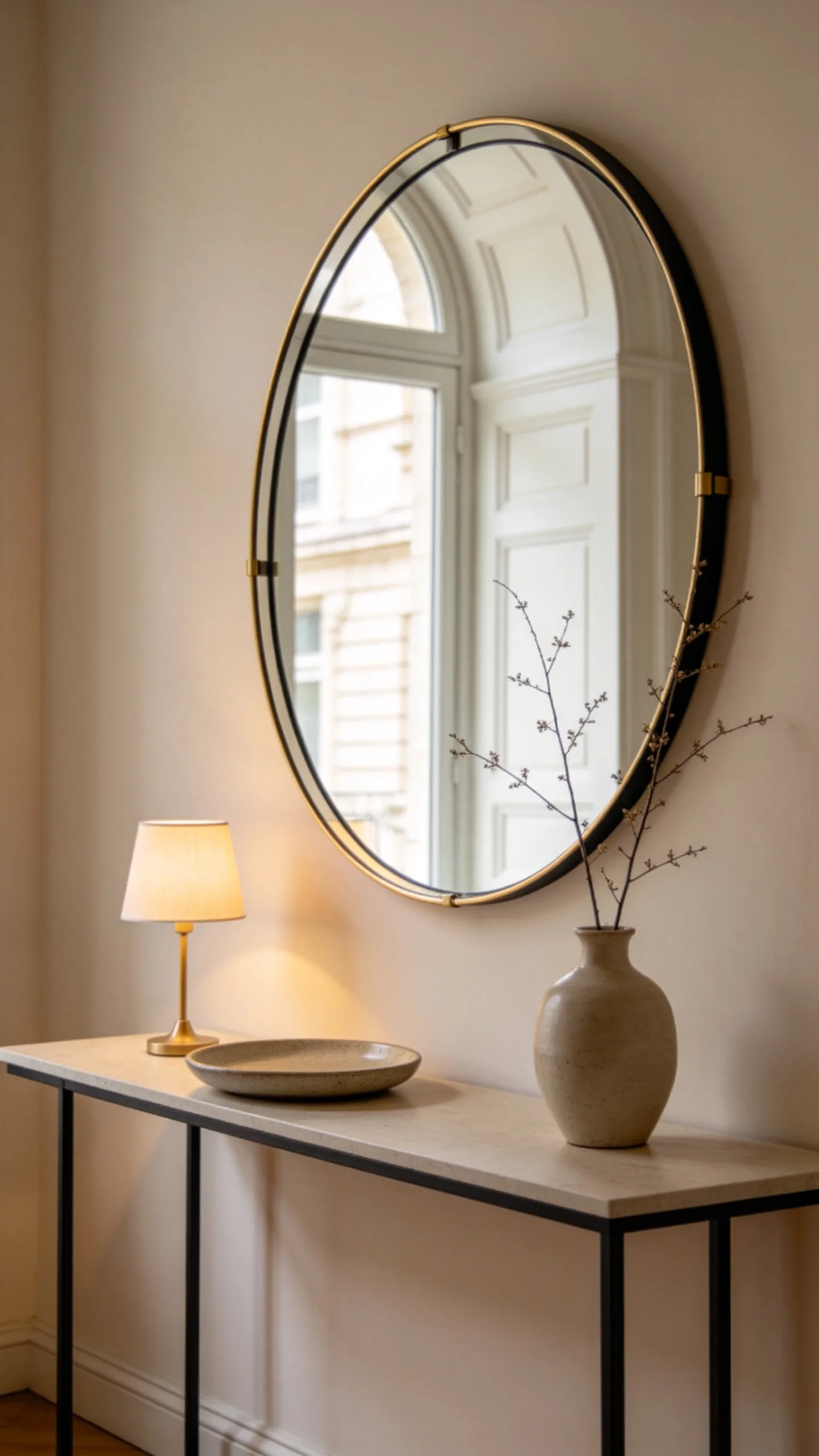
A large round mirror can function as wall art while also bouncing light around the room. It is especially helpful in entryways, small living rooms, dining nooks, and bedrooms where a blank wall feels flat or dark. The curved shape softens straight furniture lines, such as rectangular consoles, boxy sofas, and square dining tables.
For an entryway, hang a round mirror above a narrow console table and style the surface with a lamp, small tray, and vase. In a dining room, place the mirror where it reflects a window, pendant light, or attractive artwork rather than clutter. Choose a thin black frame for a crisp modern look, brass for warmth, or natural wood for a relaxed organic style.
6. Framed Vintage Posters for Character
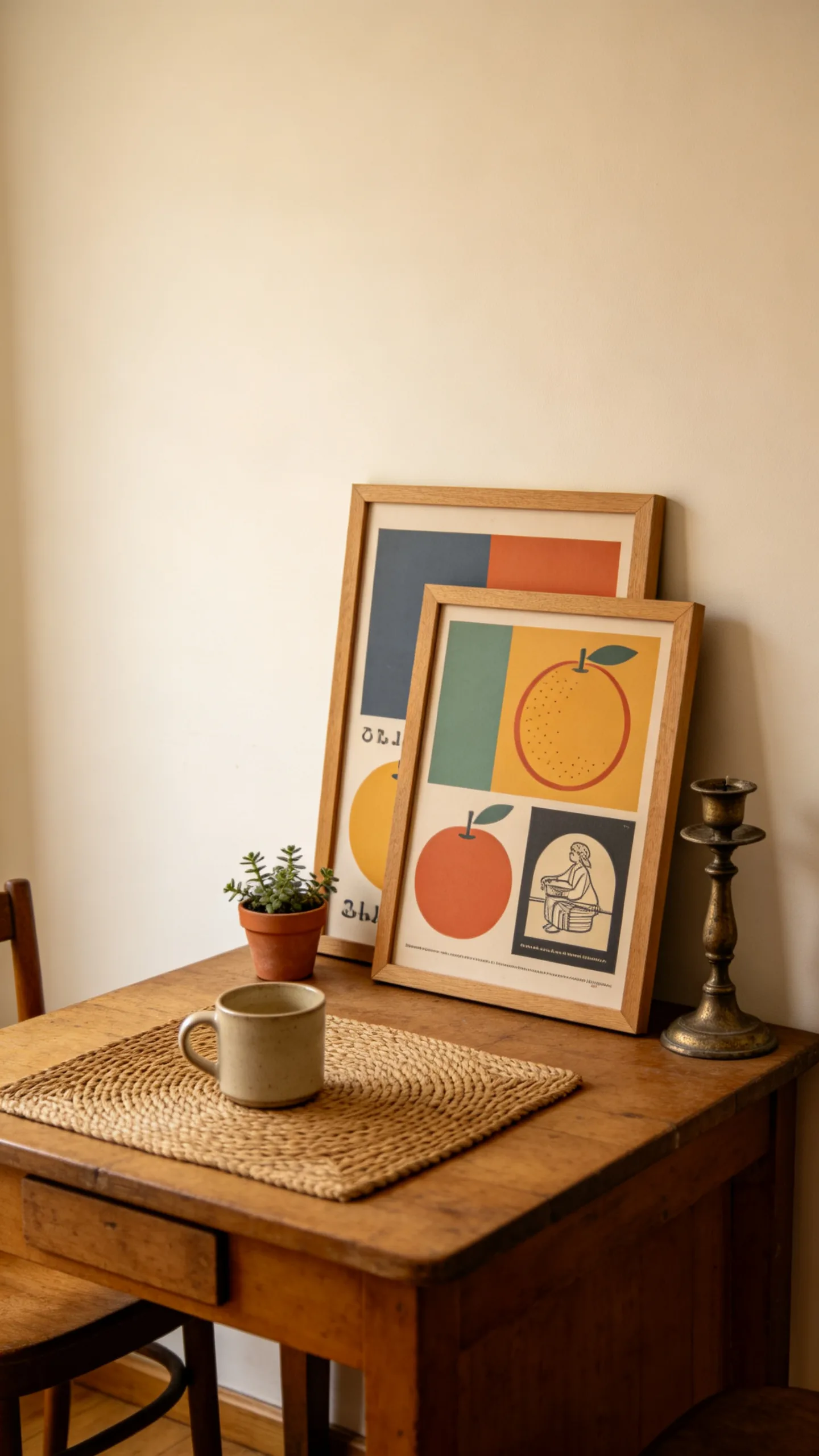
Vintage-style posters bring instant personality to a blank wall, especially in kitchens, dining rooms, home bars, and casual living spaces. Food posters, travel prints, exhibition posters, botanical charts, and old advertisement reproductions all add a collected feeling without needing a complicated gallery wall. Their bold typography and color can also help tie together furniture and accessories.
Use one large poster for a strong focal point, or hang two vertically stacked posters on a narrow wall. In a kitchen, a framed fruit, coffee, or market poster can brighten the wall beside a breakfast table. In a dining room, travel posters can add color above a sideboard. Keep the frame simple so the graphic artwork remains the focus.
7. Basket Wall Display With Natural Texture
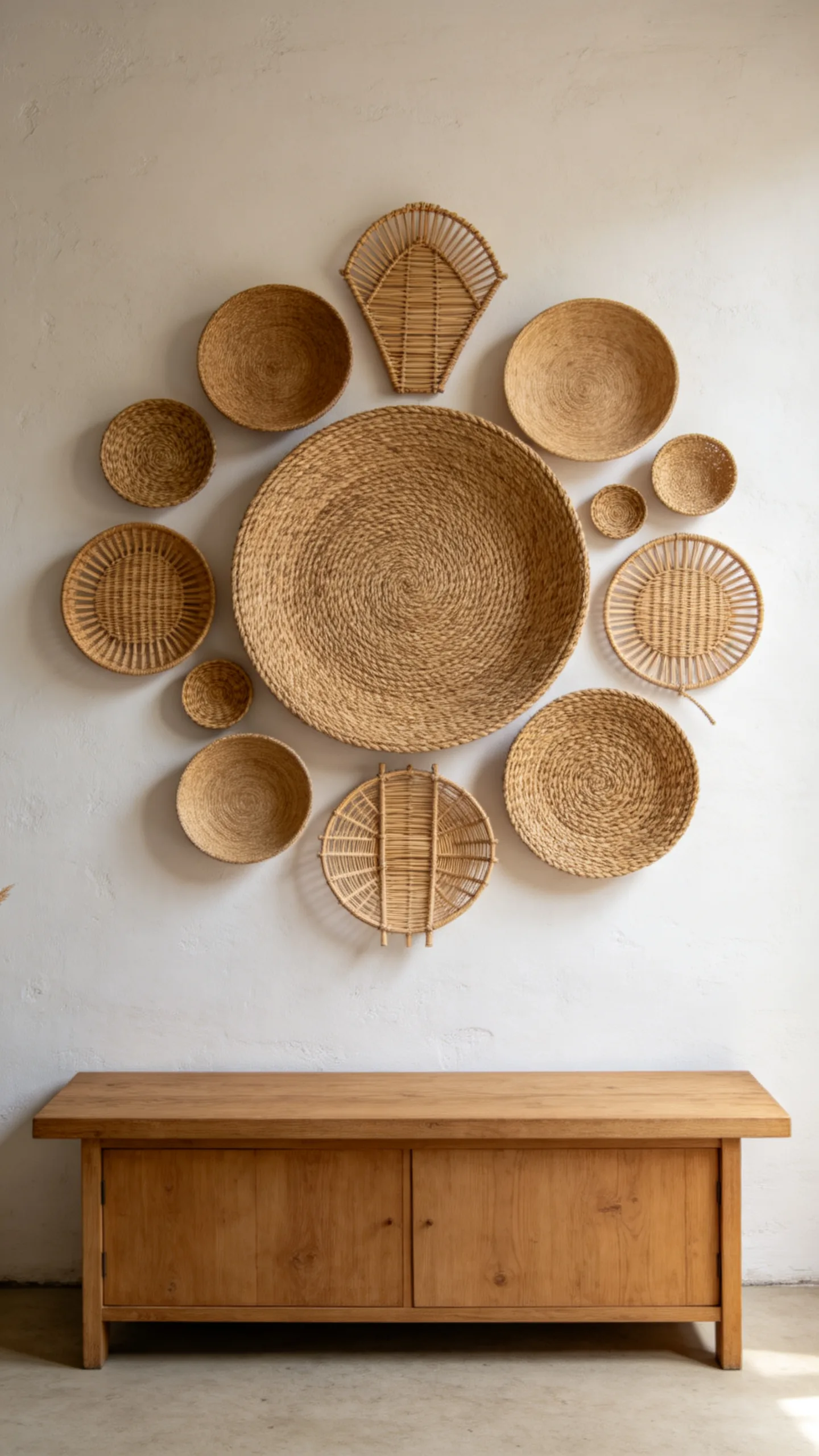
A basket wall display is a practical way to add texture to a blank wall without using traditional framed art. Flat woven baskets, shallow trays, and round rattan pieces work well in living rooms, breakfast nooks, stair landings, and bedrooms with neutral color palettes. The natural fibers bring warmth to white walls, plaster walls, and rooms with wood or cane furniture.
Arrange baskets in an organic cluster rather than a perfect grid. Start with the largest basket slightly off-center, then add smaller pieces around it to create movement. This idea works nicely above a console, bench, or low cabinet where the wall needs visual height. In a small space, keep the color palette consistent so the texture adds interest without making the room feel cluttered.
8. Black-and-White Photo Collection
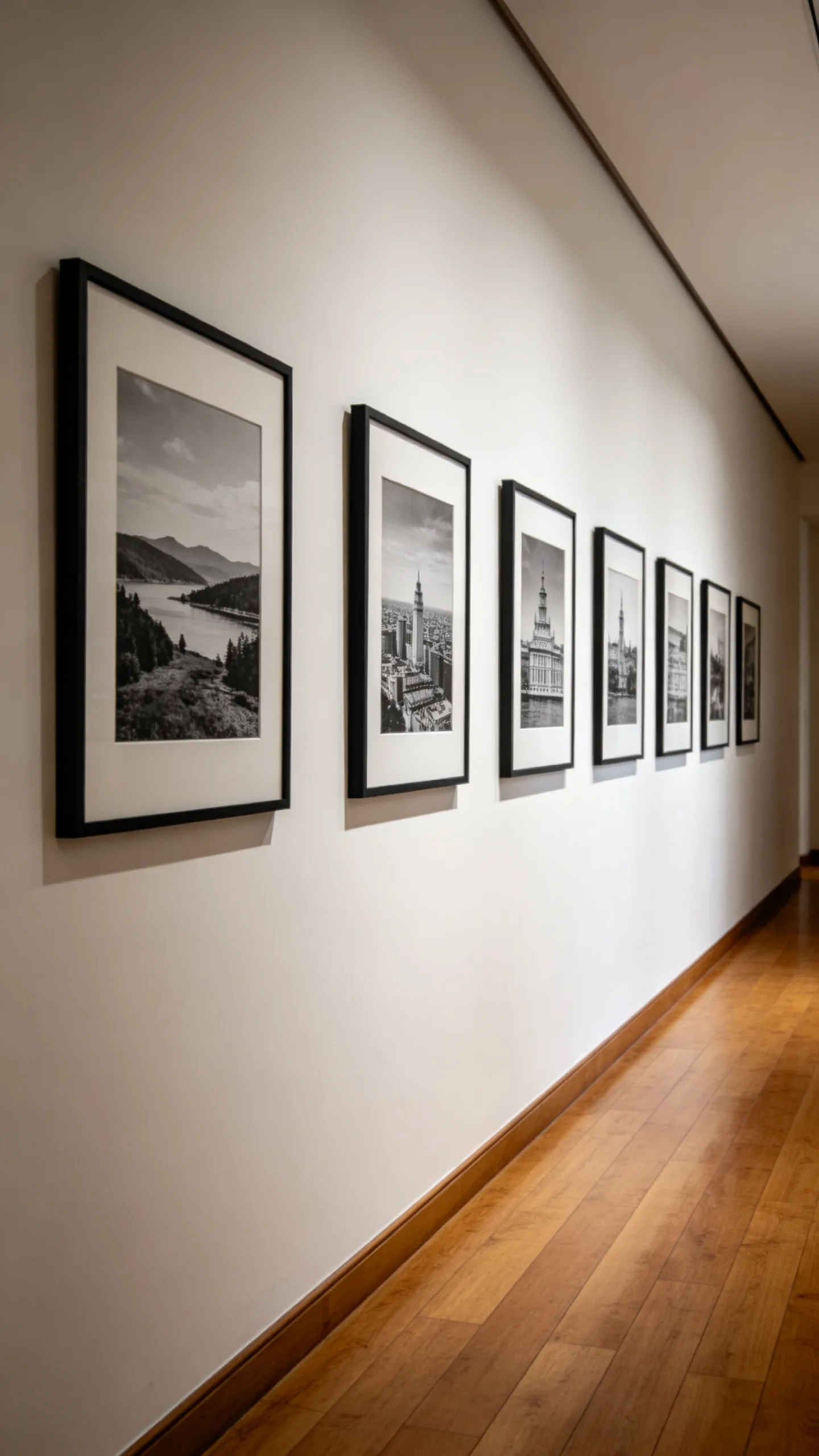
A black-and-white photo collection can make a blank wall feel personal and polished at the same time. Use family photos, city scenes, landscapes, or architectural images, then print them in the same color treatment for a cohesive look. Matching frames and mats help the wall feel intentional rather than random.
This idea works well along a hallway, above a staircase, or behind a sofa. In a narrow hallway, slim black frames with white mats create contrast without overwhelming the walkway. In a living room, larger matted photos can make the wall feel elegant while still keeping the color palette calm. Leave consistent spacing between frames so the collection feels easy to read from a distance.
9. Painted Arch Behind Simple Art
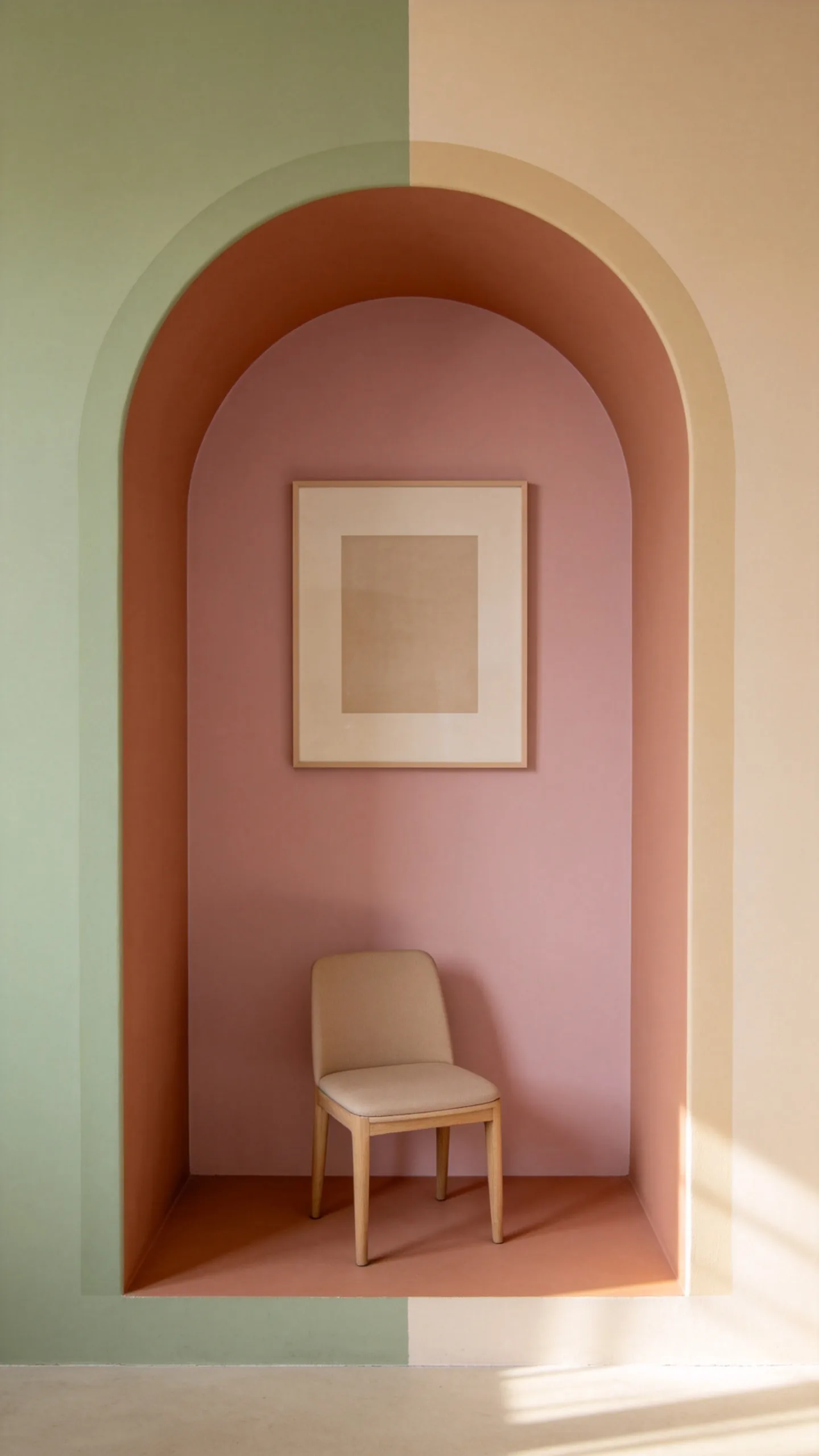
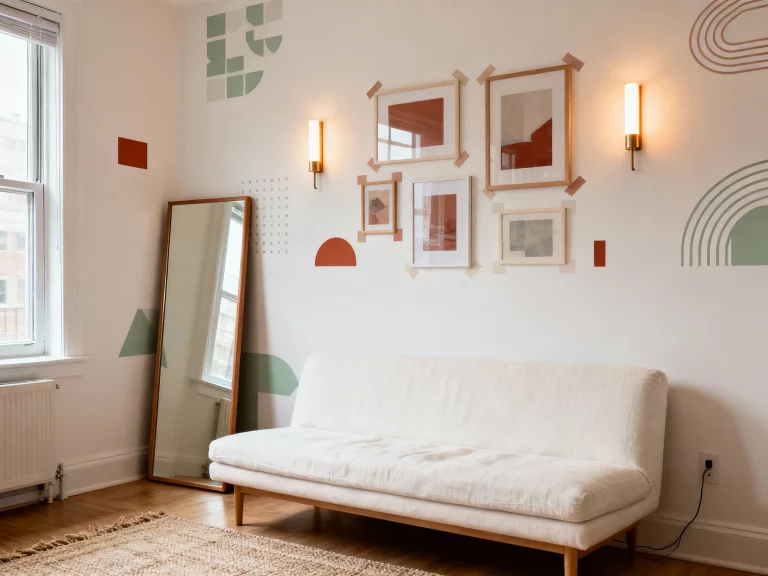
A painted arch is a low-cost way to make a blank wall look designed, especially when paired with a small framed print or wall sconce. Use the arch to frame a desk, reading chair, console table, crib, or bed. The painted shape creates a focal point even if the actual art is minimal.
Choose a color that relates to the room’s textiles or accents, such as dusty rose, sage green, warm clay, soft blue, or mushroom beige. The arch can be slightly wider than the furniture below it so it visually anchors the area. In a small room, keep the contrast gentle so the painted shape adds depth without chopping up the wall or making the space feel shorter.
10. Statement Canvas Over the Bed
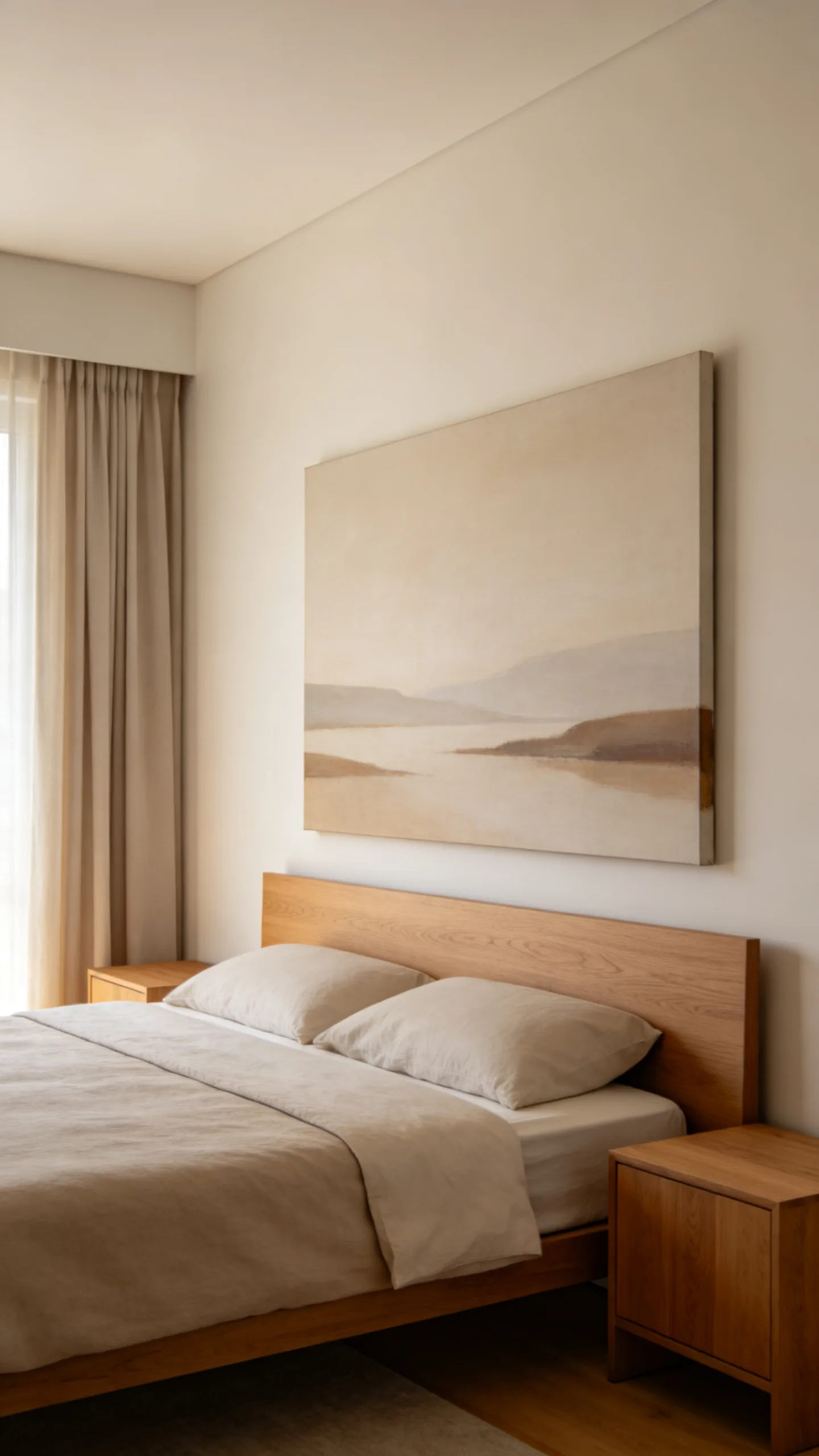
A statement canvas above the bed can complete a bedroom without adding extra furniture or taking up floor space. Choose a horizontal canvas that is narrower than the bed but wide enough to feel balanced with the headboard. Abstract shapes, muted landscapes, soft florals, or textured neutral artwork all work well above a bed.
Keep the hanging height close enough to the headboard that the two pieces feel connected. A gap of about 6 to 8 inches usually works for most rooms. If the bedding already has pattern, choose calmer artwork with simple colors. If the room is mostly solid bedding and plain curtains, the canvas can introduce more movement or color.
11. Pair of Matching Prints for Symmetry
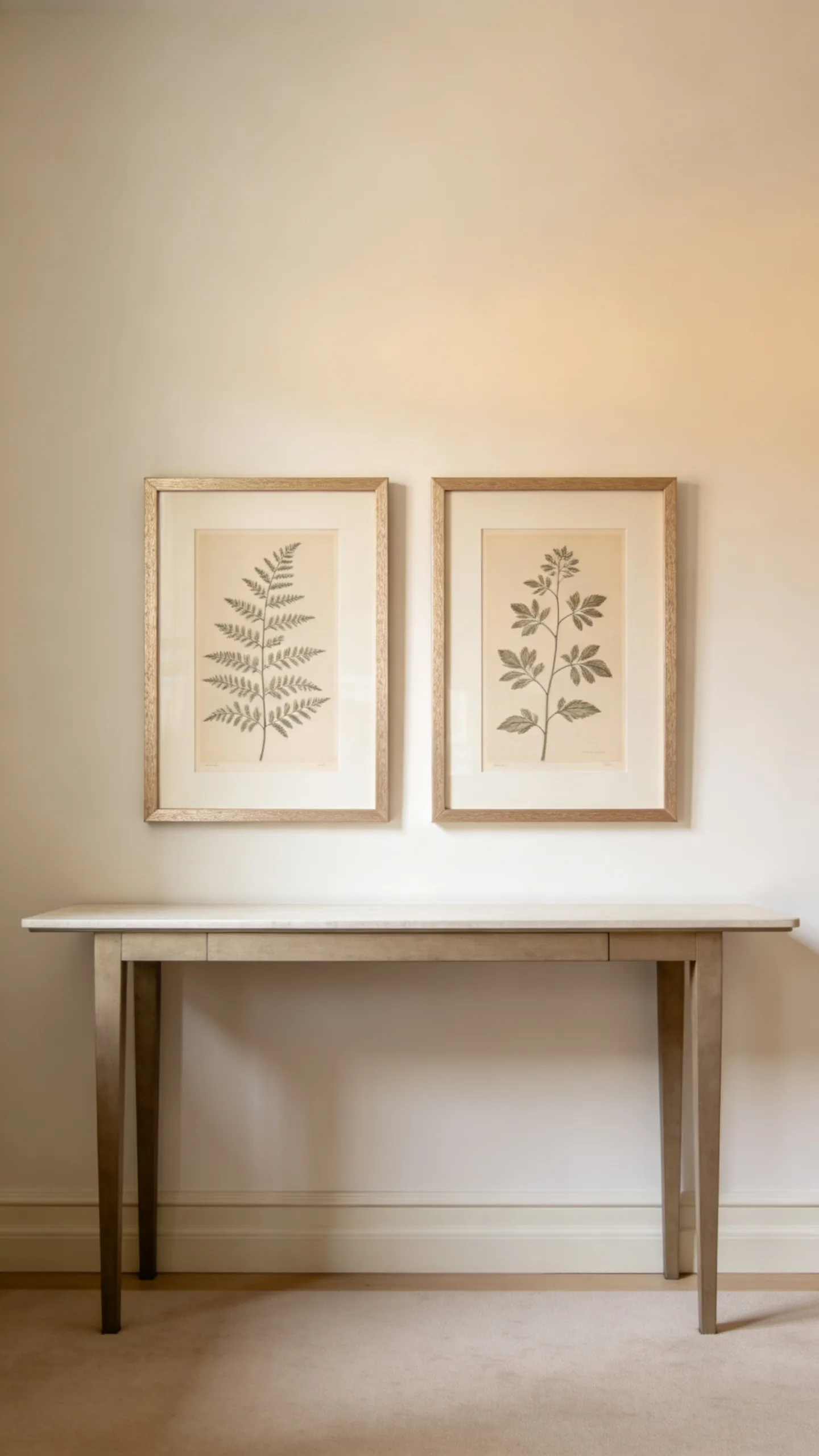
A pair of matching prints is an easy wall art idea for spaces that need balance. Hang two frames side by side above a bed, console table, dresser, desk, or dining bench. The symmetry creates a calm, finished look and works especially well in bedrooms, formal dining rooms, and entryways.
Choose prints with a shared theme, such as botanical stems, abstract shapes, coastal scenes, or simple sketches. Matching frame sizes keep the arrangement clean. For a narrow wall, hang the pair vertically instead of horizontally. This can draw the eye upward, making the ceiling feel taller while preserving floor space and traffic flow.
12. Small Art Cluster Around a Wall Sconce
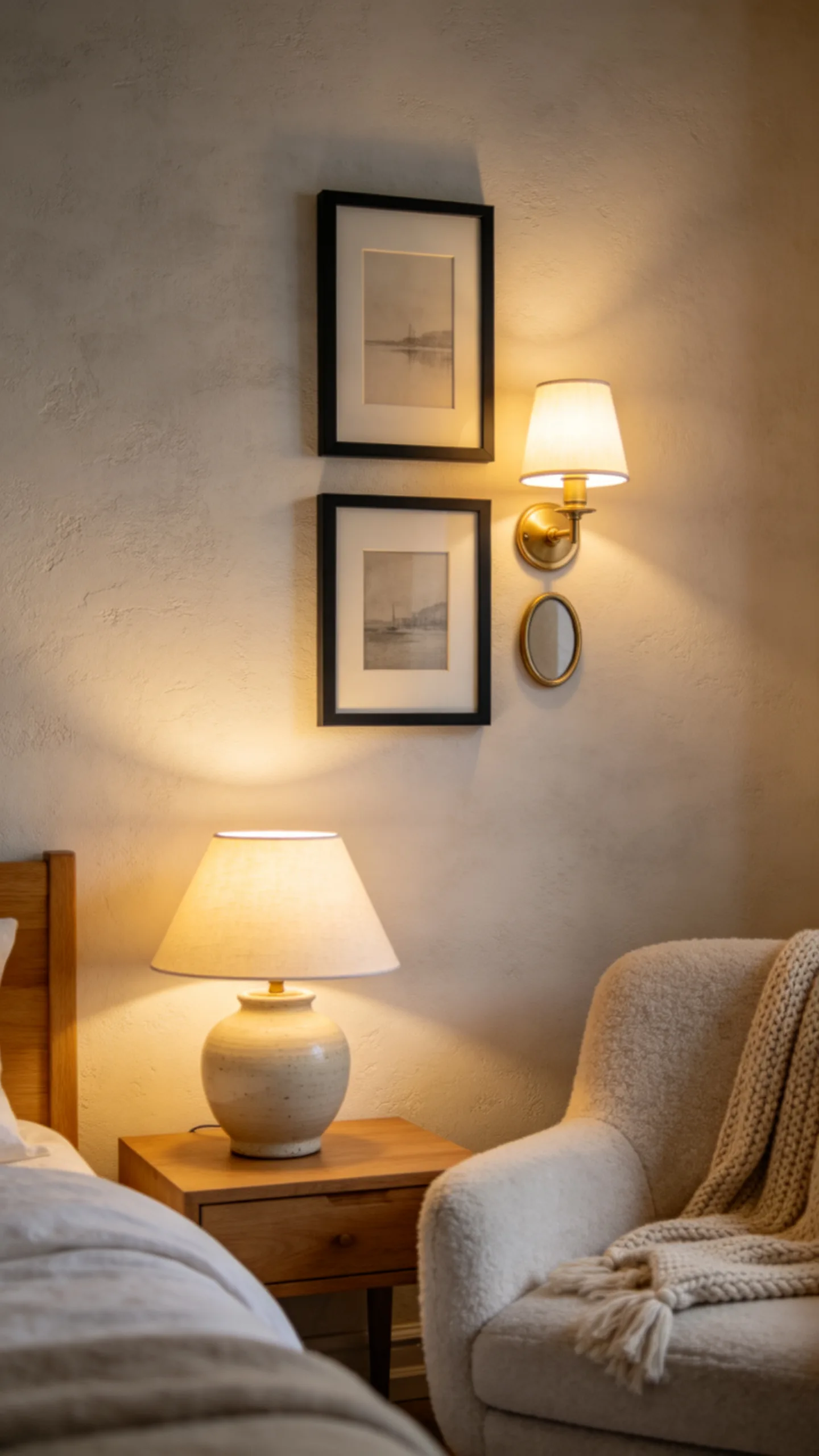
If a wall already has a sconce, use it as part of the art arrangement instead of treating it as an obstacle. A small cluster of framed pieces around a wall sconce can make a reading corner, bedside wall, hallway, or dining nook feel styled and layered. The light adds dimension and makes the artwork more noticeable in the evening.
Keep the frames smaller and varied in shape so they complement the sconce rather than compete with it. For example, place one vertical frame on one side, a smaller square frame below, and a tiny oval or round piece nearby. Leave enough space around the shade or bulb for safe clearance and easy cleaning. This approach works best when the frames share one finish, such as brass, black, or natural wood.
13. Shelf With Art, Books, and Greenery
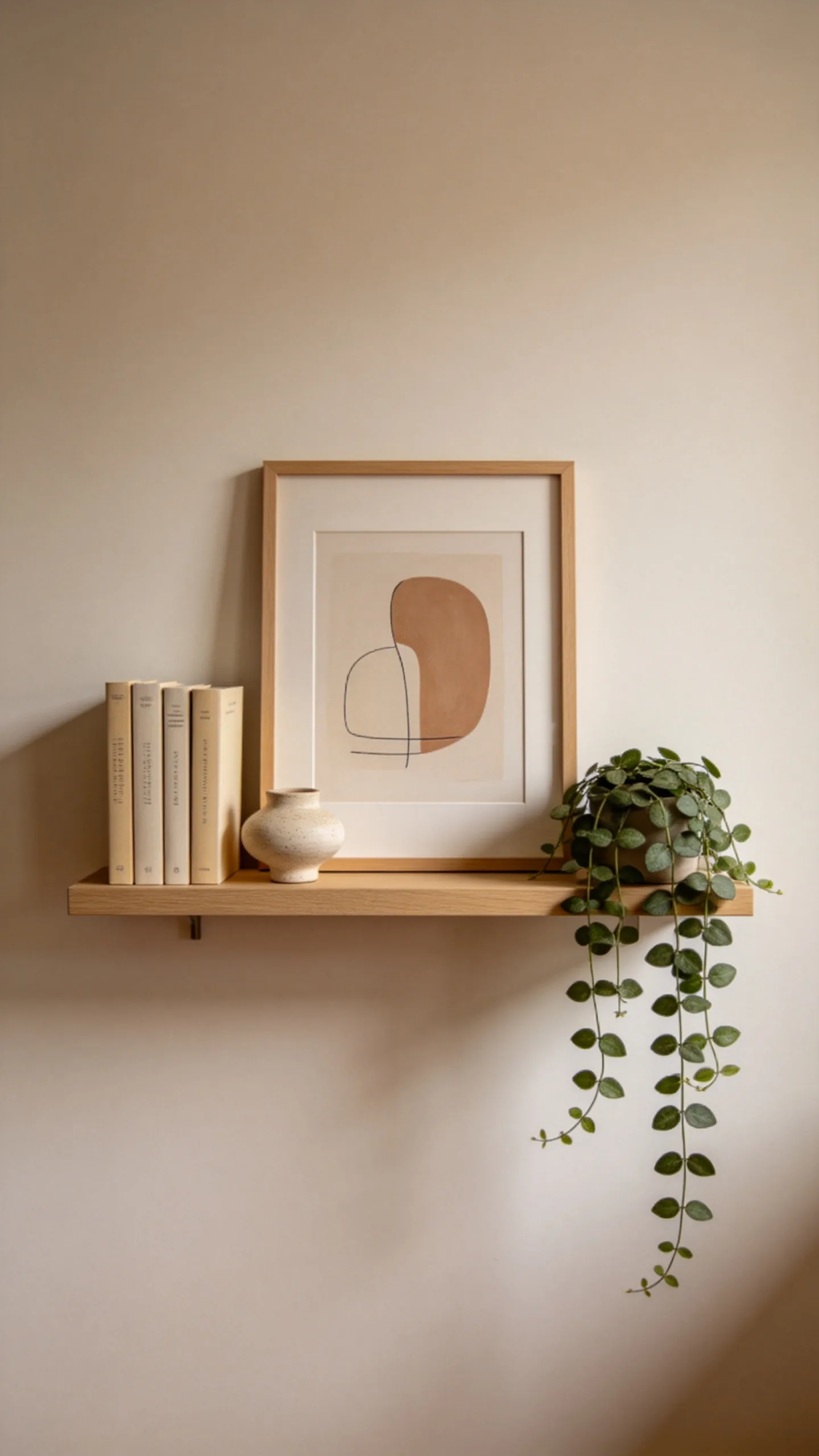
A wall shelf styled with art, books, and greenery can turn a plain wall into a useful decorative feature. This idea is great for living rooms, home offices, kitchens, and bedrooms where you want more personality but do not have room for another cabinet. A simple shelf gives you a surface for framed prints, small plants, stacked books, candles, or ceramic pieces.
For a balanced look, lean one framed print against the wall, add a small stack of books, and place a trailing plant or vase on one side. Vary the heights so the shelf does not look flat. In small rooms, choose a narrow shelf that does not project too far into the walkway. Keep the items edited so the display adds interest without becoming another clutter zone.
14. Wall-Mounted Plates in a Dining Room
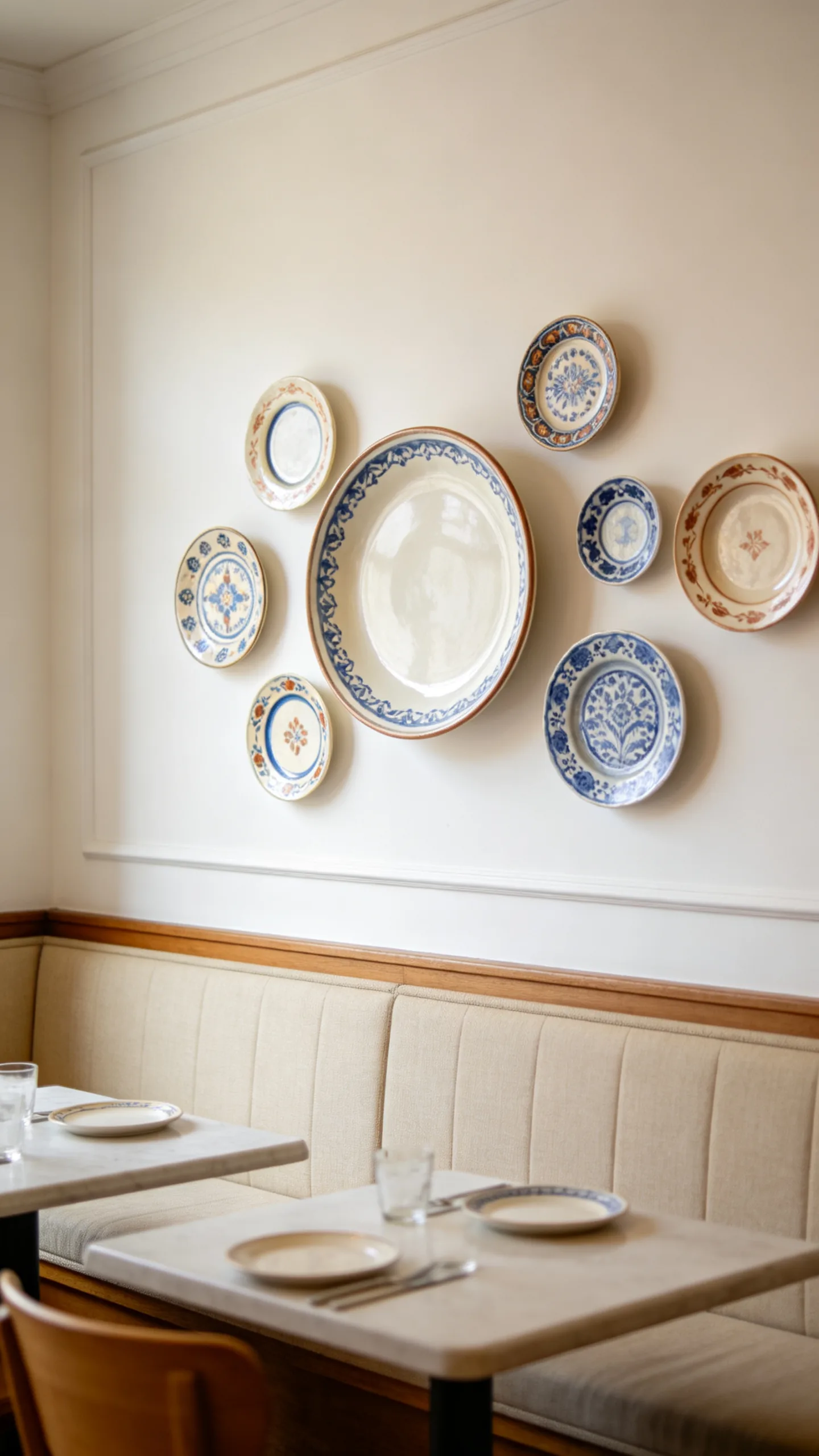
Decorative plates are a classic wall art idea for dining rooms, breakfast areas, and kitchens. They bring shape, color, and pattern to a blank wall while still feeling connected to the function of the room. Use ceramic plates, vintage dishes, handmade pieces, or a mix of white and patterned designs.
Create a loose arrangement above a sideboard, banquette, or breakfast table. Start with the largest plate near the center, then build outward with smaller plates. If the room has patterned curtains or a colorful rug, choose plates with a limited palette to keep the wall from feeling too busy. Plate hangers or adhesive disc hangers can help keep the display secure and neat.
15. Minimal Line Art for a Calm Corner
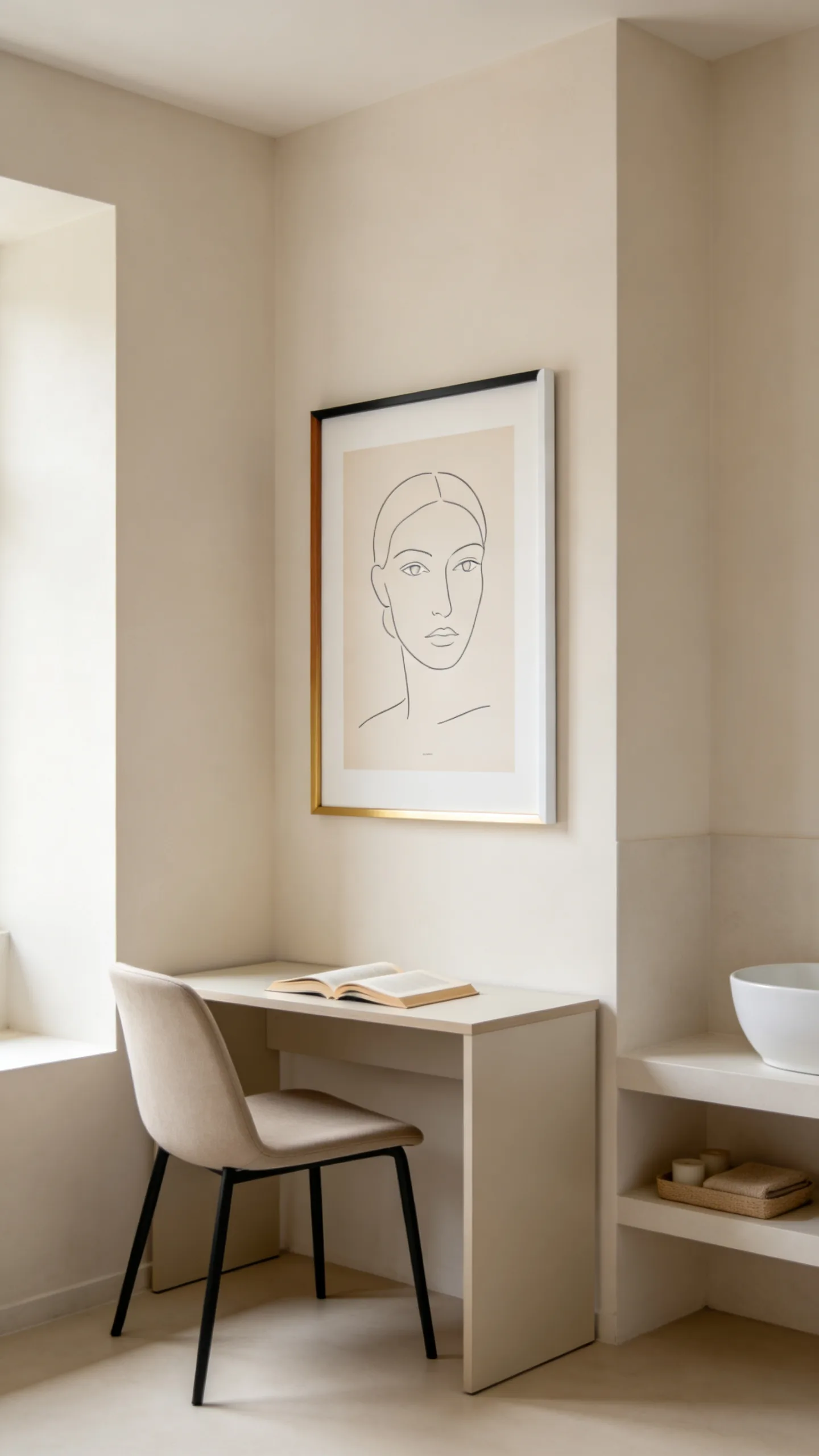
Minimal line art is perfect for a calm bedroom corner, home office, bathroom, or reading nook. The simple shapes add visual interest without introducing heavy color or pattern. This is helpful in small spaces where you want the wall to feel finished but not crowded.
Use slim frames in black, white, oak, or brass depending on the room’s finishes. A single line drawing above a small desk can help define the workspace without overwhelming it. In a bathroom, a framed line-art print can soften tile, stone, or painted drywall. Choose moisture-safe placement away from direct water and use frames that can handle humidity better than delicate materials.
16. Colorful Abstract Prints to Tie the Room Together
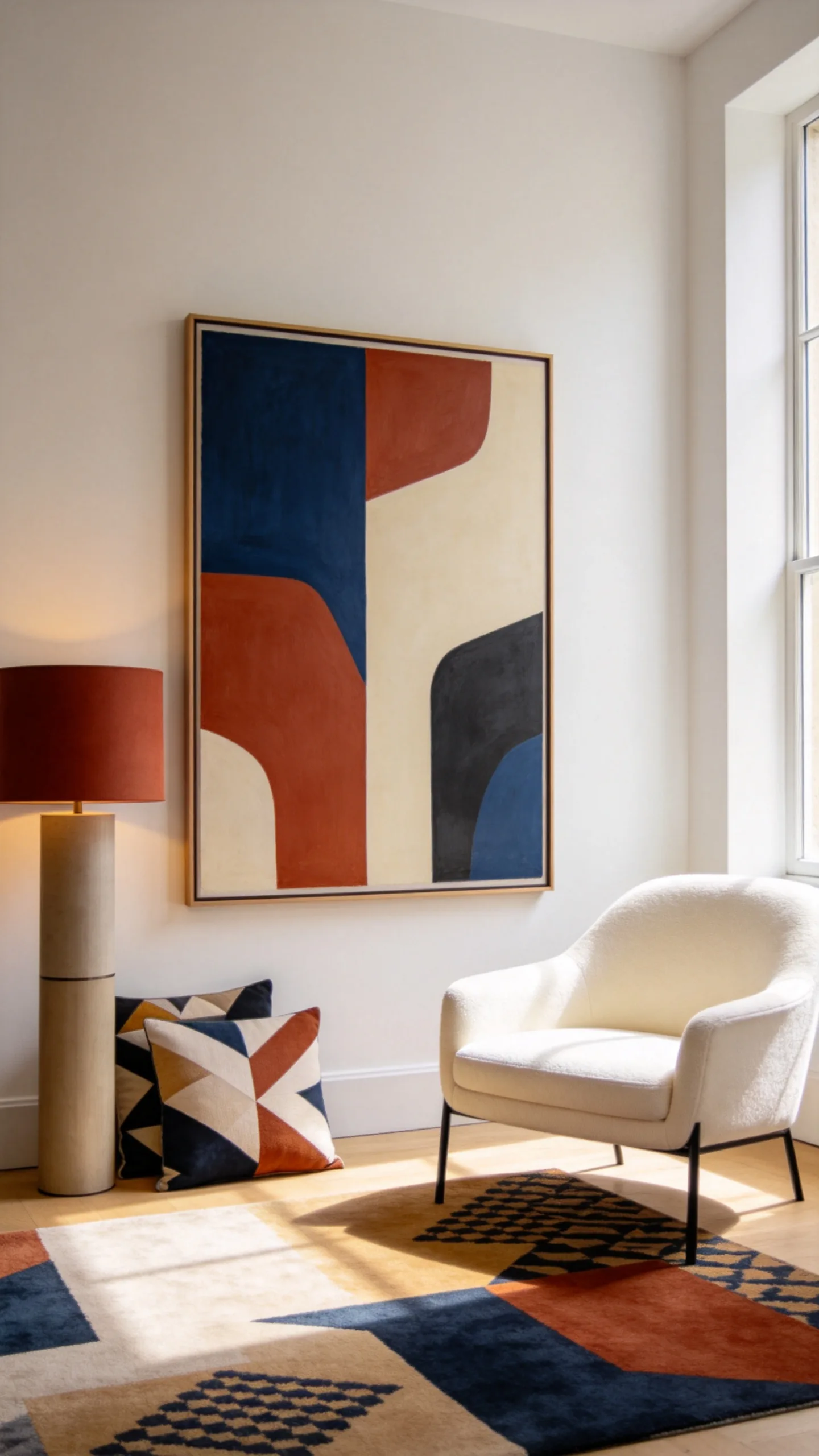
Colorful abstract prints can connect the different colors already present in a room. Look for artwork that repeats shades from your pillows, rug, curtains, lamps, or accent chair. This creates a coordinated effect without making the room look overly matched.
In a living room with a navy rug and rust pillows, for example, choose an abstract print with touches of navy, rust, cream, and charcoal. In a bedroom with sage bedding and warm wood furniture, a soft green and beige abstract piece can make the wall feel intentional. Use a simple frame if the artwork has bold color, and let the art become the main focal point on the blank wall.
17. Tall Vertical Art for Narrow Walls
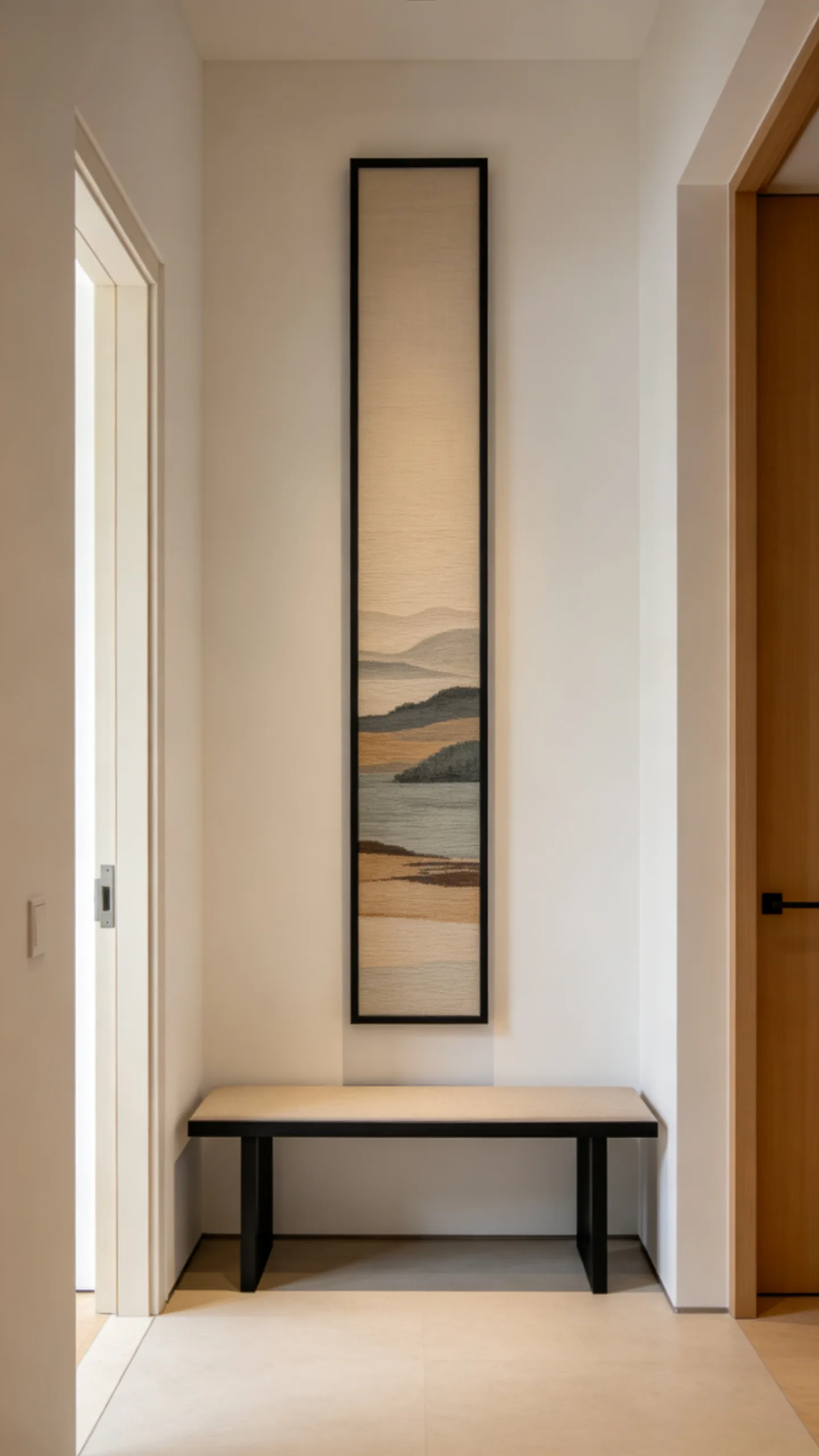
Tall vertical art is a smart solution for narrow blank walls between windows, beside a doorway, next to a fireplace, or at the end of a hallway. A vertical piece draws the eye upward and makes use of wall height without needing much width. This helps small rooms feel taller while keeping traffic paths open.
Choose a narrow framed print, textile panel, long canvas, or stacked pair of smaller frames. In an entryway, vertical art can fit above a slim bench or shoe cabinet. In a bedroom, it can fill the space beside a dresser or closet door. Keep the piece centered on the available wall area, not necessarily centered in the entire room, so the placement feels deliberate.
18. Mixed Media Gallery Wall With Depth
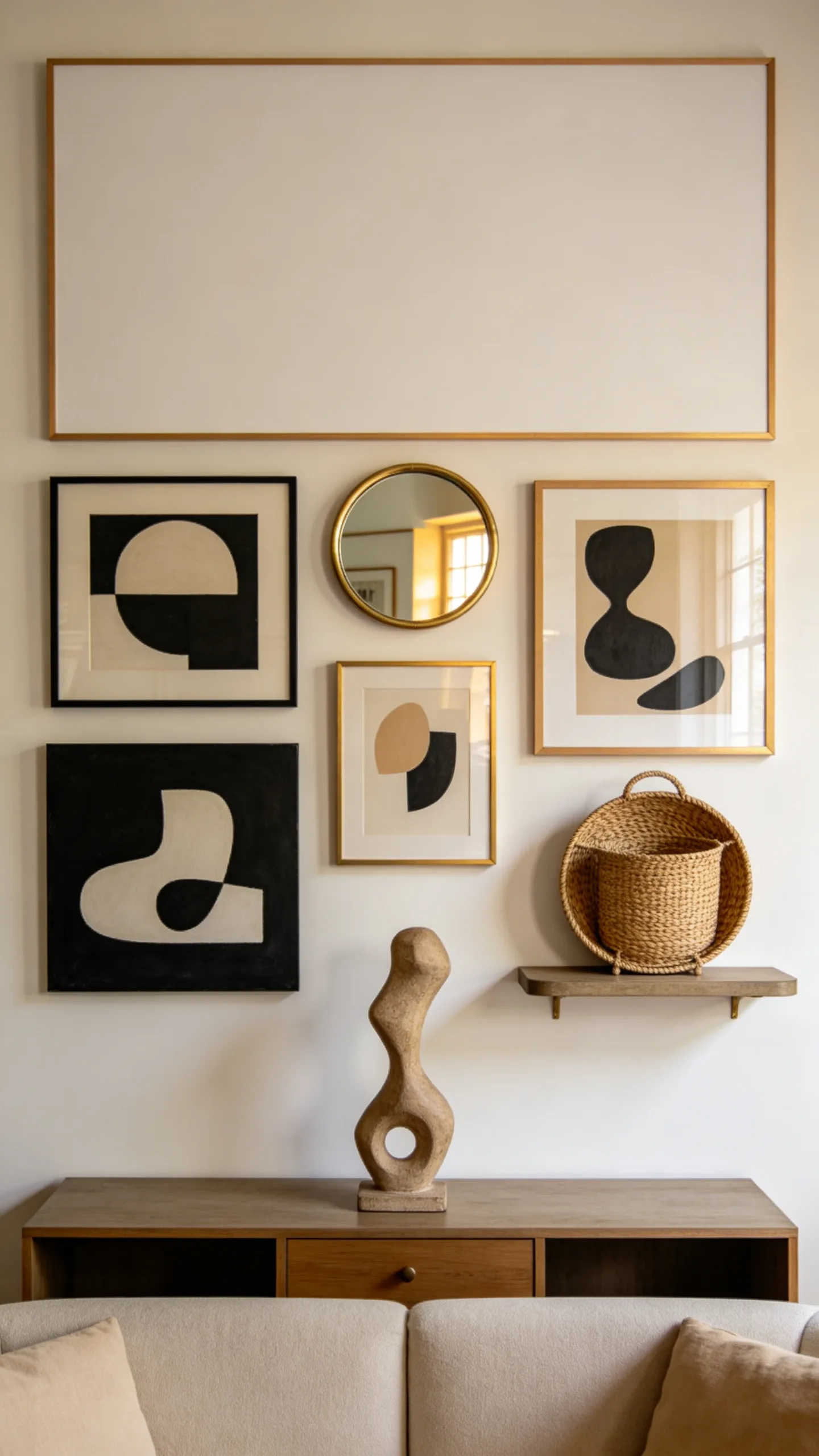
A mixed media gallery wall combines framed art with objects like mirrors, baskets, small shelves, sculptural pieces, or wall plaques. This creates depth and texture, making it a good choice for large blank walls in living rooms, stairways, and family rooms. The key is to use variety while keeping one or two elements consistent.
Choose a unifying color palette, such as black, white, tan, and brass, or wood, cream, sage, and charcoal. Mix frame sizes, but repeat at least one frame finish to keep the arrangement connected. Place heavier or darker pieces lower in the layout and lighter pieces higher up. Before hanging, lay everything out on the floor to test spacing and balance.
19. Peel-and-Stick Wall Mural Panel
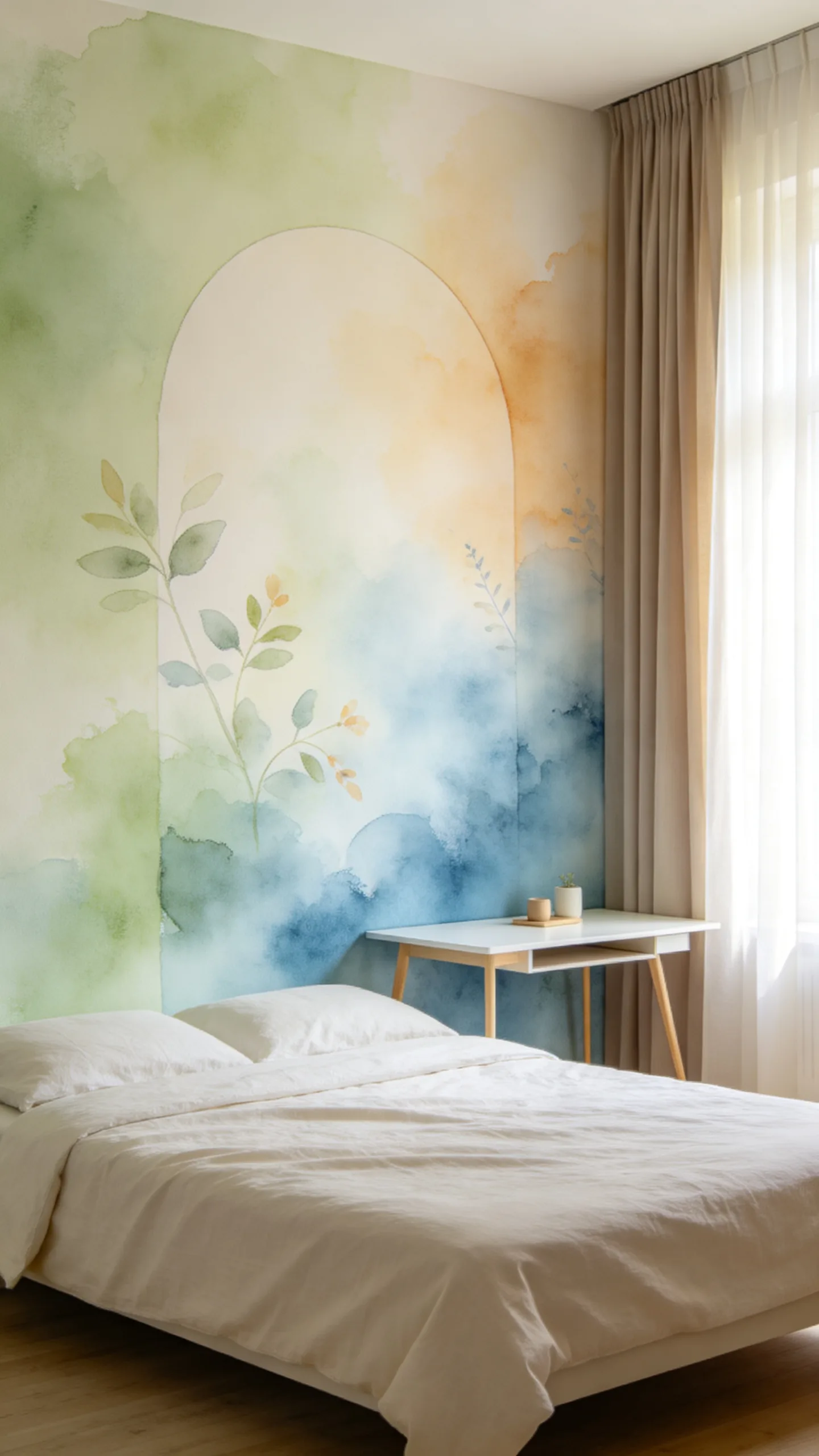
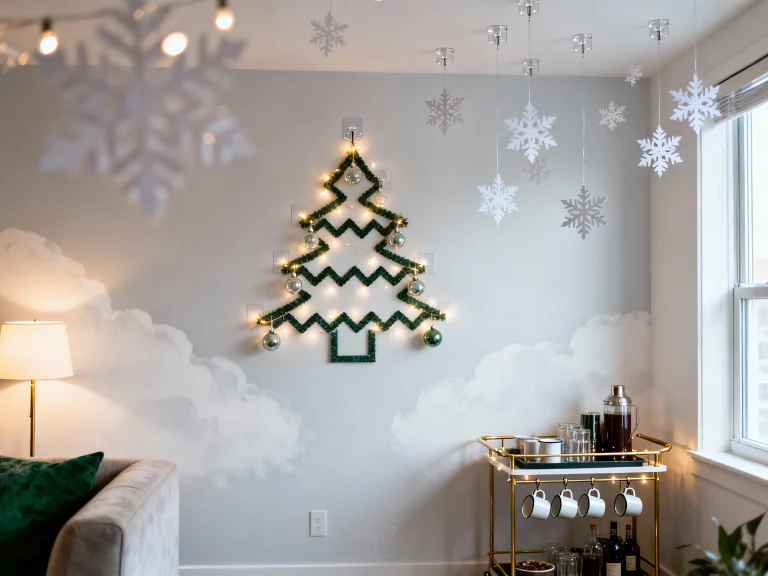
A peel-and-stick wall mural panel can make a dramatic change without permanent renovation. It works well behind a bed, in a nursery, behind a desk, or on a dining nook wall. Murals can mimic landscapes, watercolor washes, arches, florals, or graphic patterns, creating a focal point where a plain painted wall feels too empty.
For a small room, choose a mural with soft depth, such as misty trees, subtle botanical shapes, or light abstract color. Avoid overly dark or crowded patterns if the room already has limited natural light. Use the mural on one wall only so it feels like a feature rather than visual noise. Pair it with simple bedding, furniture, or curtains to keep the focus clear.
20. Framed Fabric or Wallpaper Samples
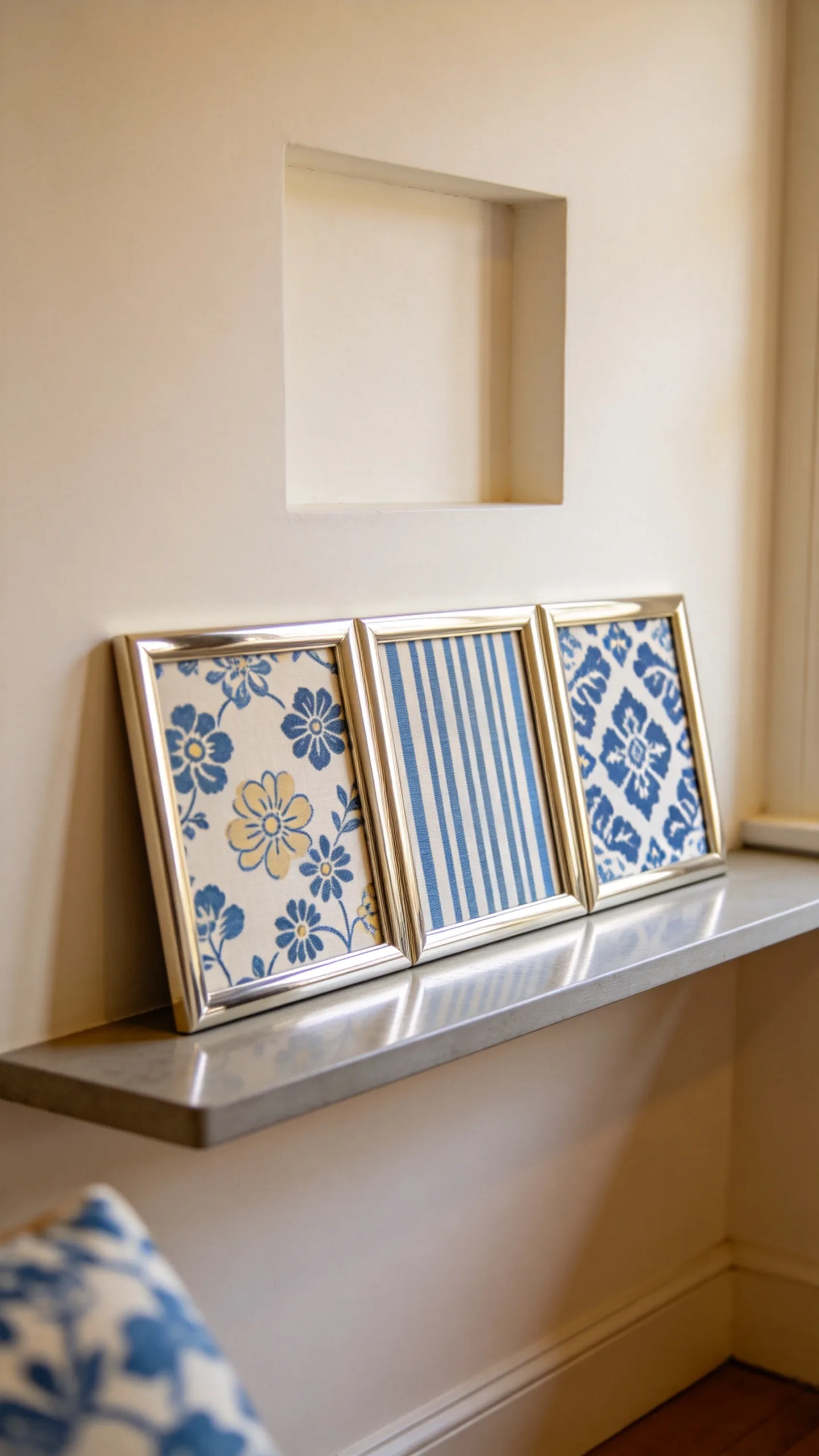
Framed fabric or wallpaper samples are an affordable way to create custom-looking wall art. This idea works especially well in bedrooms, powder rooms, laundry rooms, and creative spaces. Use leftover wallpaper, pretty fabric remnants, block-printed textiles, or patterned paper inside simple frames.
A set of two or three framed samples can fill a small blank wall above a dresser, towel bar, desk, or console. Choose patterns that match the room’s colors, such as blue floral fabric with navy towels or warm striped paper with wood furniture. The frames help the materials feel polished, while the texture and pattern add charm without needing expensive artwork.
21. Oversized Calendar or Artful Wall Planner
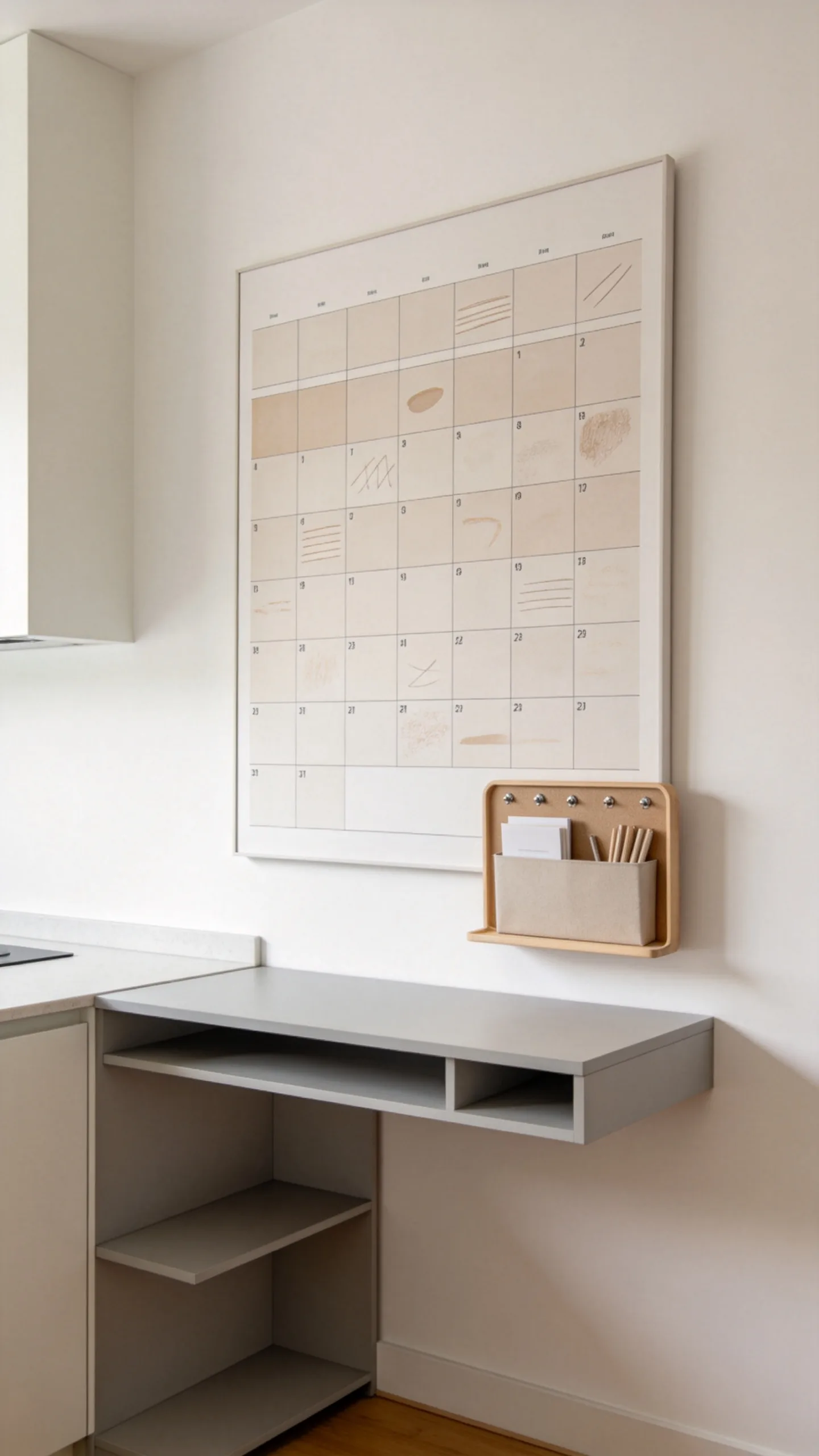
An oversized calendar or wall planner can be both decorative and useful, especially in a kitchen, home office, command center, mudroom, or family hallway. Choose a design with clean typography, neutral colors, or simple illustrations so it functions as wall art instead of visual clutter.
Hang it above a desk, beside a pantry door, or over a narrow console where you can actually use it. Pair it with a small pinboard, wall pocket, or shelf if the area needs storage for mail, keys, or notes. In a small home, this kind of functional wall art helps organize daily life while making an empty wall feel purposeful and finished.