27 Wall Art Decor Ideas That Make Blank Walls Look Beautiful
Blank walls can make a living room, bedroom, hallway, dining area, or entryway feel unfinished, even when the furniture is already in place. The right wall art decor ideas can turn those empty surfaces into focal points, add color and texture, improve the room’s proportions, and make the whole space feel more intentional without requiring a renovation.
1. Oversized Canvas Above the Sofa
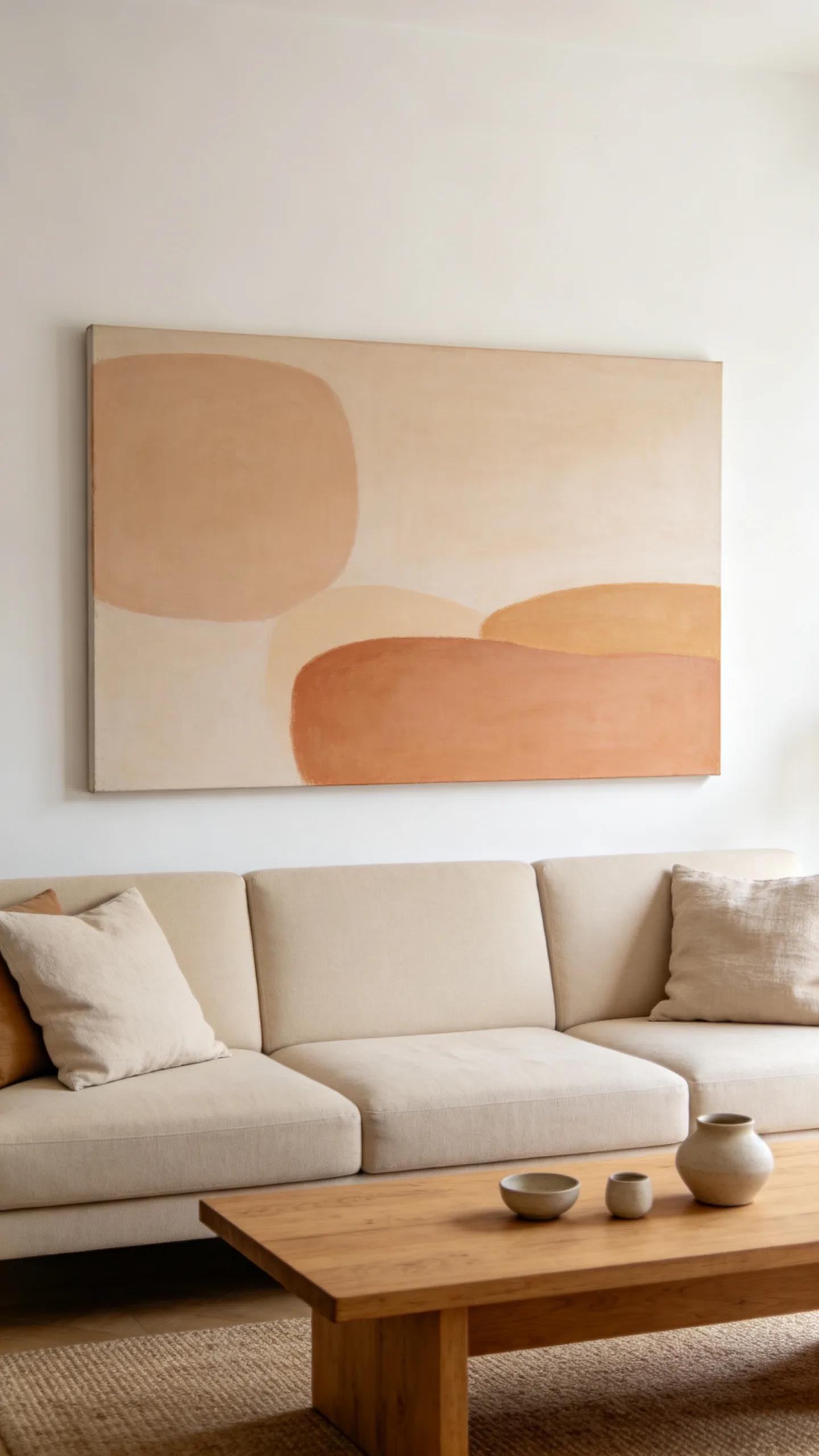
An oversized canvas is one of the simplest ways to make a blank living room wall feel complete. Choose a piece that is roughly two-thirds the width of the sofa so it looks connected to the furniture instead of floating awkwardly on the wall. For a standard three-seat sofa, a large horizontal canvas often works better than several tiny frames.
This idea is especially useful in rooms with neutral furniture, such as a beige sofa, white walls, and a wood coffee table. A canvas with soft abstract shapes, landscape colors, or warm earthy tones can create a focal point without adding visual clutter. Hang it so the bottom edge sits about 6 to 10 inches above the sofa back for a balanced sightline.
2. Grid Gallery Wall With Matching Frames
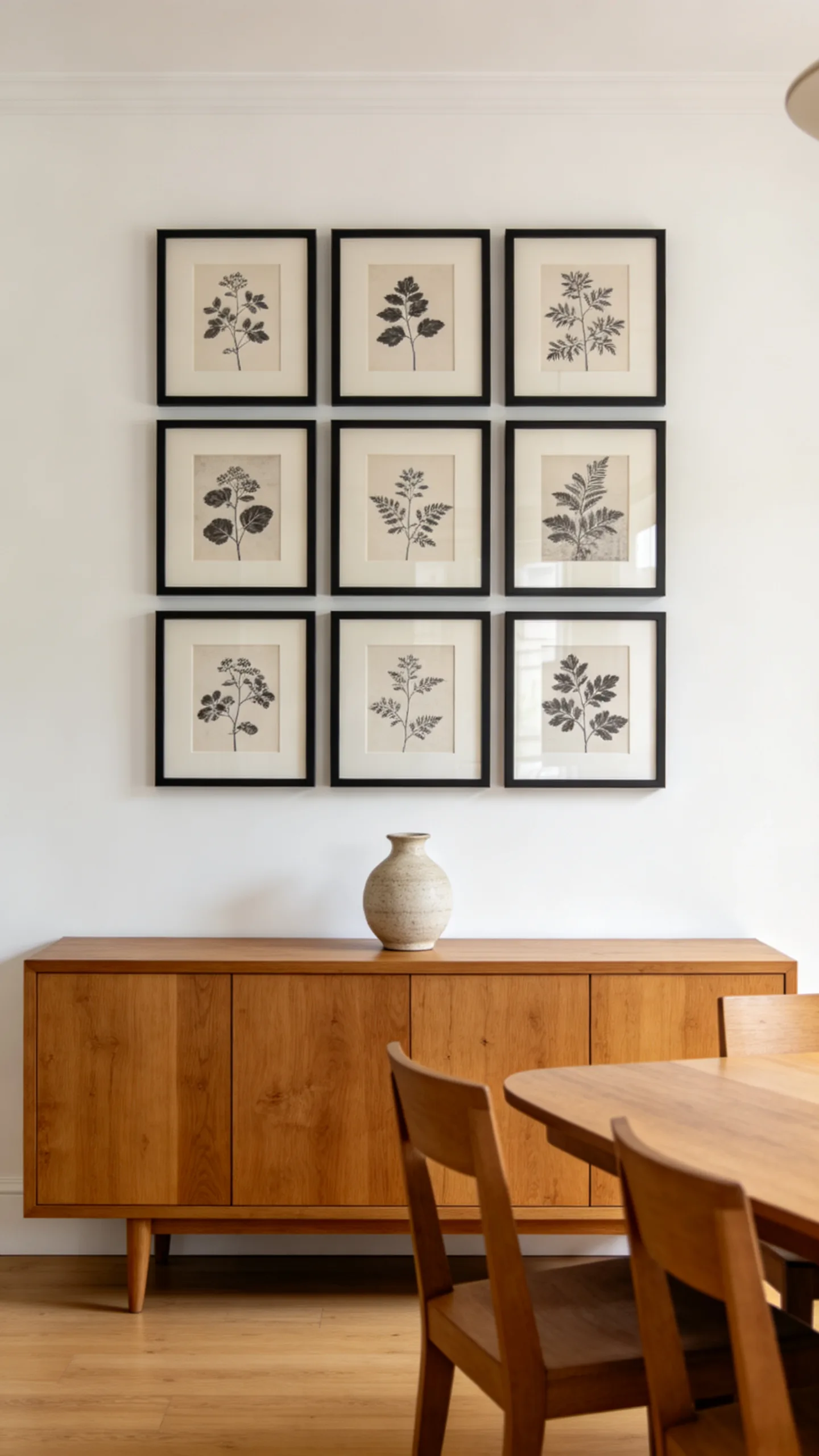
A grid gallery wall gives a blank wall a clean, organized look, especially in a dining room, hallway, or home office. Use identical frames in black, white, brass, or natural wood, and keep the spacing even between each frame. A set of six, nine, or twelve frames works well when you want structure instead of a casual collected look.
This layout is ideal for botanical prints, black-and-white photography, architectural sketches, or family photos edited in the same color style. The repeated frame size keeps the wall calm, while the artwork inside adds personality. It also works beautifully above a console table, sideboard, or desk where symmetry helps the area feel polished.
3. Floating Picture Ledges With Layered Art
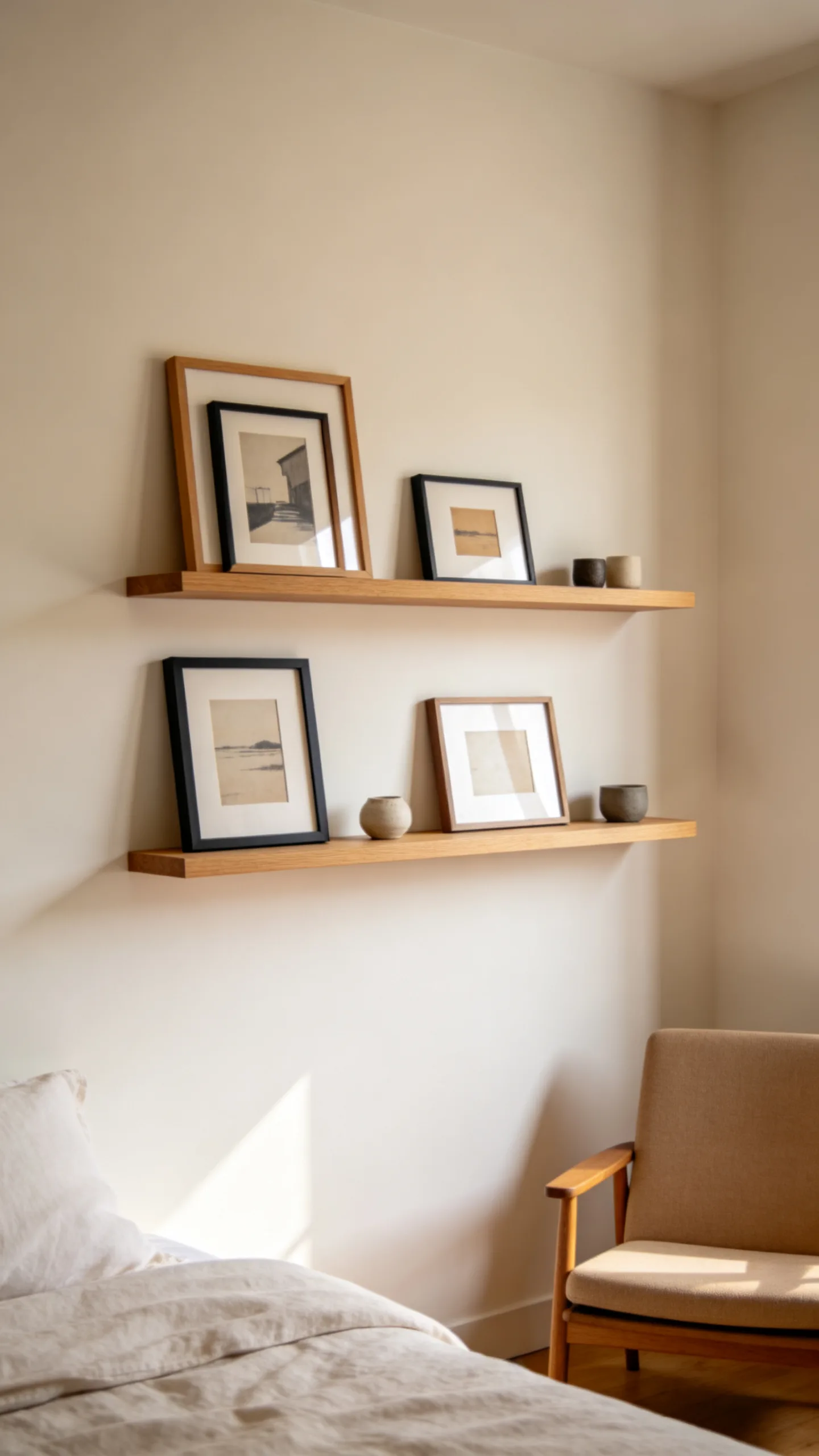
Floating picture ledges are a flexible wall art solution for renters, small apartments, or anyone who likes to change decor seasonally. Instead of committing to a fixed gallery wall layout, install one or two slim ledges and lean framed prints, postcards, small canvases, and decorative objects against the wall.
This works especially well in bedrooms, living rooms, and narrow hallways because the ledge keeps art contained without taking up floor space. Use a mix of frame heights, but repeat one material, such as oak wood or matte black metal, so the arrangement feels intentional. Leave some empty space between pieces to avoid a crowded shelf look.
4. Large Framed Textile or Tapestry
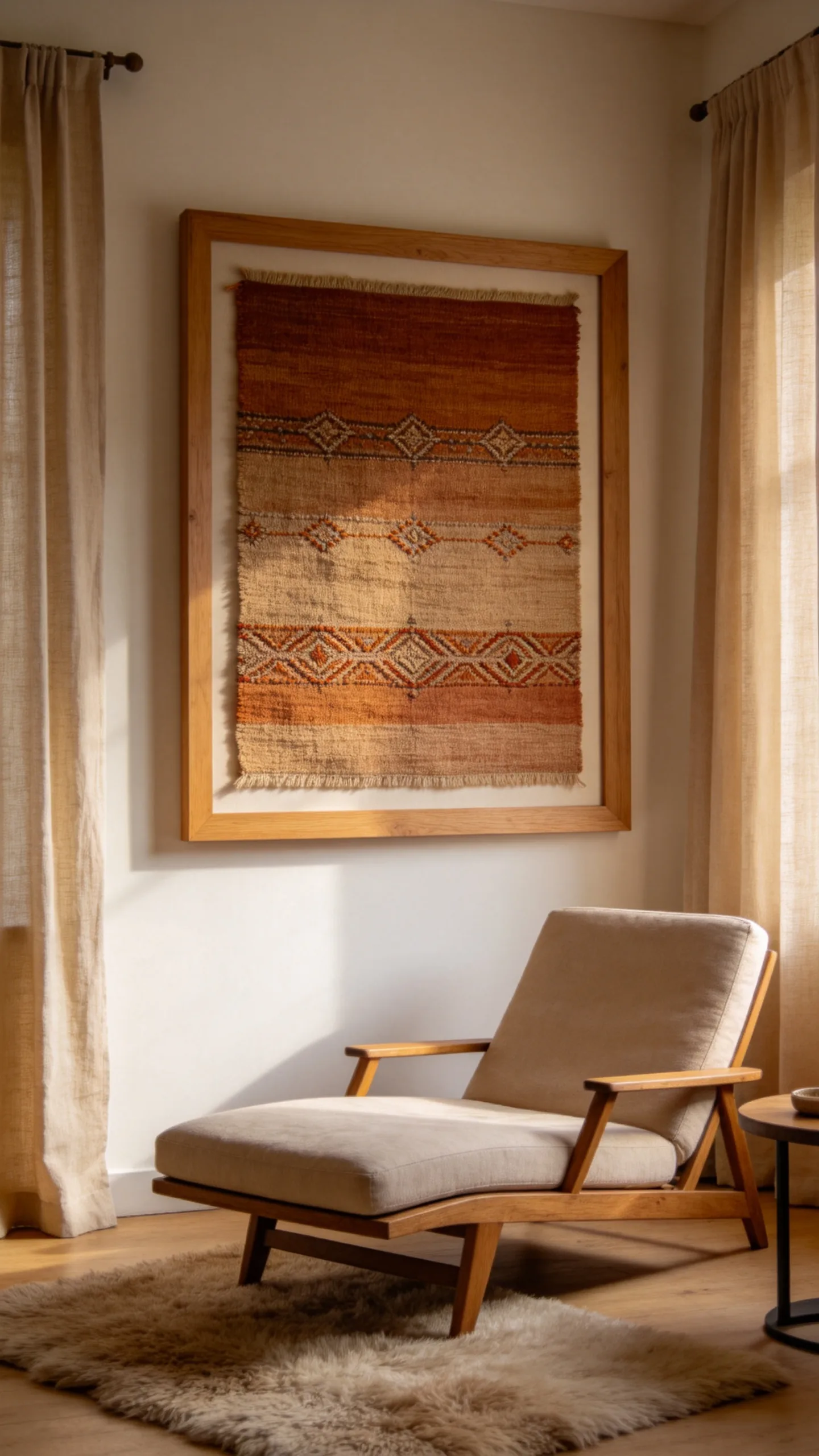
A framed textile adds softness and texture to a blank wall, making it a strong choice for bedrooms, reading corners, and boho-inspired living rooms. Instead of only using prints or paintings, consider a woven fabric, vintage scarf, embroidered panel, batik cloth, or block-printed textile framed behind glass or mounted in a simple wood frame.
Textile art is helpful when a room has many hard surfaces, such as wood floors, metal lamps, and glass tables. The fabric breaks up the flat wall visually and can echo other textiles in the room, like linen curtains, a wool rug, or patterned throw pillows. Choose a size that fills the wall area generously so the piece feels like decor, not an afterthought.
5. Black-and-White Photo Wall
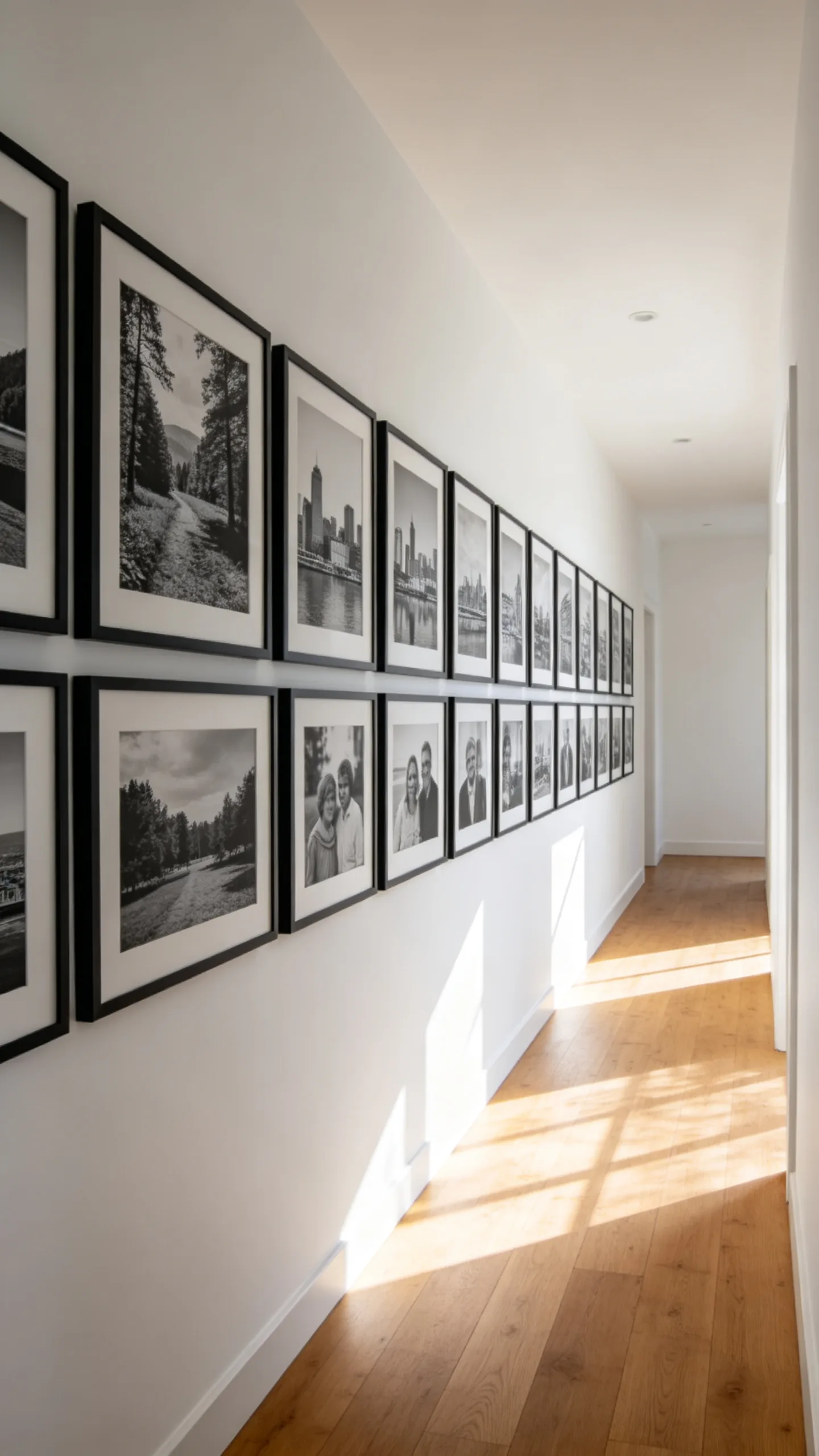
A black-and-white photo wall creates a timeless look that works in modern, traditional, farmhouse, and minimalist interiors. Use family portraits, travel photos, city scenes, or nature photography, then print them all in black and white for a cohesive finish. This keeps the wall from feeling chaotic, even when the subject matter varies.
For a hallway or staircase, use a series of frames in the same color and arrange them in a line that follows the traffic path. In a living room, group the frames into a large rectangle above a sofa or console. The limited color palette lets the images feel personal while still blending with wall paint, furniture, and surrounding decor.
6. Statement Mirror as Wall Art
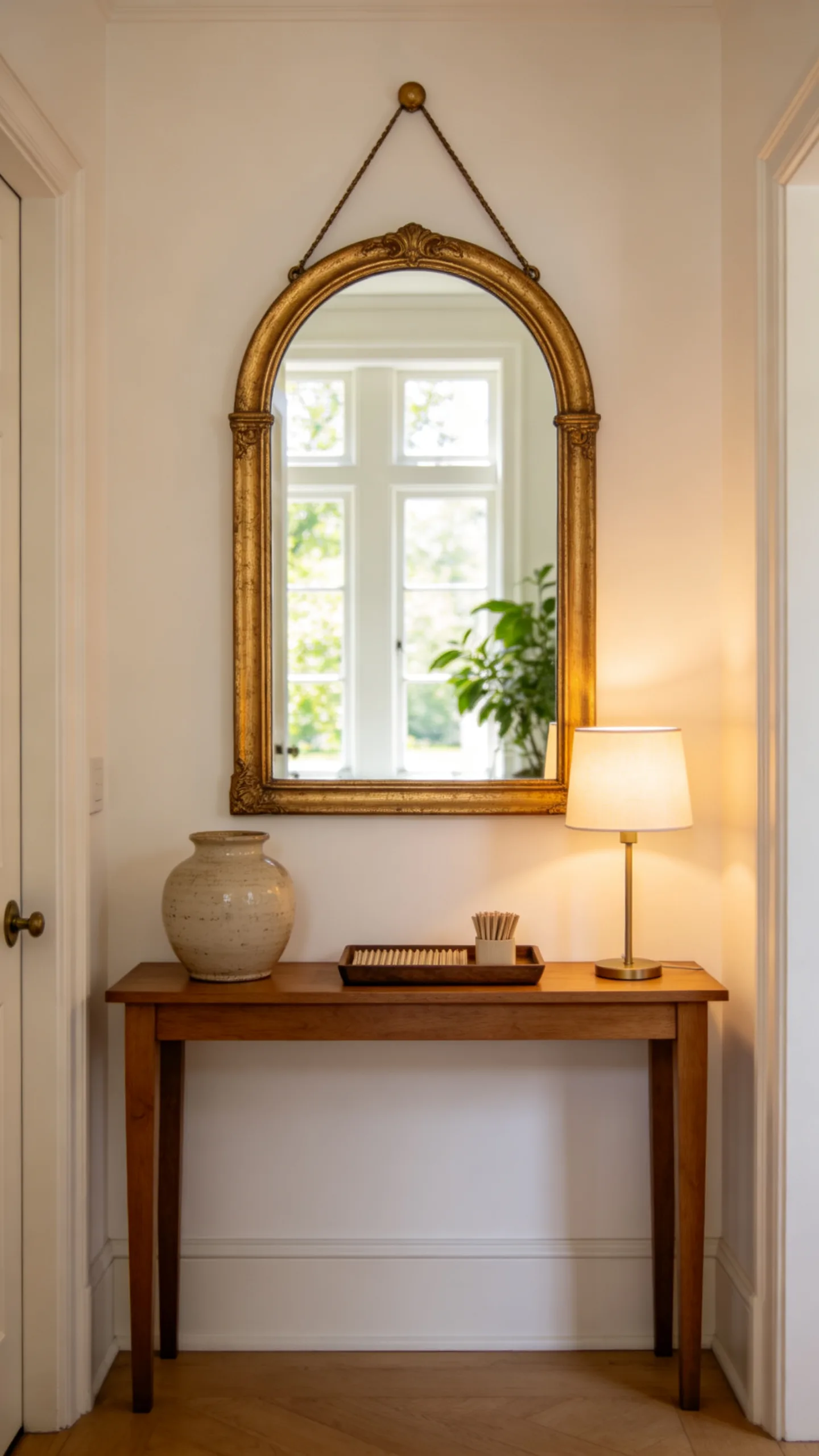
A mirror can function as wall art while also making a room feel brighter and larger. This is especially useful in small entryways, compact dining rooms, and living rooms with limited natural light. Choose a mirror with a distinctive frame, such as arched wood, antique brass, black metal, carved rattan, or scalloped edges.
Place the mirror where it reflects something attractive, such as a window, plant, pendant light, or styled console table. Avoid positioning it where it reflects clutter, a television, or a busy storage area. A large mirror above a sideboard or mantel can create the same visual impact as artwork while improving light and sightlines.
7. Framed Vintage Map Display
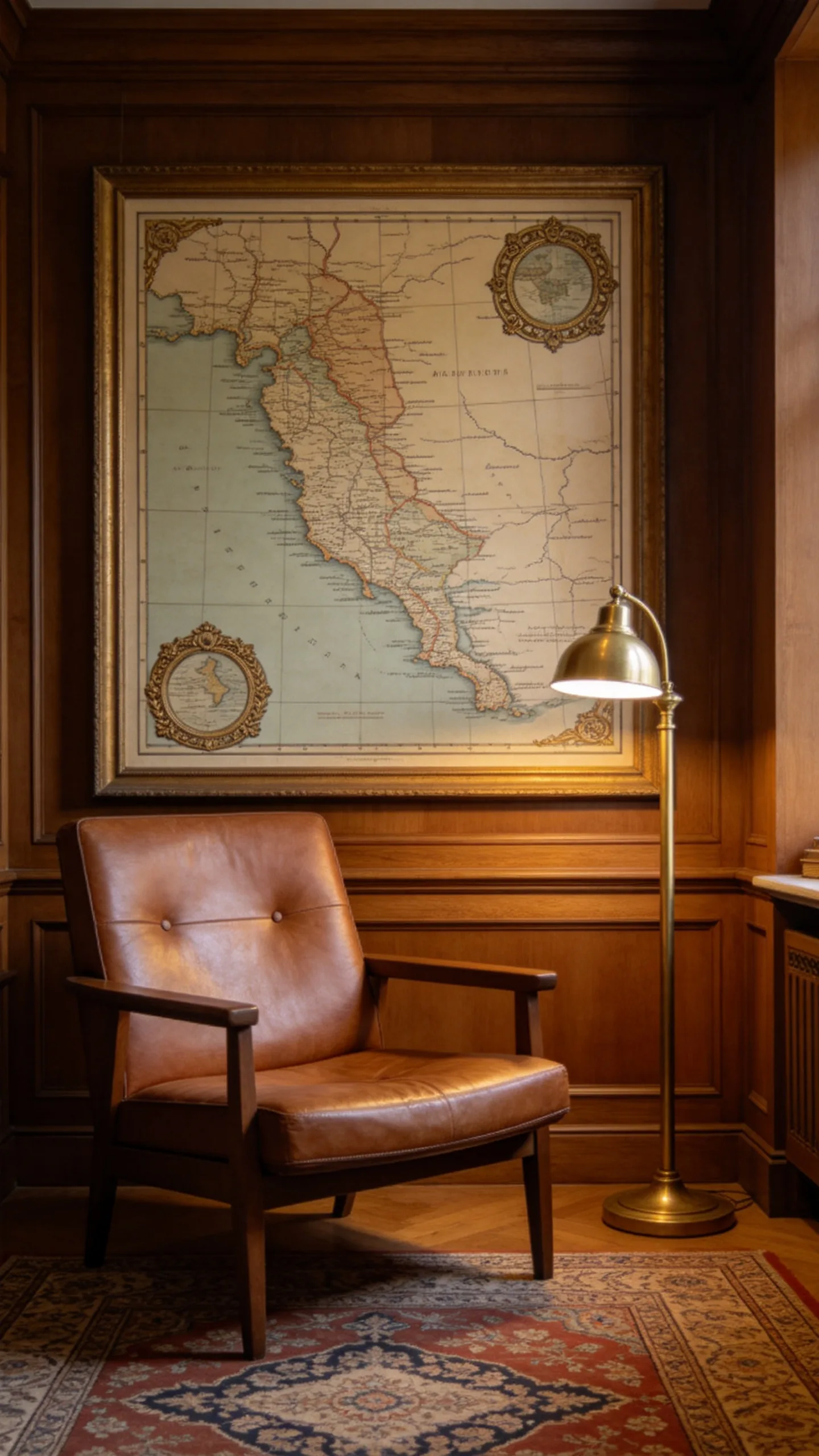
A vintage map makes a blank wall feel collected and thoughtful, especially in a study, hallway, living room, or guest bedroom. Choose a map of a favorite city, hometown, travel destination, coastal region, or historic area. Framing it gives the piece a more elevated look and protects the paper.
This idea works well with wood furniture, leather chairs, brass lamps, and traditional rugs. For a modern room, use a thin black frame and wide white matting to keep the map crisp. A single large map can anchor a wall, while a pair of smaller maps can look balanced above a desk, dresser, or entry bench.
8. Sculptural Wall Baskets
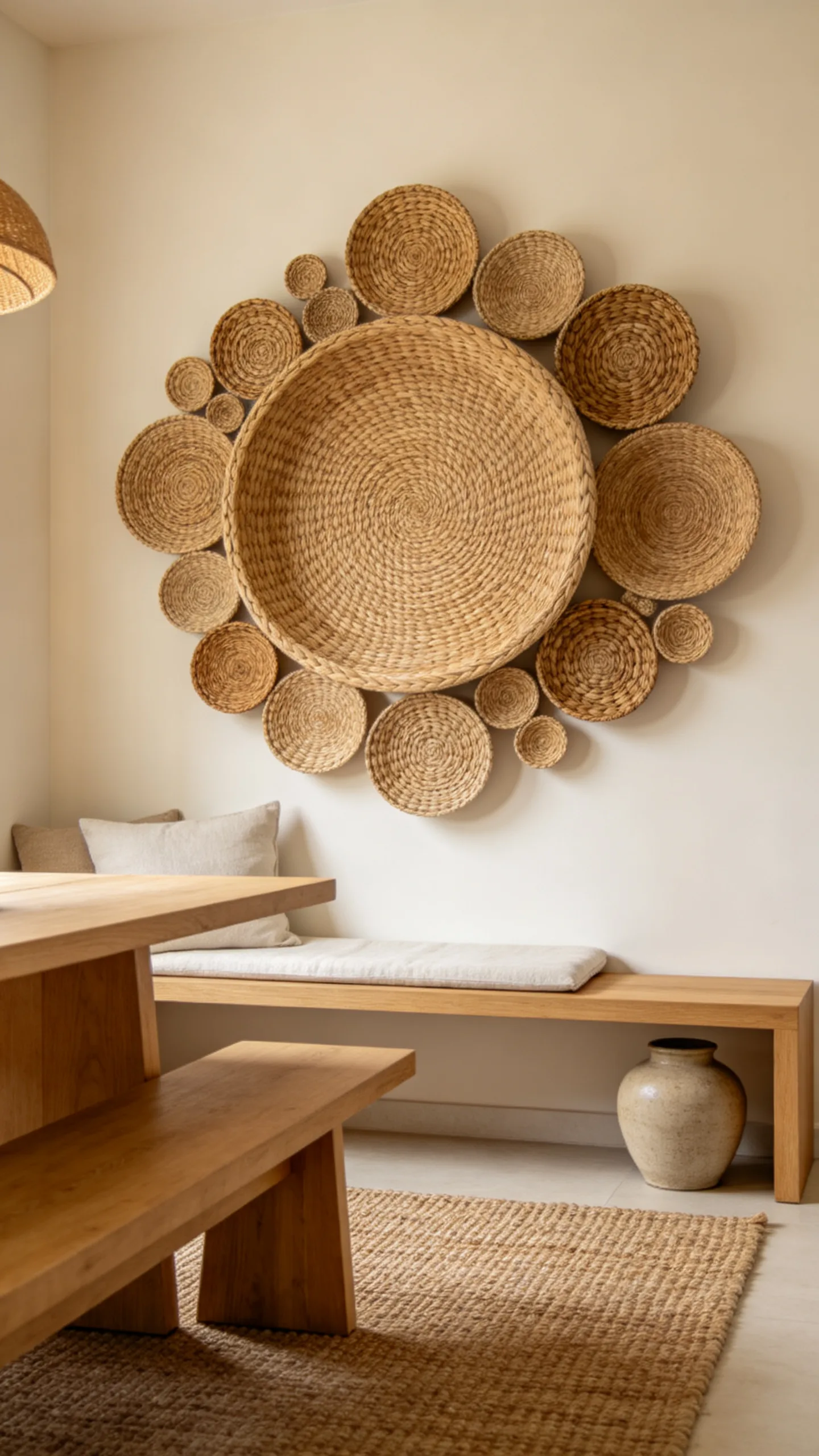
Wall baskets bring texture, pattern, and warmth to a blank wall without the heaviness of framed art. They are especially effective in dining rooms, breakfast nooks, bedrooms, and living rooms with white, cream, tan, or sage green walls. Use woven baskets in different sizes but similar natural tones for a cohesive arrangement.
Start with the largest basket slightly off-center, then build outward with smaller pieces. This helps the layout feel organic rather than stiff. Because baskets are lightweight, they can fill a large wall area without making the room feel crowded. They also pair well with wood furniture, linen curtains, jute rugs, and ceramic vases.
9. Minimal Line Art Trio
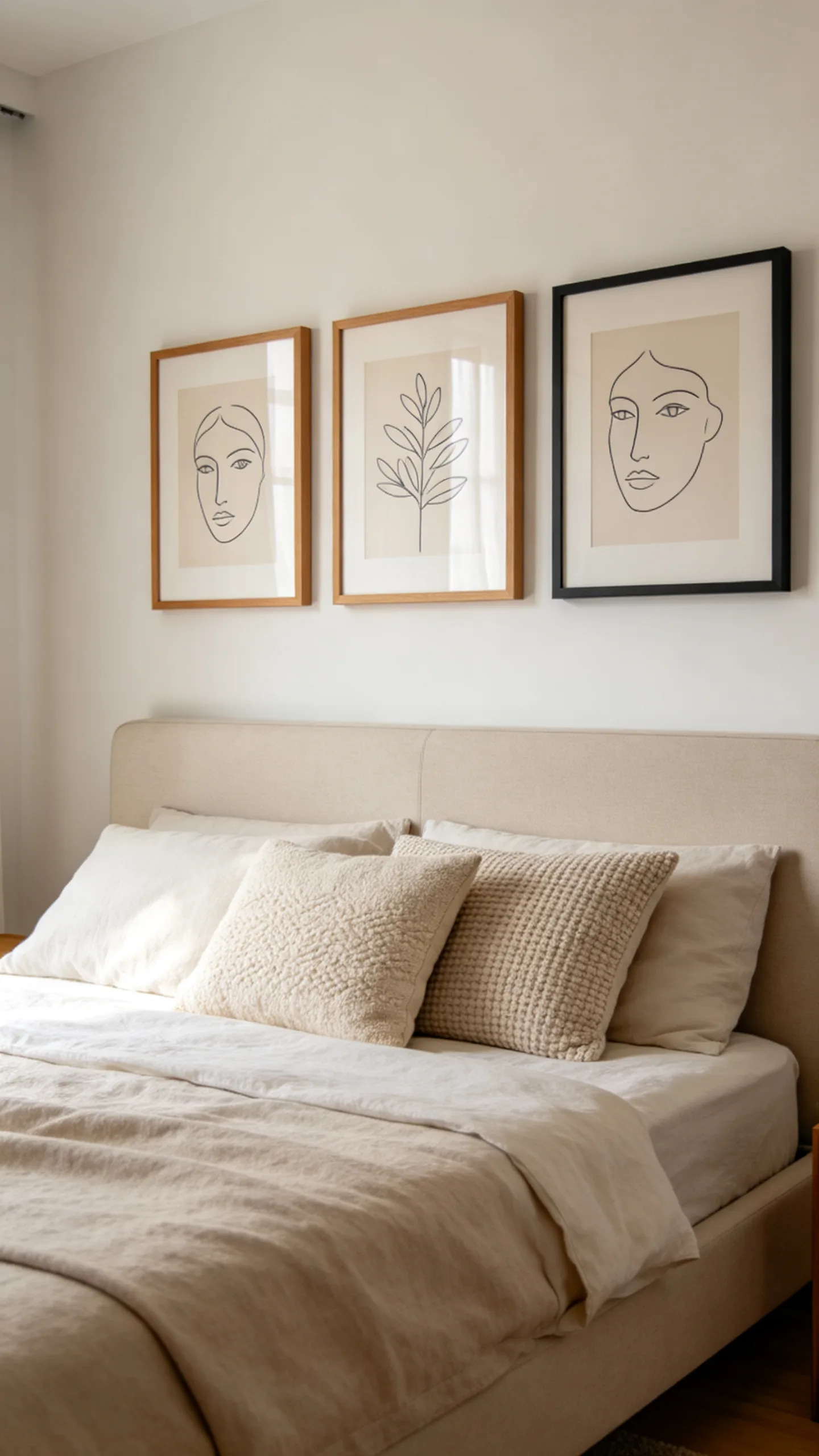
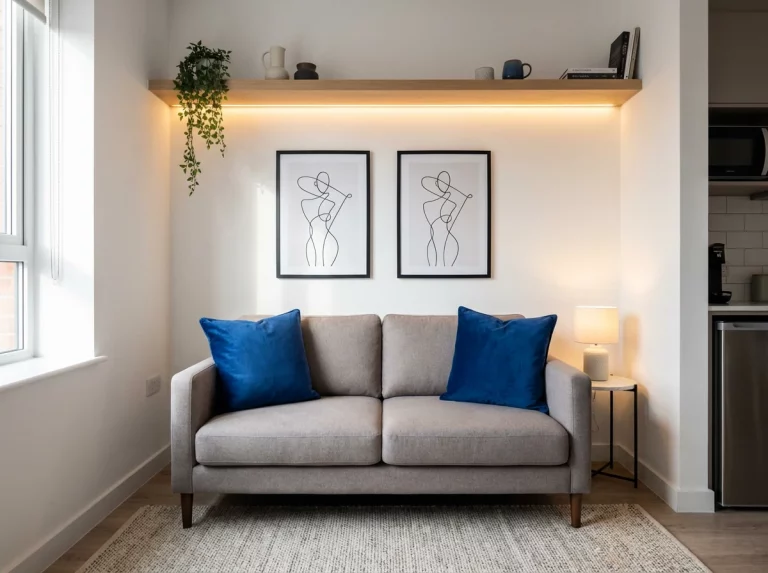
A trio of minimal line art prints is a clean solution for a blank wall in a bedroom, hallway, or modern living room. Use three matching frames and hang them in a straight row above a bed, bench, console, or sofa. The simplicity of line drawings works well when the room already has patterned rugs, textured bedding, or colorful furniture.
To make the arrangement look intentional, choose prints with similar subjects or shapes, such as abstract faces, botanical stems, or simple figure drawings. Keep the frame color tied to another finish in the room, like black curtain rods, oak nightstands, or brass lighting. This creates a quiet, polished wall without overwhelming the space.
10. Large-Scale Botanical Prints
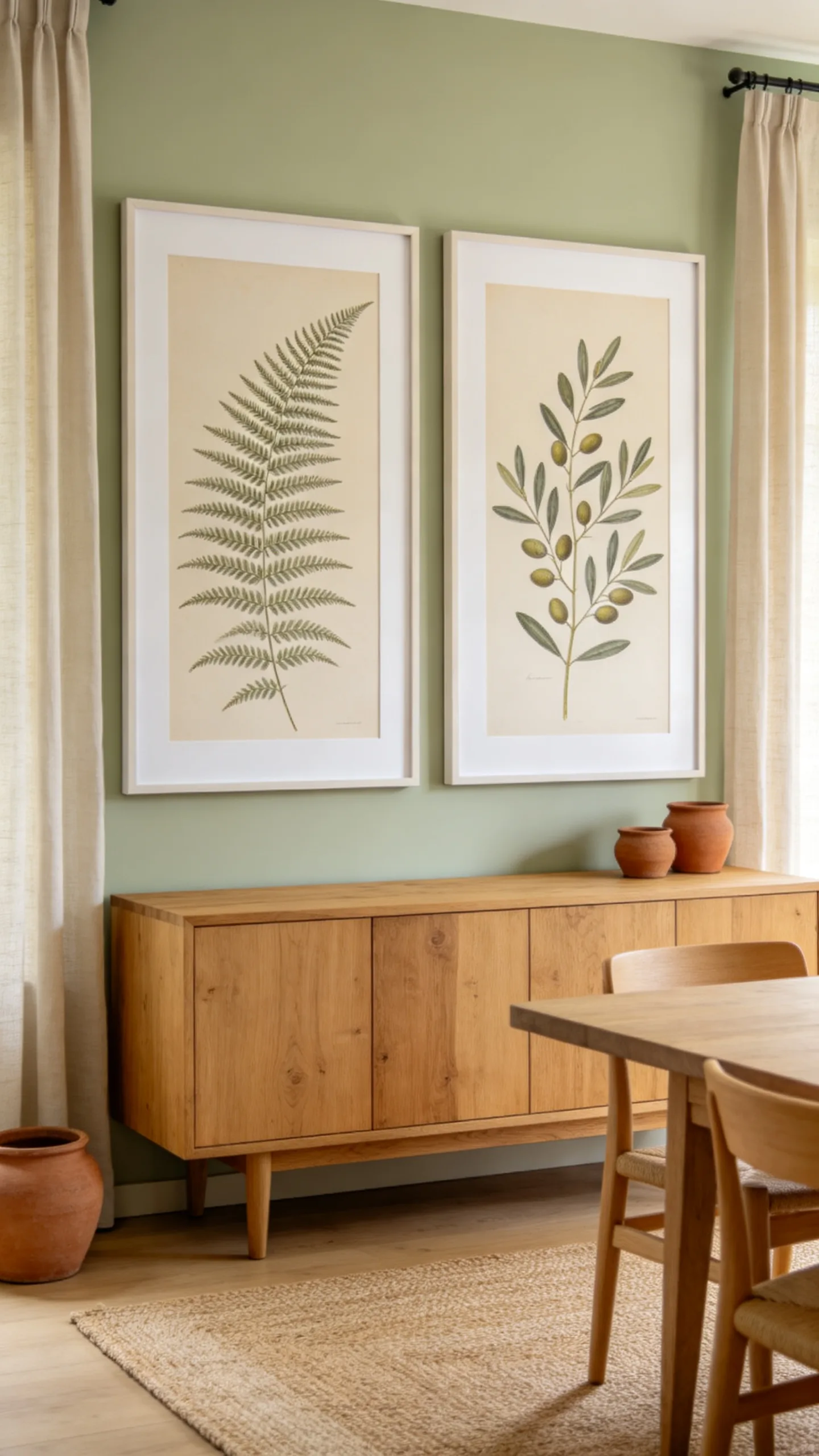
Botanical prints are a classic way to bring life to a blank wall without using bold colors. Oversized fern, palm, olive branch, or floral studies can soften a dining room, bedroom, or sunroom. Choose large prints with generous matting for a refined look, especially if the wall paint is white, greige, soft blue, or pale green.
This idea is useful when you want a natural theme but do not have space for many plants. Hang two or three botanical prints above a sideboard, bed, or reading chair. Pair them with woven shades, linen bedding, terracotta pots, or a natural fiber rug to make the wall feel connected to the rest of the room.
11. Framed Wallpaper Panels
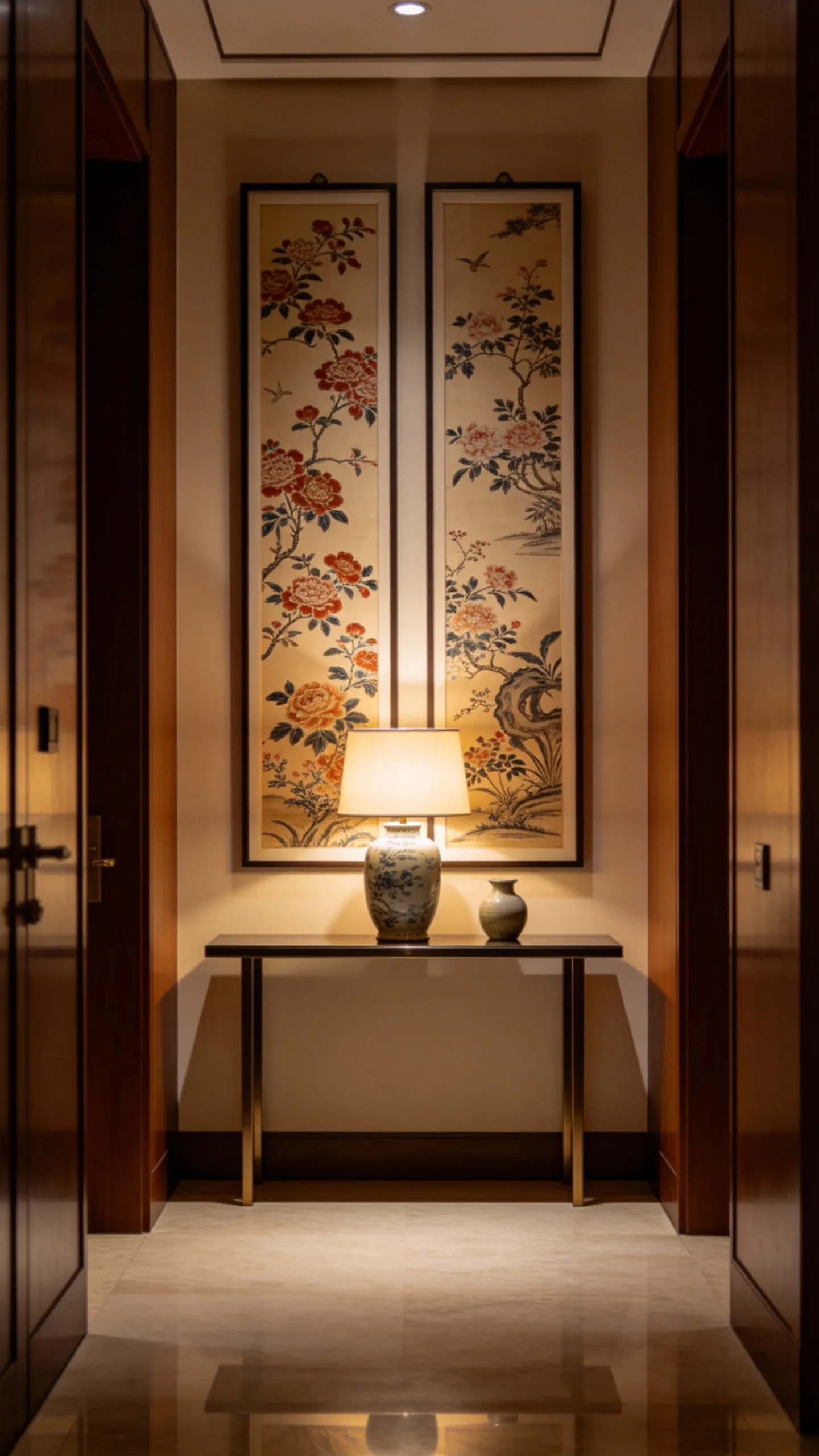
Framed wallpaper panels are a smart way to add pattern to a blank wall without covering the entire room. This works well in dining rooms, powder rooms, bedrooms, and entryways where a full wallpaper project may feel too expensive or permanent. Choose a bold floral, chinoiserie, grasscloth, geometric, or mural-style wallpaper and frame it like artwork.
Use two tall panels above a console table or one oversized panel behind a bed. The frame gives the pattern structure, while the wallpaper adds color and movement. This is especially helpful in rental homes or spaces where you want a dramatic focal point without changing the whole wall surface.
12. Art Pair Above Nightstands
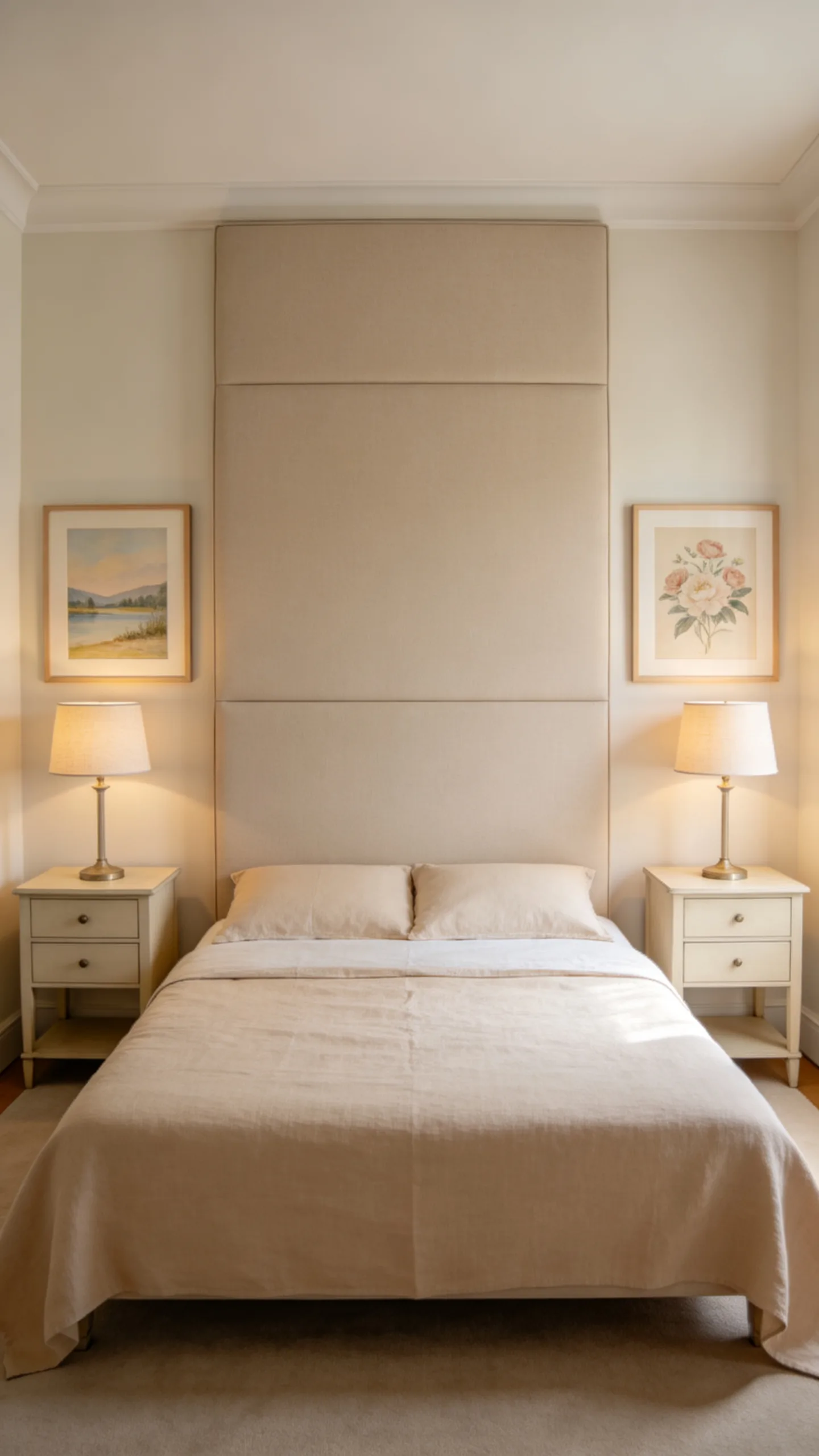
A pair of framed artworks above matching nightstands can make a bedroom wall feel finished without crowding the bed area. Instead of placing everything above the headboard, hang one piece over each nightstand to create balance across the wall. This works particularly well when the headboard is tall, upholstered, or already visually strong.
Choose artwork that relates in color or subject, such as two landscapes, two abstract prints, or two soft floral pieces. Keep the frames at the same height and align them with the center of each nightstand. The result frames the bed area and gives the room a calm, symmetrical feel.
13. Picture Rail With Rotating Art
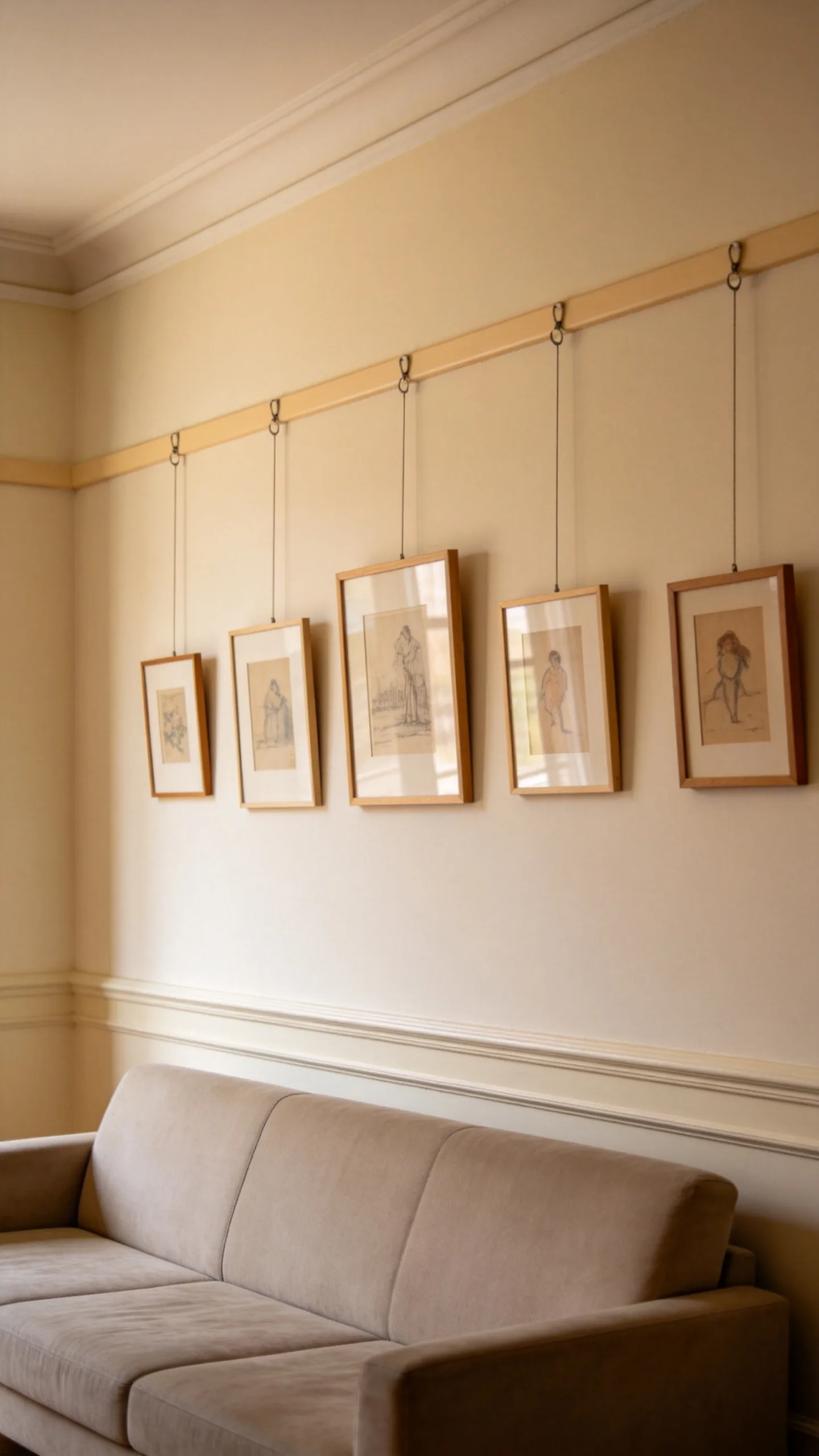
A picture rail allows you to display art without constantly adding new holes to the wall. This idea works well in living rooms, hallways, children’s rooms, and creative home offices. Install a narrow rail or molding strip, then hang framed pieces from hooks, cords, or chains.
The benefit is flexibility. You can rotate seasonal prints, kids’ artwork, small paintings, or holiday pieces while keeping the wall arrangement tidy. A picture rail also adds architectural interest to plain drywall, especially when painted the same color as the wall for a subtle built-in effect.
14. Large Round Wall Art Arrangement
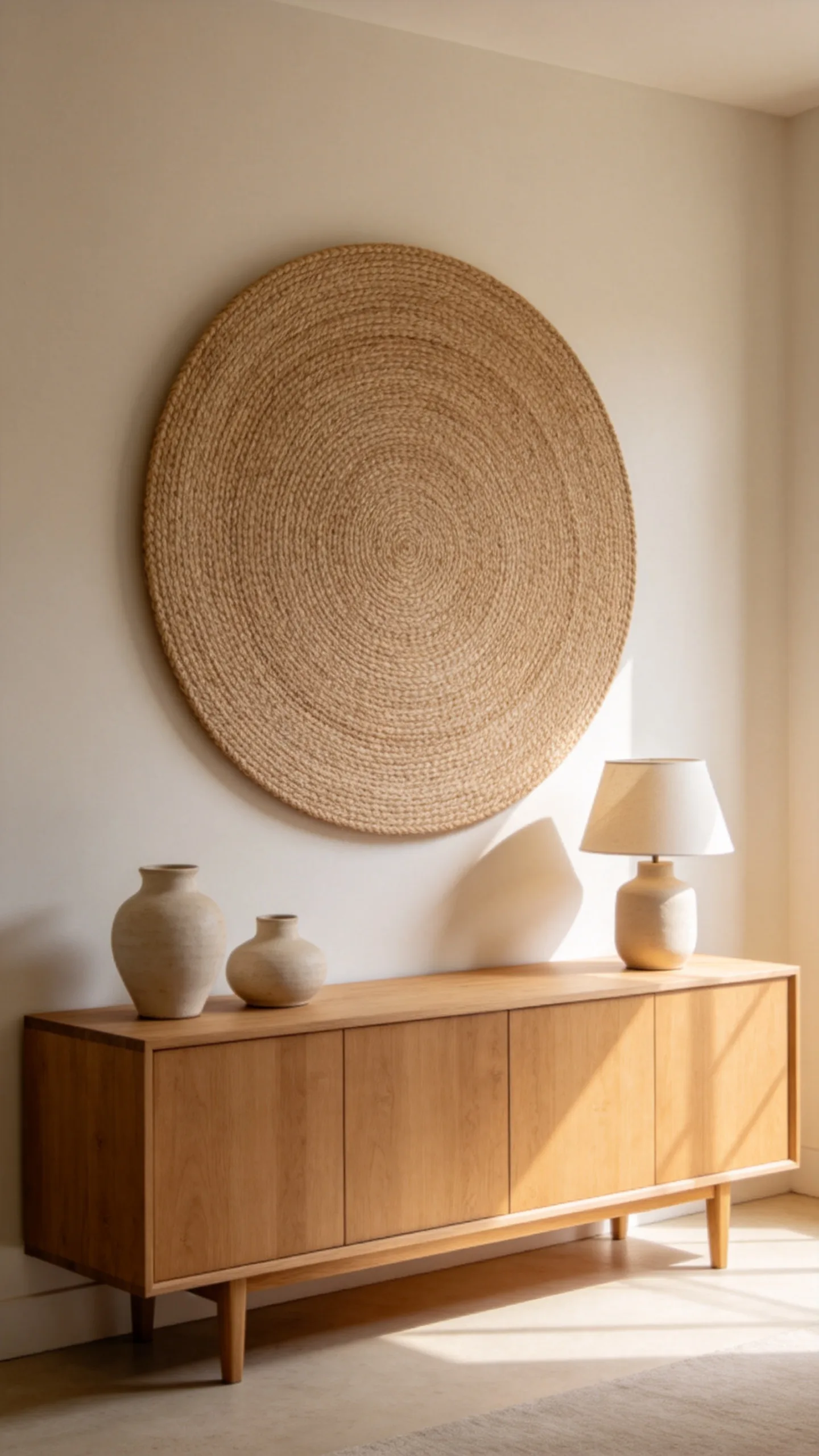
A round wall art arrangement can soften rooms filled with straight lines, such as square sofas, rectangular tables, built-in shelves, and boxy cabinets. Use a round canvas, circular mirror, woven disk, metal wall sculpture, or a set of round framed pieces to break up the hard angles.
This works beautifully above a console table, fireplace mantel, bed, or dining banquette. A round piece also helps draw the eye inward, making a blank wall feel less empty. For balance, pair it with a rectangular piece of furniture below, such as a dresser or sideboard, so the shapes contrast in a pleasing way.
15. Kids’ Art in Matching Frames
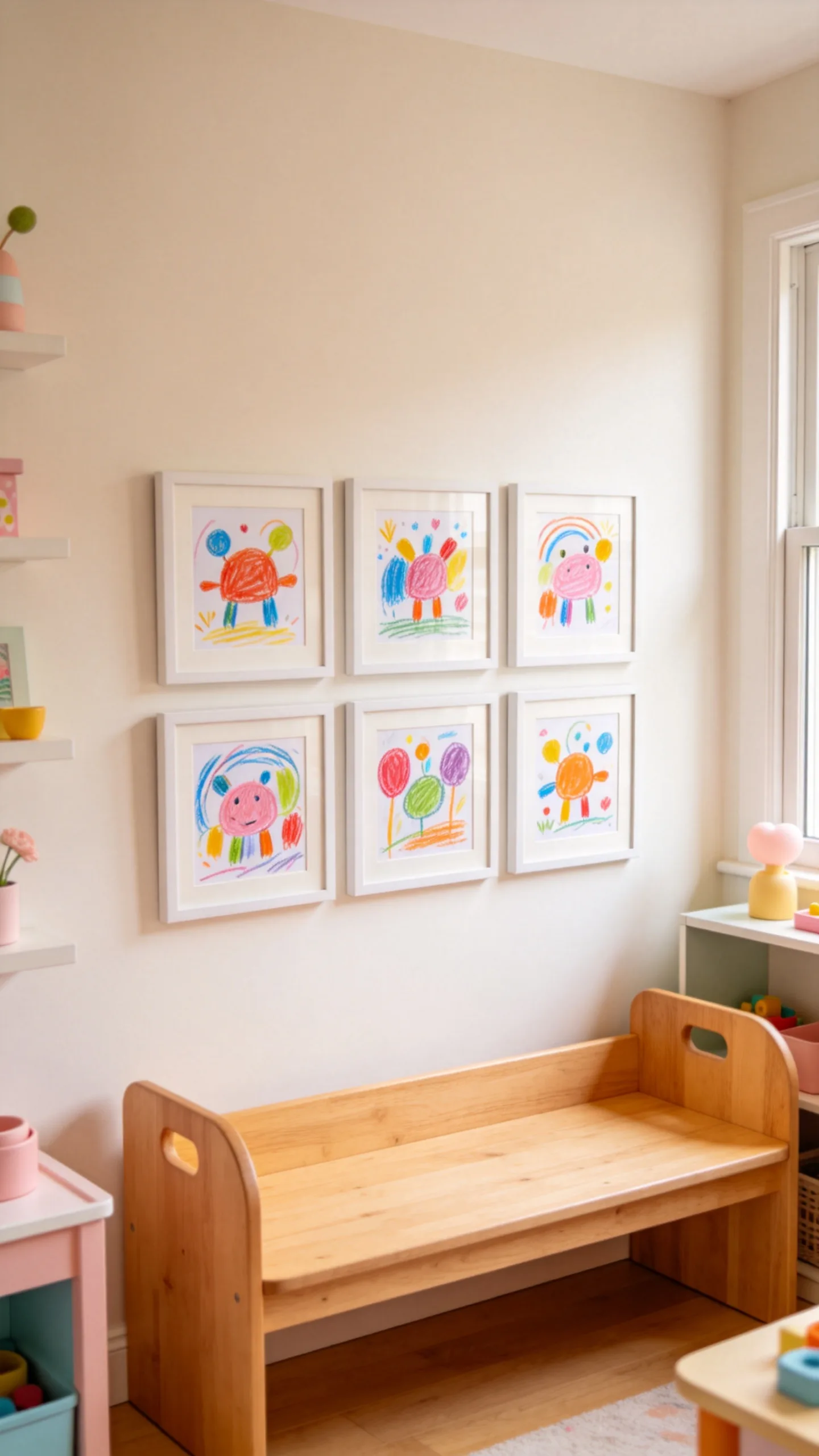
Children’s artwork can become beautiful wall decor when displayed with intention. Instead of taping drawings randomly to the refrigerator or wall, choose a set of matching frames and create a small gallery in a playroom, hallway, kitchen nook, or child’s bedroom. White frames with wide mats can make bright crayon, marker, or paint colors look polished.
This idea keeps sentimental pieces visible while reducing clutter. Use front-opening frames if you want to rotate the art easily. A neat arrangement of kids’ artwork brings personality to a blank wall and makes the room feel family-centered without looking messy.
16. Mixed Media Gallery Wall
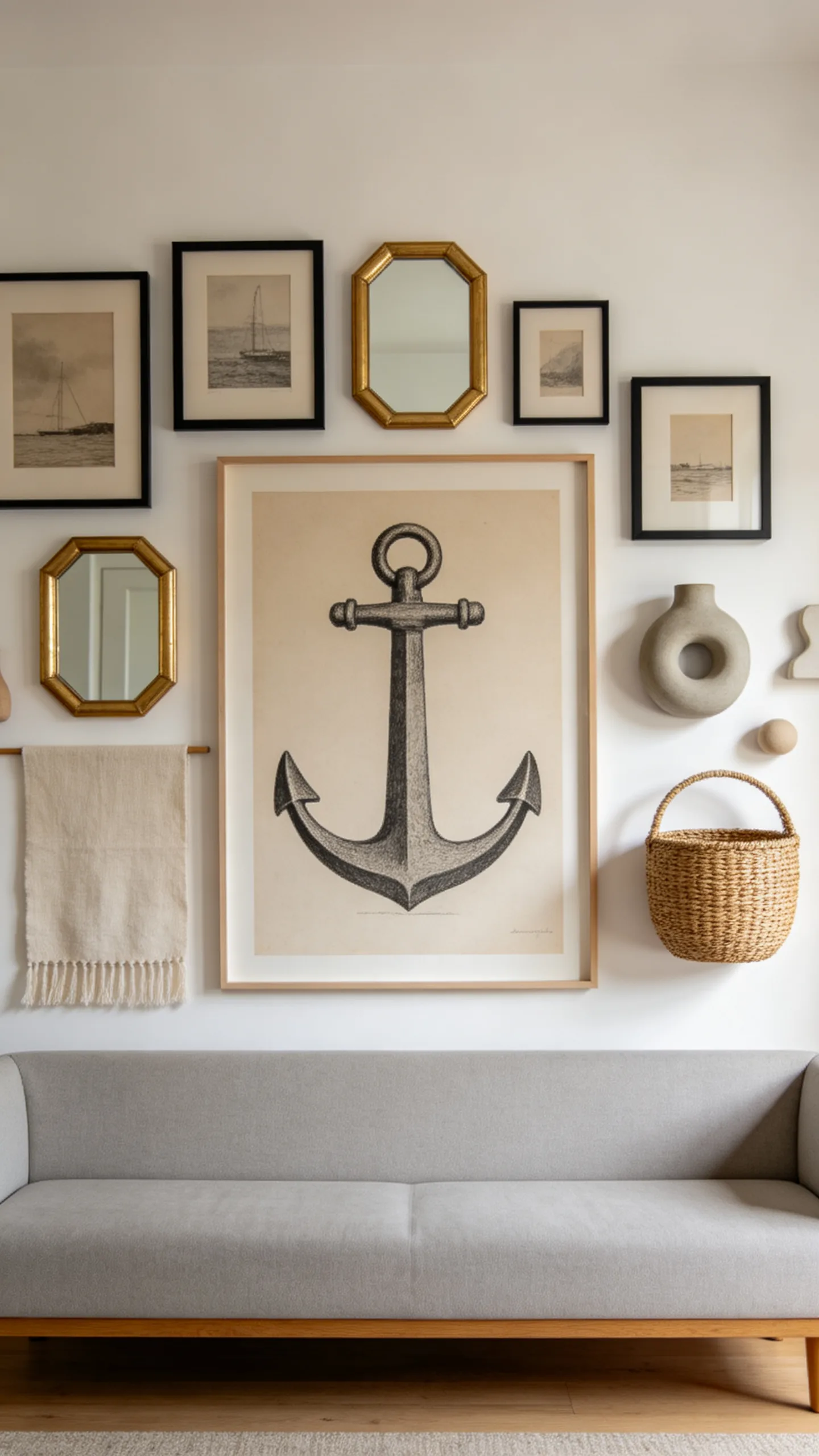
A mixed media gallery wall combines framed prints, small mirrors, textiles, ceramics, wall baskets, plaques, and sculptural pieces. This approach is ideal for a large blank living room wall, staircase, or hallway where one piece may feel too small. The key is to repeat a few colors or materials so the wall feels collected rather than random.
For example, combine black frames, warm wood, brass accents, and neutral artwork. Start with the largest piece at eye level, then add smaller items around it. Leave consistent breathing room between pieces so the arrangement does not block sightlines or overwhelm nearby furniture.
17. Framed Travel Poster Collection
Travel posters add color, nostalgia, and graphic impact to a blank wall. They work especially well in home offices, guest rooms, media rooms, and hallways. Choose posters from favorite cities, national parks, beaches, ski towns, or countries, then frame them in the same style to create a unified display.
For a bold look, use three large posters in a row above a sofa or bed. For a narrow hallway, create a vertical stack of smaller posters. This idea brings a sense of story to the room while still feeling organized because the frames and poster style tie everything together.
18. Wall-Mounted Art Light Over a Favorite Piece
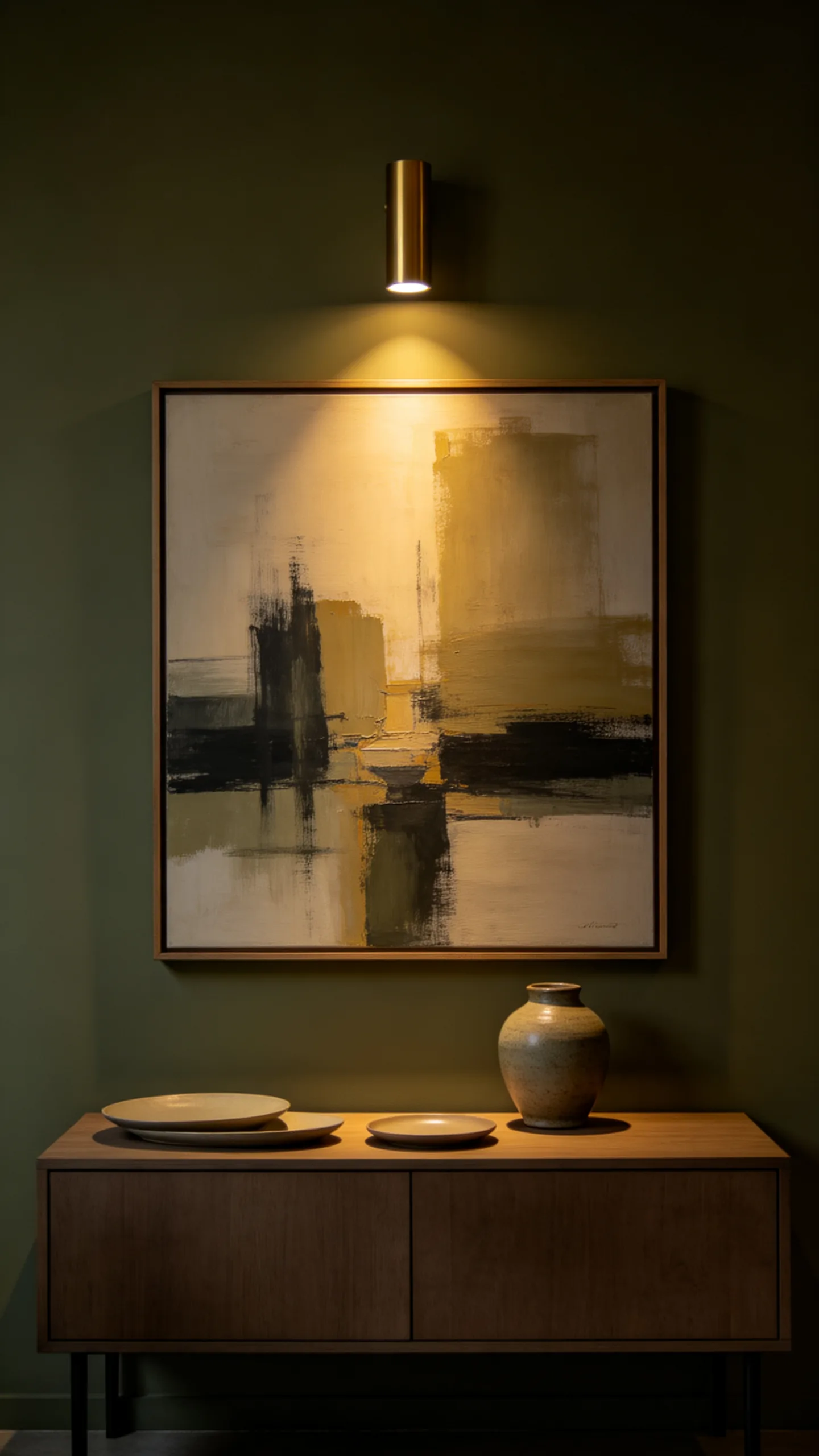
Adding a wall-mounted art light can make even a simple framed print feel like an intentional focal point. This works beautifully in dining rooms, living rooms, bedrooms, and hallways where the wall needs more presence in the evening. Choose a slim brass, bronze, black, or nickel picture light that matches nearby hardware or lamps.
Place the light above a large painting, framed photograph, or textile piece. The extra illumination draws attention to the artwork and adds ambient lighting to the room. It is especially helpful on darker wall colors like navy, charcoal, olive, or deep beige, where art can otherwise disappear after sunset.
19. Ceramic Plate Wall
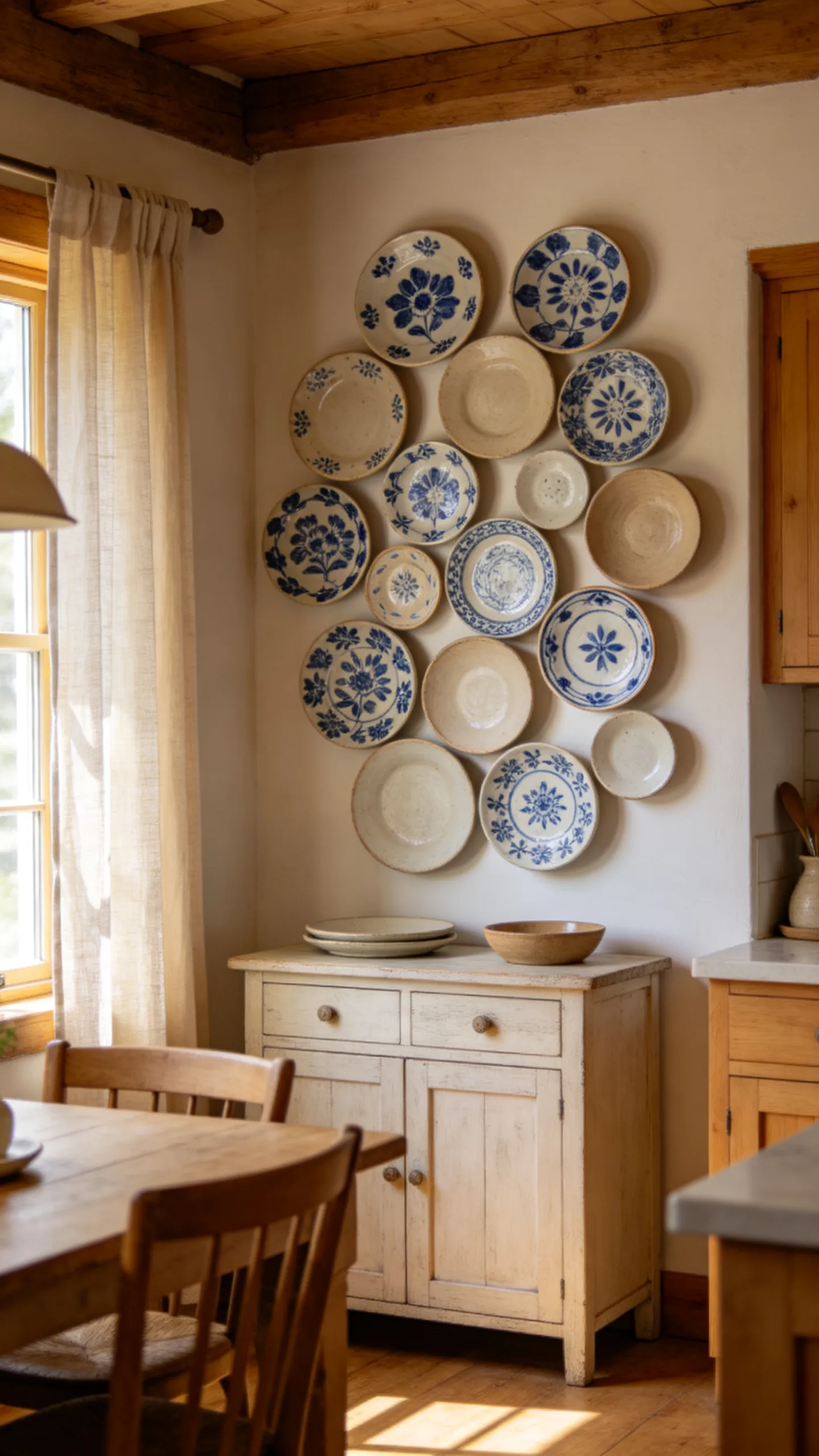
A ceramic plate wall brings color, shape, and charm to kitchens, dining rooms, breakfast nooks, and cottage-style spaces. Use plates with related colors, patterns, or materials so the wall looks curated. Blue-and-white china, handmade pottery, floral plates, or neutral stoneware can all create a beautiful display.
Arrange the plates in an organic cluster or a symmetrical grid, depending on the room style. In a dining room, center the display above a sideboard or buffet. In a kitchen, use a narrow wall near open shelving or a breakfast table. Plate hangers keep the pieces secure while allowing the wall decor to feel dimensional.
20. Large Abstract Art With Room Colors
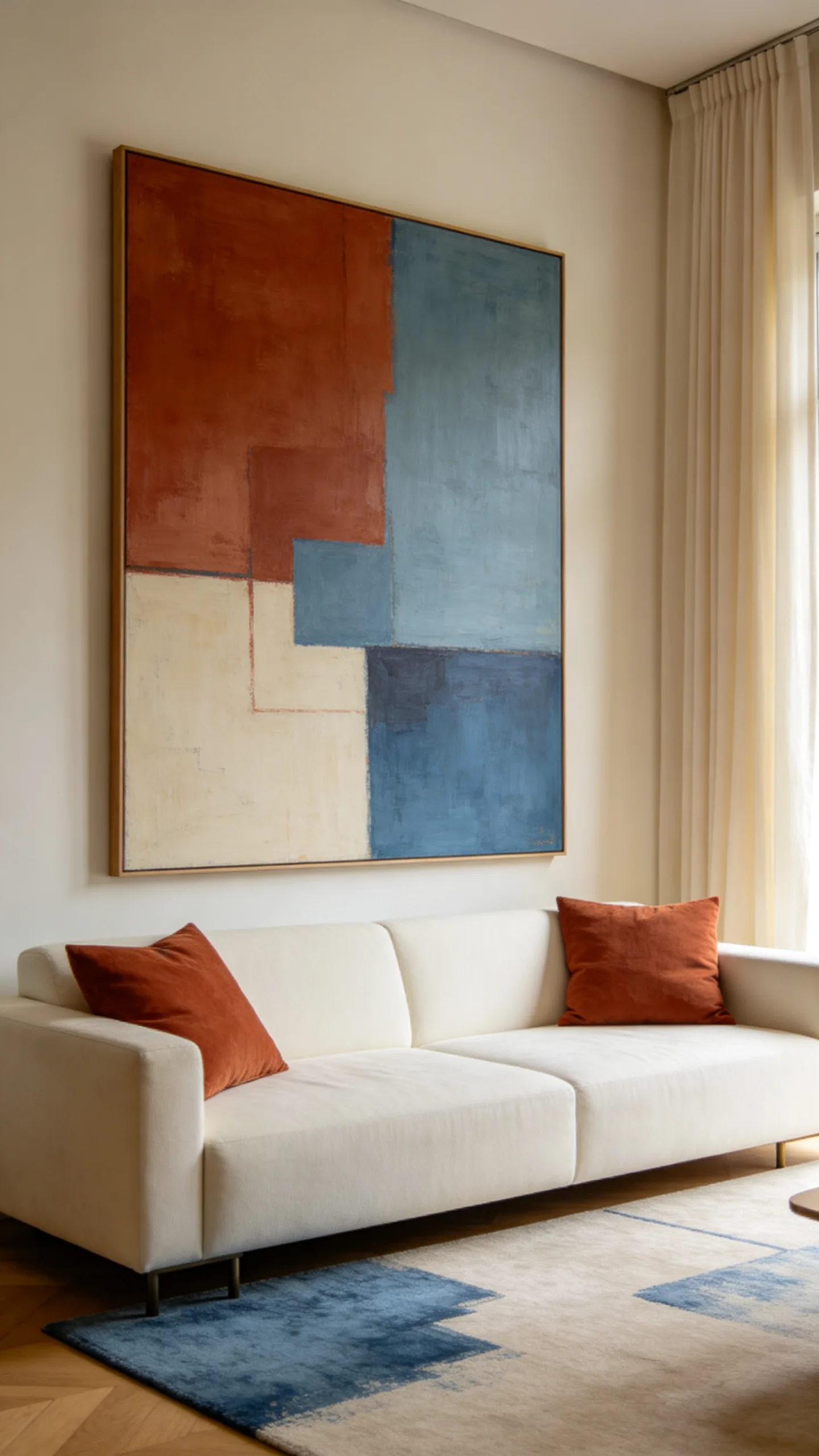
Large abstract art can connect the colors in a room and make a blank wall feel deliberate. Look for a piece that includes shades already present in the space, such as rust from throw pillows, blue from a rug, cream from curtains, or black from lighting fixtures. This helps the artwork feel integrated instead of random.
Abstract art works especially well in living rooms, bedrooms, and dining rooms because it adds movement without requiring a specific theme. Use one oversized piece when the wall is wide and the furniture below is simple. The scale helps reduce the empty-wall effect and gives the room a clear focal point.
21. Slim Vertical Art for Narrow Walls
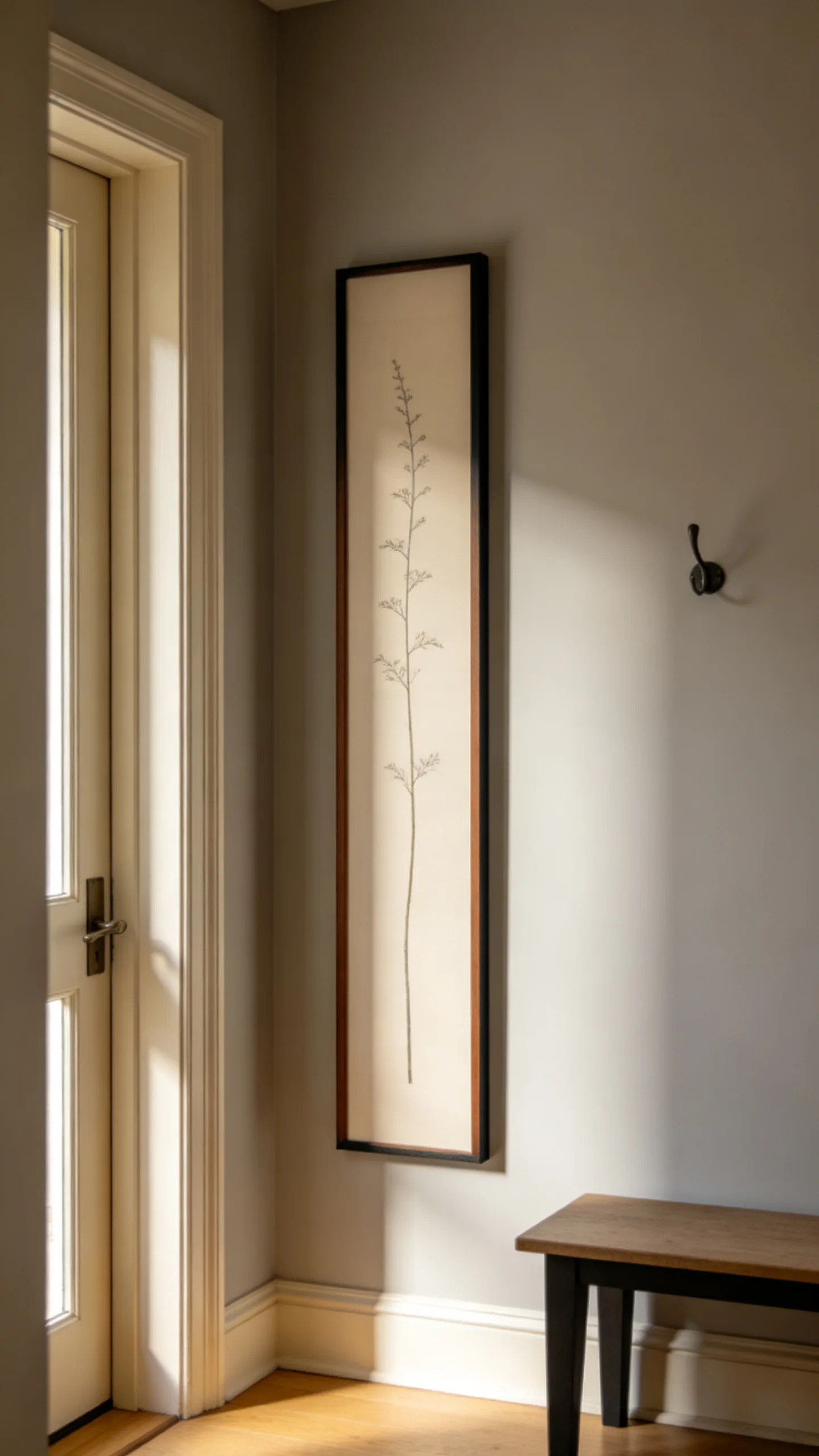
Narrow walls between windows, beside doorways, near closets, or at the end of hallways often feel difficult to decorate. Slim vertical art is a practical solution because it fills height without interfering with traffic flow. Choose a tall framed print, vertical textile, narrow canvas, or stacked pair of small artworks.
This idea is especially helpful in small rooms because it draws the eye upward and uses vertical space. In an entryway, a tall piece beside a coat closet can make the wall feel finished without blocking movement. In a bedroom, vertical art beside a dresser or mirror can balance the layout.
22. Shelf and Art Combo Above a Desk
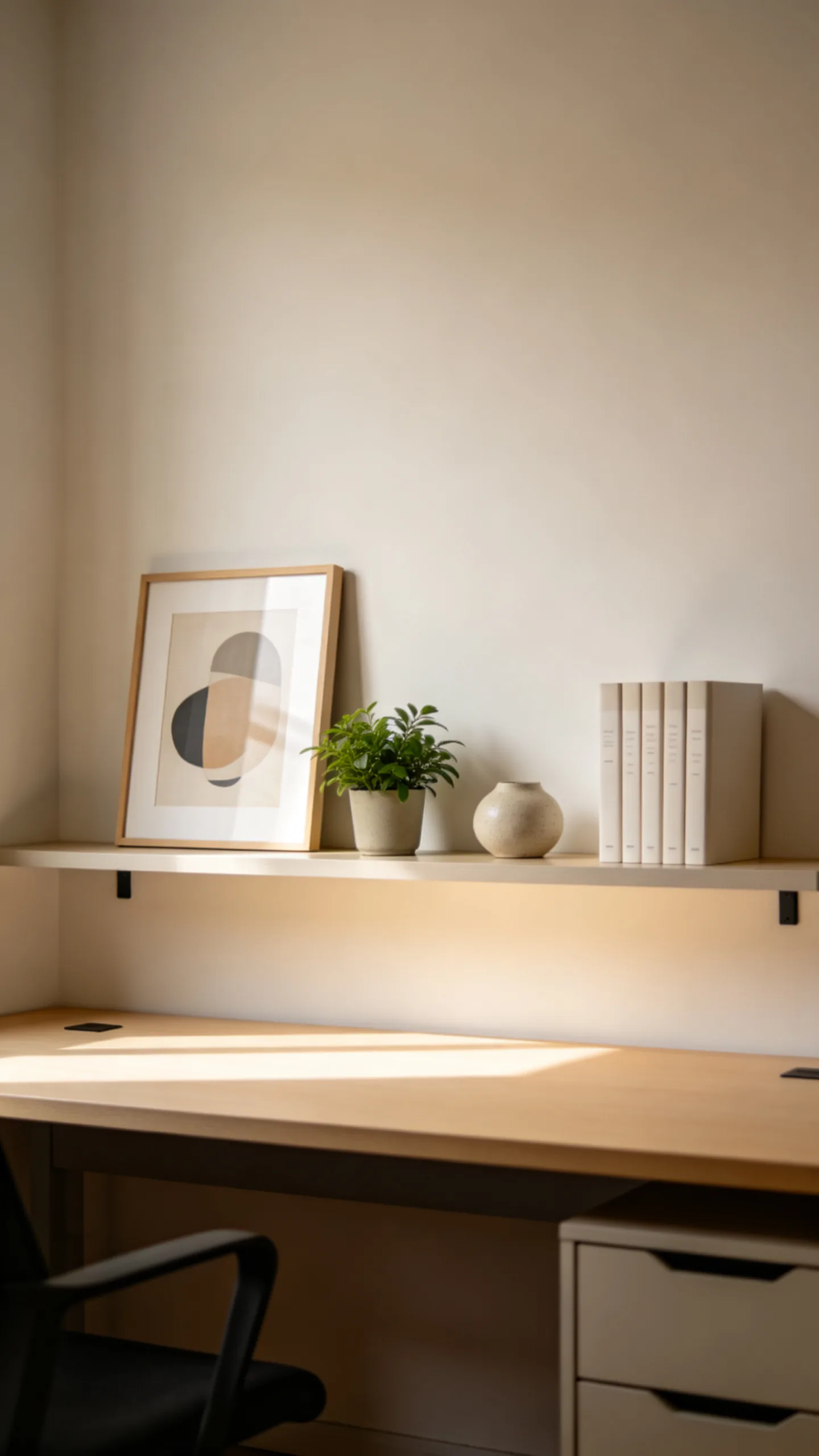
A shelf and art combination can make a home office wall more functional and attractive. Install a shallow shelf above the desk, then layer a framed print, small plant, ceramic object, and a few books. Keep the shelf depth slim enough that it does not crowd the work surface or interrupt headroom.
This approach works well when the desk faces a blank wall and needs visual interest. Choose art that supports the mood of the workspace, such as calm landscapes, simple typography, or abstract shapes. The shelf adds storage and styling space while the framed art keeps the wall from feeling plain.
23. Framed Architectural Sketches
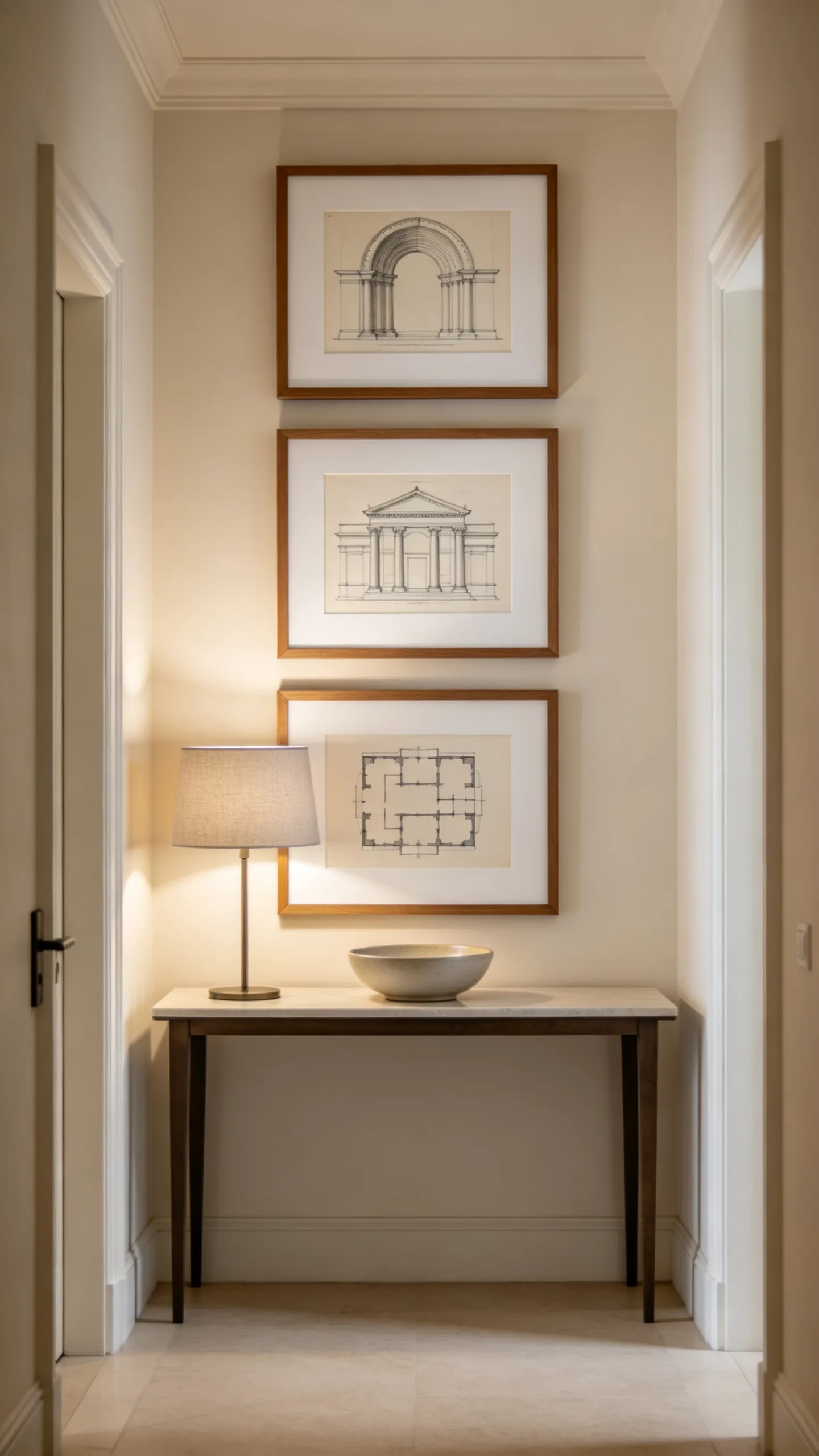
Architectural sketches bring structure and sophistication to a blank wall without relying on bright color. They are a strong choice for entryways, home offices, libraries, dining rooms, and traditional living rooms. Look for drawings of buildings, arches, floor plans, columns, or city facades.
Use thin black, walnut, or brass frames with wide mats to give the sketches breathing room. A pair or trio works well above a console, desk, or sideboard. The fine lines add detail up close, while the simple palette keeps the wall calm from across the room.
24. Wall Art Around the Television
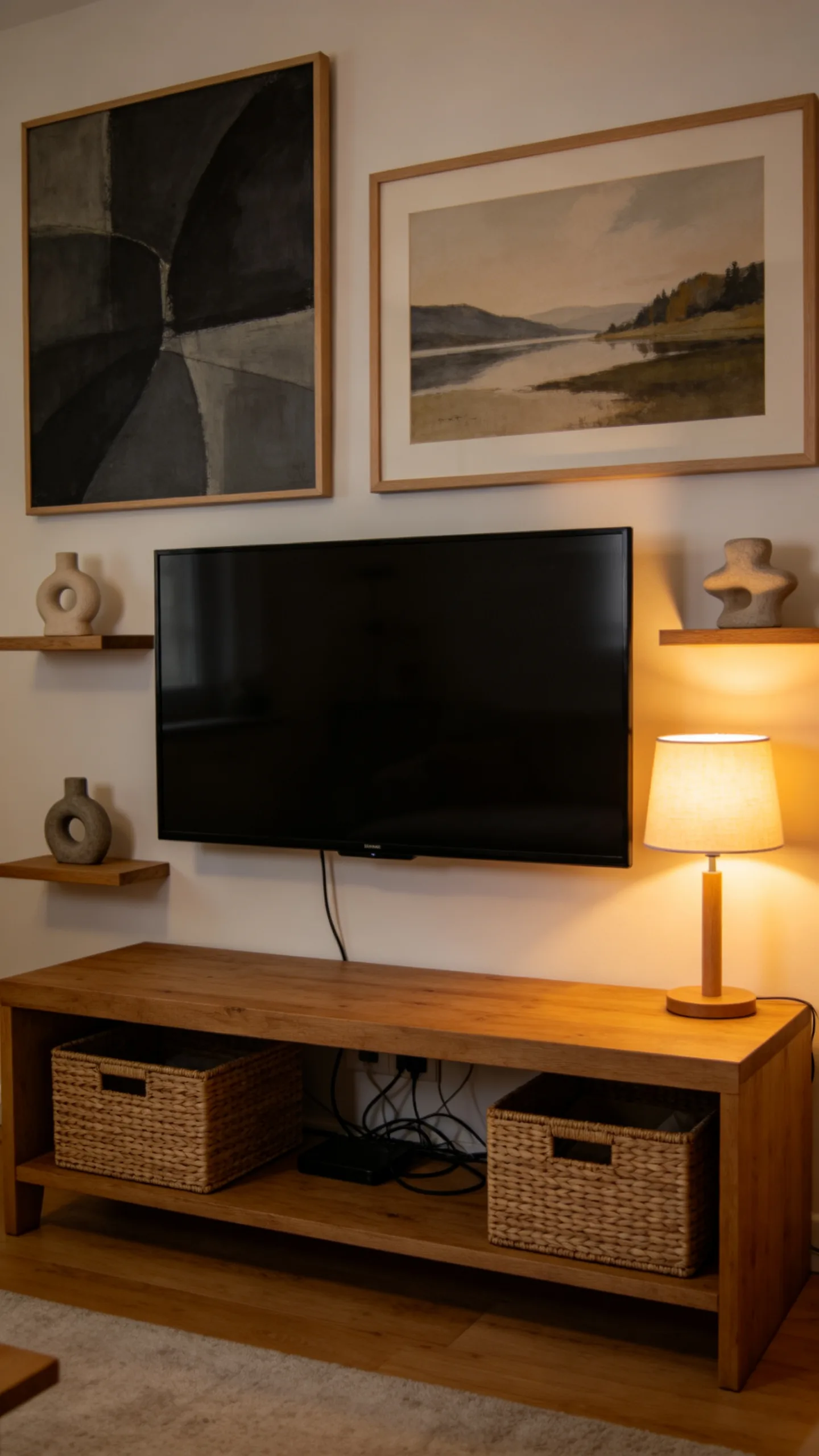
A television can make a living room wall feel unfinished if it is the only object on a large blank surface. Surrounding it with art helps the TV blend into the room instead of dominating the wall. Use framed prints, small canvases, shelves, or sculptural pieces around the screen while leaving enough negative space for balance.
Choose artwork with darker tones if you want the black screen to feel less harsh. Keep frames simple and avoid placing delicate glass pieces too close to moving mounts or cables. This idea works especially well when paired with a media console, baskets for storage, and a table lamp to soften the electronics.
25. Oversized Art Leaning on a Console
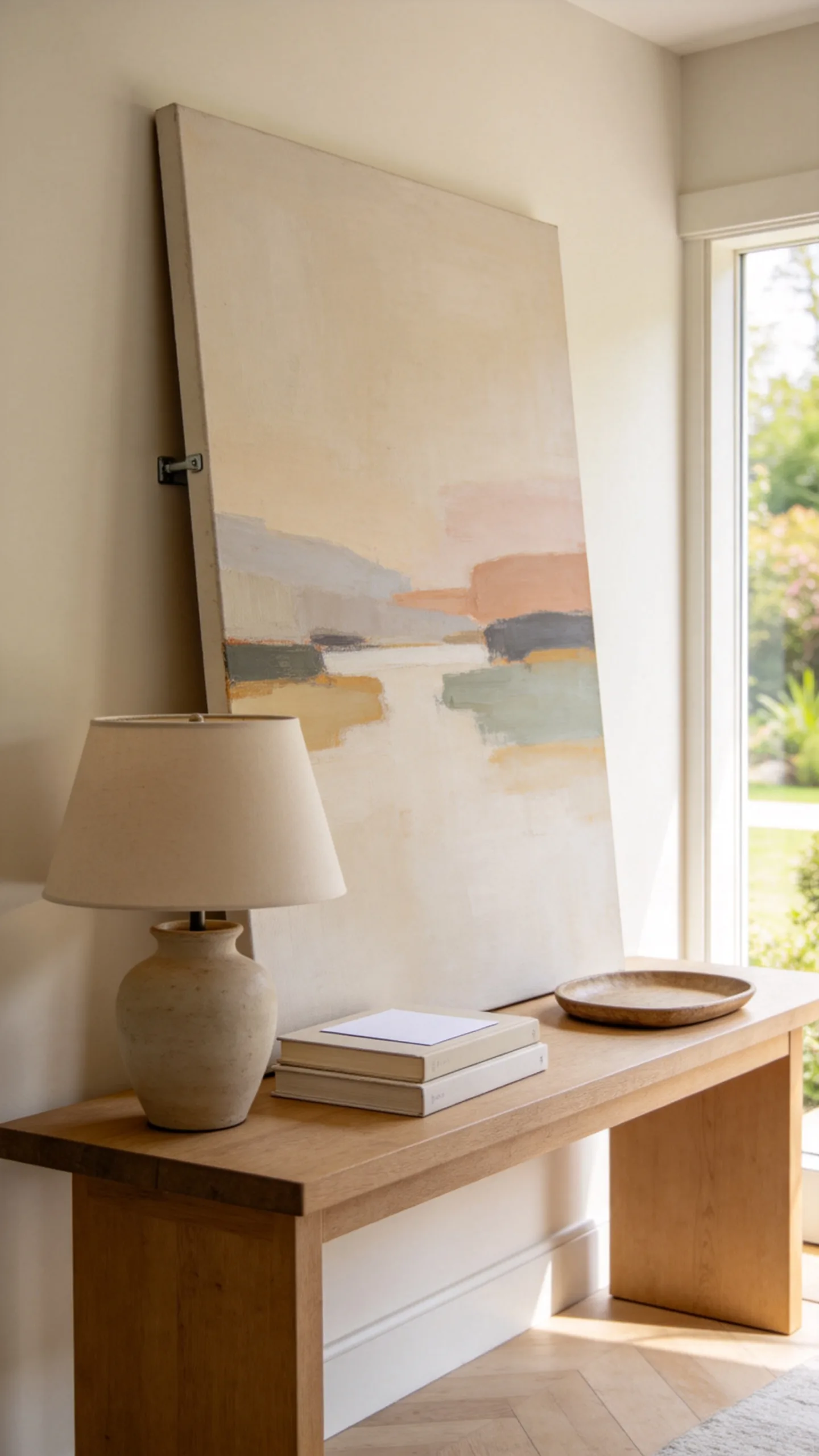
Leaning oversized art on a console table, dresser, or mantel creates a relaxed, layered look. This is a great option for renters or anyone hesitant to hang a heavy piece. Use a large framed canvas, print, or photograph and let it rest securely against the wall.
This approach works well in entryways, bedrooms, dining rooms, and living rooms. Add a lamp, vase, stack of books, or small tray in front of the art to create depth. Make sure the art is tall enough to fill the wall space above the furniture, so the arrangement feels intentional rather than temporary.
26. Colorful Art in a Neutral Room
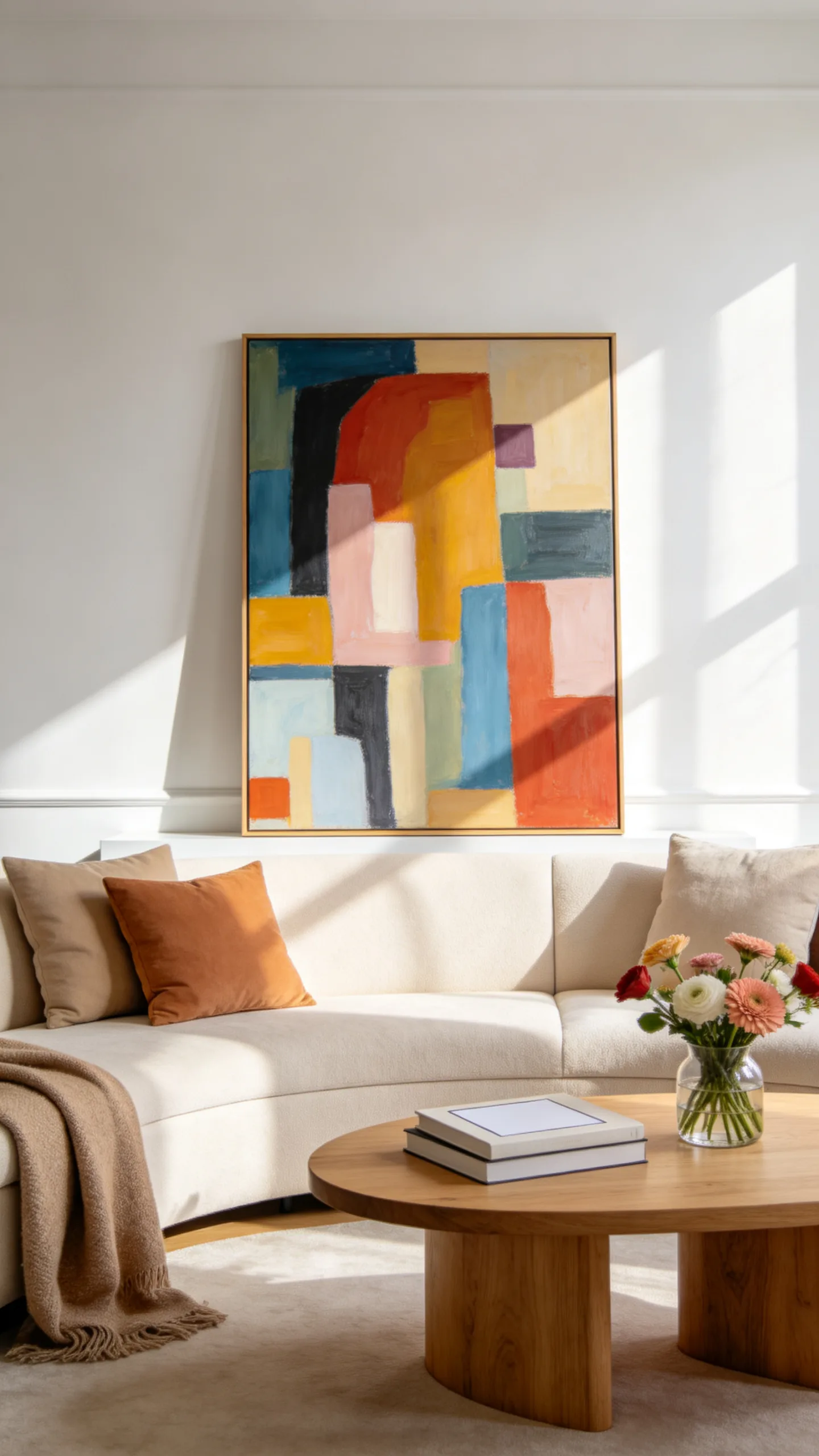
If a room has white walls, beige upholstery, natural wood furniture, and simple textiles, colorful art can bring the entire space to life. Choose one bold piece or a coordinated set with colors you can repeat in smaller accents, such as pillows, flowers, books, or a throw blanket.
This idea is especially effective in living rooms, bedrooms, and dining rooms where the furniture is already neutral. A bright landscape, modern abstract, floral painting, or graphic print can become the room’s focal point. Keep the surrounding decor edited so the colorful art has room to stand out.
27. Salon-Style Floor-to-Ceiling Gallery Wall
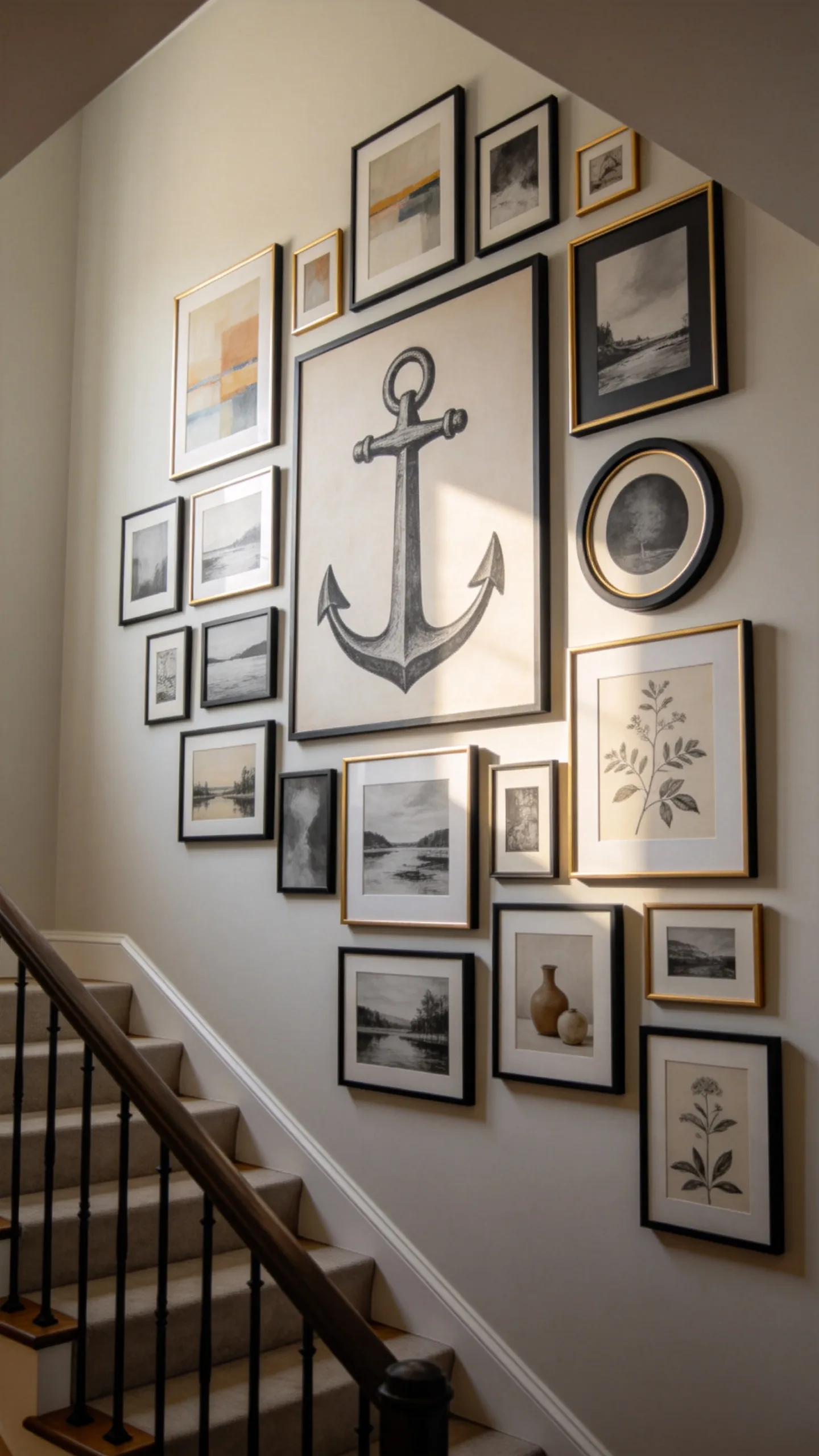
A salon-style gallery wall fills a large blank wall with art from near the floor to above eye level. This look is ideal for staircases, tall living room walls, creative studios, and eclectic dining rooms. Mix frame sizes, art types, and subjects, but repeat a few consistent elements such as black frames, gold accents, or warm neutral tones.
To keep the arrangement from feeling messy, lay the pieces out on the floor first and build around one large anchor piece. Balance heavier frames with smaller prints and leave a few inches between each item. A floor-to-ceiling gallery wall can transform an empty wall into the main design feature of the room.