5 Kitchen Grocery Storage Ideas That Instantly Make Your Pantry Look Expensive
If your kitchen groceries are currently doing that chaotic pile-up thing, welcome. We have all stared into a cabinet full of pasta, snacks, and mystery cans and thought, how did it get this bad?
The good news is you do not need a giant walk-in pantry or a label maker obsession to fix it. A few smart kitchen grocery storage ideas can make your space look cleaner, work harder, and save you from buying your third jar of paprika by accident.
1. Decant Dry Goods For That “I Totally Have My Life Together” Look
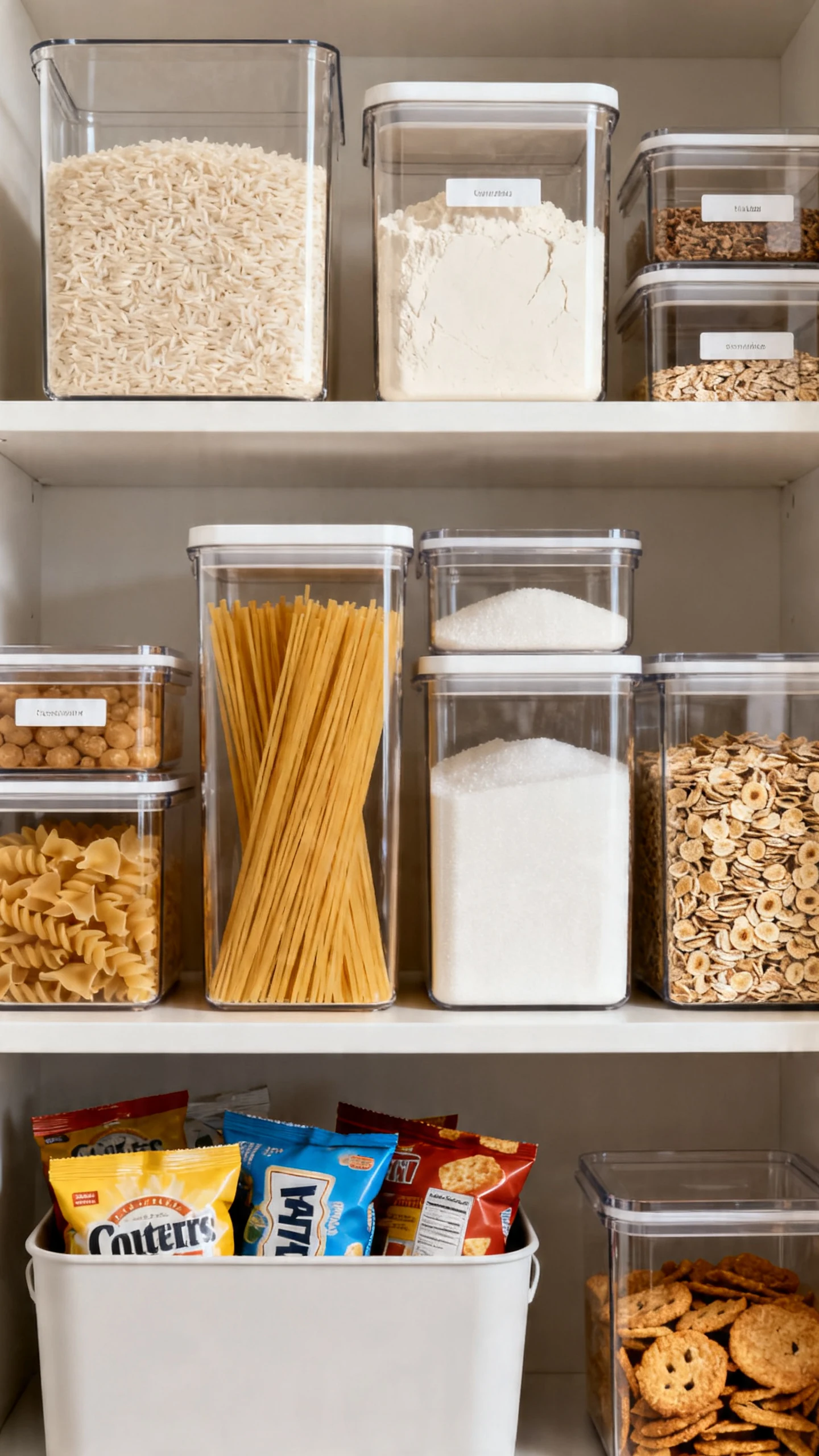
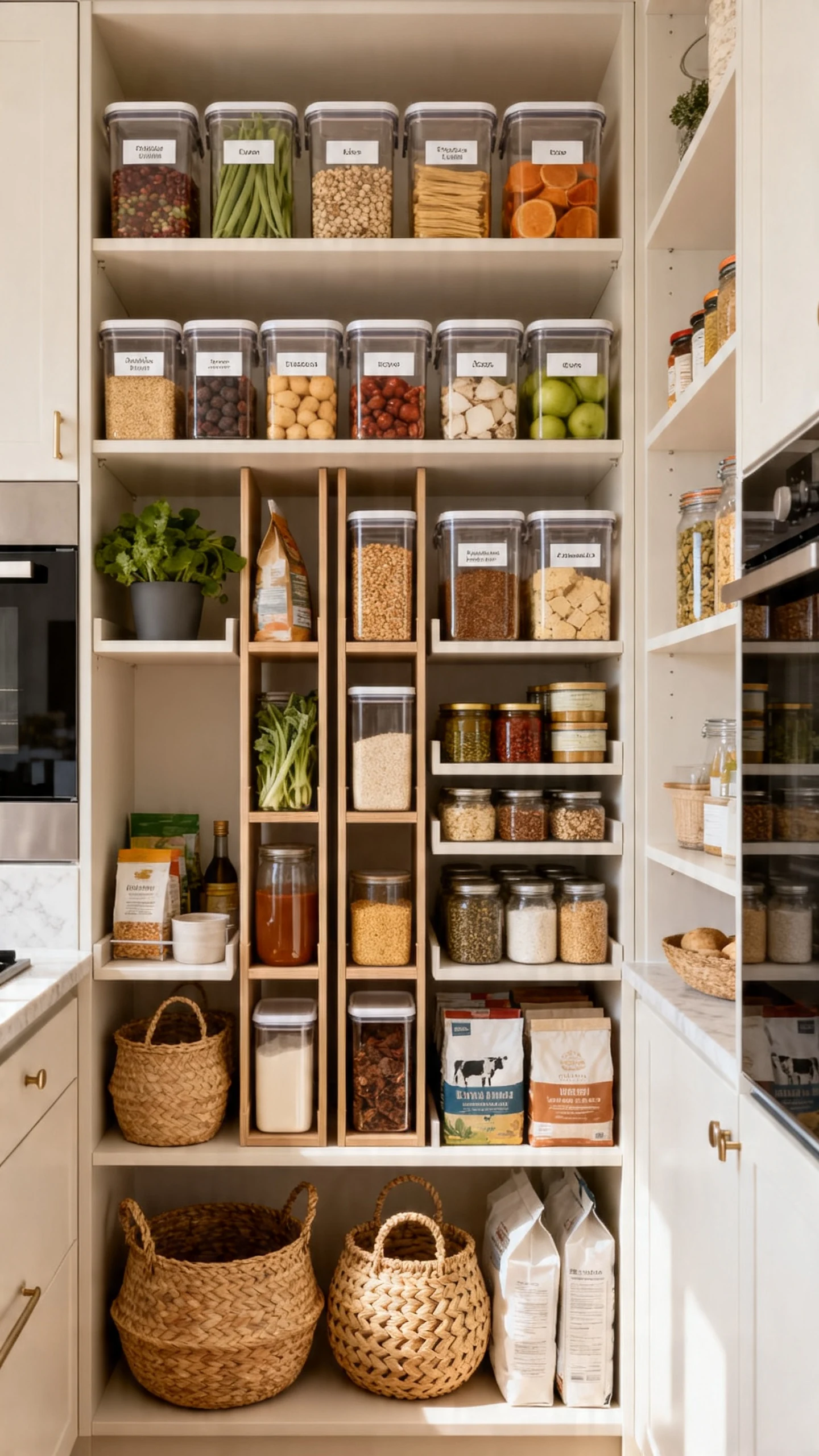
Let’s start with the easiest visual upgrade: decanting. Pouring rice, pasta, flour, cereal, and snacks into matching containers somehow makes even the most average kitchen feel a little fancy.
And no, this is not just for people who alphabetize their spice drawer for fun. Clear containers help you see what you have, how much is left, and what needs restocking before dinner turns into toast.
Why It Works So Well
Clear storage containers instantly cut down visual clutter. Instead of random bags slumping over each other like exhausted houseguests, everything stands upright and looks intentional.
They also keep food fresher longer, which is a win for your budget and your sanity. FYI, stale cereal has ruined many a morning.
- Use square or rectangular containers to maximize shelf space.
- Choose stackable options so vertical space actually gets used.
- Add simple labels for flour, sugar, oats, pasta, and snacks.
- Keep original expiration dates on the bottom or back if needed.
If you do not want to decant everything, no problem. Start with the biggest offenders: half-open chip bags, baking staples, and grains that love to spill the second you look away.
IMO, the sweet spot is a mix of pretty and practical. Store frequently used staples in clear containers, and let the less glamorous stuff stay in its original packaging inside a bin.
2. Group Groceries Into Zones So You Stop Playing Cabinet Roulette
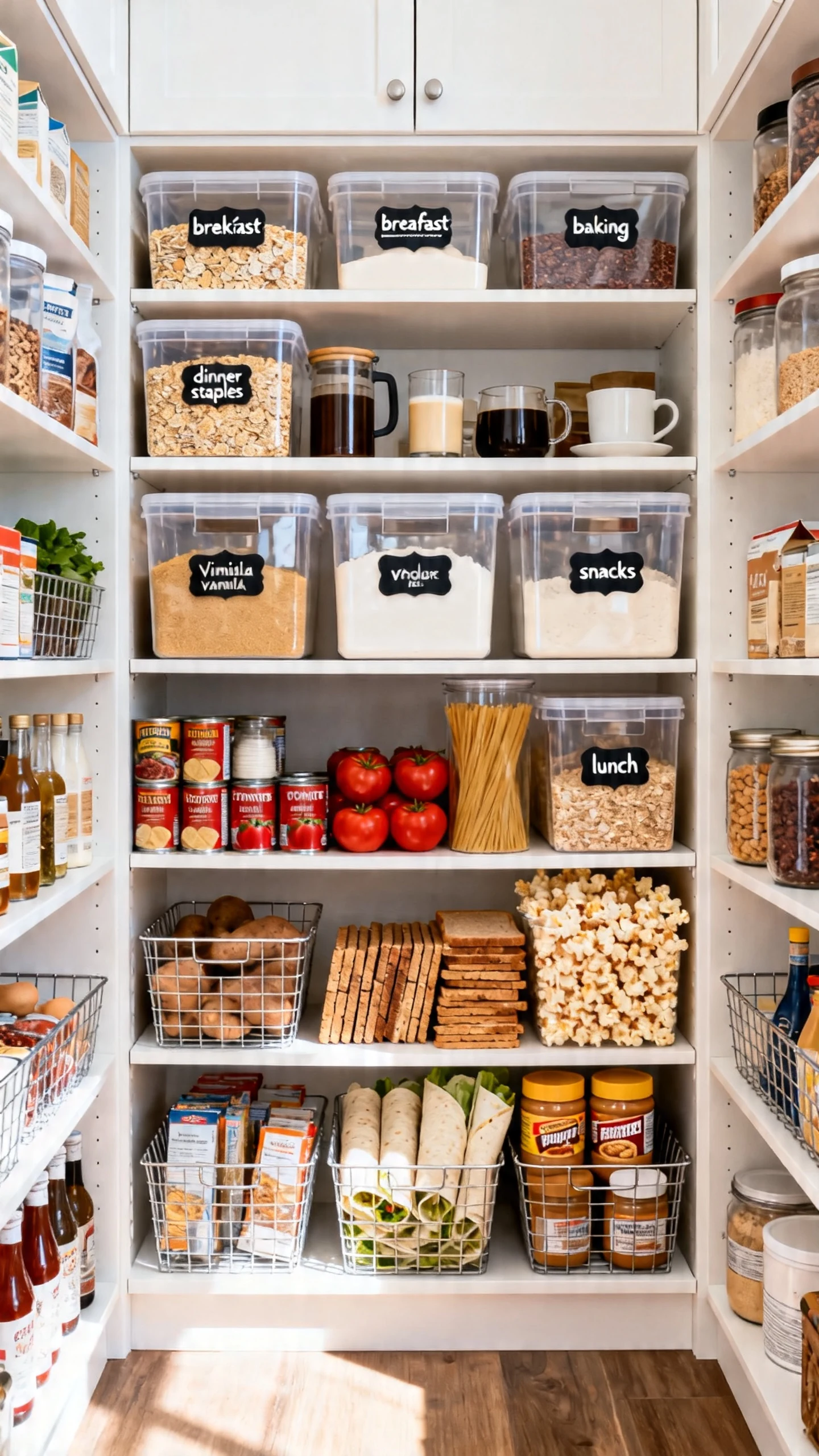
One of the best kitchen grocery storage ideas is also the least flashy: create zones. It sounds boring, but it is the secret to finding things fast and keeping your storage from turning feral.
Think of your kitchen like a tiny grocery store. Snacks go together, baking supplies share a shelf, canned goods get their own zone, and breakfast items stop roaming free.
Easy Zones That Actually Make Sense
You do not need twenty categories. Just make zones based on how you cook and what you reach for most often.
- Breakfast zone: cereal, oats, coffee, tea, pancake mix
- Baking zone: flour, sugar, vanilla, chocolate chips, sprinkles if you are fun
- Dinner staples: pasta, rice, canned tomatoes, broth, beans
- Snack zone: crackers, bars, nuts, popcorn
- Lunch zone: bread, wraps, peanut butter, soup, grab-and-go items
This setup makes grocery unpacking easier too. Instead of shoving everything into the nearest empty spot and hoping for the best, you know exactly where things belong.
If you share your kitchen with family, roommates, or one very confused partner, zones also cut down on the endless “Where is the quinoa?” questions. A small miracle, honestly.
Use Bins To Keep Zones From Sliding Into Chaos
Bins are the overachievers of kitchen storage. They hold categories together, pull out easily, and stop tiny items from getting lost in the back like they joined a witness protection program.
- Use open bins for snacks and pouches.
- Try handled bins for deep pantry shelves.
- Choose wire or clear plastic depending on your style.
- Label the front so everyone can pretend they are organized too.
3. Use Vertical Space Like Rent Is Due
Most kitchens are not lacking storage. They are lacking smart storage. If your shelves have a ton of air above everything, that is wasted space just sitting there doing absolutely nothing.
The fix? Go vertical. Add layers, risers, and shelf helpers so your cabinets can hold more without becoming a dangerous can avalanche.
Small Upgrades With Big Payoff
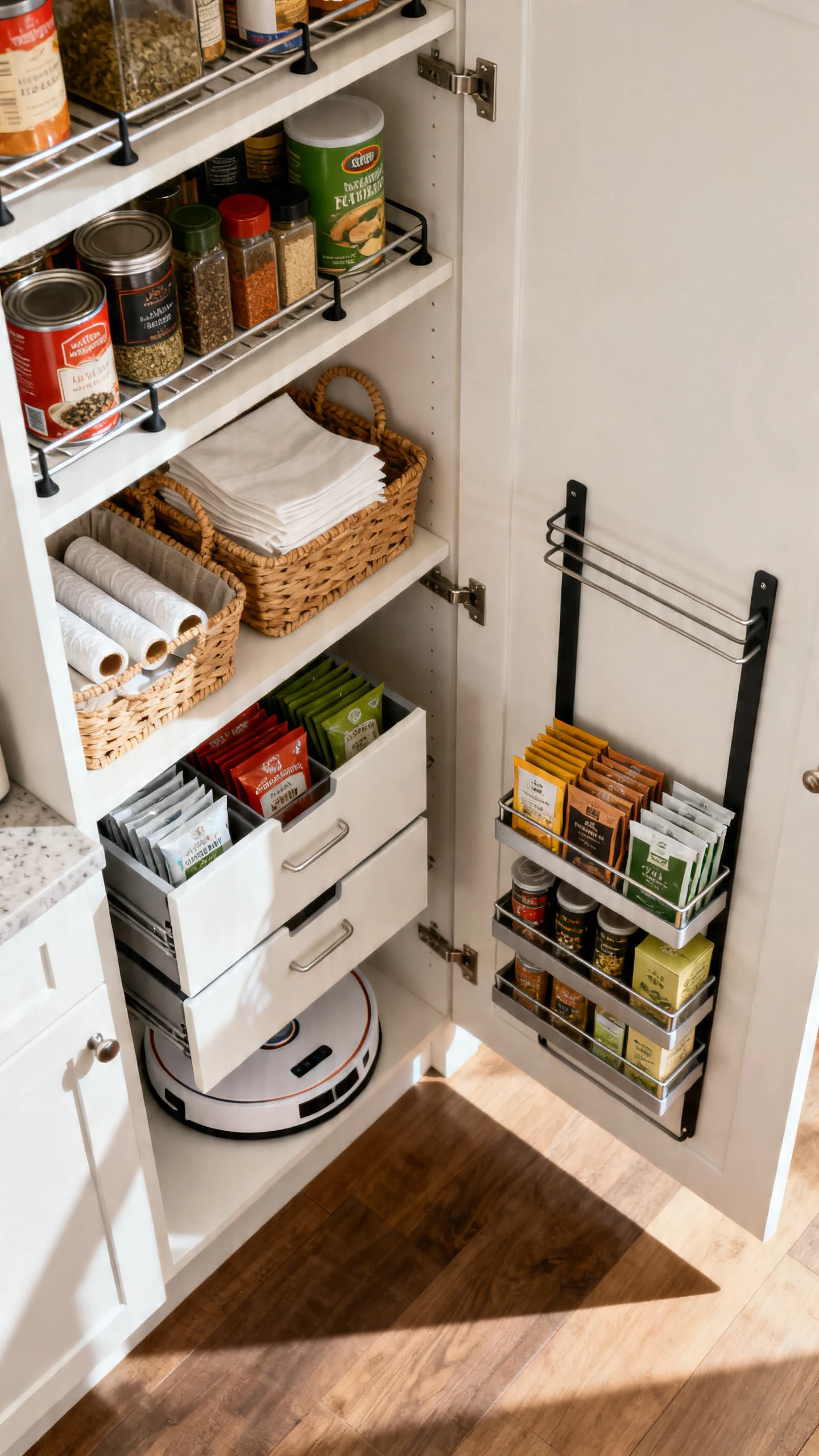
Shelf risers are great for canned goods, mugs, spices, and jars. Instead of one flat row where half your stuff disappears behind the front line, you get a tiered setup that actually lets you see everything.
Under-shelf baskets are another genius move. They slide onto an existing shelf and create bonus storage underneath for napkins, wraps, or lightweight pantry items.
- Add risers for cans, jars, and short containers.
- Use stackable drawers for packets, seasoning mixes, or tea.
- Install door-mounted racks for spices or small condiments.
- Try lazy Susans in corners so nothing gets forgotten.
And let’s talk about the inside of cabinet doors for a second. That space is prime real estate. Hooks, slim racks, and adhesive organizers can hold measuring spoons, foil, bag clips, or spice packets without eating up shelf space.
If your pantry shelves are deep, pull-out baskets are your friend. No more crouching on the floor and excavating expired lentils from the dark abyss in the back.
4. Make Everyday Items Easy To Grab, Not Weirdly Hard To Reach
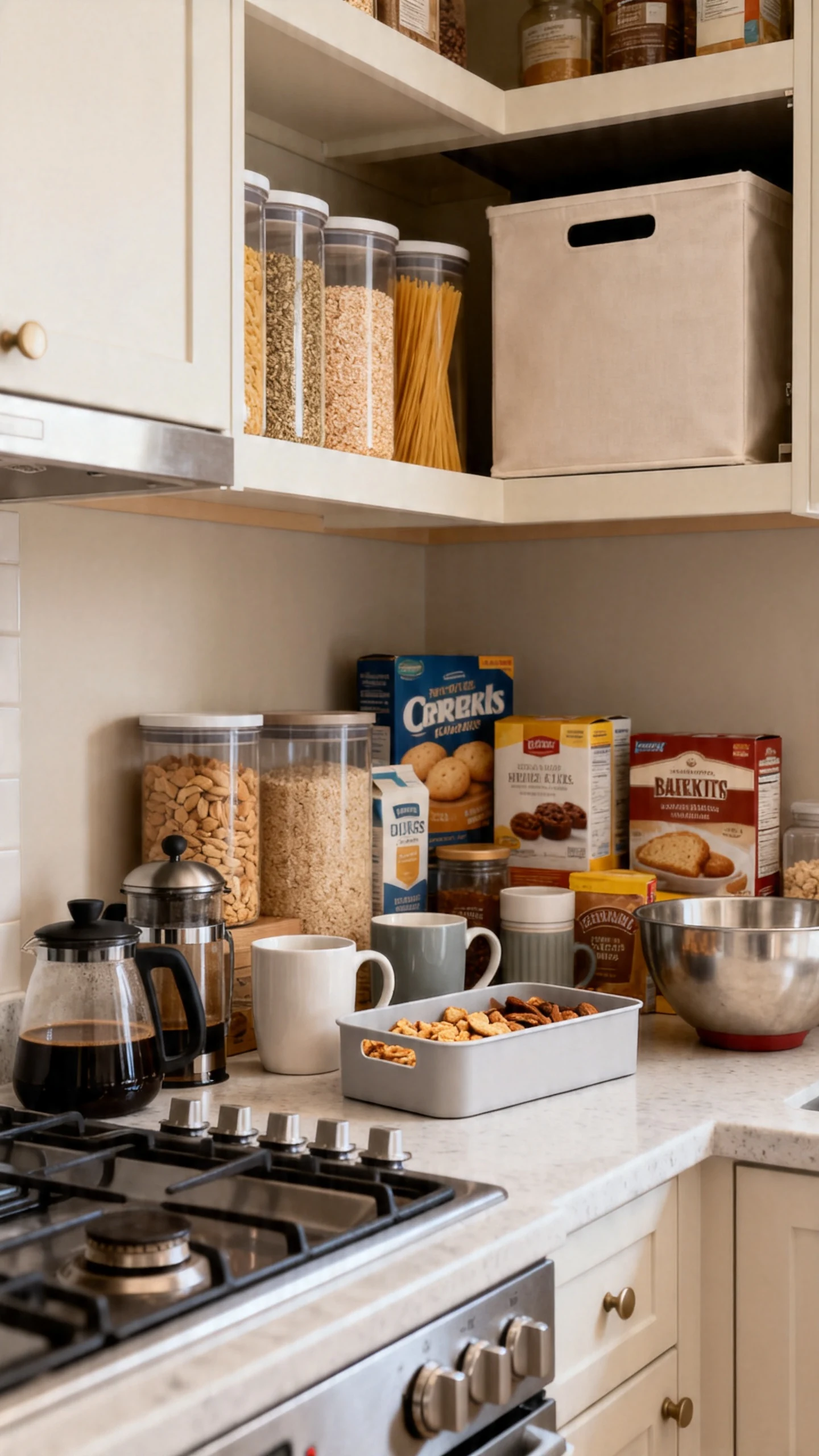
Pretty storage is nice, but functional kitchen grocery storage is what keeps your kitchen working. The trick is putting the things you use all the time where they are easiest to grab.
That means your go-to groceries should live at eye level or within easy reach. The once-a-year baking decorations shaped like snowflakes? Those can absolutely go up high and think about what they have done.
Set Up Your Kitchen Around Real Life
Start by noticing your habits. Do you make smoothies every morning, pack lunches daily, or bake three times a week because apparently you enjoy dishes? Store those groceries where they support your routine.
- Keep everyday grains and pasta near the stove.
- Store coffee, tea, and breakfast foods close to the mugs.
- Place lunchbox snacks in a low bin kids can reach.
- Keep baking ingredients together near your mixing area.
This sounds simple, but it changes everything. When your kitchen matches how you actually use it, meal prep gets faster and cleanup feels less annoying.
Create A Mini Backstock System
If you buy in bulk, do not cram giant refill bags onto your main shelves. Keep a small amount of each staple in your everyday containers, then store extras in a separate backstock bin or upper shelf.
That way your kitchen stays tidy, and you still get the savings of bulk shopping. It is basically the best of both worlds, without your pantry looking like a warehouse aisle.
Bonus tip: rotate older items forward when you restock. It is not glamorous, but neither is discovering expired crackers from 2022.
5. Add Pretty Details That Make Organization Stick
Here is the truth no one tells you: if your storage looks nice, you are way more likely to maintain it. Humans are shallow like that, and honestly, fair enough.
A few decorative touches can make your grocery storage ideas feel intentional instead of purely utilitarian. You are not just organizing food. You are styling your kitchen a little, and that makes the whole thing more fun.
Simple Decor-Forward Touches
You do not need to turn your pantry into a showroom. Just add enough personality that opening a cabinet feels satisfying instead of mildly stressful.
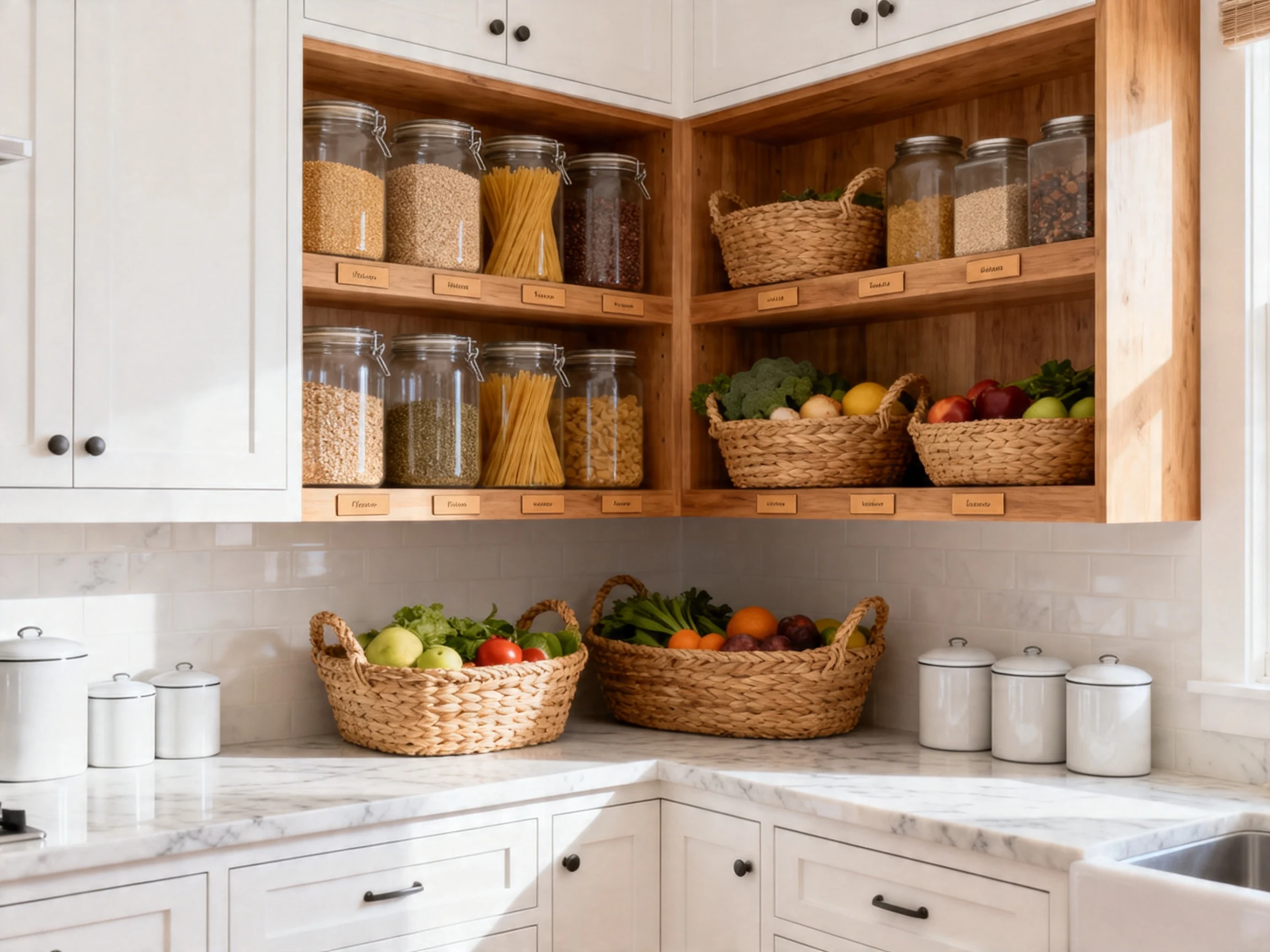
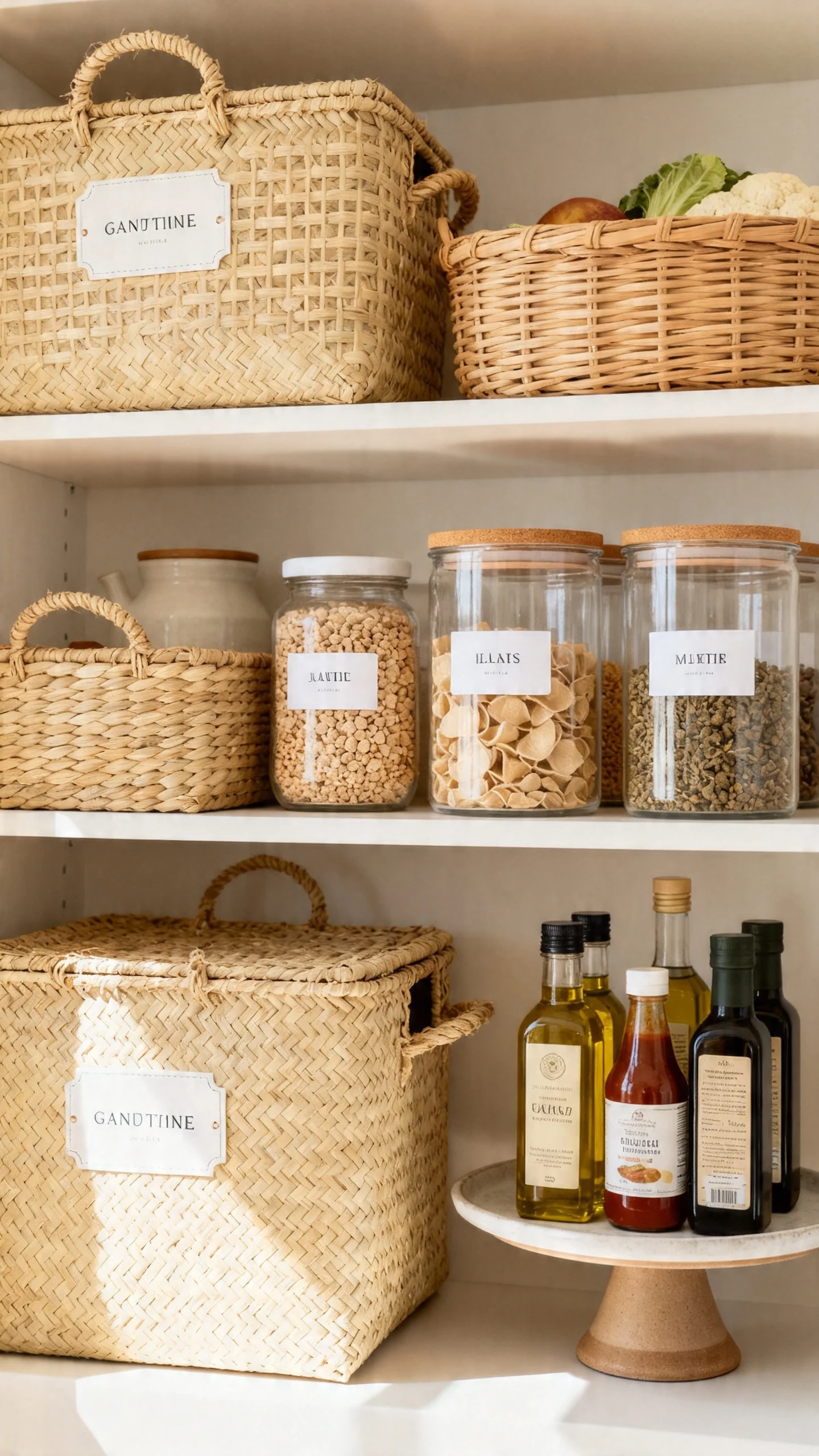
- Use matching baskets in natural textures like seagrass or woven rattan.
- Choose uniform labels in a clean, easy-to-read font.
- Stick to a simple color palette for bins and containers.
- Add a small riser or tray to make oils and sauces look styled.
If you have open shelving, be selective. Decanted dry goods, pretty jars, and a neat row of oils can look gorgeous. The jumbo economy pack of cheese crackers? Maybe let that live behind a cabinet door.
Also, give yourself permission to keep it realistic. The goal is not perfection. The goal is opening your kitchen storage and not feeling personally attacked by a pile of onions, granola bars, and canned corn.
Once your system looks good and works well, upkeep becomes easier. You are more likely to toss things back where they belong instead of creating a random “deal with later” shelf. We all know how that story ends.
At the end of the day, the best kitchen grocery storage ideas are the ones that make your space easier to use and nicer to look at. Start small, pick one problem area, and give it a quick glow-up.
You do not need a dream pantry to get organized. You just need a few smart containers, better zones, and a little strategy. Your future self, standing calmly in front of a tidy cabinet, will be very impressed.