5 Kitchen Organization Ideas That Make Your Space Look Instantly Put Together
If your kitchen counters are doing the absolute most right now, you are not alone. Between mail piles, mystery lids, snack bags, and that one spatula you swear you just had, kitchens can go from cute to chaotic fast.
The good news? You do not need a full renovation or a celebrity-sized pantry to get things under control. A few smart kitchen organization ideas can make your space feel bigger, calmer, and way easier to use.
Let’s get into five ideas that actually help, without making your kitchen look like a sterile showroom where nobody is allowed to eat crackers.
1. Clear The Counters And Create Breathing Room
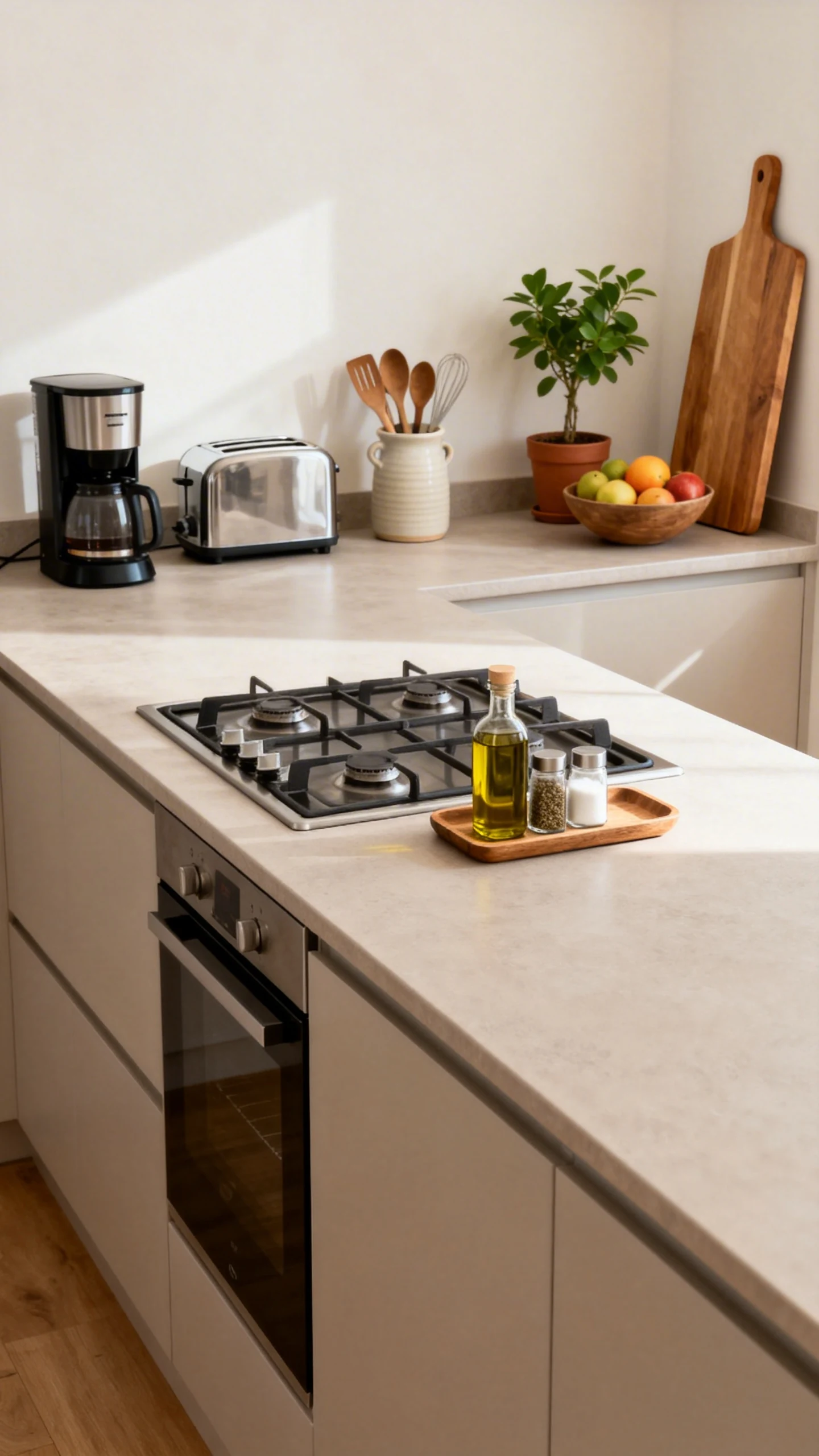
If your counters are packed, your whole kitchen feels busy. Even a beautiful kitchen looks stressed when every appliance you own is standing out like it pays rent.
Start with a simple question: What truly deserves counter space? IMO, only the things you use constantly should stay out. Everything else can take a little vacation inside a cabinet.
What To Keep Out
- Daily-use appliances like a coffee maker or toaster
- A small tray for oils, salt, and pepper near the stove
- A fruit bowl if you actually eat the fruit and it is not just décor with commitment issues
- One decorative item like a plant, candle, or pretty cutting board
Grouping items on a tray is a tiny styling trick with a huge payoff. It makes everyday essentials look intentional instead of like they wandered there and got comfortable.
Counter Decluttering Moves That Work
- Store duplicates somewhere less prime
- Move bulky appliances to a pantry shelf or lower cabinet
- Use a crock for utensils instead of letting them sprawl everywhere
- Corral random paper clutter before your kitchen turns into a mini office
The goal is not empty-for-the-sake-of-empty. The goal is visual calm. When your counters have breathing room, cooking feels less annoying and cleanup is way faster.
2. Turn Cabinets Into Hardworking Storage Zones
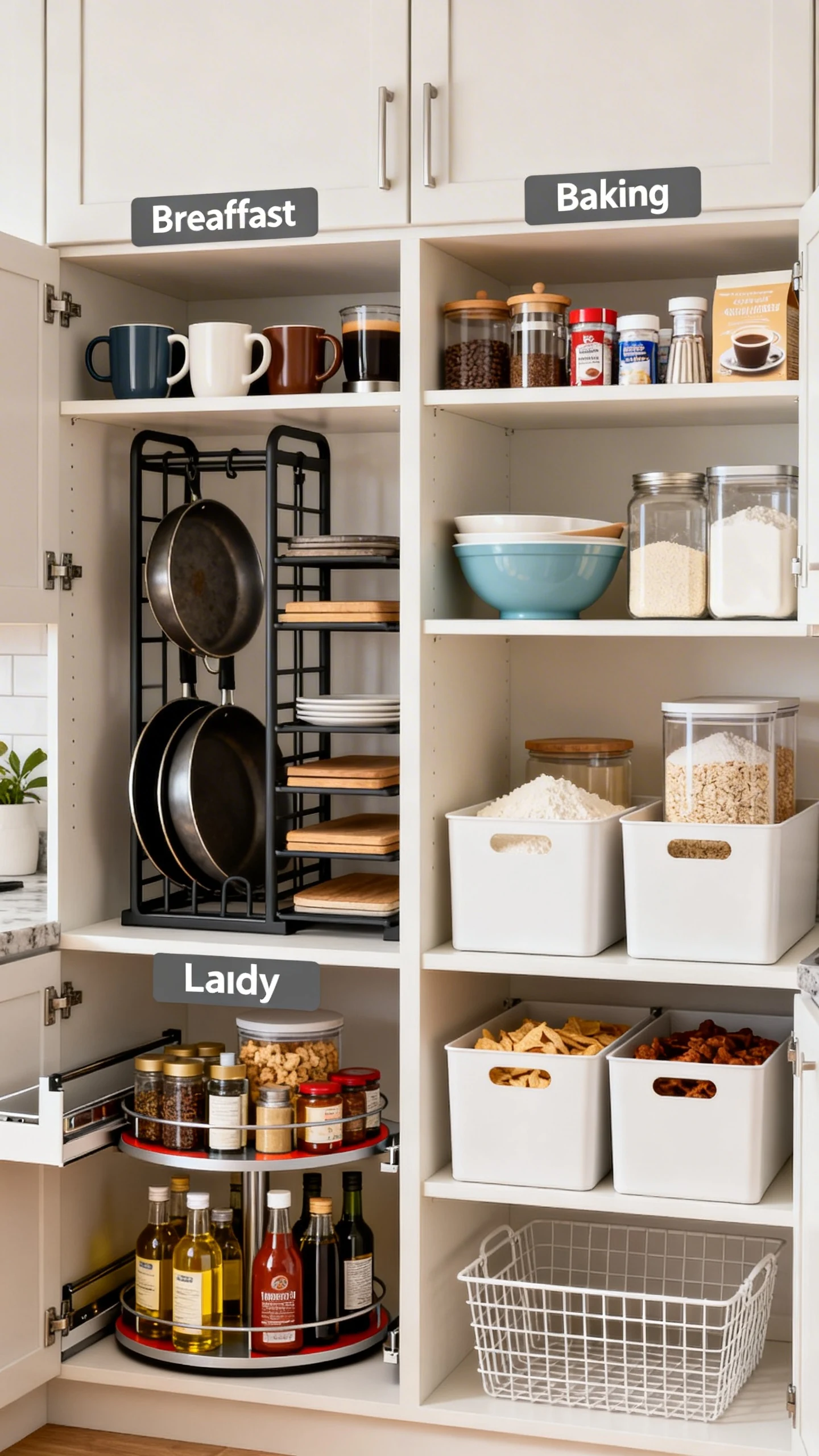
Cabinets can either be your best friend or a dark cave where baking dishes go to disappear. The trick is to stop treating them like giant dump bins and start giving them actual zones.
Think of each cabinet as having one job. Snacks in one spot, baking supplies in another, dinnerware where you can grab it without doing yoga. Revolutionary, I know.
Easy Cabinet Zones To Set Up
- Breakfast zone with mugs, coffee, tea, and sweeteners
- Cooking zone with pots, pans, spices, and oils
- Baking zone with mixing bowls, measuring cups, flour, and sugar
- Lunch-packing zone with containers, wraps, and grab-and-go snacks
Once you create zones, add a few simple tools to make the inside of your cabinets actually usable. Because stacking everything into one teetering pile is not a system. That is a cry for help.
Cabinet Organizers Worth Using
- Shelf risers to double vertical space for plates or mugs
- Pull-out bins for snacks, packets, or produce
- Pan organizers so skillets are stored vertically, not in a metal avalanche
- Lazy Susans for oils, sauces, or awkward corners
- Under-shelf baskets for extra wraps or towels
FYI, vertical storage is the secret weapon here. Lids, cutting boards, sheet pans, and trays all behave better when stored upright. Suddenly, you can see what you own and stop buying your fifth whisk for no reason.
If you share your kitchen with family or roommates, labels can help too. Not because anyone is incapable, but because apparently putting things back where they belong is a group project now.
3. Make Drawers Less Chaotic With Smart Dividers
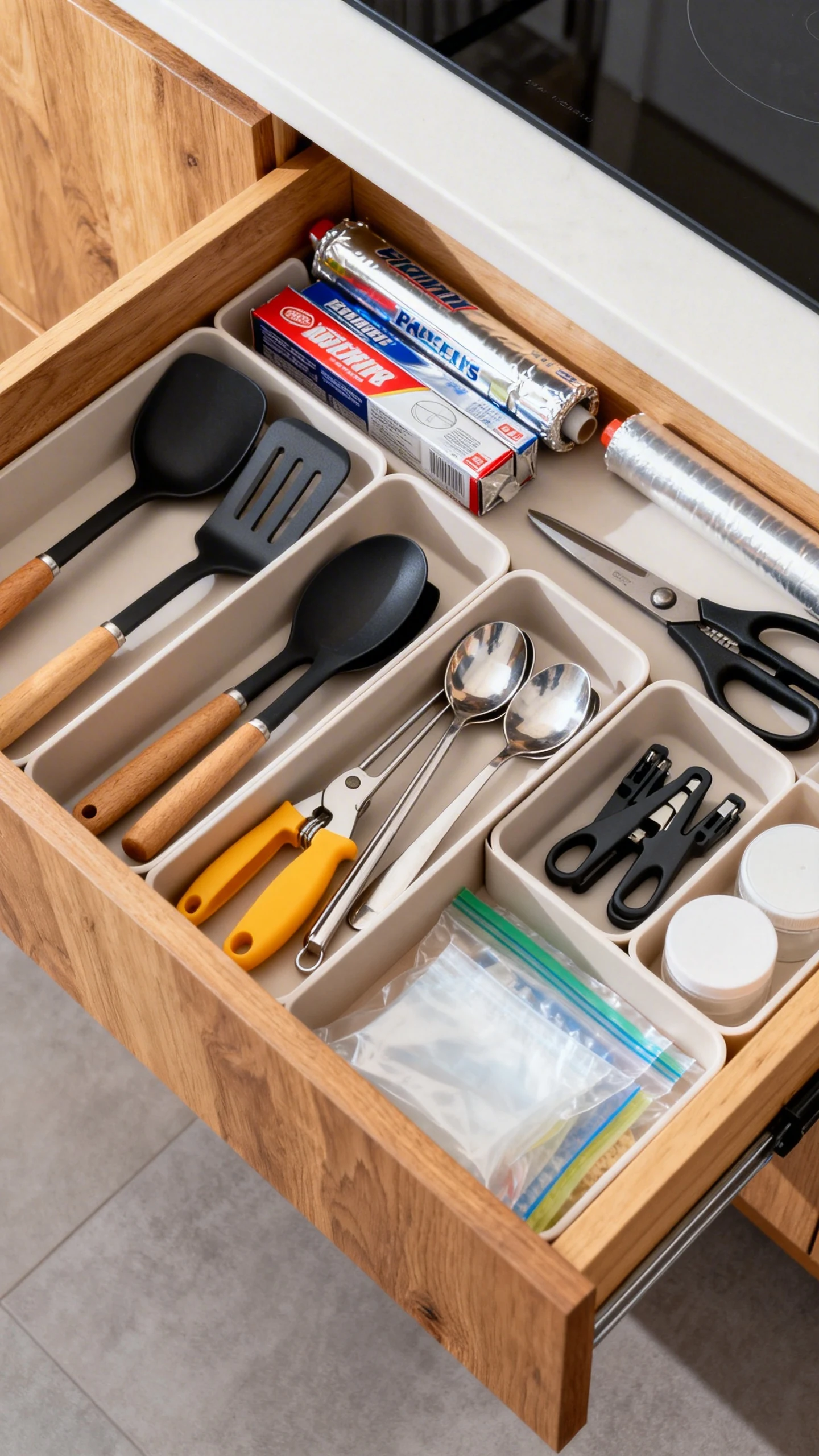
Kitchen drawers are sneaky. They look innocent from the outside, then you open one and it is 43 takeout soy sauce packets, three peelers, and a tangled nest of measuring spoons.
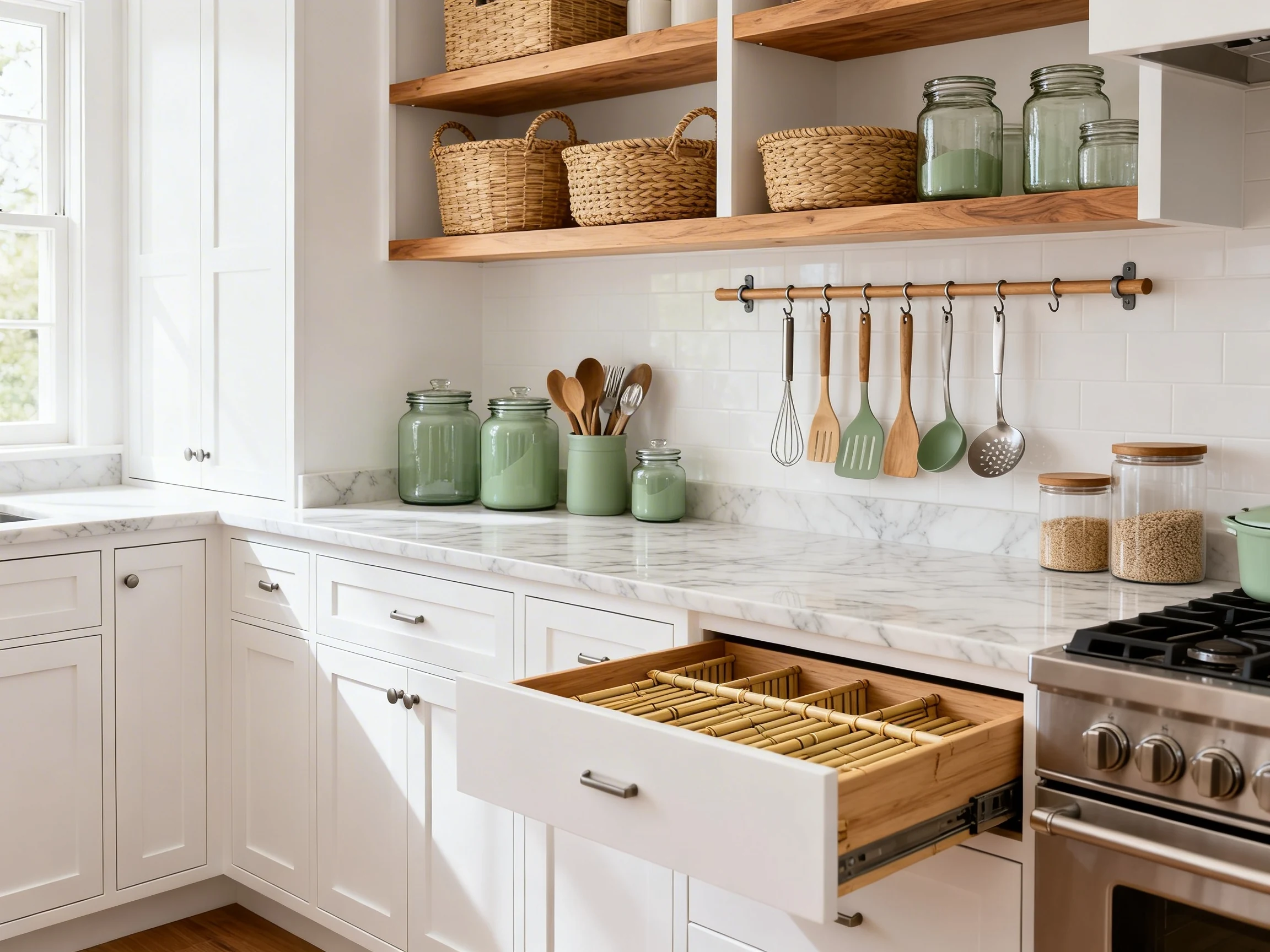
This is where drawer organization changes everything. A few dividers can turn a junky drawer into something that feels weirdly luxurious.
The Main Drawers To Organize First
- Utensil drawer for forks, knives, spoons, and serving pieces
- Cooking tools drawer for spatulas, tongs, peelers, and can openers
- Food storage drawer for wraps, bags, and foil
- Odds-and-ends drawer with strict limits, because one junk drawer is human and five is chaos
Use expandable dividers or small bins to give every item a home. Once things are separated, you stop digging around like you are on a game show trying to find one clean tablespoon.
Drawer Rules That Keep Them Tidy
- Store like with like
- Keep most-used items in the top drawers
- Do a quick edit every month and remove extras
- Do not let random non-kitchen stuff move in permanently
One underrated move? Create a dedicated meal prep drawer. Keep measuring cups, scissors, clips, baggies, and your go-to tools together. It makes weeknight cooking feel way less scattered.
And please, match your container lids to the containers. We are adults. We deserve better than the “close enough” approach.
4. Use Walls, Doors, And Awkward Spaces Like A Genius
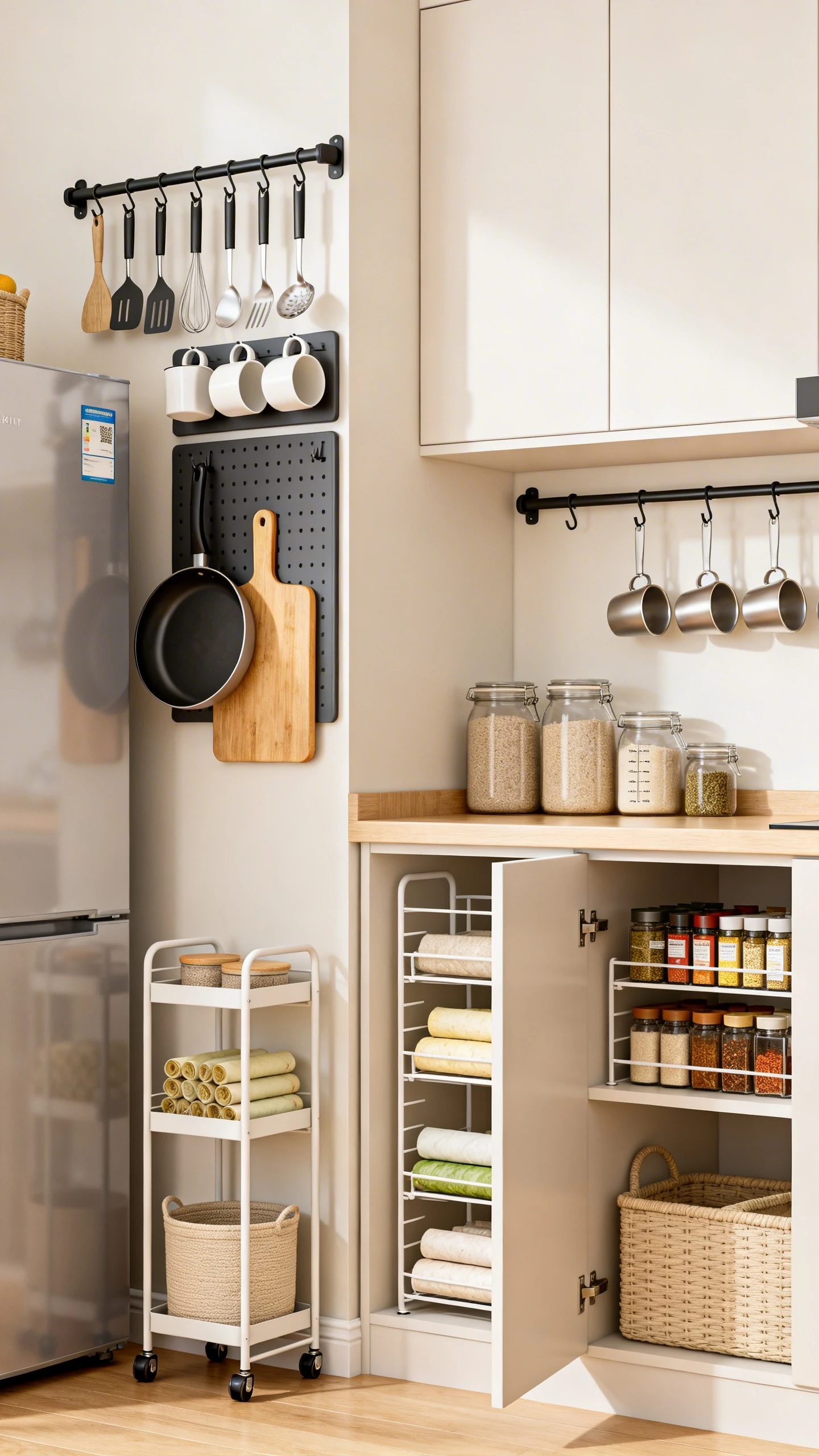
When storage is tight, look up, look behind doors, and look at those weird little gaps. Your kitchen has more usable space than you think, and it is probably being ignored out of habit.
Vertical kitchen storage is especially great for small kitchens. It gets stuff off your counters and turns blank areas into practical storage without making the room feel packed.
Smart Ways To Use Unused Space
- Wall-mounted rails for utensils, mugs, or small baskets
- Pegboards for pans, tools, or cutting boards
- Hooks under cabinets for mugs or measuring cups
- Inside-cabinet-door racks for spices, wraps, or cleaning supplies
- Rolling carts for narrow gaps beside the fridge or cabinets
A slim rolling cart is one of those things that looks almost too simple, then completely saves your life. Use it for canned goods, spices, water bottles, or baking supplies and suddenly that awkward three-inch gap is pulling its weight.
Keep It Functional And Cute
Open storage works best when it is not overcrowded. Pick practical items that also look decent, like matching jars, wood utensils, or a few neutral baskets. This is not the place for visual chaos dressed up as personality.
If you hang things on the wall, leave a little breathing space between them. The goal is chic and useful, not “restaurant supply closet with better lighting.”
Also, do not forget the top of the fridge or the inside of a pantry door. Those spots are prime real estate for baskets, trays, or overflow items you do not use every day.
5. Create A Pantry System You Can Actually Maintain
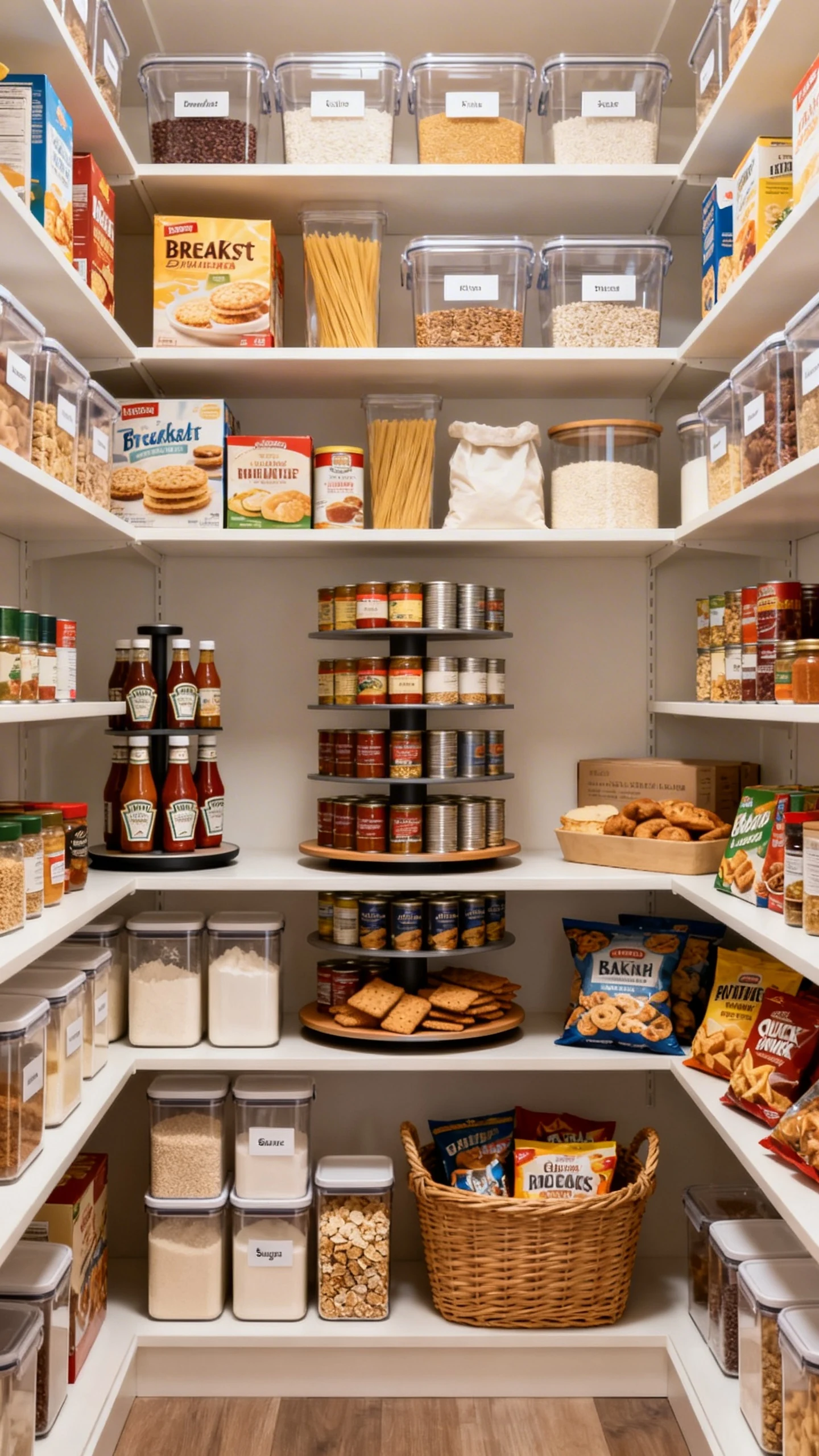
Whether you have a walk-in pantry or one lonely cabinet pretending to do pantry duty, the same rule applies: make it easy to see, grab, and restock what you use. If you cannot find the pasta, you probably own six boxes of it already.
The best pantry organization ideas are not about perfection. They are about making daily life smoother, so snack time is less of a scavenger hunt.
Set Up Pantry Categories
- Breakfast foods
- Pasta, rice, and grains
- Canned goods
- Baking ingredients
- Snacks
- Dinners and quick meal staples
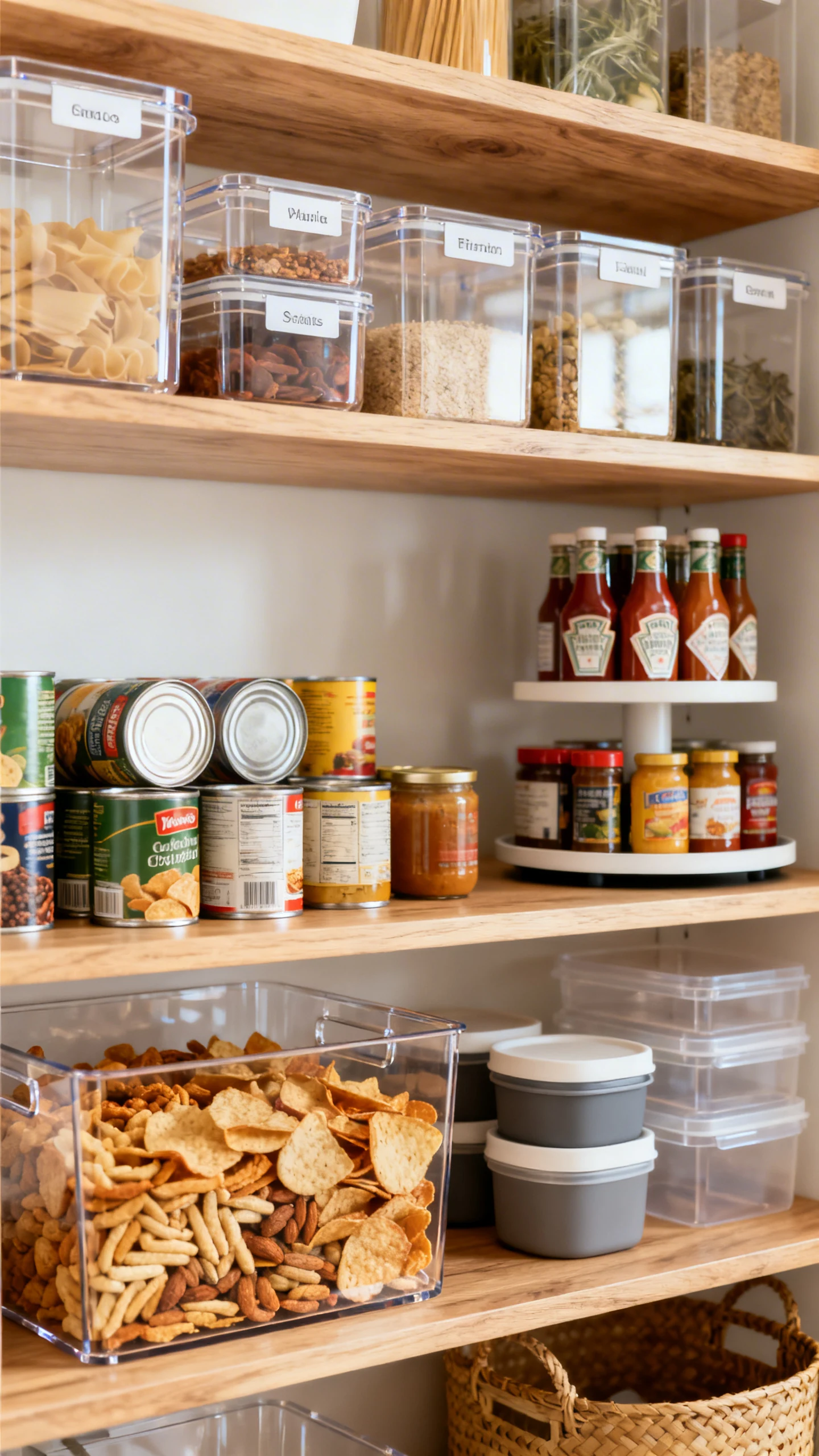
Once categories are set, use containers and bins where they make sense. Decanting everything is optional, not a personality test. But for messy basics like flour, sugar, cereal, or crackers, clear containers can really help.
Pantry Tools That Earn Their Keep
- Clear bins to group similar items
- Labels so everyone knows what goes where
- Tiered shelves for cans and jars
- Turntables for sauces and small bottles
- Stackable containers to maximize height
Want the pantry to stay organized longer than 48 hours? Build in a reset habit. Take five minutes once a week to toss expired stuff, group items back together, and add snacks to the shopping list before you hit an emergency chip shortage.
It also helps to create a small backstock area for extras. Keep duplicates in one basket or one shelf instead of letting them scatter everywhere. That way, you know exactly what you have and you stop buying cinnamon every single time you shop.
If kids are part of the kitchen equation, give them one lower, easy-to-reach snack bin. It cuts down on rummaging and saves the rest of the pantry from looking like a tiny tornado rolled through.
Kitchen organization does not have to be fancy or expensive to work. A few thoughtful systems, a little editing, and some basic containers can completely change how your kitchen feels day to day.
Start with one section, not the whole room. Clear a counter, fix a drawer, tame the pantry. Small wins add up fast, and before you know it, your kitchen will look calmer, work better, and maybe even make you want to cook more often. Miracles happen.