5 Kitchen Pantry Organization Ideas That Instantly Make Your Whole Kitchen Feel Calmer
If your pantry turns into a chaotic snack cave the second you buy groceries, welcome. You are among friends. A well-organized pantry is not about being impossibly perfect or labeling every grain of rice like you run a tiny gourmet store. It is about making your kitchen easier to use and way less annoying.
The good news? You do not need a celebrity-sized pantry or a full weekend meltdown to make it work. A few smart moves can turn that messy shelf situation into something functional, pretty, and honestly a little satisfying to look at.
1. Start With A Ruthless Pantry Reset
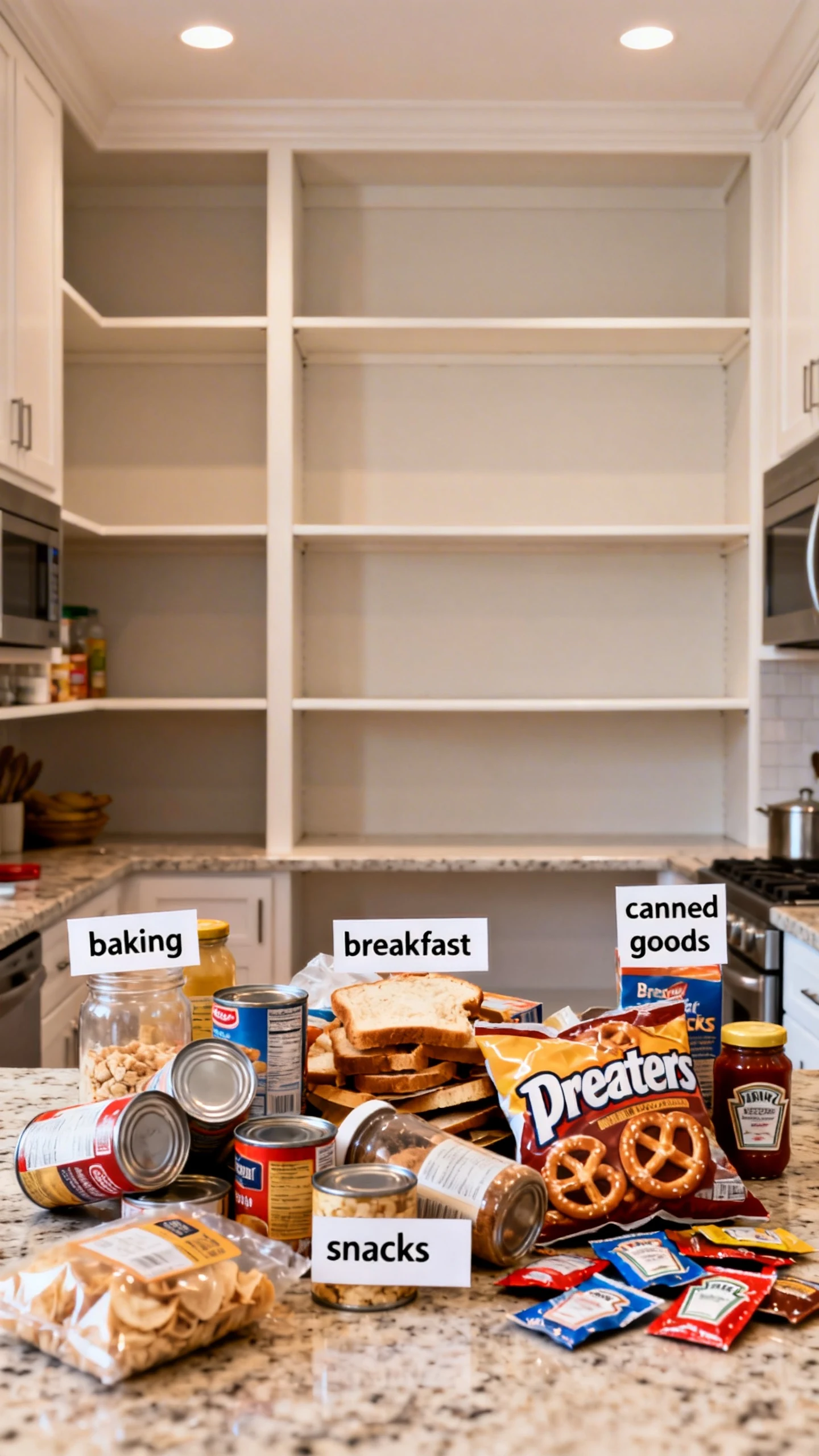
Before you buy bins, labels, or those cute matching jars you saved on Pinterest three months ago, pull everything out. Yes, everything. You cannot organize what you refuse to face, and that half-open bag of stale pretzels knows it.
This is the part where you stop pretending you are going to use five mystery sauce packets and a can of beans from another era. Be honest, be brave, and clear the clutter first.
What To Toss, Keep, And Relocate
- Toss expired food, stale snacks, and duplicates you realistically will not use.
- Keep pantry staples you reach for often, like pasta, cereal, canned goods, flour, and snacks.
- Relocate specialty appliances, bulk overflow, or party platters to another cabinet or storage zone.
Once everything is out, wipe down the shelves. It sounds basic, but a clean pantry instantly feels more under control. Also, crumbs attract pests, and nobody wants uninvited dinner guests.
Now sort your food into broad categories. Think baking, breakfast, snacks, dinner staples, and canned goods. This one step makes the rest of your pantry organization so much easier because you are finally working with groups instead of random chaos.
2. Give Everything A Zone So It Stops Wandering
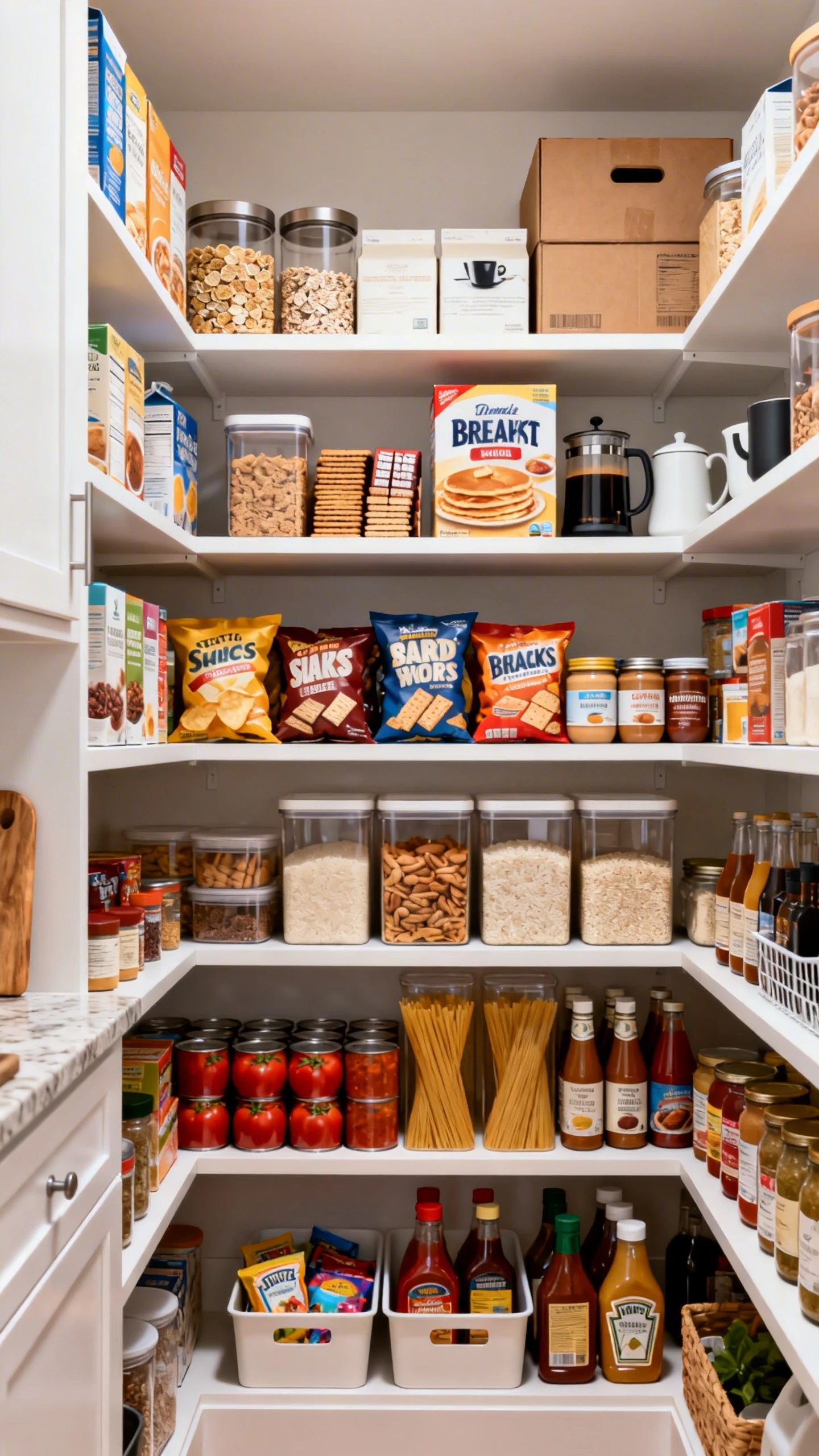
A pantry gets messy fast when items have no assigned home. Suddenly granola bars are hiding behind tomato soup, and your spices are somehow next to pancake mix. Cute? No. Efficient? Also no.
The fix is simple: create dedicated zones based on how you actually cook and snack. Not how some hyper-organized stranger on the internet says you should live.
Easy Pantry Zones That Actually Make Sense
- Everyday breakfast zone: cereal, oats, coffee, tea, pancake mix
- Lunch and snack zone: crackers, chips, bars, nut butters
- Dinner prep zone: pasta, rice, canned tomatoes, broth, sauces
- Baking zone: flour, sugar, baking soda, chocolate chips, vanilla
- Kid-access zone: easy grab-and-go snacks on lower shelves
Put the most-used categories at eye level. That prime real estate should go to the things you grab constantly, not the holiday sprinkles. Reserve higher shelves for backstock or rarely used items, and lower shelves for heavier bins or kid-friendly foods.
If you share your kitchen with family, zoning also cuts down on the endless, “Where is the pasta?” questions. FYI, that might be the biggest perk of all.
3. Use Clear Containers, Bins, And Risers For Instant Order
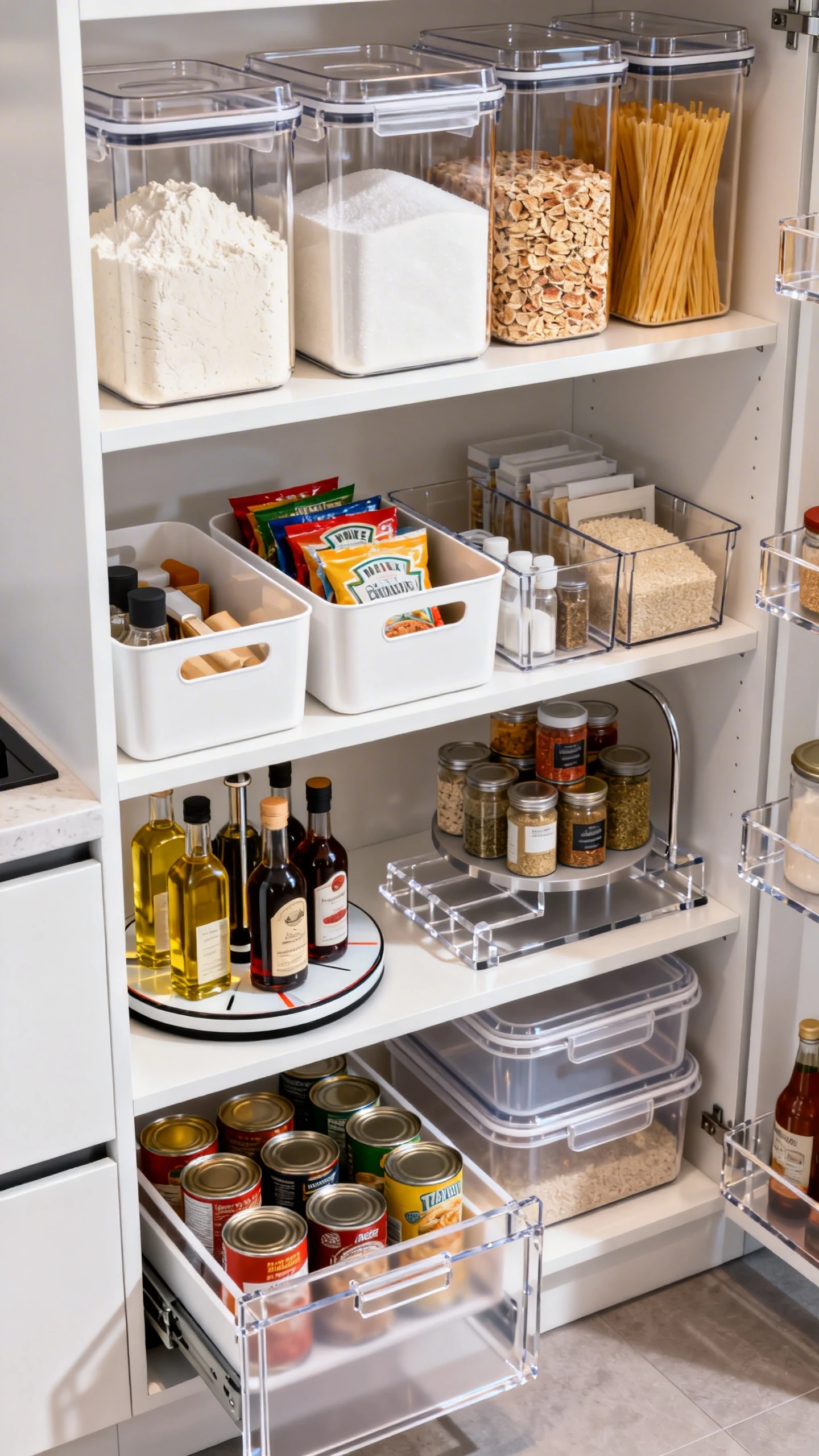
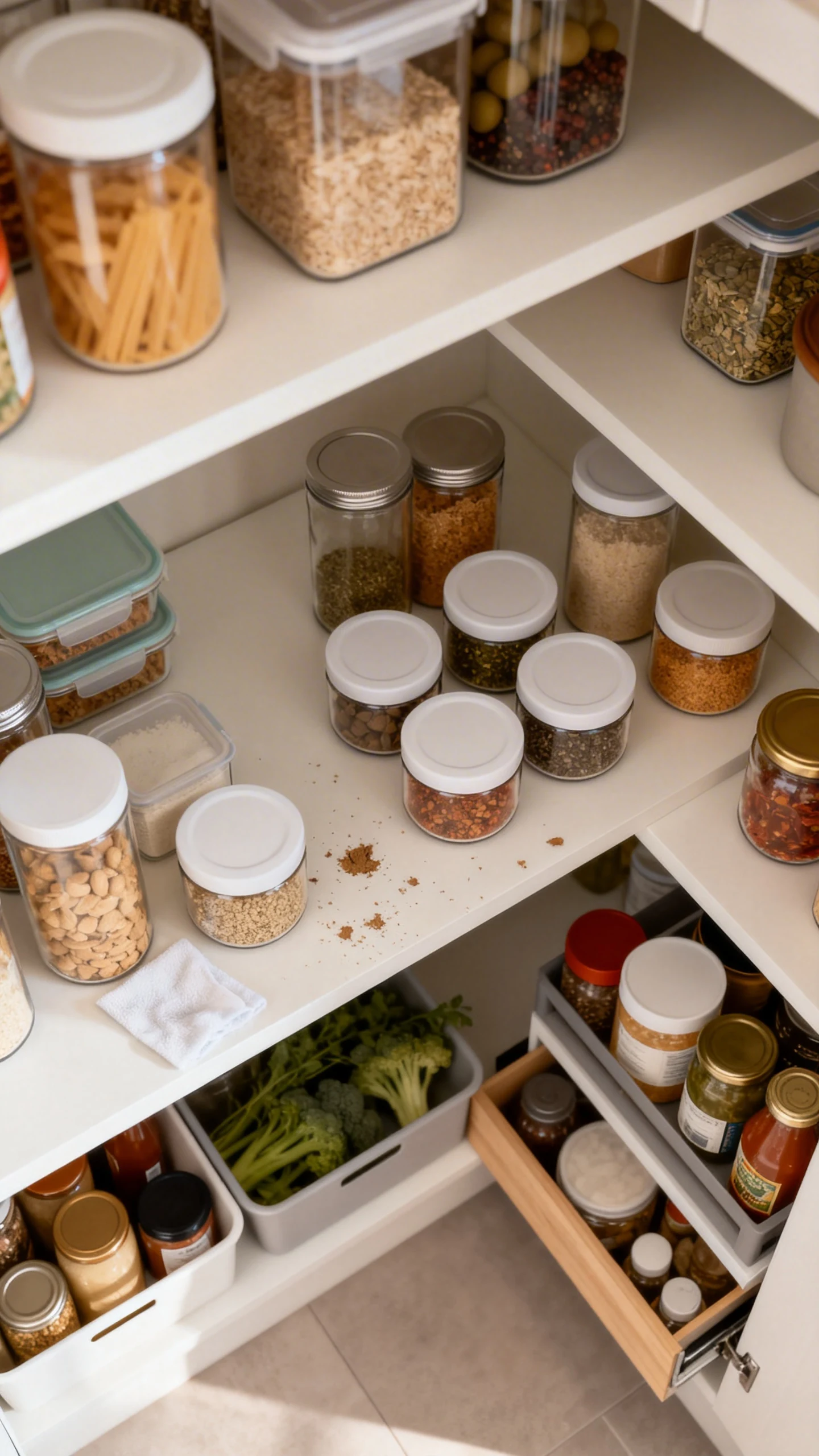
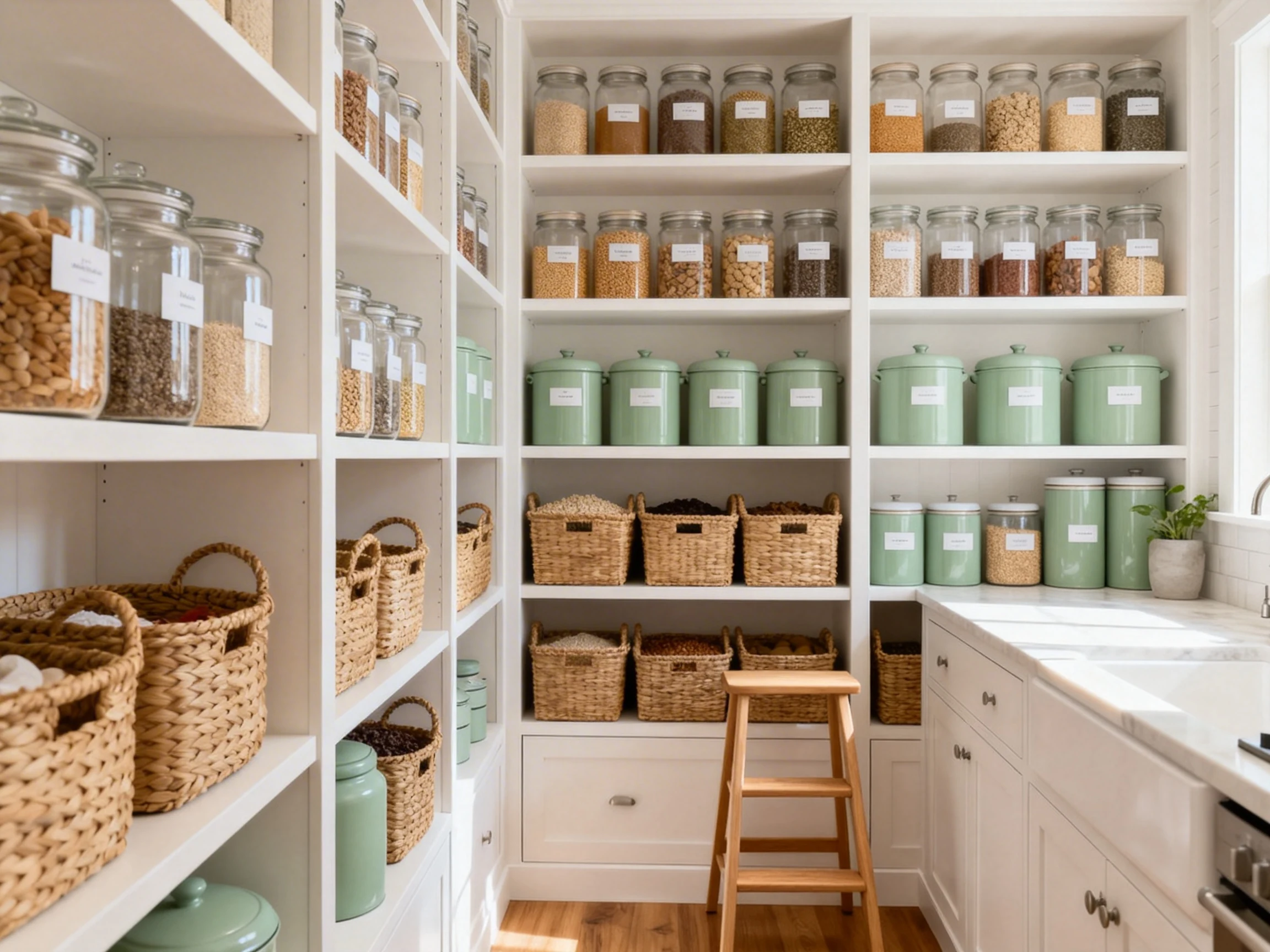
This is where your pantry starts looking polished without becoming high-maintenance. Clear containers, baskets, and shelf risers help you see what you have, use space better, and stop buying your fifth box of spaghetti because you forgot the other four existed.
You do not need to decant every single thing you own. IMO, that is where pantry organization can tip into part-time job territory. Focus on the items that spill, get lost, or look messy in flimsy packaging.
The Best Organizing Tools For A Pantry
- Clear airtight containers for flour, sugar, pasta, rice, cereal, and snacks
- Open bins for grouping pouches, seasoning packets, or baking supplies
- Lazy Susans for oils, vinegars, sauces, and jars
- Shelf risers to make canned goods and jars easier to see
- Stackable bins for maximizing vertical shelf space
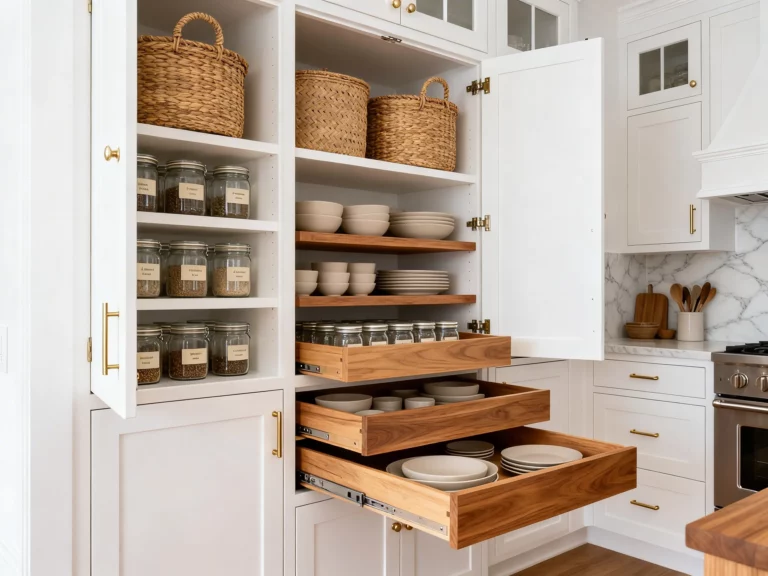
- Pull-out drawers if your pantry shelves are deep and awkward
Deep shelves are notorious for turning food into hidden treasure. Shelf risers and pull-out bins fix that problem fast by bringing items forward and making everything visible. No more excavating behind three cans of chickpeas to find paprika.
If you want that clean, styled look, stick to just a few container shapes and materials. Matching pieces instantly make the pantry feel calmer, even if inside one bin it is still every snack for itself.
4. Label Like You Mean It
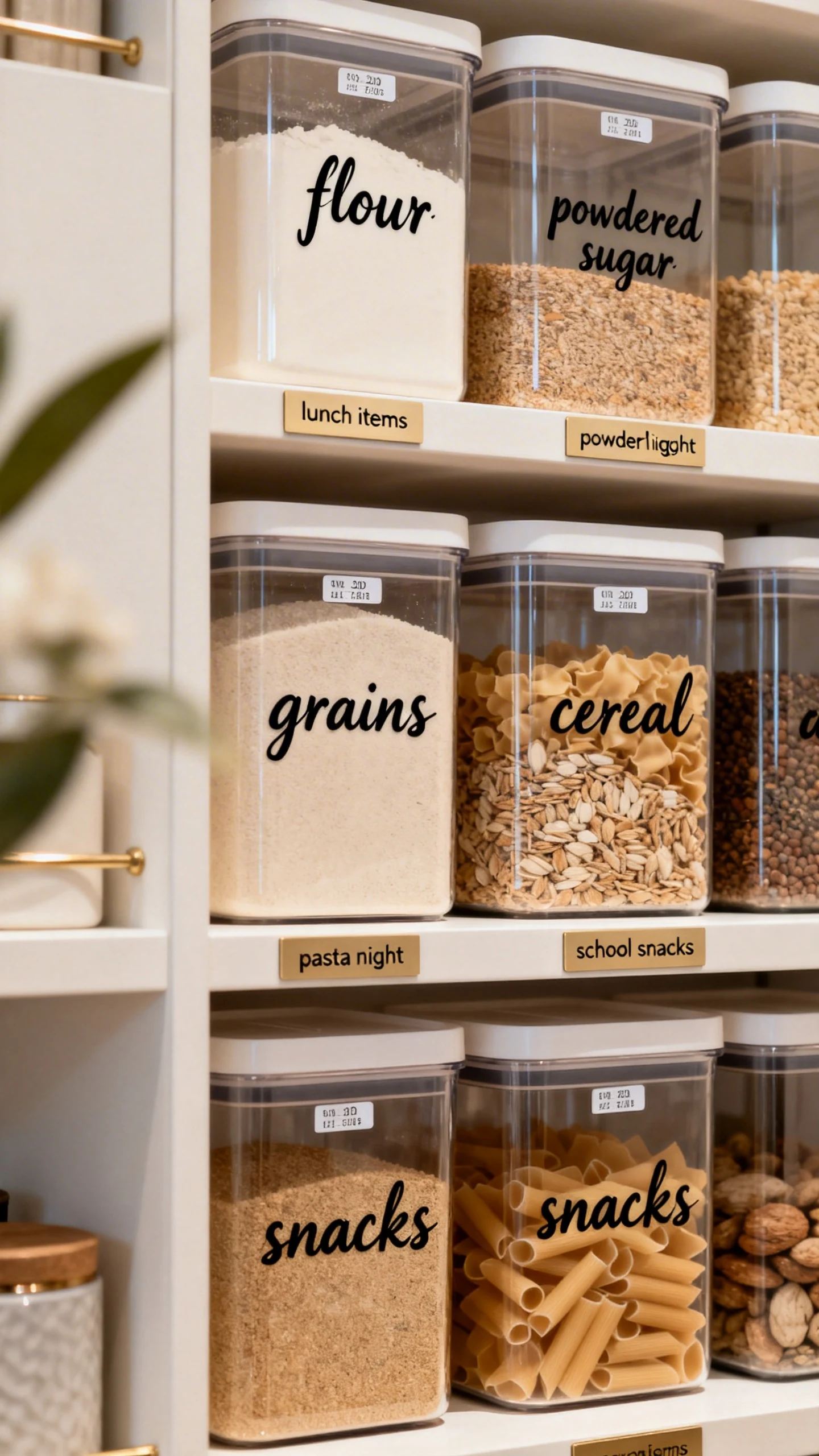
Labels are not just for aesthetics, although yes, they do make a pantry look weirdly expensive. They also help everyone in the house know where things go, which means your lovely new system has a fighting chance of surviving the week.
You can go fancy with printed labels or keep it simple with a label maker or neat handwritten tags. The point is clarity, not perfection.
What To Label In Your Pantry
- Containers holding baking ingredients, grains, cereal, and snacks
- Bins for categories like lunch items, pasta night, or school snacks
- Shelves if you want the whole family to follow the system
- Expiration-sensitive items with purchase or refill dates when needed
Labeling is especially useful if you decant ingredients. White flour and powdered sugar can look suspiciously alike, and that is not a surprise you want during baking. Trust me.
Try to use wording that matches how you think. “Quick dinners” might work better for you than “dry goods,” and “sweet snacks” may be more useful than “miscellaneous.” Your pantry should support your real routine, not sound like a grocery aisle.
Want it to stay nice longer? Add a tiny habit: when you unload groceries, refill containers and put extras in a designated backstock area. That five-minute reset saves you from a full pantry spiral later.
5. Make It Pretty Enough To Maintain
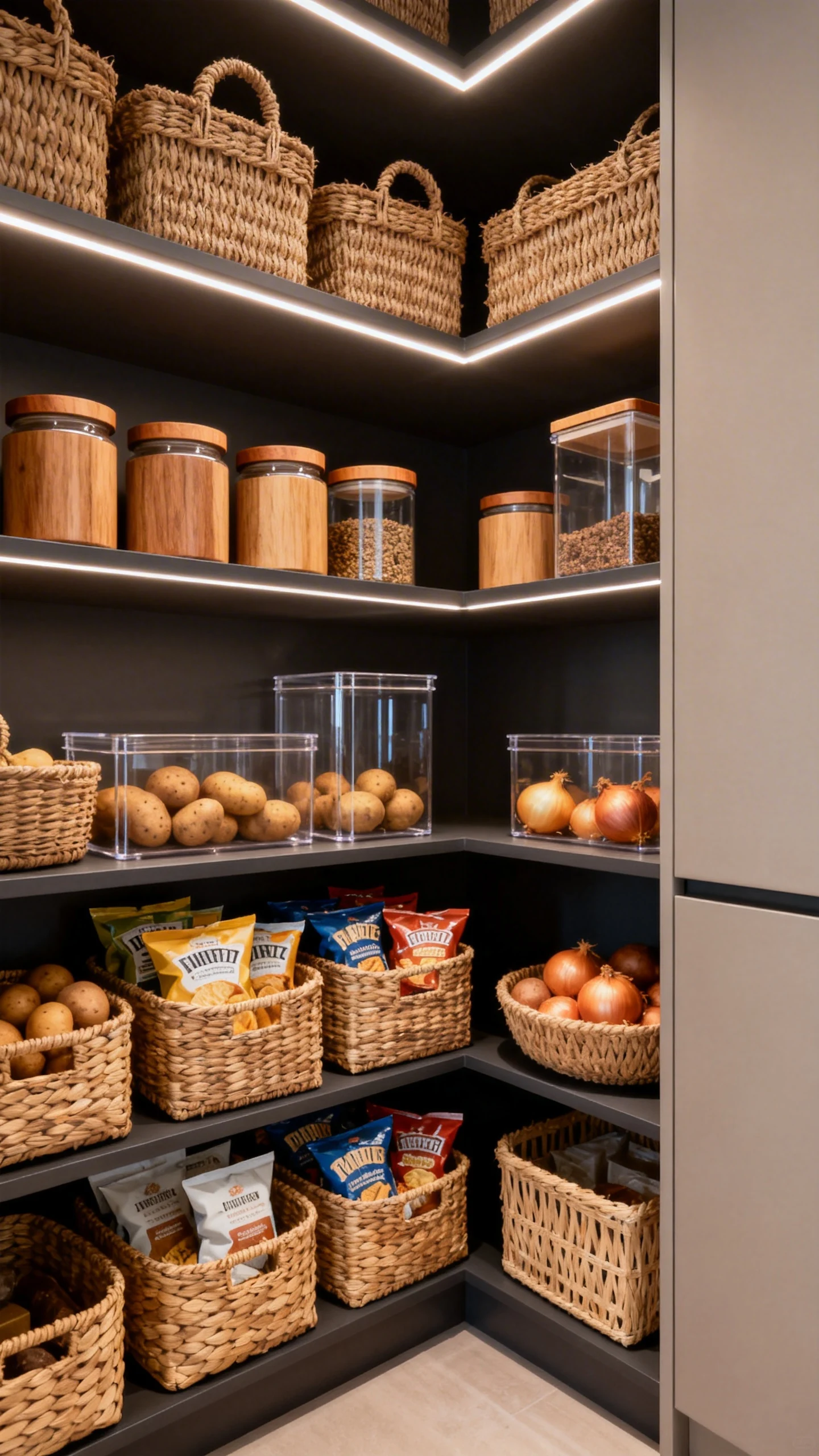
Here is the underrated truth about kitchen pantry organization ideas: if the pantry looks good, you are way more likely to keep it organized. Humans are shallow like that, and honestly, fair enough.
You do not need a designer pantry with custom shelves and imported brass anything. A few simple styling touches can make the space feel intentional, warm, and actually enjoyable to use.
Simple Ways To Add Style Without Losing Function
- Choose a color palette for bins, labels, and baskets so the space feels cohesive
- Mix textures like woven baskets, wood lids, and clear acrylic for a layered look
- Add a small light if the pantry is dark and cave-like
- Use matching jars for visible staples to create a clean visual rhythm
- Leave a little breathing room so shelves do not feel stuffed to the edges
One of the easiest wins is using a couple of attractive baskets for things that look messy no matter what. Think snack bags, potatoes, onions, or random pouches. Suddenly the chaos looks curated. Magic? Almost.
And please, do not overfill every inch. A pantry with some open space feels calmer and works better. It also gives you room for new groceries without starting a game of shelf Jenga.
If you want to keep the momentum going, do a mini check-in once a week. Straighten a shelf, combine duplicates, wipe crumbs, and move things back to their zones. It is low effort, high reward, and way easier than waiting until the pantry stages a full rebellion.
A well-organized pantry does more than look pretty. It saves time, cuts food waste, and makes cooking feel less chaotic on busy days. Start with one shelf, one category, or one bin if that feels easier.
You do not need a perfect pantry. You just need one that works for your life and does not make you sigh every time you open the door. And honestly, that is a home decor win worth celebrating.