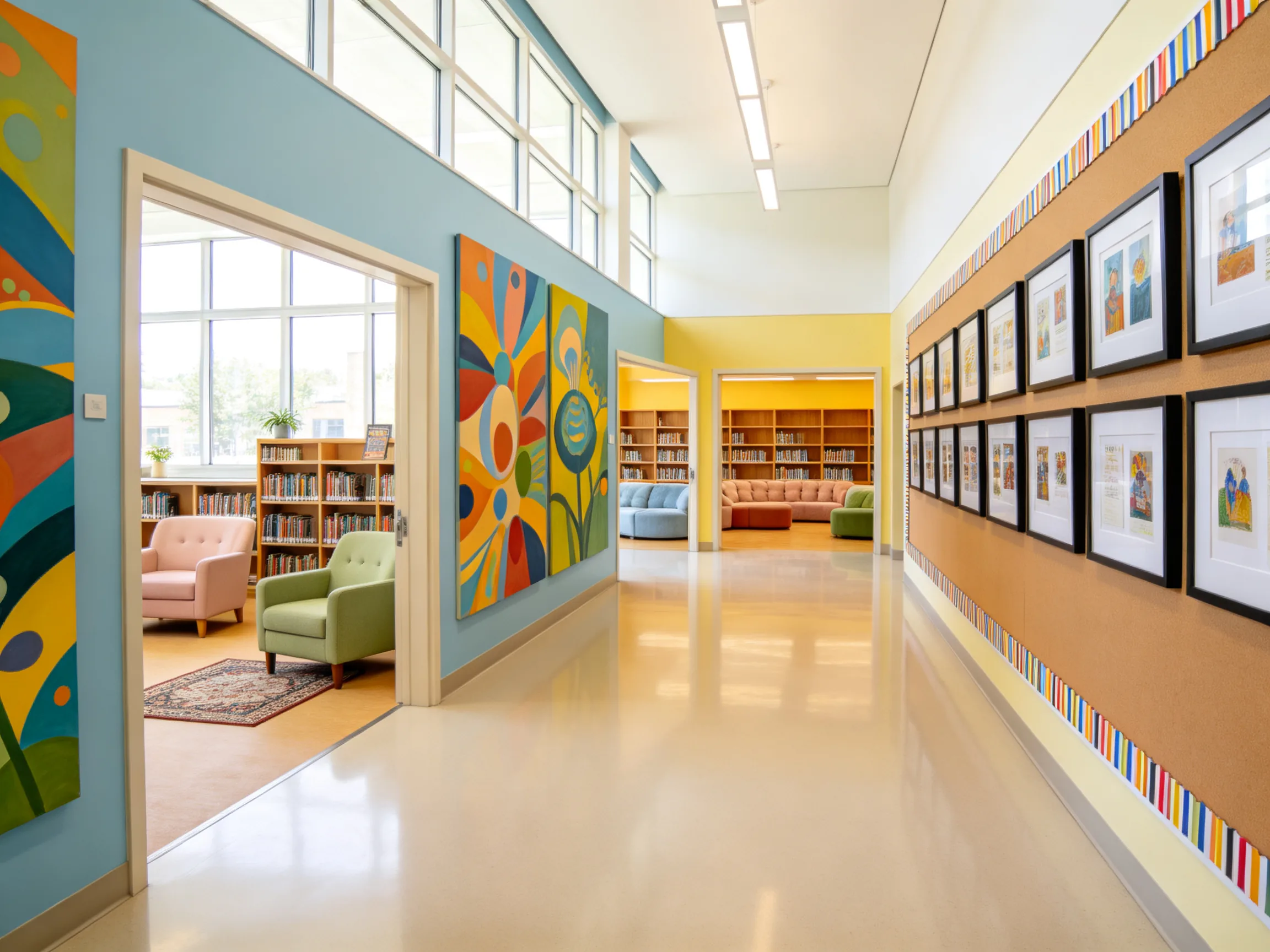
25 School Wall Art Ideas for Classrooms, Hallways, and Libraries
School wall art can make classrooms, hallways, libraries, offices, and shared learning spaces feel more welcoming, organized, and purposeful. The best ideas are not just decorative; they support routines, celebrate student work, improve wayfinding, and create focal points on large blank walls. These school wall art ideas include practical options for different campus areas, from bulletin boards and library corners to cafeteria walls and long corridors.
1. Classroom Reading Corner Quote Wall
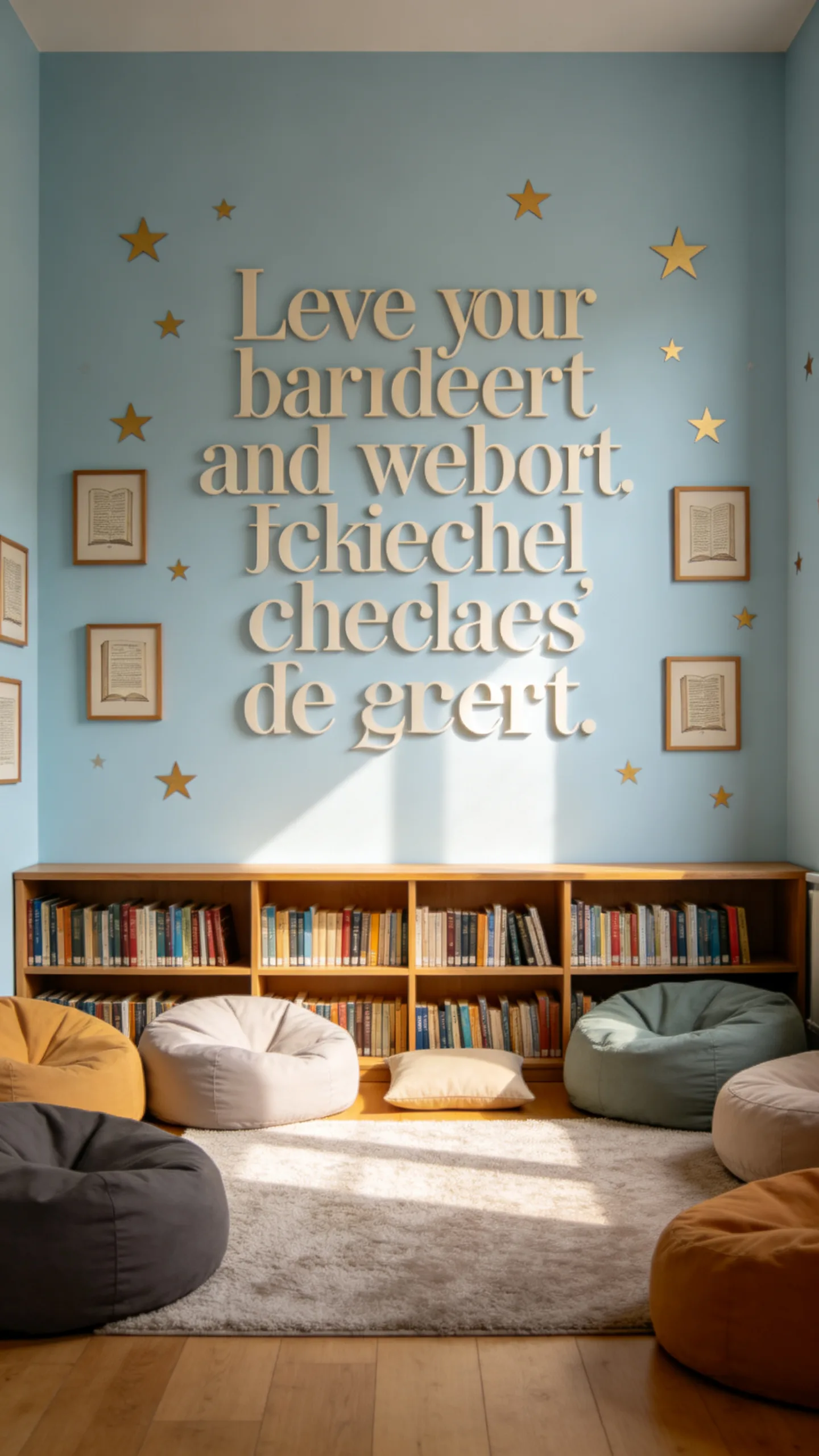
A reading corner becomes more inviting when the wall behind it has a clear visual focus. Use a soft background color such as pale blue, sage green, warm cream, or light gray, then add a large reading quote in vinyl letters, framed print, or painted lettering. Place it above a low bookshelf, beanbags, floor cushions, or a small classroom rug so the wall connects directly to the reading area.
For a practical classroom layout, keep the quote high enough that students do not rub against it while sitting, but low enough to be seen from the carpet. Add a few small framed book cover prints, paper stars, or removable decals around the quote to fill the wall without making the corner feel cluttered.
2. Hallway Student Artwork Gallery
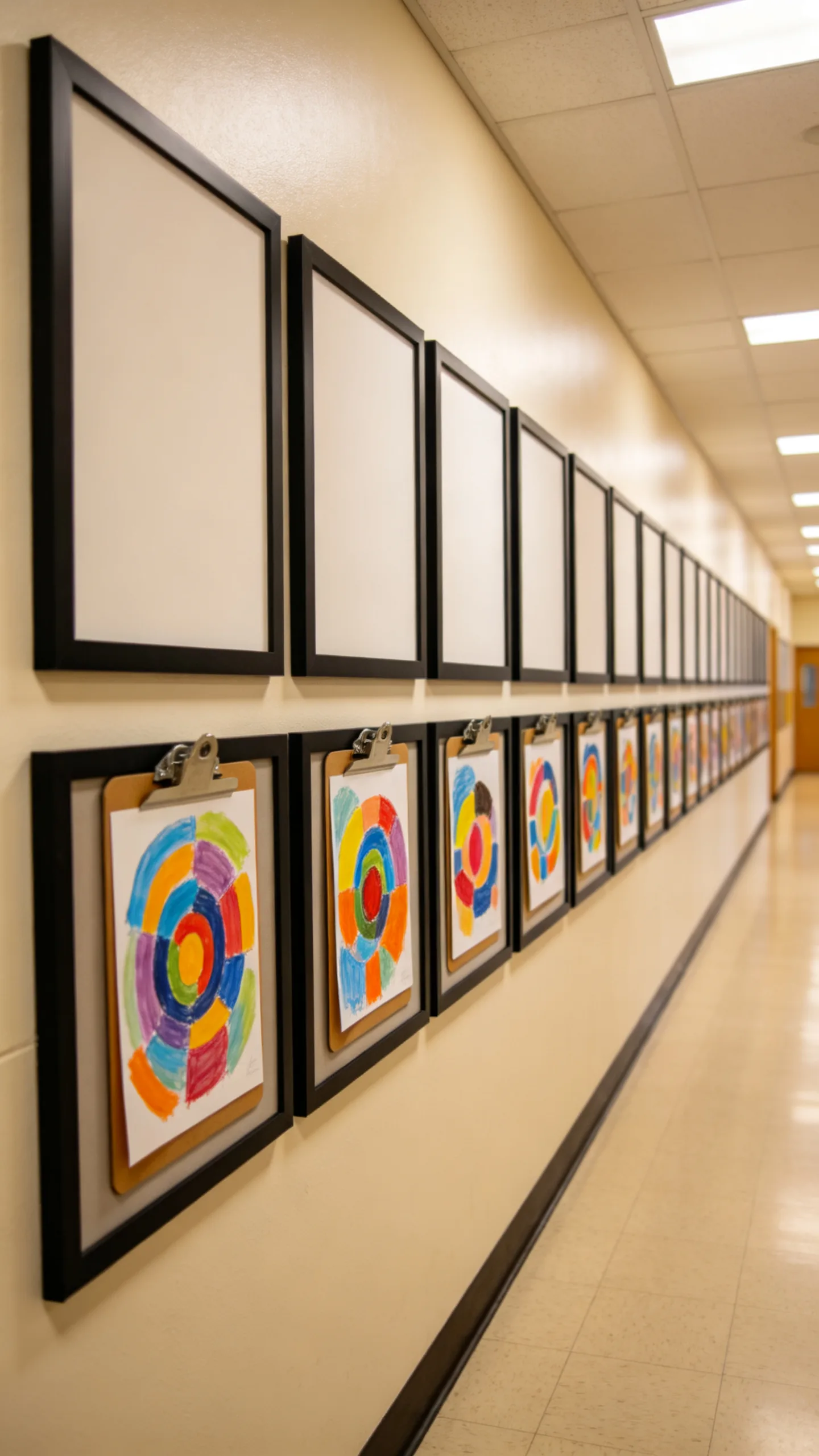
A hallway gallery turns long empty walls into a rotating showcase of student creativity. Use matching frames, clipboards, cork strips, or mounted display rails so teachers can update the art without damaging the wall. A consistent border color, such as black, navy, or natural wood, helps different projects look cohesive.
This idea works especially well in wide corridors outside classrooms, the art room, or the main office. Keep displays at student eye level, and leave enough blank space between pieces so the hallway does not feel visually crowded. Labels with grade level, project theme, or medium make the gallery feel organized and intentional.
3. Library Genre Wall With Color-Coded Signs
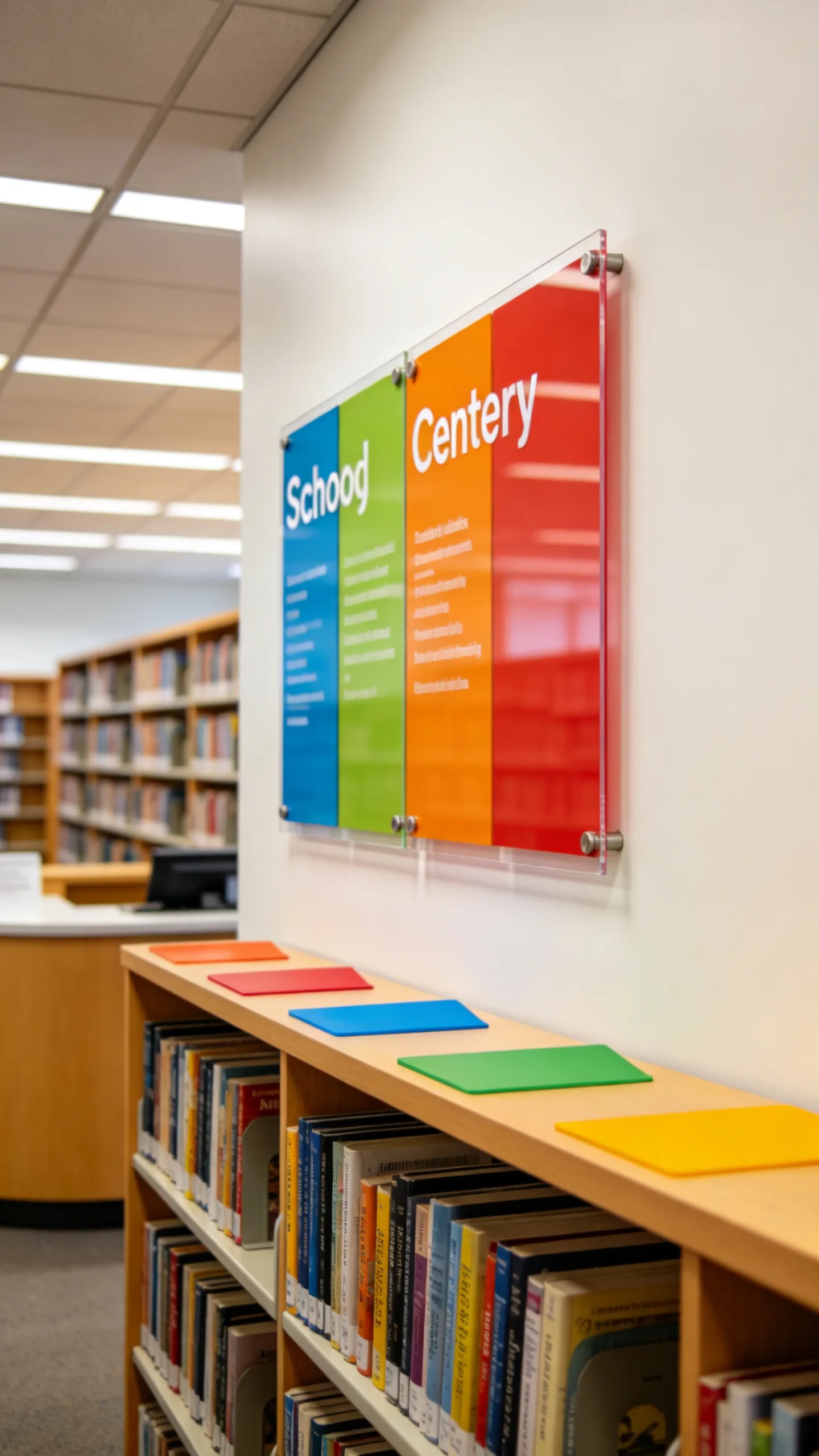
A school library wall can help students find books faster when it combines decoration with clear categories. Create a genre wall using color-coded signs for mystery, fantasy, biography, graphic novels, historical fiction, nonfiction, poetry, and adventure. Hang the signs above nearby shelves or on a large wall near the circulation desk.
Use sturdy laminated posters, acrylic sign holders, or framed cardstock so the display lasts through daily traffic. Matching colors on shelf labels and wall art create a simple wayfinding system, which is especially useful in elementary and middle school libraries where students are still learning how to browse independently.
4. Growth Mindset Classroom Poster Grid
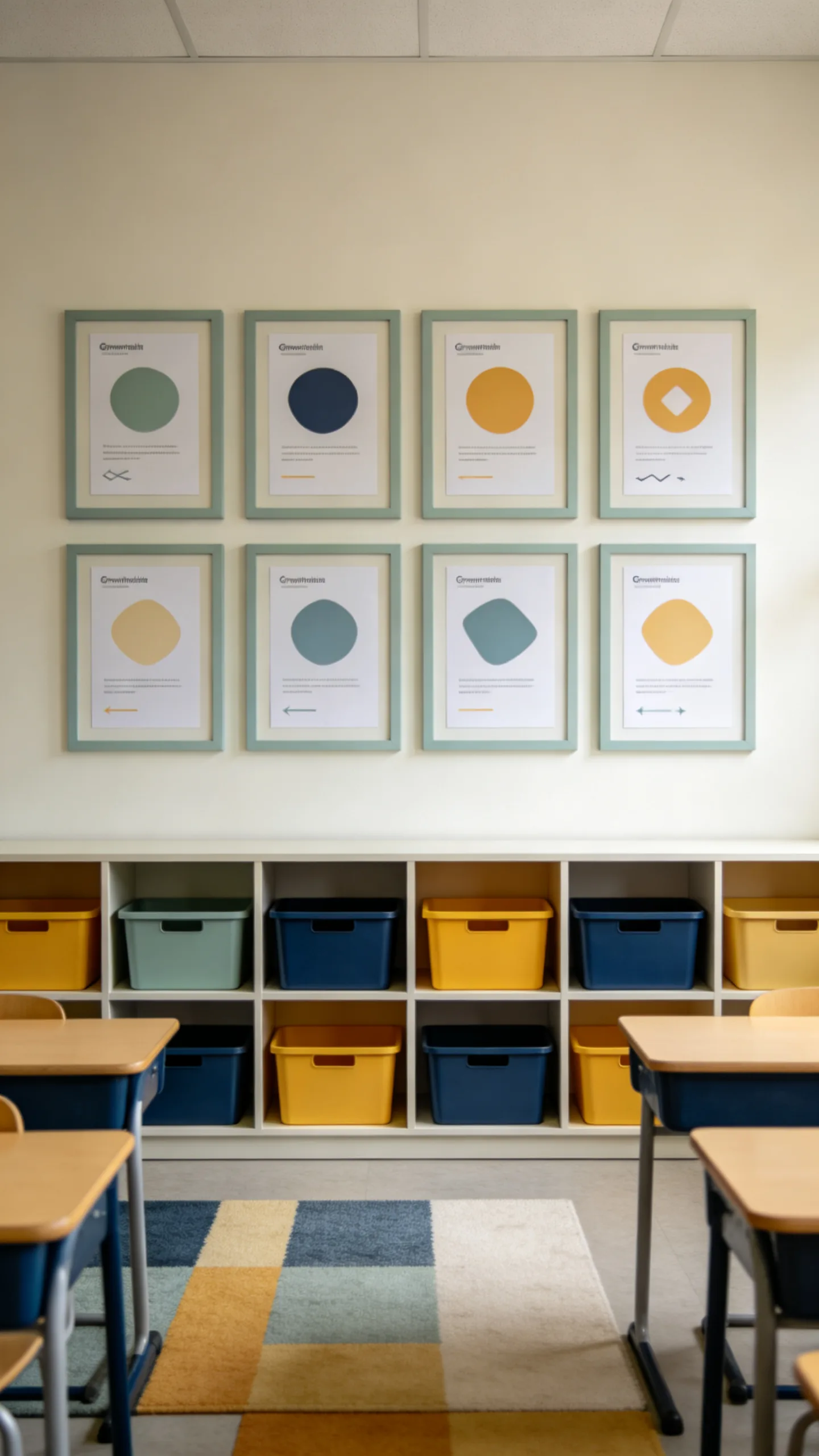
A growth mindset poster grid gives a classroom wall structure while reinforcing positive learning habits. Choose short phrases such as “Mistakes Help Us Learn,” “Try Another Strategy,” and “Questions Are Welcome.” Arrange the posters in a clean grid above cubbies, along the back wall, or near the teacher table.
For a polished look, use the same frame size or border style for every print. Keep the color palette limited to three or four colors that match the classroom rug, bulletin board paper, or storage bins. This prevents motivational wall art from becoming too busy and helps the classroom feel calm.
5. School Entryway Welcome Mural
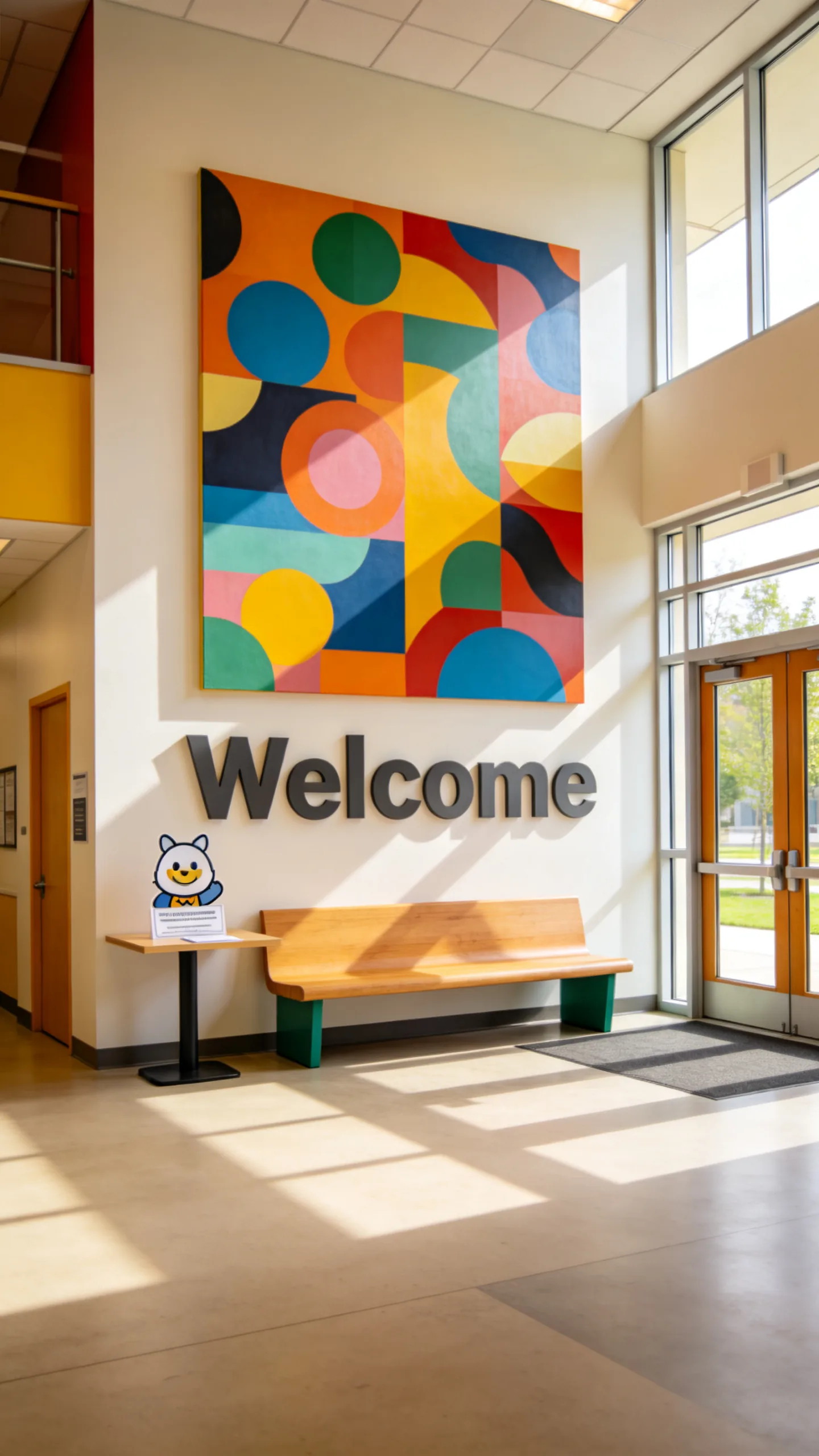
The front entrance is a strong place for school wall art because it sets the tone for families, visitors, and students. A welcome mural can include the school name, mascot, values, and a simple illustrated campus theme. Use bold lettering that can be read from several feet away, especially near the main doors or office check-in area.
If a painted mural is not practical, use removable wall decals, large printed panels, or framed posters. Position the design above a bench, reception table, or sign-in station so the entryway feels complete. Durable materials are important in this area because bags, coats, and foot traffic can easily scuff lower walls.
6. Hallway Timeline of School History
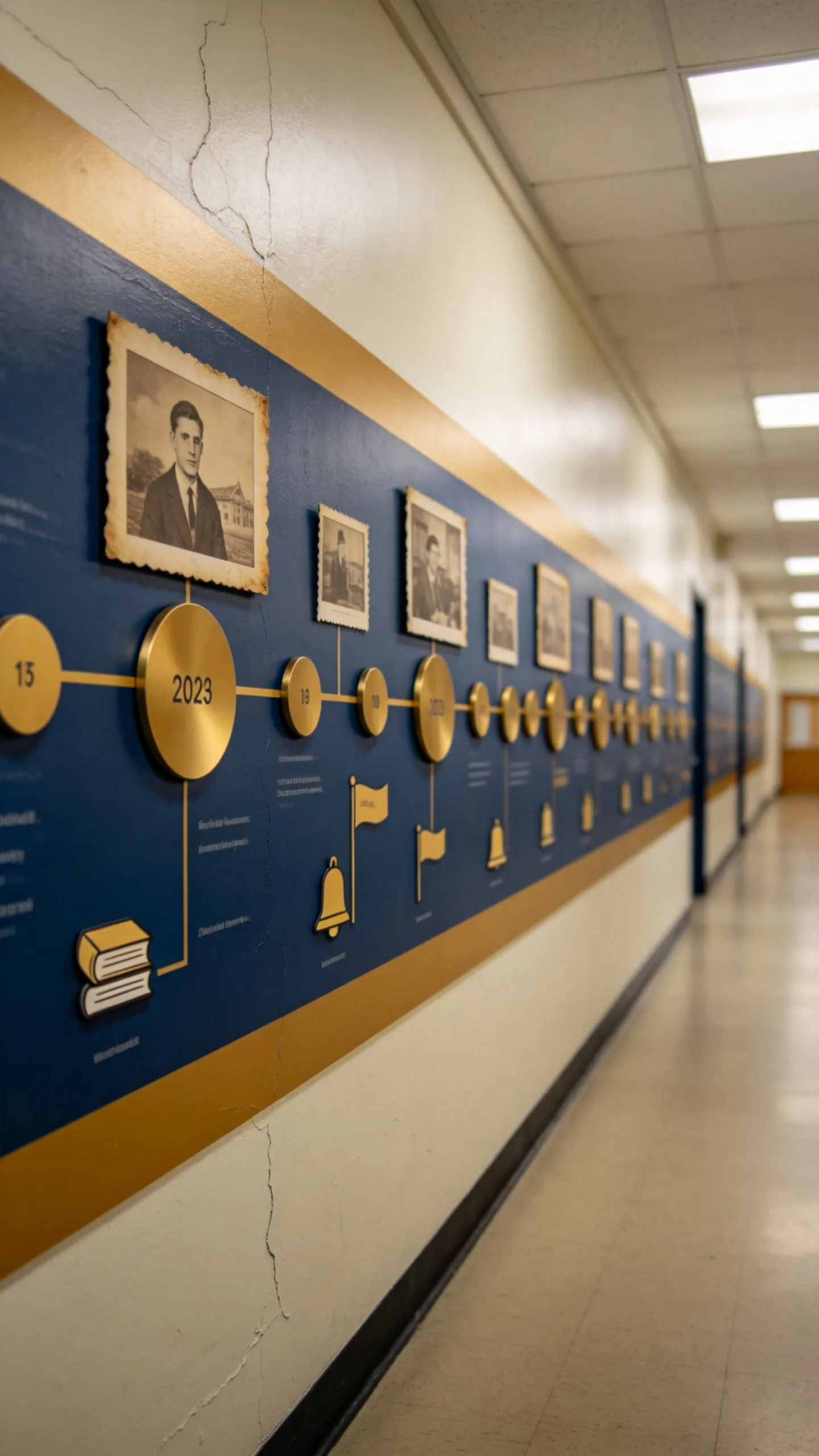
A school history timeline adds meaning to a long corridor, especially near the main office, auditorium, or gym entrance. Include important dates such as the school’s founding, building expansions, championship years, principal milestones, or community events. Pair each date with a photo, short caption, or small illustration.
Use a horizontal layout along the wall to guide the eye down the hallway. A consistent background strip in school colors can make the timeline feel connected without overwhelming the space. This type of wall art works well for alumni visits, open houses, and everyday student pride.
7. Classroom Subject Wall for Math Vocabulary
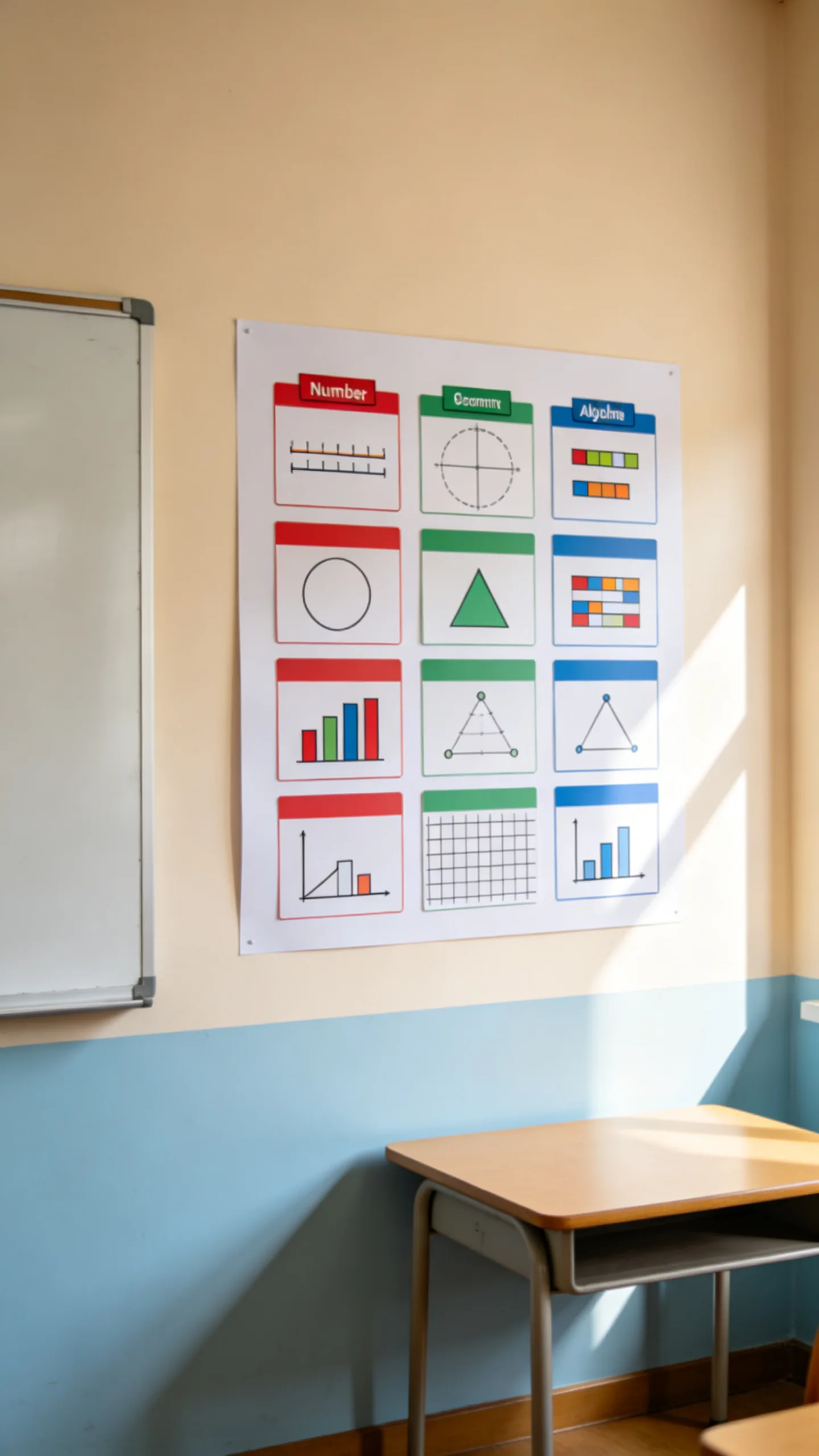
A math vocabulary wall can be both decorative and functional. Use clean poster cards for terms such as fraction, equation, perimeter, variable, angle, graph, and pattern. Add simple visuals like number lines, shapes, bar models, or coordinate grids so students can connect words to examples.
Place the wall near the whiteboard, small group table, or math center where students will actually use it. Keep the layout tidy with categories or color blocks so the wall does not become a jumble of words. Leave room for new vocabulary throughout the year.
8. Library Book Recommendation Wall
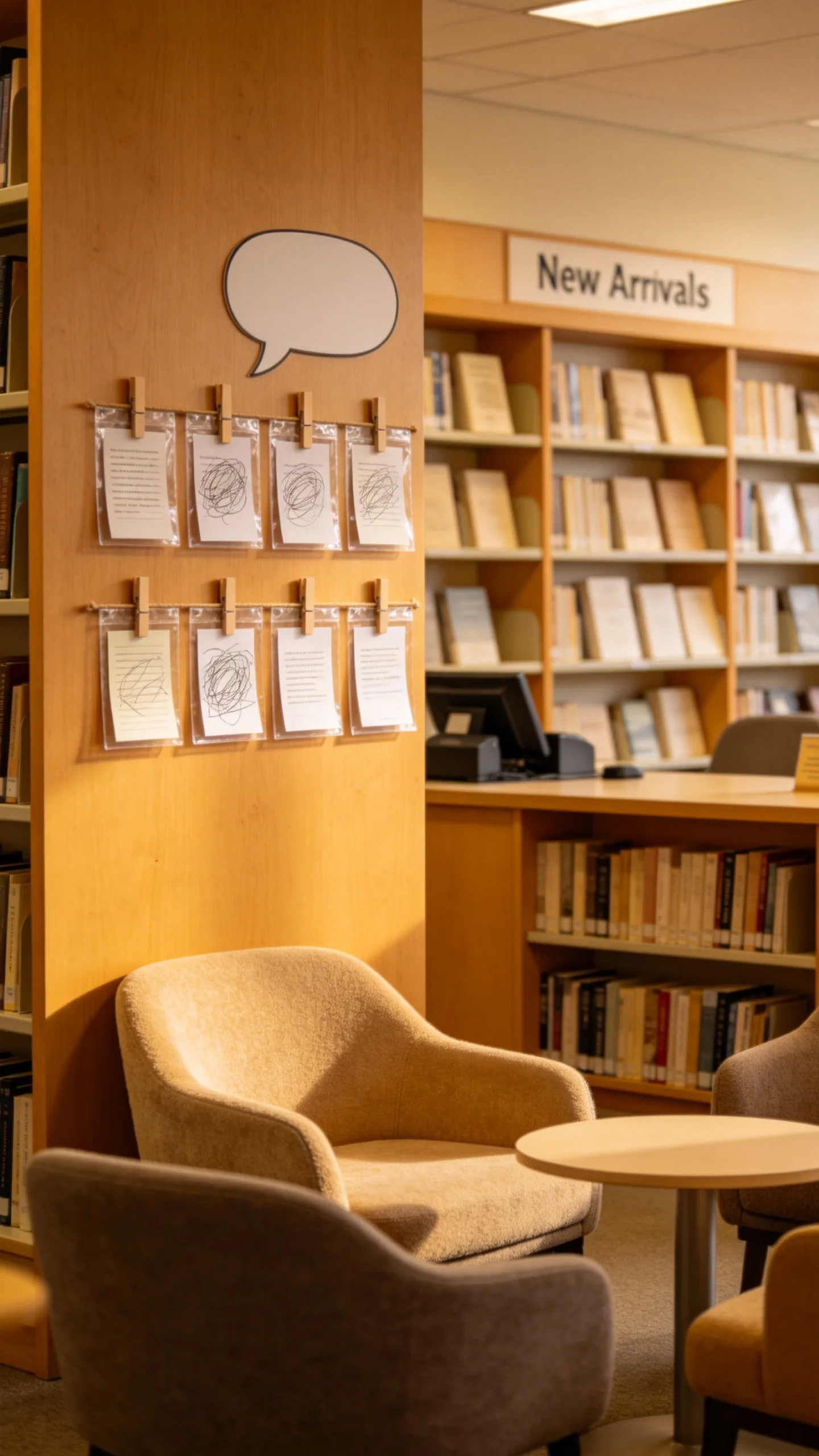
A book recommendation wall gives students a reason to interact with the library space. Use speech bubble cutouts, mini review cards, or framed “Student Pick” templates where readers can write the title, author, and one sentence about why they recommend the book.
Place this wall near the checkout desk, new arrivals shelf, or cozy seating area. Use clothespins, magnetic strips, or clear pockets so recommendations can be changed often. The wall becomes a living display and helps students discover books from classmates rather than only from shelf browsing.
9. Cafeteria Nutrition Art Display
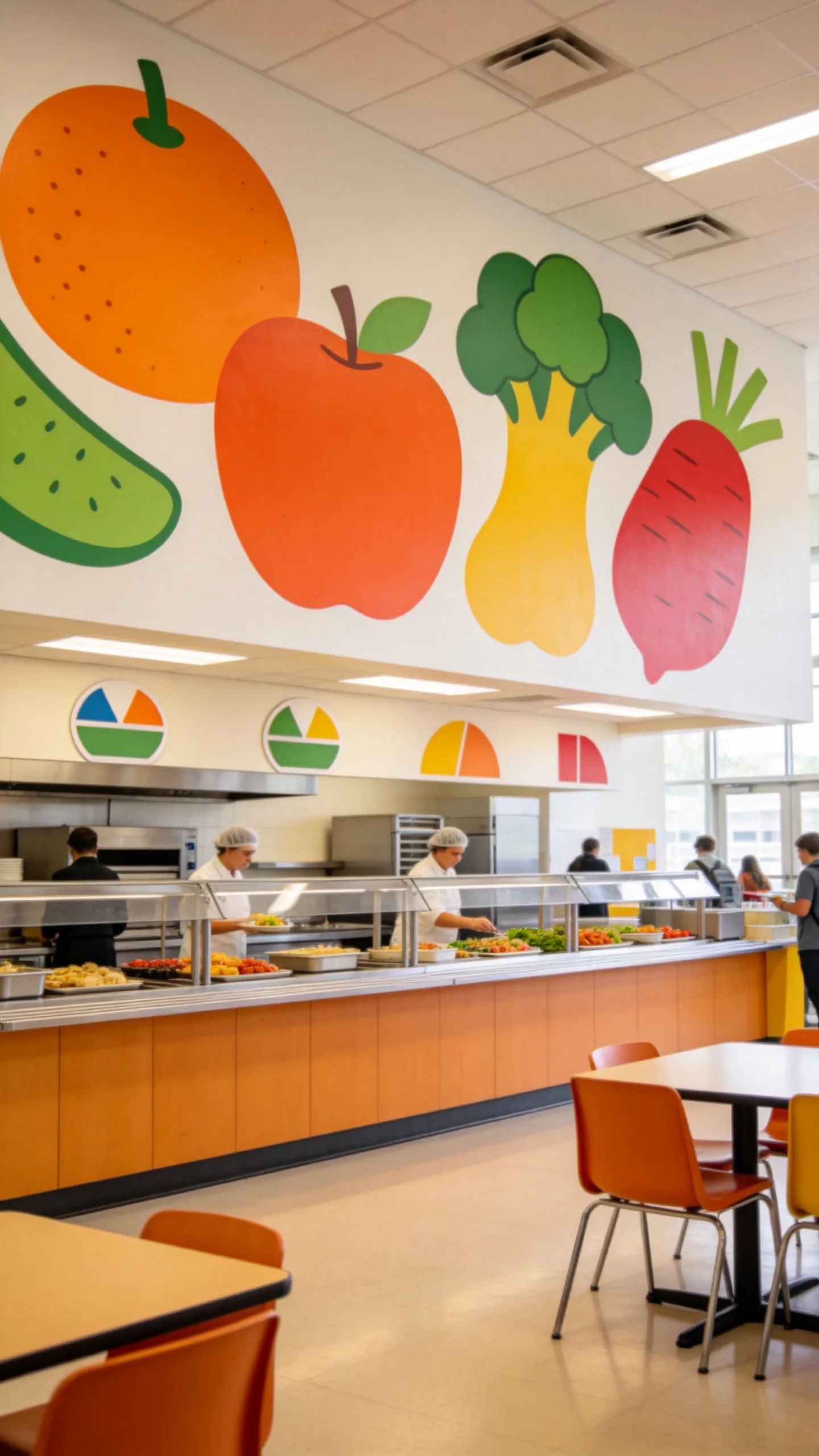
Cafeteria wall art can brighten a large, noisy room while supporting healthy routines. Use oversized fruit and vegetable illustrations, simple meal balance graphics, or cheerful posters about water, breakfast, and trying new foods. Bright colors such as orange, green, yellow, and red work well in a cafeteria setting.
Hang the art above serving lines, tray return areas, or blank walls near tables. Choose wipeable laminated prints, vinyl decals, or sealed painted designs because cafeteria walls need to handle spills, fingerprints, and regular cleaning. Keep messages short so students can read them while moving through the space.
10. Hallway Wayfinding Map Wall
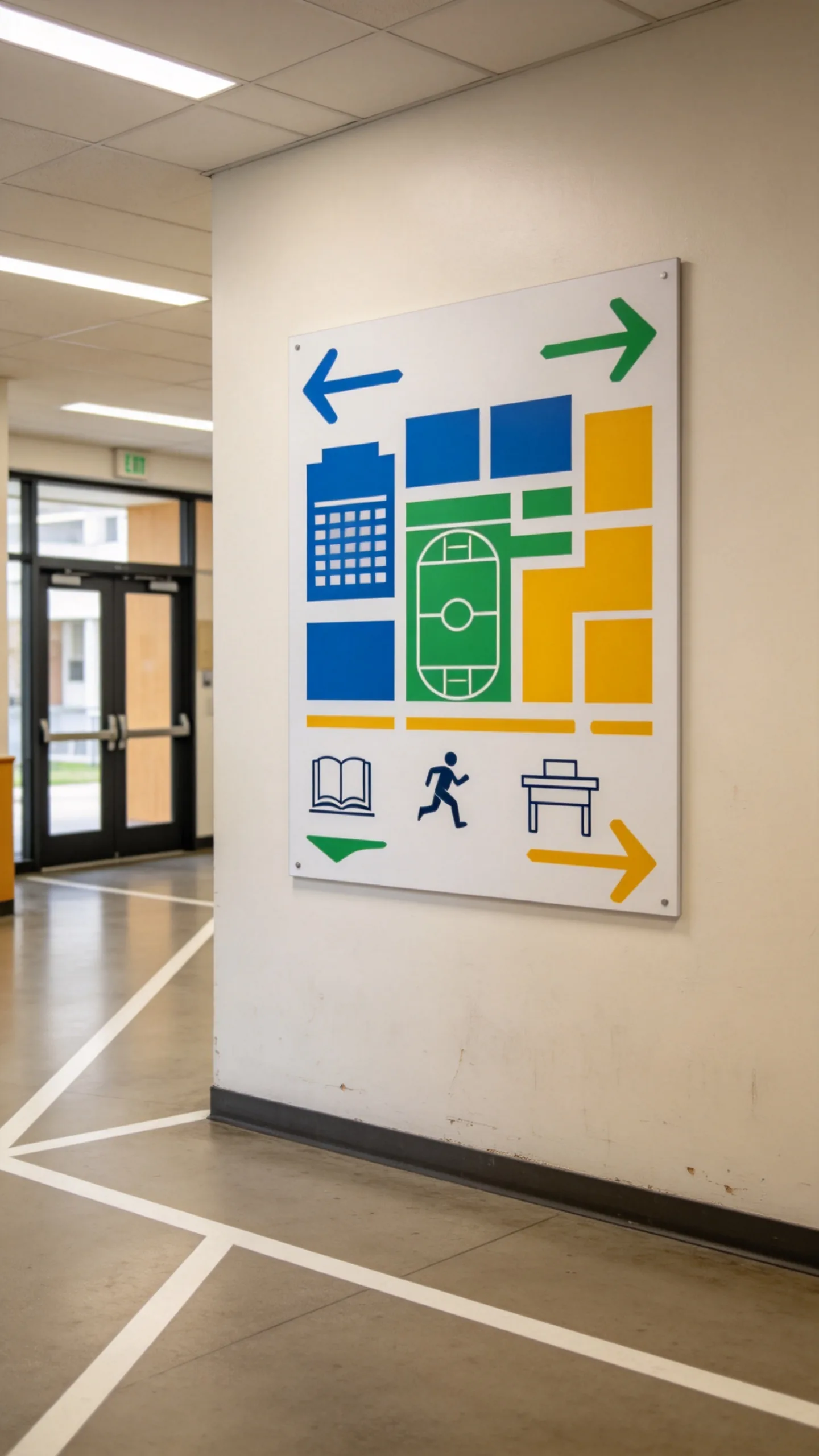
A wayfinding map wall is especially helpful in larger schools with multiple wings, grade-level areas, or shared spaces. Create a simplified campus map with clear labels for the office, library, gym, cafeteria, auditorium, nurse, restrooms, and grade-level hallways. Use arrows and color zones to make navigation easy.
Place the map near the main entrance, visitor check-in area, or central hallway intersection. The design can still be attractive by using school colors, a clean font, and simple icons. Avoid tiny text, since students and visitors need to understand the map quickly while walking.
11. Science Lab Discovery Wall
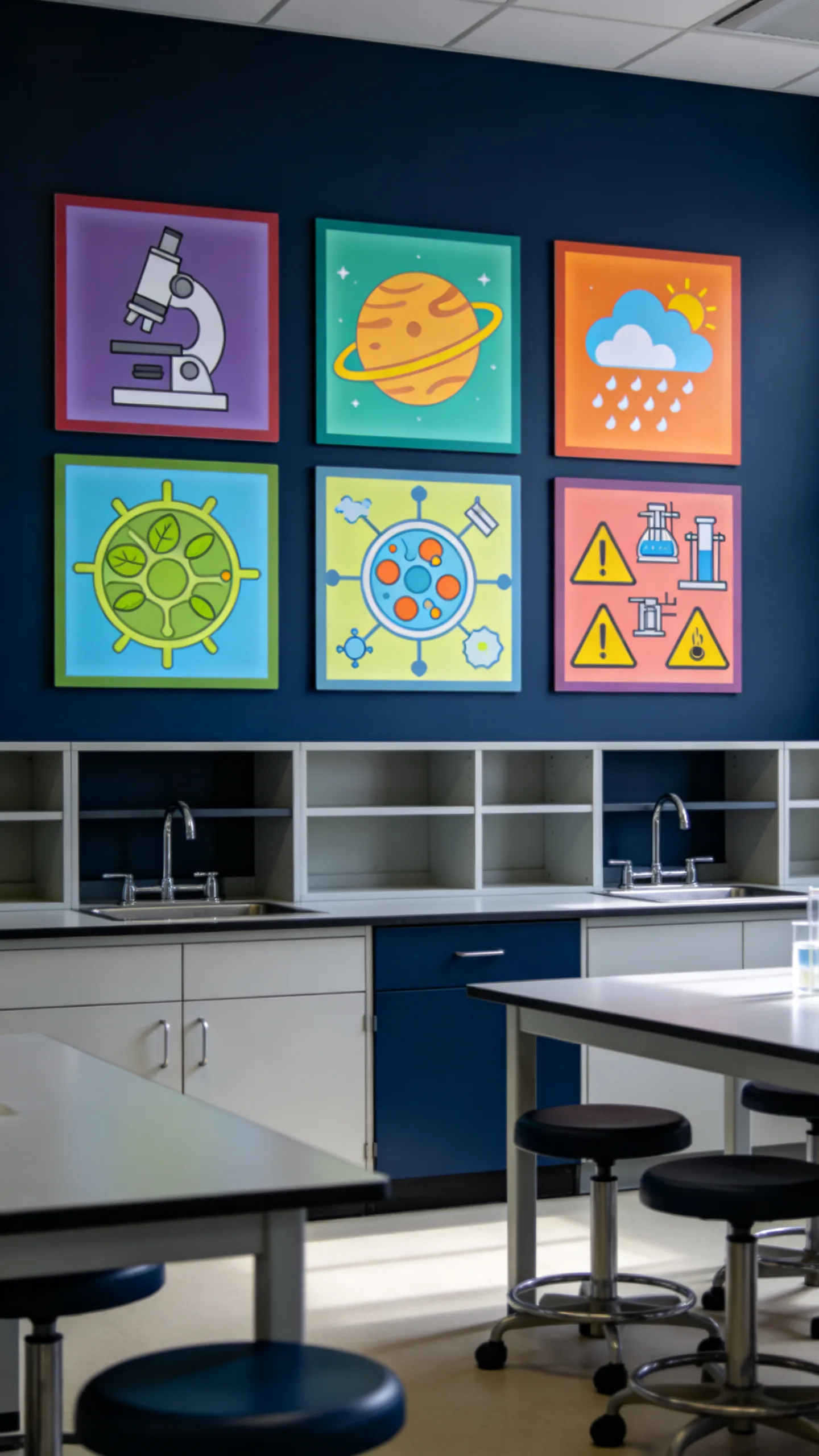
A science lab or STEM classroom benefits from wall art that feels active and curious. Display illustrations of microscopes, planets, plant cells, weather systems, simple machines, or lab safety icons. Pair visuals with short labels so the wall supports vocabulary without overwhelming the room.
Use wall space above storage cabinets, sinks, or lab tables where students can see the display without it interfering with equipment. Choose laminated posters or framed prints with acrylic instead of glass for safety. A dark navy, charcoal, or deep green background can make bright science graphics stand out.
12. Music Room Instrument Silhouette Wall
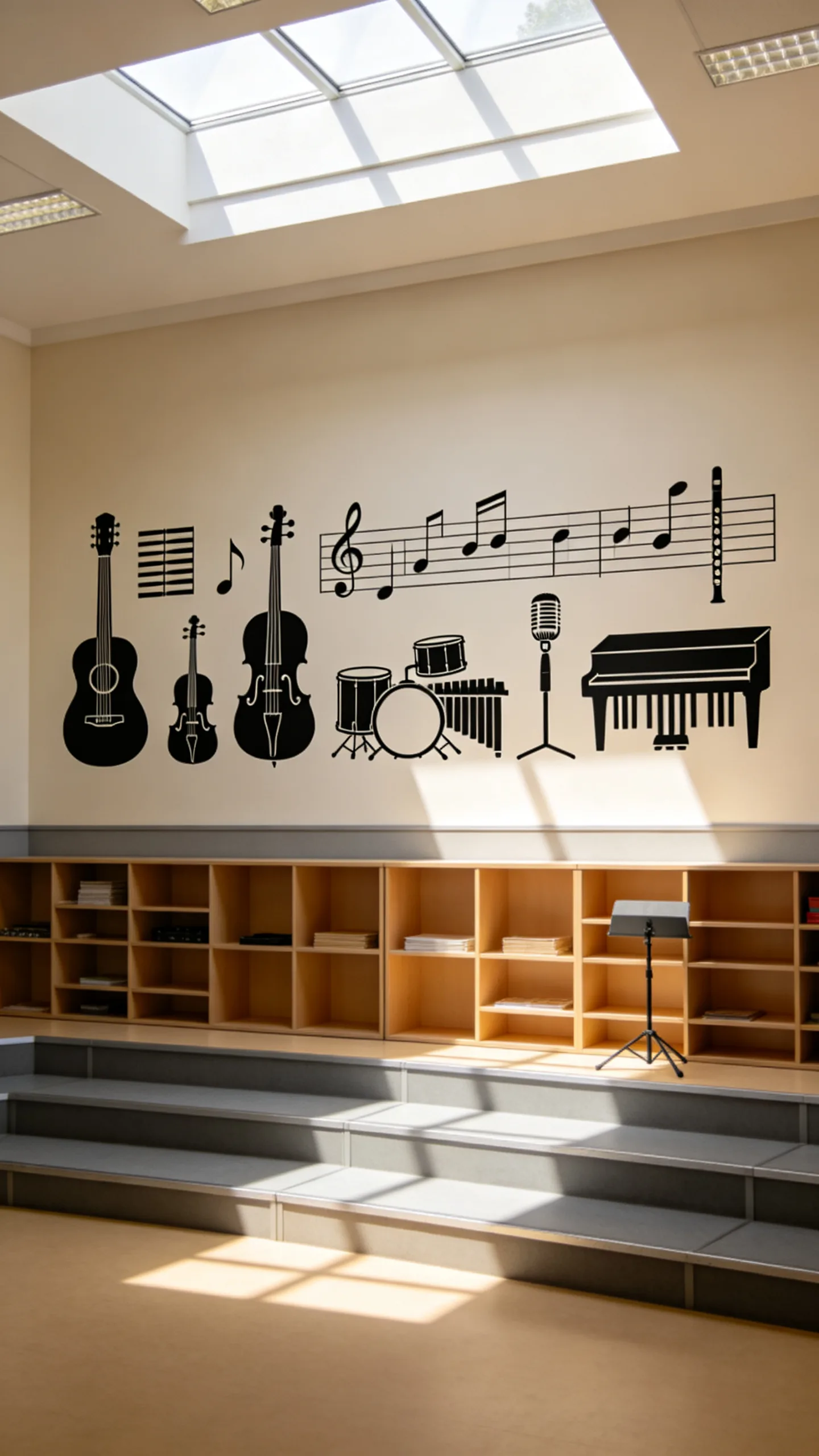
A music room wall can feel lively with instrument silhouettes or line drawings. Feature guitars, violins, drums, trumpets, pianos, flutes, and microphones in a repeating pattern or gallery arrangement. Add musical notes, rhythm patterns, or composer names for extra context.
Place the display above instrument storage, along the back wall, or near risers. Black silhouettes on a white or pale yellow wall create a clean look, while colorful instruments can make the room feel energetic. Keep lower wall areas clear if students move chairs, music stands, or cases through the room.
13. Gymnasium Sportsmanship Banner Wall
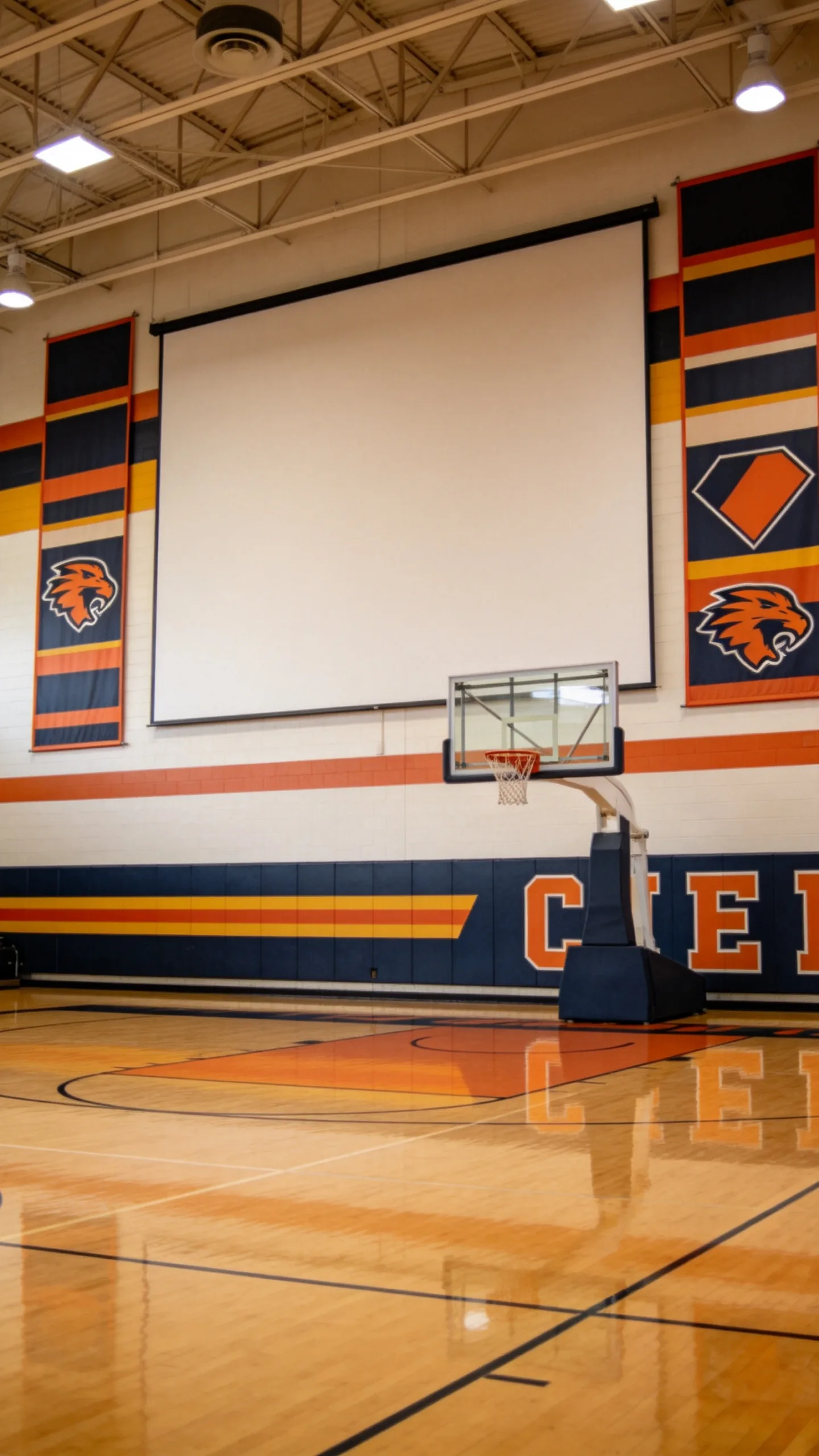
A gym wall often has large blank surfaces that can handle oversized graphics. Create a sportsmanship wall with banners that feature words like teamwork, effort, respect, courage, and fairness. Use the school colors and mascot to tie the design to existing athletic decor.
Hang banners high enough that basketballs, volleyballs, and equipment carts will not damage them. Vinyl banners, painted block letters, or mounted panels are good choices for a gym because they are durable and visible from across the room. Keep the design bold rather than detailed so it can be read during assemblies and games.
14. Classroom Birthday Wall Calendar
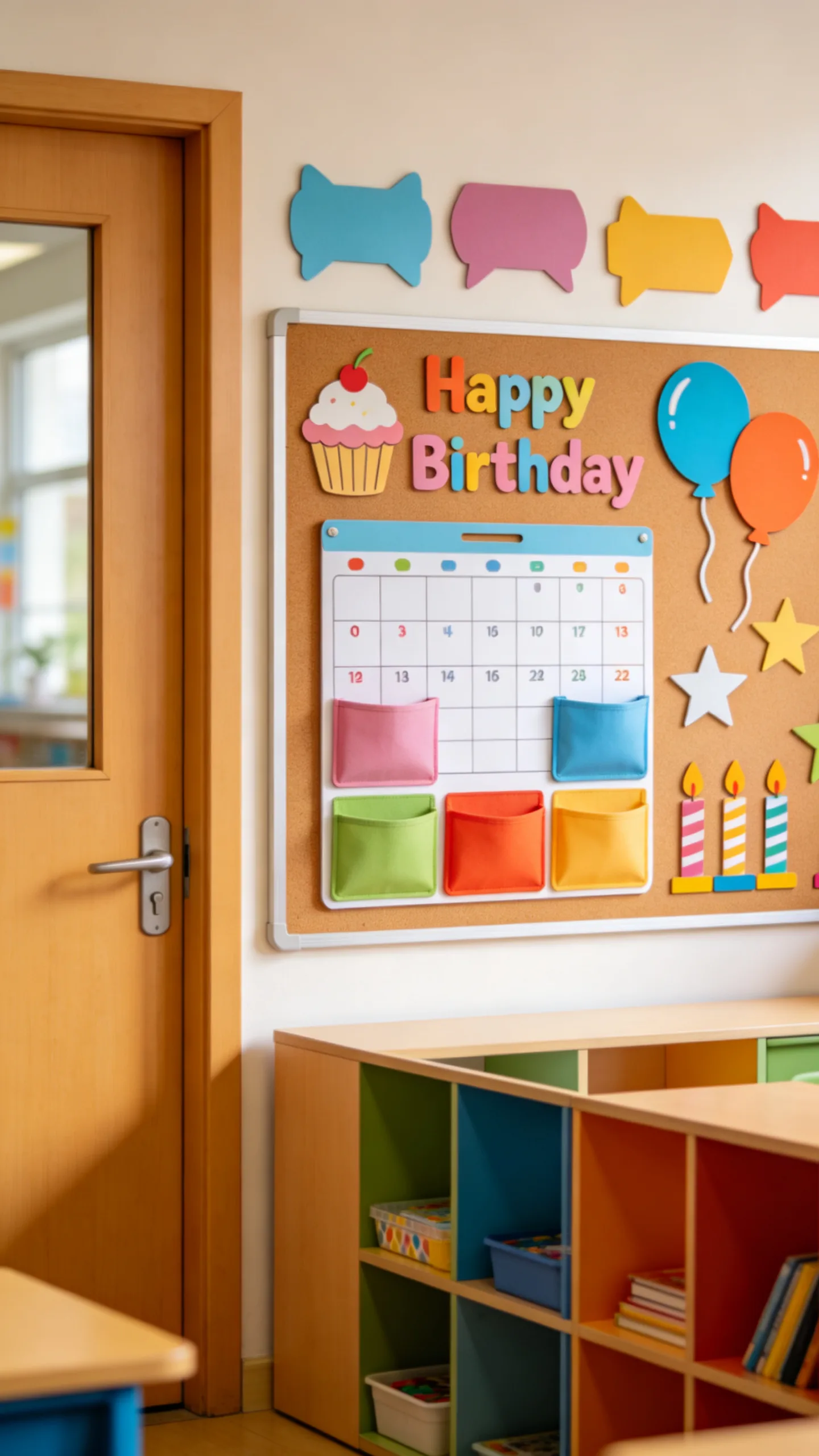
A birthday wall adds warmth to a classroom without taking up desk or shelf space. Use a large calendar-style layout, monthly pockets, or a simple row of month signs with student names underneath. Add small icons like cupcakes, balloons, stars, or candles for a cheerful look.
Place the birthday display near the door, cubbies, or morning meeting area so it becomes part of classroom routines. Use removable name tags so the wall can be updated each year. A neat, compact design works better than a large display if the classroom already has anchor charts and learning posters.
15. Library Quiet Zone Wall Art
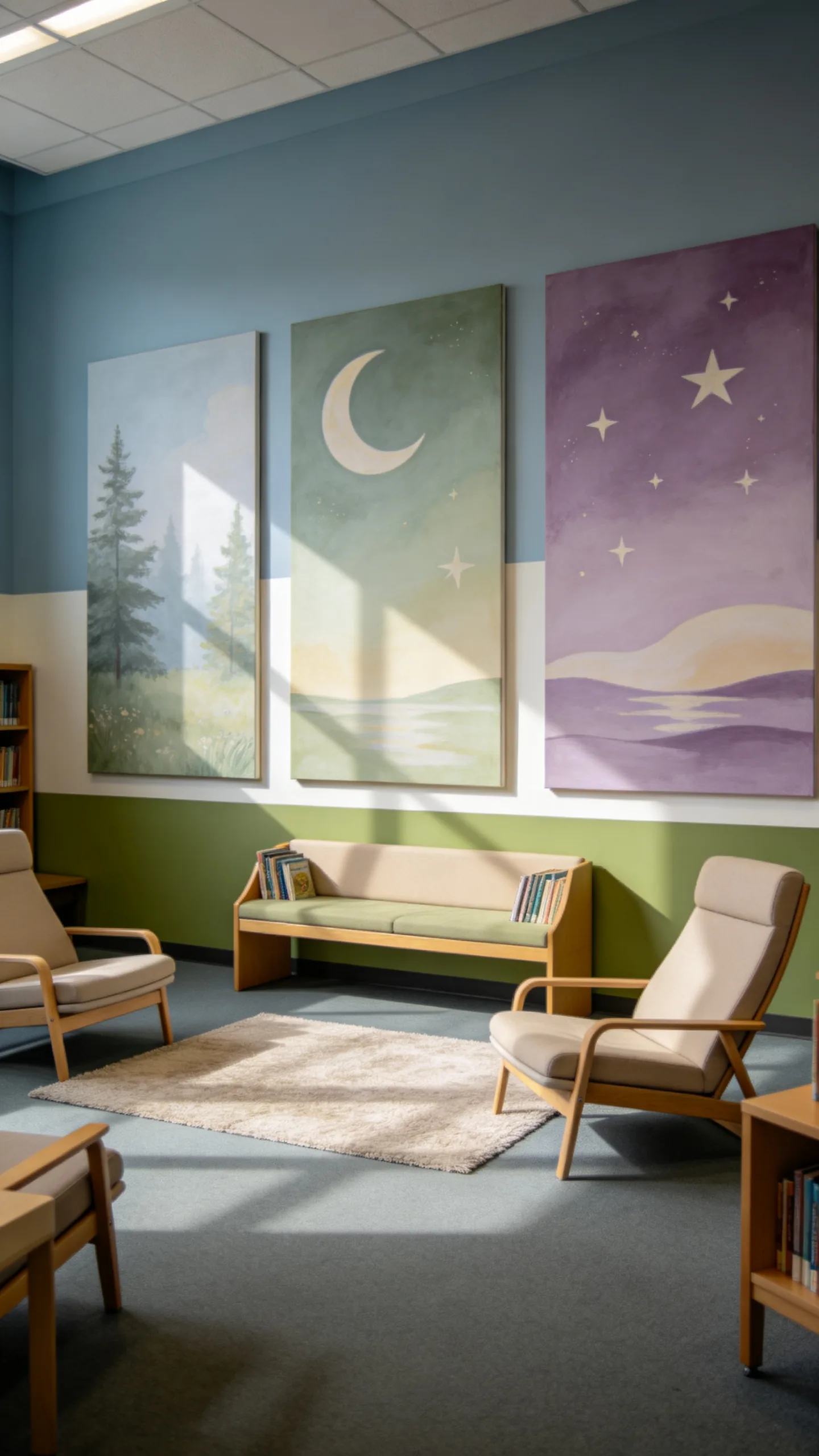
A quiet reading area in the library can be defined with calming wall art. Choose soft illustrations, nature prints, moon and star designs, or short phrases such as “Read, Rest, Wonder.” Use muted colors like dusty blue, moss green, oatmeal, or lavender to create a peaceful feeling.
Place the art above lounge chairs, a reading bench, or a small area rug. Keep the wall simple so it does not distract students who are reading or working independently. A few larger pieces usually look calmer than many small posters in a quiet zone.
16. Hallway Kindness Message Wall
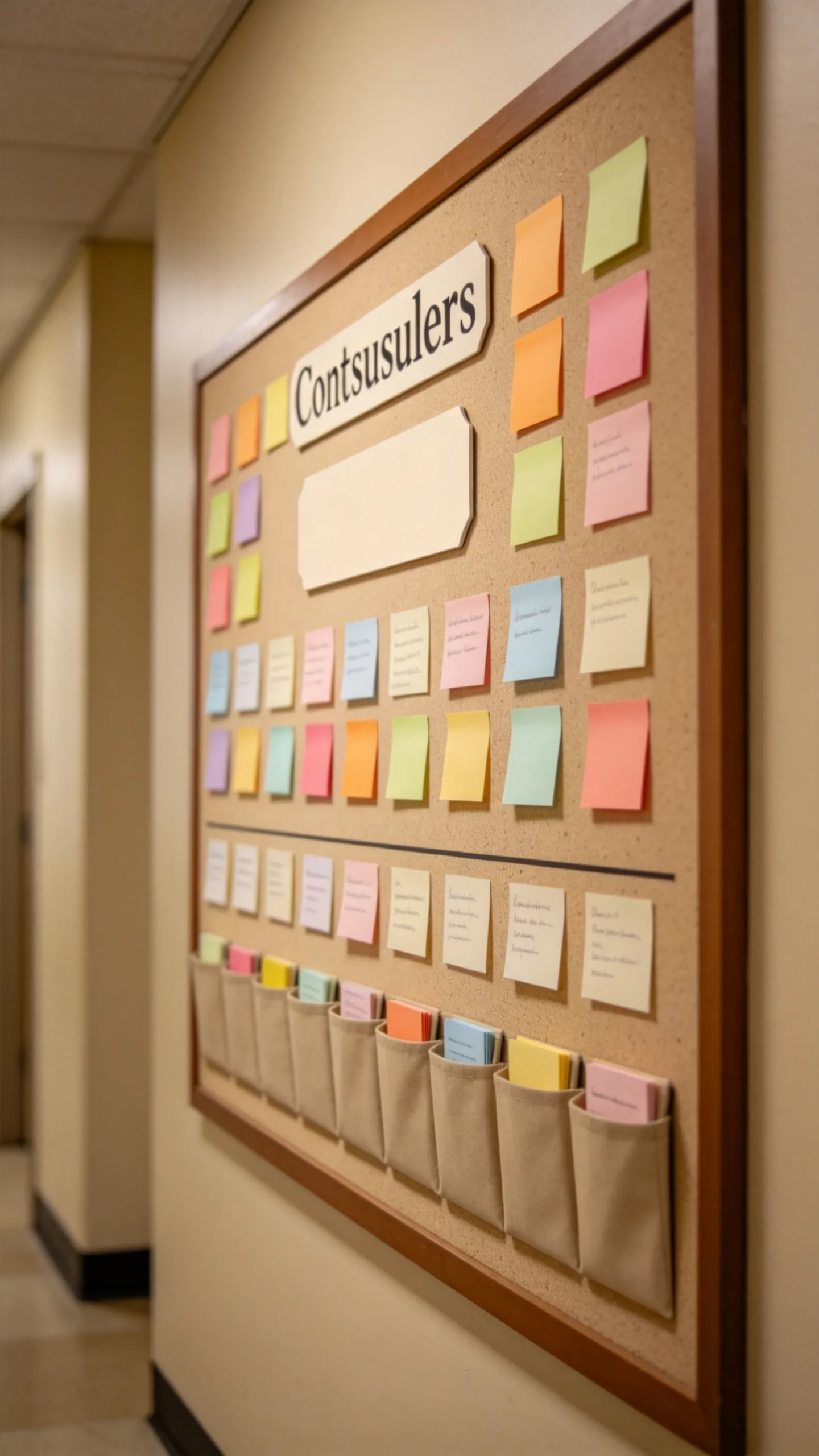
A kindness message wall works well near a counselor’s office, cafeteria entrance, or central hallway. Use short prompts such as “Leave a Kind Note,” “Notice the Good,” or “Choose Respect.” Add pockets, sticky note spaces, or small cards where students can contribute positive messages.
For visual order, use a large central title with organized sections around it. Choose a sturdy backing like corkboard, foam board, or bulletin board paper with a border. Refresh the notes often so the wall stays clean and meaningful rather than becoming messy or faded.
17. Art Room Color Wheel Wall
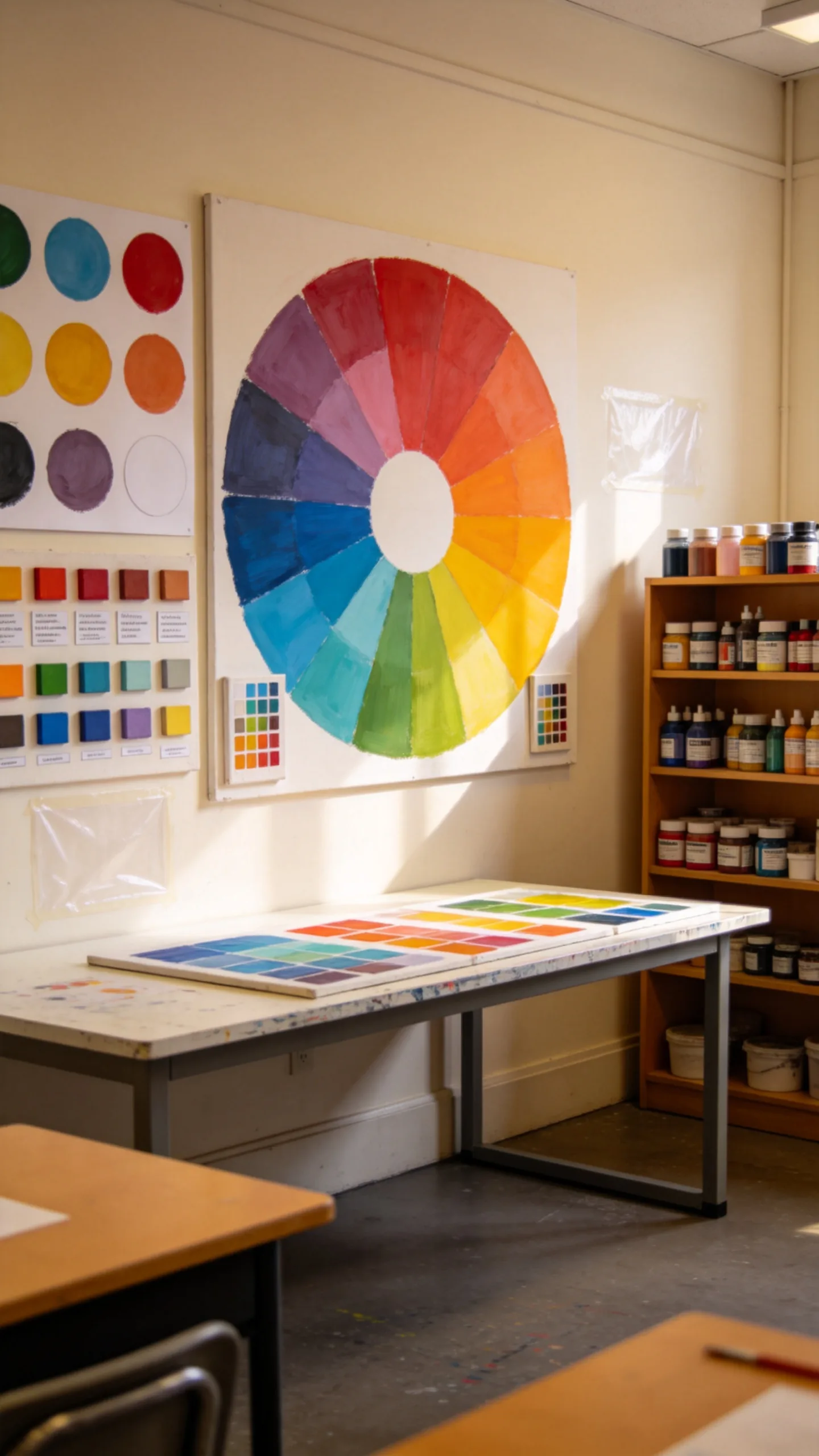
An art room color wheel wall is both decorative and useful for teaching. Make a large color wheel with paint samples, paper circles, canvas panels, or printed graphics. Add labels for primary, secondary, tertiary, warm, cool, complementary, and analogous colors.
Place the display near the demonstration table, sink area, or supply shelves so students can reference it during projects. Use bold color blocks and clear text for visibility. If the wall is close to paint or clay workstations, choose materials that can be wiped clean or protected with a clear covering.
18. Classroom Door Wall Art Extension
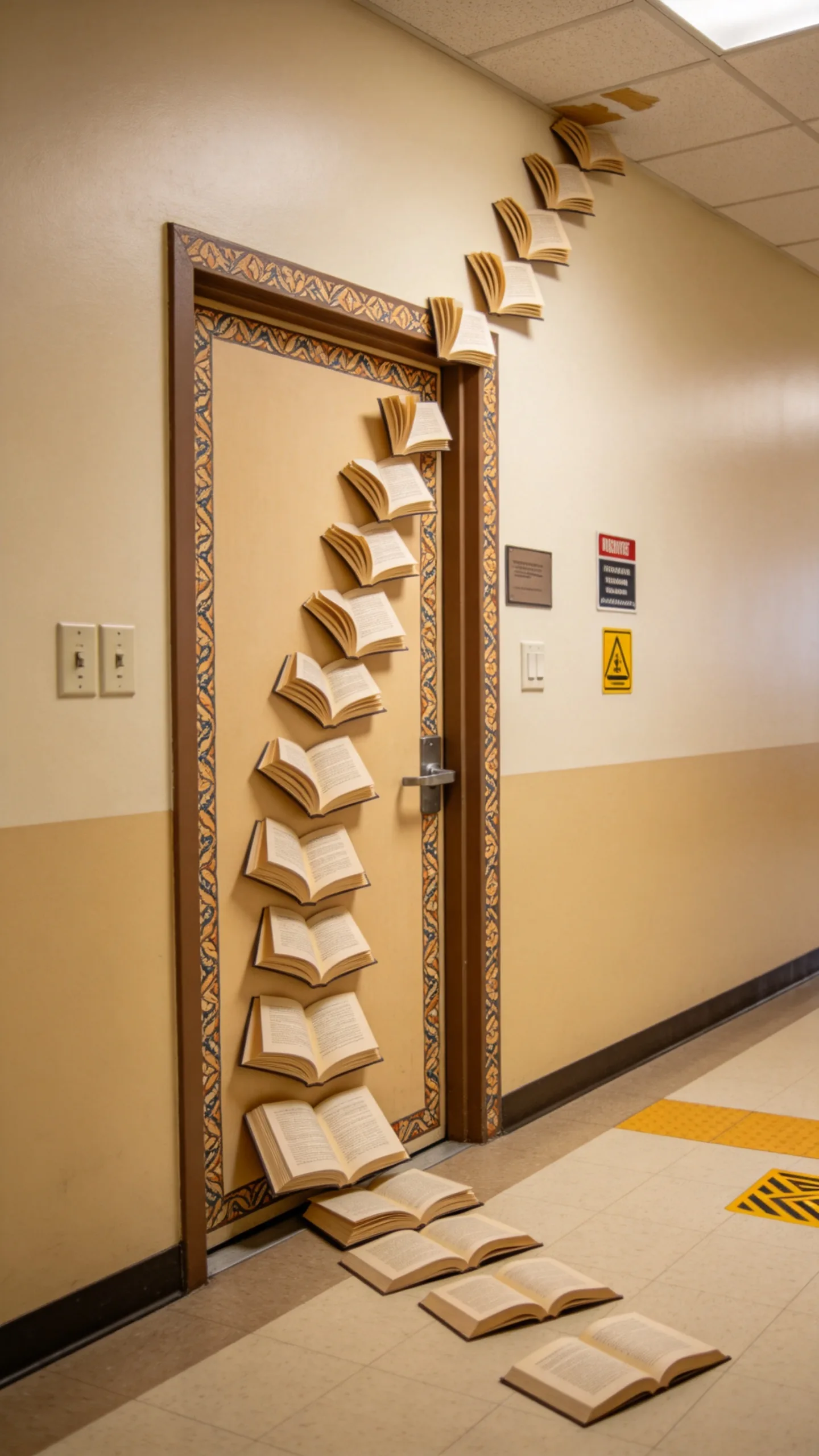
The area around a classroom door can become a small but memorable wall art moment. Extend the door theme onto the surrounding wall with a frame, border, quote, or seasonal design. For example, a reading-themed door could have paper books “spilling” onto the wall, while a science door could have planets orbiting into the hallway.
This idea is useful when the classroom has limited interior wall space. Keep the design narrow enough that it does not block signs, light switches, or hallway safety information. Use removable materials if the display changes with units or seasons.
19. Main Office Values Wall
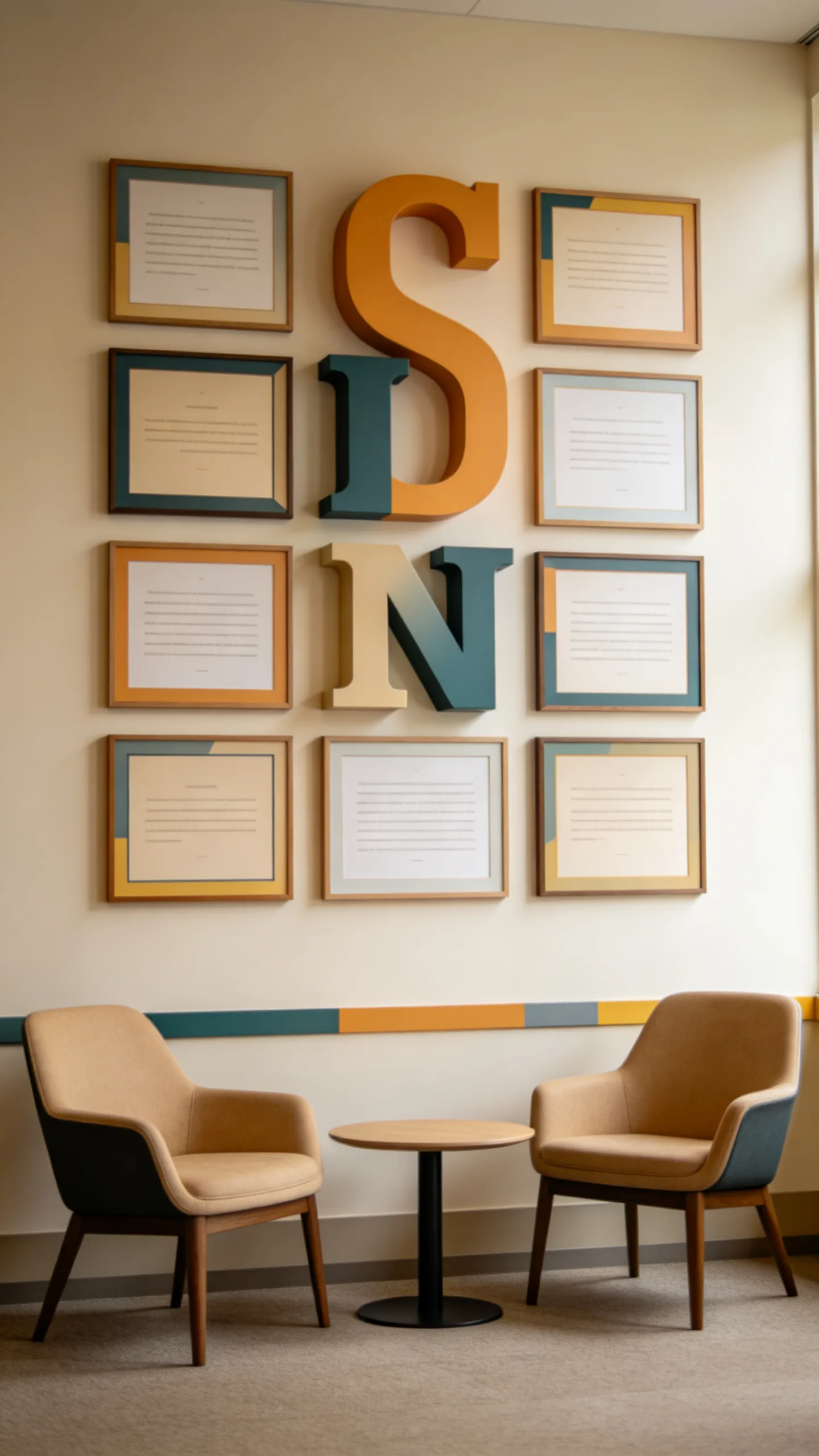
A values wall in the main office can communicate the school’s identity to families and visitors. Feature words such as respect, responsibility, curiosity, safety, inclusion, and perseverance. Use dimensional letters, framed typography, or printed panels arranged behind the reception desk or along the waiting area wall.
Keep the design polished and easy to read. A neutral wall color with school-color accents creates a professional look without feeling cold. If the office has chairs or a small table below the display, align the art above the furniture so the space feels intentionally styled.
20. Counselor’s Office Calm Affirmation Wall
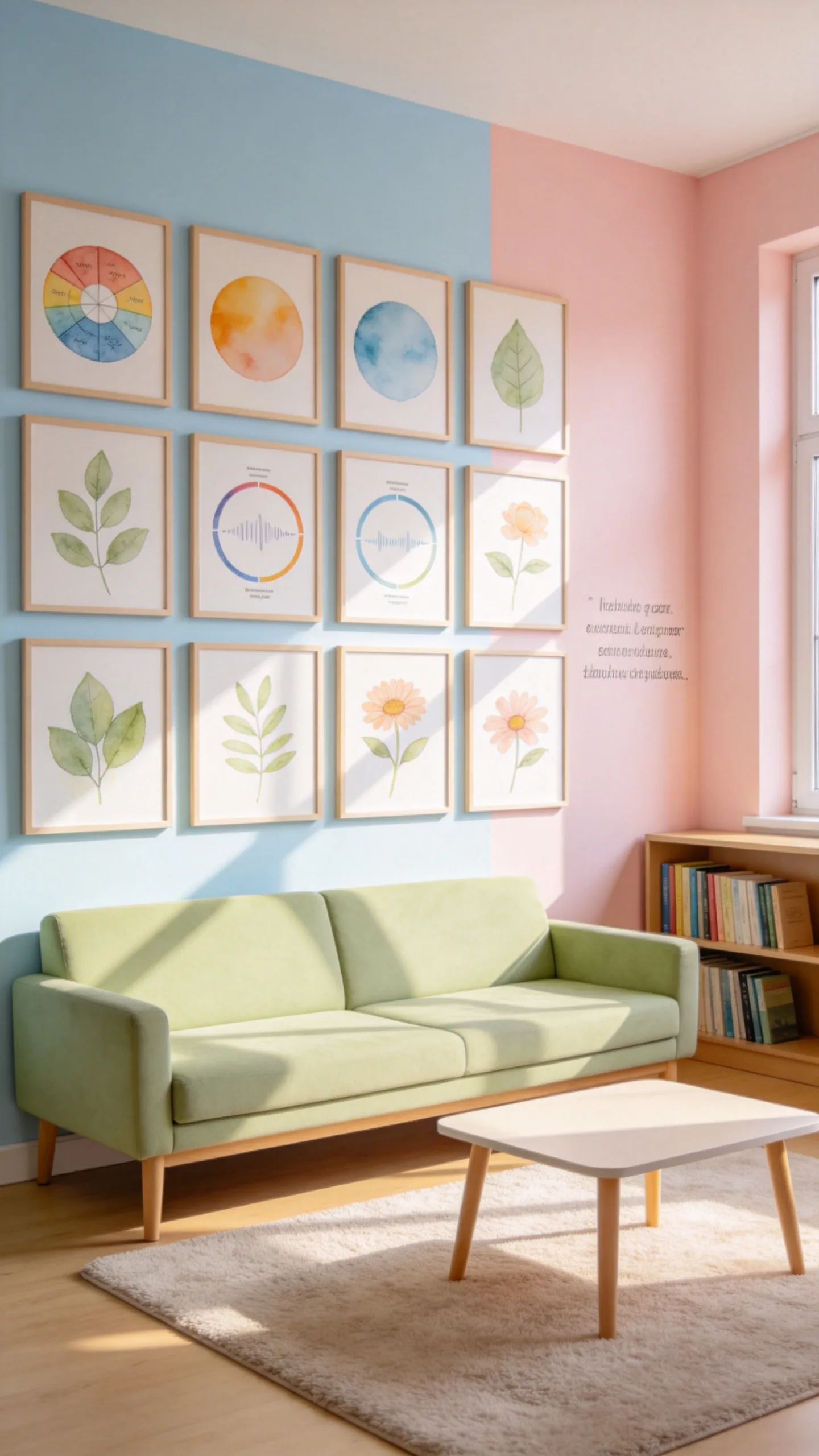
A counselor’s office should feel supportive and uncluttered, so wall art should be gentle and clear. Use calming affirmations, emotion charts, breathing visuals, or simple watercolor prints. Soft colors, rounded shapes, and natural imagery can make the room feel less clinical.
Place the art where students can see it from a chair or small meeting table. Avoid crowding every wall; one focused display is often more effective. A small gallery of framed prints above a loveseat, rug, or bookshelf can make the office feel grounded and welcoming.
21. Media Center Digital Citizenship Wall
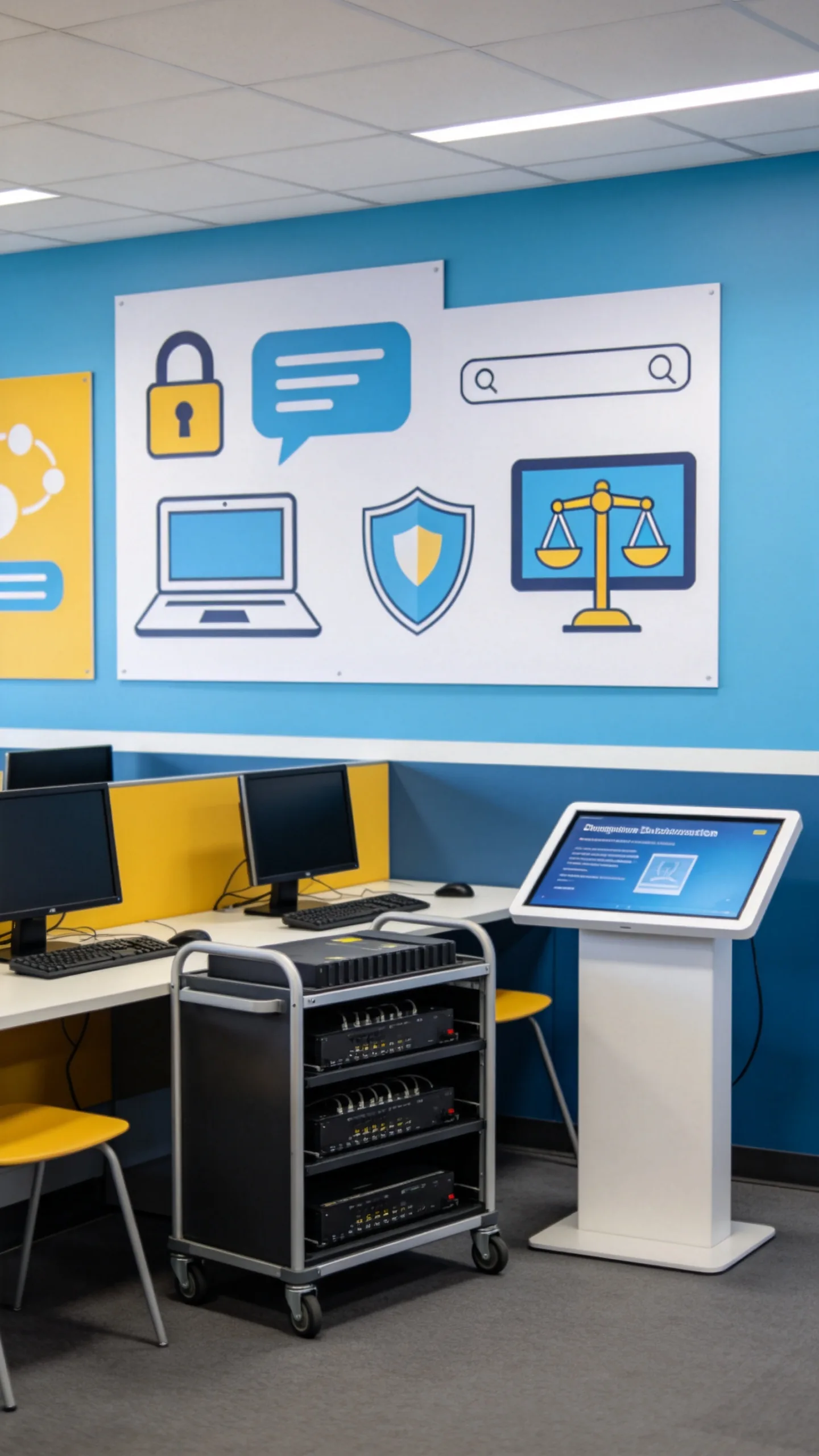
A media center or computer lab wall can teach digital habits through clear visual reminders. Create posters about password safety, respectful comments, credible sources, screen balance, and online privacy. Use icons such as locks, speech bubbles, laptops, search bars, and shields.
Hang the display near computer stations, charging carts, or the teacher demonstration screen. Keep the information short and direct so students can absorb it quickly. A consistent color palette, such as blue, white, and yellow, keeps technology-themed wall art looking clean instead of cluttered.
22. Stairwell Motivational Step Wall
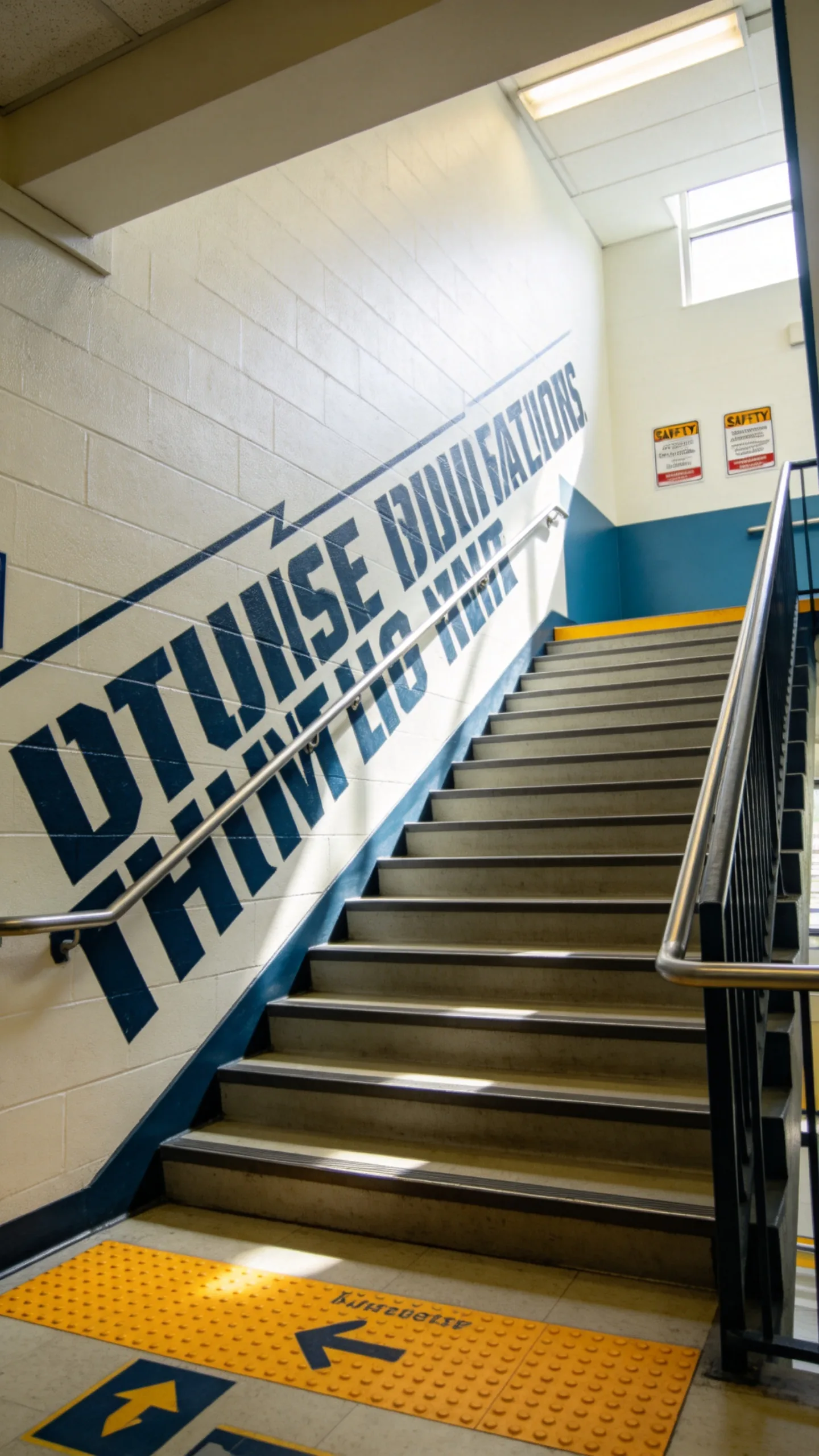
A stairwell wall can become a strong visual feature because students pass it many times each day. Add large words or short phrases that rise with the stairs, such as “Keep Going,” “One Step at a Time,” or “Climb Toward Your Goal.” Place each word or phrase along the diagonal line of the stairs for movement.
Use durable vinyl lettering or painted stencils because stairwells experience heavy traffic. Make sure the art does not interfere with safety signs, railings, or directional markings. High-contrast lettering helps the display stay readable in stairwells with dim lighting.
23. Kindergarten Shape and Color Wall
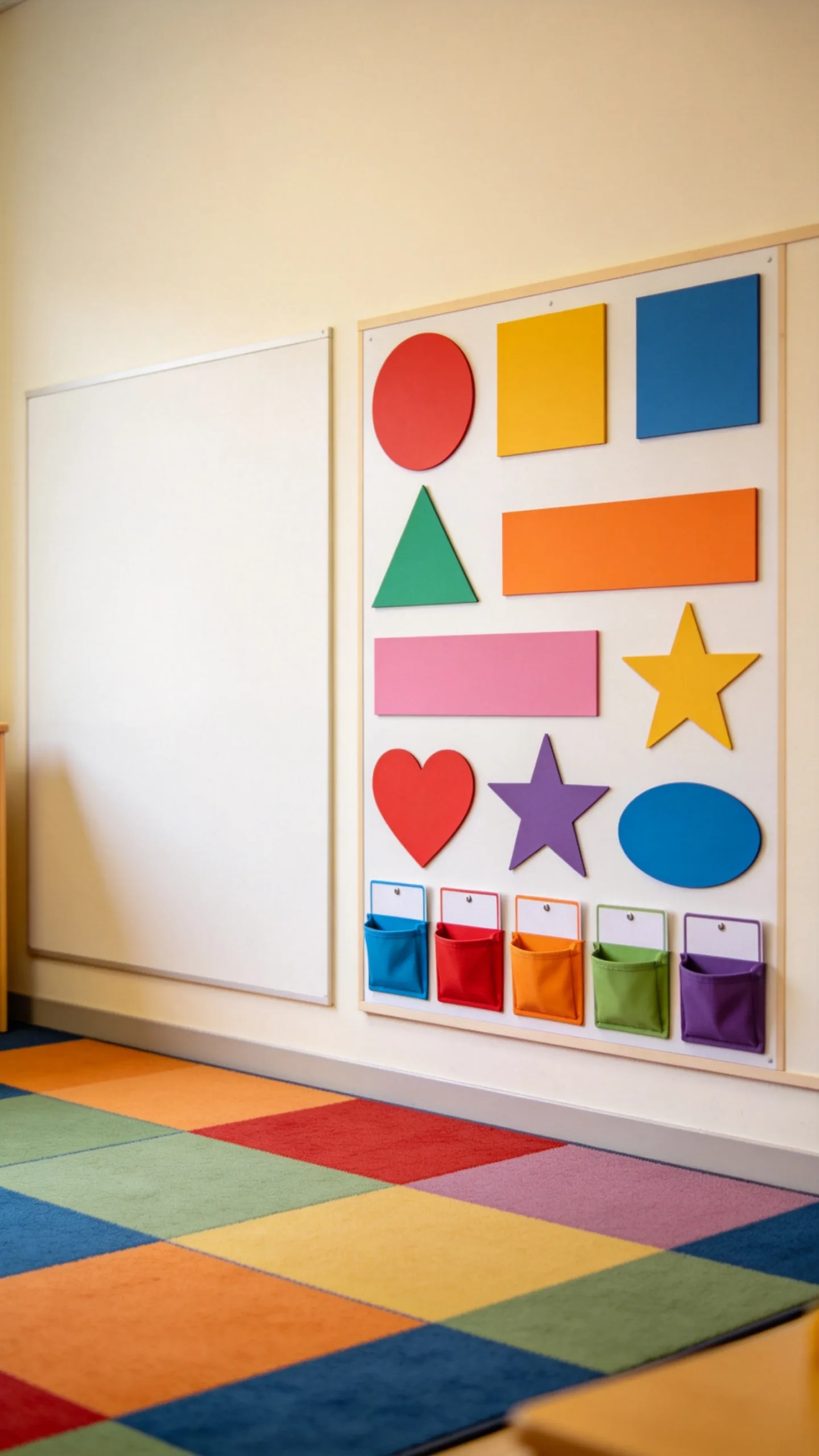
A kindergarten classroom can use wall art to support early learning without overwhelming young students. Create a shape and color wall with circles, squares, triangles, rectangles, hearts, stars, and ovals in clear, bright colors. Add simple labels with large letters for easy recognition.
Place the display near the carpet, calendar area, or activity centers where children gather. Keep the lower portion of the wall interactive with removable shape cards or matching pockets. Leave enough blank space around the display so the room still feels orderly and easy to navigate.
24. Auditorium Performance Poster Wall
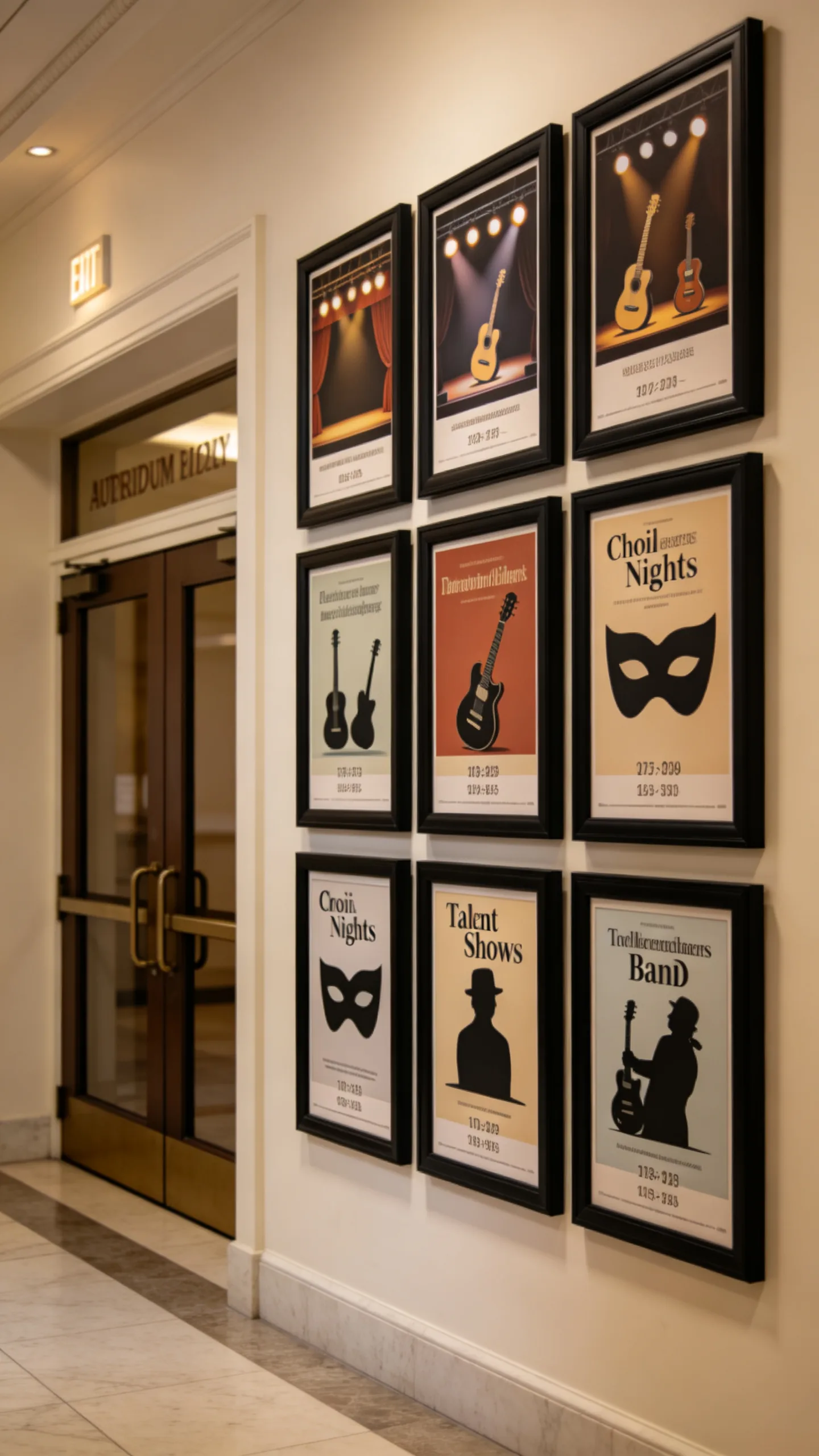
An auditorium lobby or music hallway is a great place to display performance-related wall art. Use posters from past plays, concerts, choir nights, talent shows, or band performances. Frame them in matching black, white, or wood frames to turn event posters into a school arts gallery.
Arrange the posters in a grid or chronological line near the auditorium doors. This gives students a sense of tradition and makes the space feel more finished during events. If the wall is large, add a title such as “On Our Stage” or “School Performances” above the display.
25. Outdoor Covered Walkway Mural
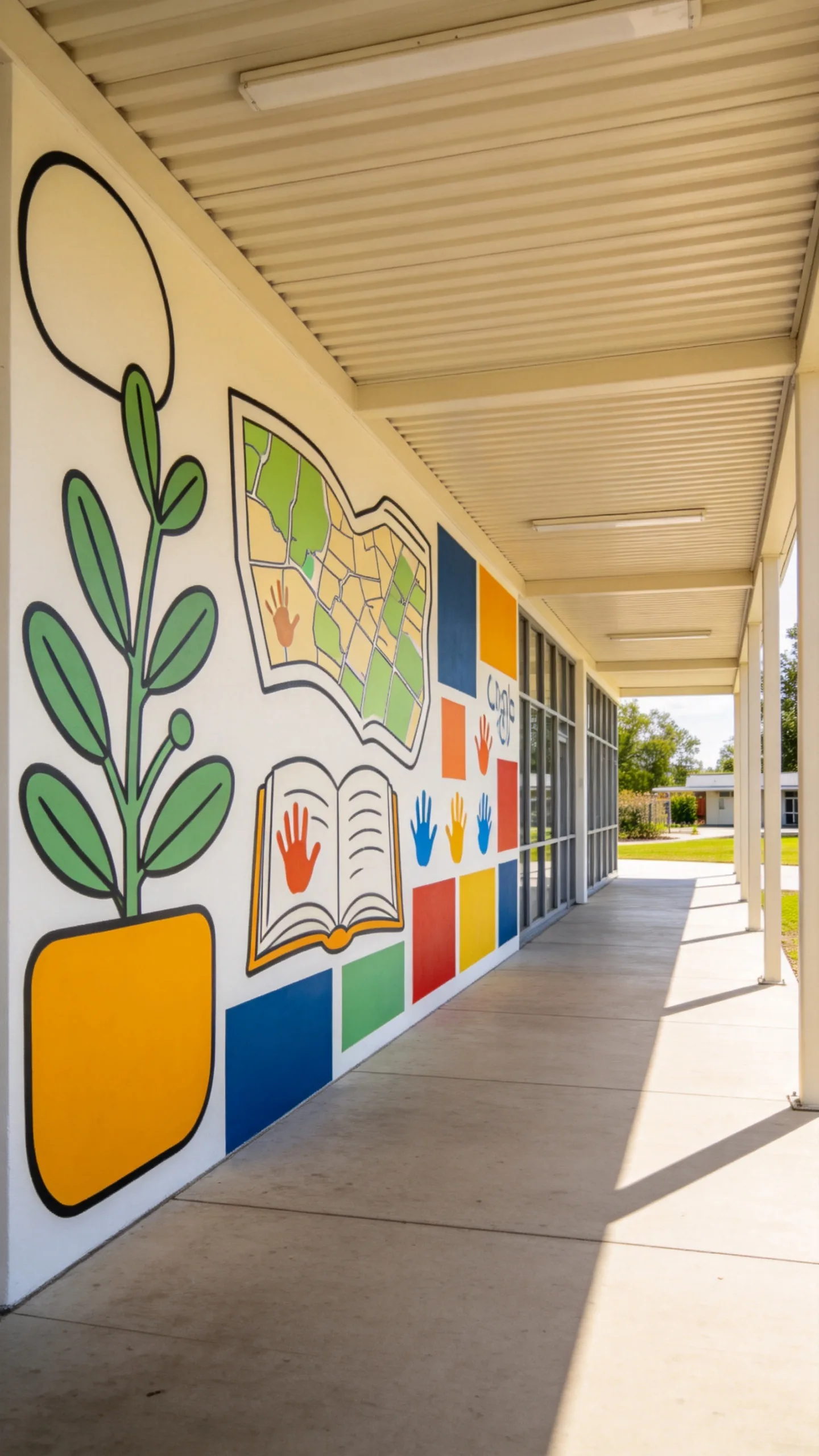
A covered walkway, breezeway, or exterior hallway can benefit from weather-resistant wall art. Choose a mural theme connected to the school community, such as local plants, the mascot, books, maps, or student handprints. Use exterior paint, sealed panels, or outdoor-rated vinyl so the design holds up better against sun and moisture.
Keep the composition bold because outdoor walkways are viewed while students are moving. Large shapes, strong outlines, and school colors work better than tiny details. If the walkway is narrow, place the mural on one side only so the path still feels open and easy to pass through.